AI内容创作

Search documents
寻找中国经济破局之路 和讯财经中国2025年会圆满落幕
和讯· 2025-12-08 10:25
Core Viewpoint - The conference focused on "Finding the Path to Breakthrough for the Chinese Economy," addressing key issues such as macroeconomic trends, technological innovation, and capital market restructuring in the context of global changes [1]. Group 1: Economic Challenges and Opportunities - The chairman of Hexun, Zhang Zhifang, highlighted the vibrant growth in China's tech and cultural sectors, exemplified by the success of AI and film industries, while also noting challenges such as unbalanced development and risks in key areas [4]. - Huang Qifan pointed out that China's urbanization has transitioned from a 1.0 version (1980-2020) with an urbanization rate increase from 18% to 38% to a 2.0 version aiming for a further 30% increase, targeting a rate of 78% [6]. - Liu Shijun emphasized that the shift from investment and export-driven growth to innovation and consumption-driven growth is crucial during the 14th Five-Year Plan, necessitating a focus on expanding consumption and improving livelihoods [9]. Group 2: Future Economic Outlook - Yao Yang suggested that stabilizing the real estate market and local government finances is essential for supporting short-term demand and restoring economic vitality [10]. - Li Xunlei discussed the need for structural adjustments and reforms to address the intertwined issues of real estate cycles and structural problems, advocating for a technology-led growth model [11]. - Liang Hong noted that improvements in production efficiency are foundational for the revaluation of RMB assets and strengthening of the currency [11]. Group 3: Monetary Policy and AI Impact - Li Yang indicated that low interest rates may become a norm in China's financial landscape, with monetary policy increasingly focusing on asset prices and systematic interventions in the bond market [14]. - Cai Fang addressed the structural employment challenges posed by AI, advocating for policies that align AI development with employment strategies [16]. - Yao Xin highlighted that AI's impact extends beyond technology, affecting societal paradigms and economic models, while Cai Hongping expressed skepticism about the immediate applicability of humanoid robots in complex environments [19][20]. Group 4: Capital Market and Investment Strategies - Wang Qing stated that the Chinese capital market is not synchronizing with the real economy, predicting a shift towards performance-driven stock market dynamics [22]. - Xing Ziqiang noted that historical patterns of over-investment during technological revolutions suggest that the current AI boom will ultimately enhance global productivity [22]. - Wu Xiaoqiu emphasized the need to transition from a financing-centered approach to one that prioritizes investor rights in the restructuring of China's capital market ecosystem [24].


“不看工资条”的王自如再创业,但AI内容创作并不一定“来钱快”
Di Yi Cai Jing· 2025-06-06 08:37
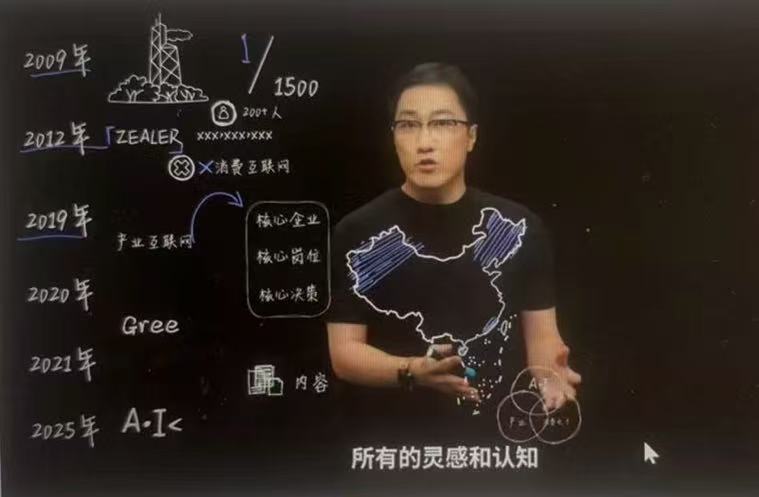
Core Viewpoint - Experts believe that for Wang Ziru to succeed in his new venture, he must find a balance between the "fast" production of AI and the "slow" creation of content [3][4] Group 1: Wang Ziru's New Venture - Wang Ziru announced his return to entrepreneurship in the AI field, focusing on AI content creation, which he claims is a quick way to generate revenue [3] - He previously founded the tech media outlet ZEALER and was involved in digital channel reform at Gree Electric [3] - Wang Ziru faced financial difficulties, including a court-ordered execution of 33.83 million yuan in 2024, leading to his departure from Gree [3] Group 2: Expert Insights on AI Content Creation - Du Lan, former president of the Guangdong AI Industry Association, highlighted that while AI content creation appears to be rapidly growing, sustainable success requires deep foundational work [3][4] - He pointed out three key observations: the importance of lasting value after traffic influx, the need for a competitive edge, and the unique characteristics of the Guangdong manufacturing sector [4] - The current trend in AI content creation resembles the rapid rise of mobile apps, but only creators with core values will survive the eventual market shakeout [4] Group 3: Challenges in AI Content Creation - A senior advertising industry professional noted that while AI can assist in basic advertising tasks, the final creative product still requires human input [4][5] - Limitations of AI in generating continuous content, particularly in short dramas, were emphasized, as AI struggles with maintaining character continuity and emotional depth [5] - Despite some potential for monetization through platform revenue sharing, advertising, and selling AI courses, the overall commercial viability of AI-generated content remains uncertain [6]