
AI医疗服务

Search documents
HCA Healthcare (NYSE:HCA) 2026 Conference Transcript
2026-03-17 20:02
HCA Healthcare Conference Call Summary Company Overview - HCA Healthcare (NYSE:HCA) is a leading healthcare provider in the U.S., operating approximately 190 hospitals and 202,500 ambulatory sites of care, with a focus on local hospital networks in rapidly growing regions [1][3]. 2025 Performance Highlights - In 2025, HCA Healthcare served 47 million patients, achieving a 2.4% adjusted admission growth across all 15 domestic divisions [4]. - The company managed expenses effectively, resulting in a 90 basis point improvement in EBITDA margin, reaching 20.6% for the year [4]. - Challenges included the lingering effects of Hurricane Helene in North Carolina and cost pressures related to hospital-based physician services [5]. 2026 Outlook - HCA anticipates continued growth in hospital-based physician services, with costs expected to remain in the high single-digit range [6]. - The company plans to maintain disciplined capital allocation and invest in AI and digital capabilities, as well as network optimization strategies [7]. Financial Resiliency Initiatives - HCA has built a $400 million savings target from its financial resiliency program, focusing on four areas: revenue integrity, operations, asset optimization, and cost reduction [8][11]. - The company is leveraging AI and automation to enhance revenue cycle management and reduce administrative costs [15]. AI Integration - HCA is investing in AI to improve patient care processes, including documentation, nurse rounding, and patient monitoring [25]. - The AI agenda is structured into three domains: administrative, operational, and clinical, with specific initiatives aimed at enhancing efficiency and patient satisfaction [28][29]. Exchange Subsidy Expiration Impact - The expiration of enhanced premium tax credits (EPTCs) is projected to impact EBITDA by $600 million to $900 million, with expectations that 15%-20% of exchange volume may decline [30][32]. - HCA is monitoring enrollment and effectuation rates closely, as well as shifts in metal tiers among exchange patients [34][35]. Capital Allocation Strategy - HCA generated approximately $12.6 billion in cash flow from operations in 2025, with projections of $12 billion to $13 billion for 2026 [48]. - The company plans to allocate $5 billion to $5.5 billion in capital expenditures in 2026, with half dedicated to growth and the other half to routine maintenance and technology [49][50]. Nursing Workforce Development - HCA's Galen College of Nursing has expanded from 5 to 25 campuses, with plans to grow to 30 campuses and 30,000 nursing students, addressing labor supply challenges [54][56]. - The company is experiencing improved labor metrics, returning to pre-pandemic turnover rates [56]. Competitive Advantages - HCA's competitive edge includes shared service platforms, a strong GME program, and significant investments in network development and optimization [61][62]. - The company aims to increase access points from 14 to 20 per hospital, targeting a composite market share of 30% by the end of the decade [63][64]. Conclusion - HCA Healthcare is well-positioned for growth in 2026, with a focus on financial resiliency, AI integration, and capital investments to enhance its service offerings and market share [66].

云知声黄伟:AI向善才关键!外科医生不会被全替代
Feng Huang Wang Cai Jing· 2026-02-26 08:01
Core Viewpoint - The CEO of CloudWalk, Huang Wei, discusses the differences in healthcare between China and the U.S., emphasizing that the core issue in China is not about replacing doctors but rather about enriching and balancing medical resources. He acknowledges that while AI may replace some tasks of doctors, complete replacement is not feasible due to ethical and legal considerations [1]. Group 1 - Huang Wei responds to Elon Musk's claim that AI will completely replace surgeons in a few years, stating that the current focus in China is on improving the availability and balance of medical resources rather than outright replacement of doctors [1]. - He agrees that many knowledge-based and experiential jobs could be replaced by AI, including some tasks performed by surgeons, but emphasizes that this replacement will likely be partial rather than total [1]. - Huang highlights the importance of ethical and legal issues surrounding AI in medicine, suggesting that even if AI advances to perform complex surgeries, considerations about its intentions and accountability must be addressed [1].
泰达生物股价逆势下跌,AI医疗业务商业化待验证
Jing Ji Guan Cha Wang· 2026-02-14 06:16
Stock Performance - Recently, the stock price of Teda Biomedical (08189.HK) has declined by 11.43% over the past week, while the AI medical sector has seen a slight increase of 0.94%, indicating a counter-trend decline [2] - The trading volume on the day was only 27,700 HKD, with a turnover rate of 0.01%, reflecting low market liquidity [2] - The company's total market capitalization is approximately 662 million HKD, categorizing it as a small-cap stock [2] Business Development - The AI medical business of the company is still in the research and development investment phase and has not yet generated significant revenue [3] - The interim report for the fiscal year 2025 shows a net loss of 6.4264 million HKD, with losses increasing by 55.86% year-on-year, and the main business revenue still relies on bio-composite fertilizers [3] - The company has initiated several collaborations, such as participating in the establishment of the "Cloud Innovation AI Medical Alliance" and investing in the Xiamen AI diagnosis and treatment project, but the commercial success of these initiatives requires time to validate [3] Industry Policy and Environment - Favorable policies for the AI medical industry are emerging, but market funds are more inclined towards leading enterprises that have achieved commercial success [4] - Due to unfulfilled profitability and negative price-to-earnings ratios, Teda Biomedical is currently struggling to attract incremental funds [4] - The Hong Kong stock market exerts certain pressure on small-cap stocks, necessitating observation of whether the company can improve liquidity through technological breakthroughs or collaborations [4] Company Status - In December 2025, Teda Biomedical was awarded the title of "Most Investment Potential Listed Company in Hong Kong" at the 14th Annual Conference on the Development of Listed Companies, reflecting market expectations for its long-term AI medical technology layout [5] - However, it is noteworthy that this event occurred over two months ago, and the recent stock performance contrasts with the expectations set by the award [5]
微医三闯港交所,AI故事这次能讲通吗?
Sou Hu Cai Jing· 2026-02-04 14:32
Core Viewpoint - Weiyi, an early player in the internet healthcare sector, is making a new move as it aims for an IPO after multiple attempts since 2021, now positioning itself as a leading AI healthcare solution provider [2][3]. Revenue Growth - Weiyi's revenue has shown significant growth, increasing from 1.37 billion RMB in 2022 to 5.5 billion RMB in 2024, with a compound annual growth rate exceeding 100%. In the first half of 2025, revenue reached 3.08 billion RMB, marking a year-on-year increase of 69.4% [3][5]. Business Model and Structure - The company's revenue is primarily derived from its "health community" model, which emphasizes AI healthcare services, accounting for 92.2% of total revenue by mid-2025. This model involves partnerships with hospitals and a focus on health management services [5][10]. - Health management membership services have become the main revenue pillar, generating 2.39 billion RMB in the first half of 2025, a 131.4% increase year-on-year, representing 77.6% of total revenue [12]. Profitability Challenges - Despite revenue growth, Weiyi has consistently reported losses, with adjusted net losses of 9.1 billion RMB in 2022, 4.9 billion RMB in 2023, and 2.5 billion RMB in 2024, and 1.3 billion RMB in the first half of 2025 [20]. - The company's overall gross margin was only 13.4% in the first half of 2025, with the core AI healthcare services maintaining a low gross margin around 3% [6][13]. Market Position and Competition - Weiyi's business model is heavily reliant on the "health community" approach, which has proven difficult to replicate in other regions due to varying local healthcare policies and resource distribution [17][19]. - The competitive landscape includes major players like JD Health and Alibaba Health, which are rapidly expanding into online consultations and health management, posing a threat to Weiyi's market share [19]. IPO Motivation - The company is under pressure to address its significant losses, with a total adjusted net loss of approximately 51.8 billion RMB since 2018, and a net debt of 25.3 billion RMB as of mid-2025 [20][21]. - Weiyi's IPO is seen as a potential solution for providing liquidity to early investors and funding for further business expansion, especially in R&D, which has seen a decline in investment [22][23]. Technology and Innovation Concerns - There are doubts regarding the depth of Weiyi's AI capabilities, as its AI models are based on third-party frameworks, raising concerns about dependency and potential risks if support is withdrawn [26][27]. - The company's R&D spending has decreased significantly, which may hinder its ability to compete effectively in the rapidly evolving AI healthcare sector [27].


重大预警,2026年春节前中国A股或将再现历史级行情
Sou Hu Cai Jing· 2026-01-18 18:16
Core Viewpoint - The A-share market is experiencing a significant surge in trading volume and financing, indicating a potential bull market, with major sectors like commercial aerospace and technology seeing substantial gains [1][4][7]. Group 1: Market Performance - The first week of 2026 saw a trading volume of 14.26 trillion, nearly breaking the record from August 2025, with financing balances surpassing 2.6 trillion for the first time [1]. - The Shenzhen Component Index reached 14,000 points, and the ChiNext Index hit a four-year high, with the commercial aerospace sector rising by 20% and aerospace equipment by 26% in just one week [1]. - The Shanghai Composite Index recorded a 16-day consecutive rise with a cumulative increase of 3.35%, while the Shenzhen and ChiNext indices rose by 5.59% and 4.93%, respectively, marking the strongest start to the year in nearly a decade [4]. Group 2: Capital Flow - Net financing purchases amounted to 79 billion, with the electronics sector receiving 24.1 billion, power equipment 12 billion, and defense and military industries 9.4 billion [3]. - Major funds have shifted over 600 billion into electronics and computer sectors, with mechanical and power equipment sectors also seeing inflows exceeding 500 billion [3]. Group 3: Policy Support - The government is actively promoting investment with the upcoming "14th Five-Year Plan," focusing on technology, consumption, and domestic demand, alongside direct financial incentives like birth subsidies [5][13]. - The recent policies are expected to stimulate consumer spending, benefiting sectors such as consumer goods and services [13]. Group 4: Sector Opportunities - The commercial aerospace sector is highlighted as a key growth area for 2026, with strong policy support and performance expectations similar to the rise of the new energy vehicle sector [7][10]. - AI applications are gaining traction, with companies in AI healthcare and education reporting significant revenue growth, indicating a shift towards commercial viability [10]. - The consumer sector shows signs of recovery, particularly in dining, tourism, and healthcare services, although disparities exist within sub-sectors like liquor and medical services [11]. Group 5: Historical Context and Future Outlook - Historically, the A-share market tends to rise before the Spring Festival, with the Shanghai Composite Index showing an average increase of 1.72% in the five trading days leading up to the holiday [8]. - The current market dynamics suggest a more rational participation from investors, with a higher proportion of long-term funds compared to speculative short-term trading [11].

AI医疗概念股再度走强 英伟达将“全栈式”布局医疗领域 AI医疗商业化确定性将加强
Zhi Tong Cai Jing· 2026-01-14 06:50
Group 1 - AI healthcare stocks have strengthened, with notable increases in share prices for companies such as Alibaba Health (+18.81%), MicroPort (+7.7%), Yidu Tech (+6.06%), Ping An Good Doctor (+5.9%), and JD Health (+4.08%) [1] - NVIDIA and Eli Lilly announced a joint investment of $1 billion to establish an AI drug development lab in San Francisco, aimed at accelerating drug development processes [1] - NVIDIA has previously invested in biotechnology company Recursion and established partnerships with leading firms in the healthcare sector, including Novo Nordisk and Mayo Clinic [1] Group 2 - Citic Securities believes that AI in healthcare will accelerate the restructuring of the trillion-dollar pharmaceutical market, with significant changes expected by 2026 [2] - The core change in AI healthcare is the clearer and stronger payment capabilities of payers this year, which is expected to enhance the commercial viability of AI healthcare [2] - 2026 is anticipated to be a year of greater certainty for the commercialization of AI healthcare, opening up new commercial opportunities [2]

智惠千行,赋能百业,2025AI + 产业应用创新大会释放融合新动能
第一财经· 2025-12-12 11:55
Core Viewpoint - The article emphasizes the transition from speculative capital hype around AI to solid industrial applications, driven by policy support and technological advancements, highlighting the ongoing value transformation in AI-integrated industries [1]. Group 1: AI Industry Events and Initiatives - The 2025 AI+ Industry Application Innovation Conference was held, focusing on linking AI resources to enhance the real economy [3]. - The conference featured leaders from various sectors discussing the need for collaboration to unlock the industrial value of AI [3]. - A new ecosystem approach is being adopted by media organizations to support technological innovation and industry needs [4]. Group 2: AI in Healthcare - AI technology is moving from conceptual popularity to tangible value in healthcare, with significant advancements in drug development and disease diagnosis [6]. - The release of the "2025 AI+ Healthcare Industry Application Map" aims to provide a comprehensive reference for AI integration in healthcare, addressing core industry pain points [7]. - The map was developed through extensive research involving 25 leading companies and institutions, showcasing real-world applications of AI in healthcare [8]. Group 3: Investment Opportunities - The current phase of AI application in healthcare presents a prime investment opportunity, as the industry is still relatively small and underappreciated by the market [10]. - AI's integration is expected to enhance medical efficiency and reduce costs, leading to improved profitability for companies in the sector [10]. - The conference facilitated direct interactions between AI technology firms and various stakeholders, promoting efficient resource alignment [10].


智惠千行,赋能百业,2025AI + 产业应用创新大会释放融合新动能
Di Yi Cai Jing· 2025-12-12 11:29
Core Viewpoint - The capital speculation around AI is gradually receding, while the exploration of industrial applications is becoming more solid, driven by policy guidance and technological acceleration [1] Group 1: Event Overview - The 2025 AI+ Industry Application Innovation Conference was successfully held, focusing on the theme "AI Empowering Industries" and gathering leaders from various sectors to explore new paths for linking AI resources with the real economy [4] - The conference emphasized the need for collaboration across sectors to drive the practical application of AI technologies, transforming technological imagination into actual productivity [4] Group 2: Industry Insights - The integration of AI technology in the healthcare sector has moved from conceptual hype to a phase of value cultivation, with significant advancements in drug development and disease diagnosis expected by 2025 [6][11] - A comprehensive industry guide titled "2025 AI+ Healthcare Industry Application Map" was released, providing a panoramic reference for the integration of AI in healthcare, covering drug development, medical devices, and healthcare services [7][8] Group 3: Investment Opportunities - AI technology's application in healthcare is entering an accelerated implementation phase, presenting a prime investment opportunity as the industry size remains relatively small and underappreciated [11] - The use of AI in medical imaging is expected to significantly enhance diagnostic efficiency and reduce costs, creating substantial profit potential in this area [11]
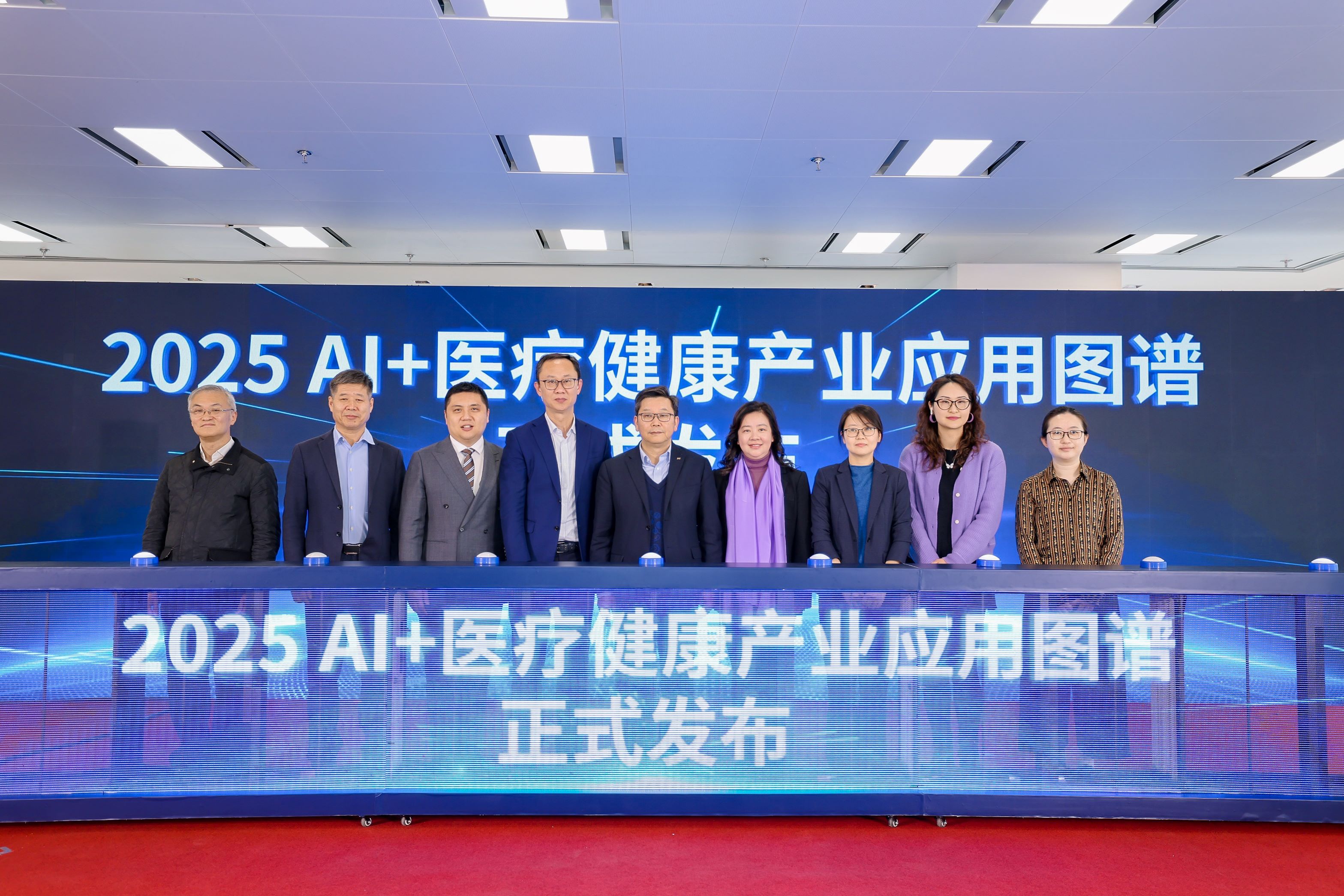
注入资本维度价值,汇正财经深度赋能《2025AI+健康(医疗)产业应用图谱》
Di Yi Cai Jing· 2025-12-11 11:12
Core Insights - The integration of AI and healthcare is transitioning from hype to tangible value creation, driven by supportive policies for industrial upgrades in China [1] - A new industry report titled "2025 AI+ Healthcare Industry Application Map" will be released to provide a comprehensive reference for industry development [1][2] Group 1: Industry Development - As of the first three quarters of 2025, 42 medical AI products have received NMPA Class III certification, representing a 68% increase from the end of 2024 [2] - The penetration rate of AI systems in top-tier hospitals has increased from 15% to 32%, indicating an imminent opening of the industry realization cycle [2] Group 2: Challenges and Solutions - There is a growing issue of information asymmetry in the industry, with companies confused about AI application pathways and investors struggling to discern real value amid potential technology bubbles [2] - The report aims to address core pain points by systematically analyzing the development status of three key areas: AI in drug development, AI in medical devices, and AI in medical services [2] Group 3: Capital Perspective - The involvement of Huizheng Finance adds a crucial capital dimension to the report, emphasizing a focus on "structural differentiation under value concentration" in the current market [3] - The report serves as a practical toolkit for various stakeholders, providing data support for government policy implementation, successful models for companies, and insights for investors to identify quality targets [3] Group 4: Future Outlook - The report will be dynamically updated to align with the evolution of AI technology and the healthcare industry ecosystem [3] - Huizheng Finance plans to deepen research on AI+ key industries and uncover growth benchmarks in AI application [3]
AI医疗行业研究报告:AI医疗前景广阔,政策助推应用落地
Guoyuan Securities· 2025-11-05 09:40
Investment Rating - The report recommends a "First Time Buy" rating for the AI healthcare industry [6] Core Insights - The AI healthcare industry is experiencing robust growth, with the market size in China expected to increase from 97.3 billion yuan in 2023 to 159.8 billion yuan by 2028, representing a compound annual growth rate (CAGR) of 10.5% from 2022 to 2028 [2][28] - The industry is supported by various government policies aimed at accelerating the implementation of AI technologies in healthcare settings [3][37] - Different application scenarios within AI healthcare exhibit varying levels of maturity, with medical imaging and drug development showing rapid growth [4][32] Summary by Sections 1. AI Technology Development in Healthcare - AI healthcare refers to the use of advanced technologies such as machine learning, natural language processing, and computer vision to analyze complex medical data, assisting clinical decision-making and optimizing treatment processes [12] - The core technologies in AI healthcare include medical imaging analysis, natural language processing, drug development, and intelligent health management [14][18] 2. Market Size and Growth - The AI healthcare market in China was valued at 97.3 billion yuan in 2023 and is projected to reach 159.8 billion yuan by 2028, with a CAGR of 10.5% [28] - The AI medical imaging market is expected to grow significantly, with a projected size of approximately 74.5 billion yuan in 2024, reflecting a year-on-year growth of 160.5% [32] - The AI drug development market is anticipated to grow from 410 million yuan in 2023 to 5.86 billion yuan by 2028, with a CAGR of 68.5% [33] 3. Policy Support - The Chinese government has introduced multiple policies to support the development of AI in healthcare, including guidelines for AI applications in medical institutions [3][37] - Key policies include the "Artificial Intelligence + Action Plan" and the "Guidelines for the Pricing of AI-Assisted Diagnostic Services" [37] 4. Application Scenarios - AI healthcare applications can be categorized into pre-treatment, during treatment, and post-treatment stages, covering health promotion, disease prevention, diagnosis, treatment, rehabilitation, and chronic disease management [15][19] - The maturity of AI applications varies significantly across different scenarios, with medical imaging analysis being one of the most mature areas [22][24] 5. Key Companies in the Industry - **Weining Health**: Focuses on providing integrated solutions for healthcare information systems and has developed a medical AI model, WiNGPT, enhancing its service capabilities [50][51] - **Chuangye Huikang**: Specializes in healthcare information technology and has developed a comprehensive solution system for clinical decision support and electronic medical records [54][55] - **Yidu Technology**: Offers an AI-driven platform, YiduCore, that supports various healthcare sectors, including public health and clinical research [60][61] - **Donghua Software**: Develops AI solutions for healthcare, focusing on intelligent decision support systems and electronic medical record generation [65][66]