AI生成代码

Search documents
2026年中国企业AI人才与组织发展报告
极客邦· 2026-02-05 09:25
Investment Rating - The report does not explicitly provide an investment rating for the industry Core Insights - The report highlights that AI is transitioning from experimental phases to becoming a foundational infrastructure for enterprises, with significant advancements expected by 2025 in various sectors including finance, manufacturing, and energy [4][5] - The focus is on the need for organizations to adapt their structures and talent development strategies to effectively integrate AI into their business processes, emphasizing the importance of creating quantifiable value from AI applications [4][5] Summary by Sections Section 1: Current State of AI Applications in Enterprises by 2025 - AI core talent constitutes less than 10% in nearly half of Chinese enterprises, indicating a reliance on application-oriented capabilities [20] - Internal training is the primary source for AI talent, with 75% of respondents indicating that internal development is preferred [23] - AI project implementation cycles are shortening, with nearly 50% of enterprises reporting that projects can be completed within one month, and some as quickly as one week [28] - Enterprises are entering a "scale validation period," with 75.3% of companies aware of their token consumption, indicating widespread application of large models [31][33] - The focus for 2026 will be on multi-agent collaboration and AI-assisted programming as key technological trends [34] Section 2: Intelligent Agents as Key Tools for AI Application - Technological breakthroughs and cost reductions are paving the way for the large-scale commercialization of intelligent agents [43] - The ecosystem is evolving, significantly lowering the barriers for the development and application of intelligent agents [45] - Policy support and market demand are mutually reinforcing the deep integration of intelligent agents into industry applications [47] Section 3: AI Technology Implementation Outcomes Below Expectations - The effectiveness of AI technology implementation is not meeting expectations, with only 39% of respondents reporting a significant impact on EBIT [59] - A lack of effective evaluation metrics for AI value is noted, with successful AI implementation often requiring business process redesign [59] Section 4: Demand for "Super Employees" in the AI Era - There is a growing demand for "super employees" who can manage end-to-end processes from demand discovery to product testing, leading to a reevaluation of traditional job roles [66] - The need for hybrid talent that combines business insight with AI technical skills is emphasized, with a shift towards roles that cover comprehensive workflows [67] Section 5: Talent Development Trends - The emergence of "super employees" who can navigate across traditional job boundaries is anticipated, driven by the integration of intelligent agents [72] - Management roles are expected to evolve, focusing on strategic oversight and resource allocation rather than traditional hierarchical functions [73] - New roles are likely to emerge that facilitate collaboration between humans and intelligent agents, enhancing operational efficiency [75]
AI兴起留下的烂摊子,带火了一波“修复经济”
3 6 Ke· 2025-09-03 08:58
Core Viewpoint - The rise of AI-generated content has led to an increase in "AI garbage," necessitating the hiring of human workers to review, correct, and clean up AI outputs, thereby creating new job opportunities in the process [1][12]. Group 1: AI Design Repair - AI-generated designs often require extensive reworking, sometimes more effortful than original creation, as seen in the case of a designer who had to fix poorly generated logos [2][5]. - Clients often expect designers to retain the "style" of AI outputs, which essentially means starting from scratch to achieve a coherent design [6]. Group 2: Textual Corrections - Freelance writers face challenges in correcting AI-generated texts that are filled with clichés and logical inconsistencies, requiring them to inject human warmth and detail into the content [7][8]. - An example includes a writer who had to rewrite a cold AI-generated tribute to a pet by incorporating personal anecdotes to convey genuine emotion [8]. Group 3: Code Fixing - Programmers are finding that AI-generated code often contains significant errors and vulnerabilities, necessitating thorough reviews and corrections to ensure functionality and security [9]. - A programmer recounted a situation where an AI-generated e-commerce site had critical flaws that could lead to financial losses for the client, highlighting the need for human oversight [9]. Group 4: Demand for AI Content Repair - The demand for "AI content repair" services is projected to grow significantly, with a 300% increase in related orders expected by mid-2025, indicating a burgeoning market for human intervention in AI outputs [10][12]. - Specific tasks such as web design and emotional storytelling are seeing the fastest growth, as AI struggles to capture the nuances of human experience [10]. Group 5: Human Value in AI Collaboration - Despite AI's capabilities, it cannot replace human understanding of meaning, warmth, and emotional depth, which are essential in various creative fields [12]. - The collaboration between humans and AI is framed as a new symbiosis, where AI serves as a tool while humans provide the necessary emotional and contextual insights [12].

微软CEO透露:公司近三成代码由AI生成,程序员未来何在?
Sou Hu Cai Jing· 2025-05-01 18:34
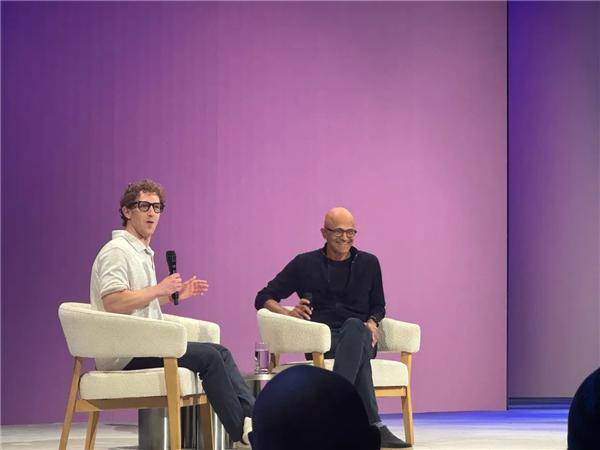
Group 1 - Microsoft CEO Satya Nadella revealed that 20% to 30% of the code in Microsoft's codebase is AI-assisted or generated, indicating the rapid rise and widespread application of AI in software development [1] - Different programming languages are adopting AI-generated code at varying speeds, with Python showing significant progress compared to traditional languages like C++ [1] - Microsoft CTO Kevin Scott predicts that by 2030, 95% of code will be generated by AI, painting a new picture for the future of the software development industry [1] Group 2 - Google CEO Sundar Pichai stated that over 30% of Google's code is generated by AI, aligning with Microsoft's findings and highlighting the extensive application and rapid development of AI in software development [2] - There is currently no unified definition or measurement standard for AI-generated code, which may lead to discrepancies and uncertainties in the data reported by Microsoft and Google [2] - Despite the potential inconsistencies, the data provided by these companies offers valuable insights into the application of AI in software development [2] Group 3 - The continuous advancement of AI technology and its expanding application areas suggest that the software development industry is poised for a more intelligent and efficient transformation [4] - Major tech giants like Microsoft, Meta, and Google are expected to play significant roles in this transformation [4]

码农“瑟瑟发抖”!微软CEO纳德拉:公司20%-30%代码由人工智能写的【附人工智能行业发展趋势分析】
Qian Zhan Wang· 2025-05-01 07:52
Group 1 - Microsoft CEO Satya Nadella revealed that 20% to 30% of the code in Microsoft's codebase is generated by artificial intelligence, with varying progress across programming languages [2] - The proportion of AI-generated code at Microsoft is continuously increasing, and CTO Kevin Scott predicts that by 2030, 95% of code will be AI-generated [2] - The artificial intelligence industry is recognized as one of the most transformative and strategically significant fields today, driving rapid technological advancements and profoundly impacting various aspects of the economy and society [2] Group 2 - According to preliminary estimates, the market size of China's artificial intelligence industry is expected to expand significantly between 2025 and 2030, aiming to reach a scale of 1 trillion yuan by 2030 as outlined in the New Generation Artificial Intelligence Development Plan [4] - China possesses unique advantages in the field of artificial intelligence, including a rich talent pool, vast data resources for training AI models, and a well-established industrial ecosystem that supports the application and promotion of AI technology [6] - With increasing policy support, continuous technological breakthroughs, and a growing variety of application scenarios, China's artificial intelligence industry is poised to occupy a more significant position in global competition [6]