AI生成器

Search documents
被AI支配与反抗的一年
3 6 Ke· 2026-01-05 11:13
Group 1: Core Insights - The year 2025 is marked as a pivotal moment for AI, bringing both technological advancements and collective anxieties, reshaping society and accelerating a transition to a new civilization [1] - AI has led to significant changes in content creation, making it accessible to a broader audience while simultaneously raising concerns about privacy and trust [3][4][6] Group 2: Privacy Conflicts - The conflict between privacy and convenience is intensifying as AI technologies can analyze personal interests and even delve into subconscious aspects, leading to a trust crisis between users and AI models [3] - Users are increasingly aware of the risks associated with AI-generated content, including the tightening regulations around such content and the challenges of identifying AI-generated works [4][5][6] Group 3: Intellectual Property Conflicts - The AI industry is facing a copyright storm, with major companies like OpenAI and Google being sued for allegedly using creators' styles without compensation, raising questions about the protection of personal IP [22] - The debate over whether AI can learn from existing styles without infringing on copyrights is becoming more contentious, as creators express concerns over their work being used to train AI models without consent [22][23] Group 4: Employment Conflicts - The rise of AI in customer service has led to job losses for traditional customer service roles, with many workers struggling to adapt to new job requirements that involve AI [17][30] - Job seekers are facing challenges in AI-driven interview processes, where the reliance on algorithms creates a disconnect between human abilities and machine evaluations [30][32] Group 5: Trust Issues - There is a growing distrust between AI companies and users, with concerns about data misuse and the potential for personal information to be exploited [12][14] - The need for a new AI service model that ensures user data privacy and builds trust between AI providers and users is becoming increasingly urgent [14][15]


台积电市值已蒸发770亿美元 芯片行业复苏或需更长时间
Xin Lang Ke Ji· 2025-11-26 09:14
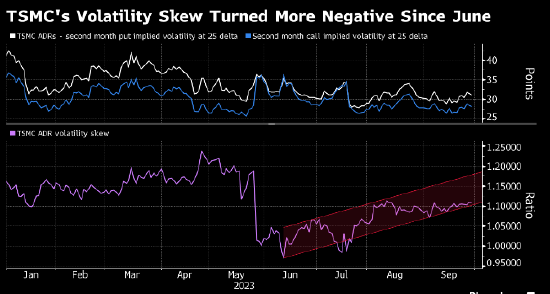
Core Viewpoint - TSMC has experienced a significant decline in market value, losing $77 billion since mid-June, primarily due to concerns over macroeconomic conditions and weak global consumer electronics demand [1][3]. Group 1: Market Performance - TSMC's stock price has dropped 11% from its June peak, leading to the largest market value loss in Asia [1]. - The company's 12-month earnings forecast has been revised down by approximately 8% from last October's high [4]. Group 2: Industry Concerns - There is growing skepticism among traders regarding the profitability contributions from the AI boom, especially as smartphone and personal computer markets remain sluggish [3]. - High-end AI chip orders are declining faster than expected, with major clients like Nvidia and AMD potentially delaying chip orders until 2025 [4]. Group 3: Capital Expenditure Outlook - Analysts have become cautious about TSMC's capital expenditures, with estimates now averaging around $30 billion, down from the previously indicated range of $32-36 billion [3]. - Goldman Sachs has reduced its forecast for TSMC's capital expenditures for next year by over 20% to $25 billion, marking the lowest level since the pandemic began [3]. Group 4: Competitive Position - Despite challenges, TSMC maintains a strong market share of 59% in chip manufacturing, significantly ahead of its closest competitor, Samsung, which holds 11% [6]. - Analysts continue to hold a positive outlook on TSMC, with no sell ratings and a 12-month average target price 24% above the recent closing price [6]. Group 5: Future Expectations - Investors are expected to remain cautious until there is a broader economic recovery, with inventory adjustments from TSMC's clients anticipated to extend into the first or even second quarter of next year [6].