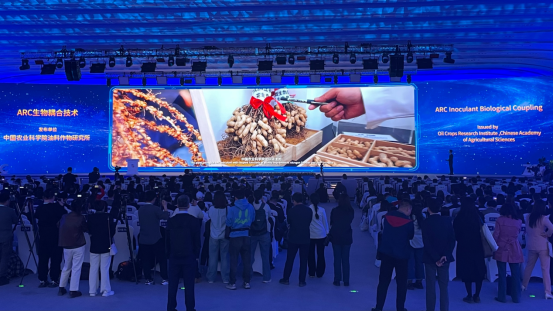
ARC生物耦合技术

Search documents
20余年攻关让大豆、花生安全高产——科技与产业共生共赢的生动样本
Jing Ji Ri Bao· 2026-02-14 10:05
Core Viewpoint - The ARC biological coupling technology, developed by a team led by Li Peiwu, has won the highest award at the 14th China Innovation and Entrepreneurship Competition, indicating its potential to enhance soybean and peanut production while addressing food safety concerns [1][5]. Group 1: Technology Breakthrough - The ARC technology addresses two major challenges in the soybean and peanut industry: controlling aflatoxin contamination and improving nitrogen fixation efficiency [2][3]. - The technology achieves "two fixes, three increases, and five reductions," which includes nitrogen fixation, carbon fixation, increased yield, efficiency, and safety, while reducing bacteria, losses, fertilizer use, costs, and carbon emissions [3][4]. Group 2: Research and Development Journey - The research team began their work in 1999, focusing on the pain points of the soybean and peanut industry, and successfully developed a core technology for efficient aflatoxin detection in 2012 [4]. - The team discovered a "seesaw effect" between root nodule bacteria and aflatoxin-producing fungi, leading to the innovative coupling of these two research areas [4]. Group 3: Policy Support and Implementation - Since 2021, the Chinese government has emphasized increasing soybean production capacity and has shown growing interest in peanuts, with specific policies set for 2025 and 2026 to expand peanut cultivation [6]. - The ARC technology has been demonstrated in 22 provinces, showing strong resistance and quality improvement characteristics, with reported yield increases of over 15% for soybeans and 19% for peanuts [6][7]. Group 4: Future Prospects - The Chinese Academy of Agricultural Sciences plans to launch a major research task in 2024 to further develop the ARC technology, aiming to expand its demonstration area to 3 million acres by 2025 and potentially to 30 million to 50 million acres in the next 3 to 5 years [7]. - The focus on technological innovation is seen as a key driver for increasing the yield of oilseed crops, contributing to national food security and the implementation of carbon neutrality strategies [7].
20余年攻关让大豆、花生安全高产
Jing Ji Ri Bao· 2026-02-14 01:19
Core Viewpoint - The ARC biological coupling technology, developed by a team led by Li Peiwu, addresses two major challenges in the soybean and peanut industries: aflatoxin contamination and low nitrogen-fixing efficiency, thereby enhancing both yield and quality of these crops [1][3][4]. Group 1: Technology Breakthrough - The ARC technology simultaneously controls aflatoxin contamination and promotes nitrogen-fixing by inducing root nodule formation in legumes, achieving a dual benefit of increased production and safety [3][4]. - The technology allows for a reduction in chemical fertilizer use by 20% to 40%, while increasing soybean and peanut yields by over 15% and 19% respectively, and achieving a 63% effectiveness in controlling aflatoxin-producing fungi [6][7]. Group 2: Industry Significance - Soybeans and peanuts are crucial for China's edible oil market, accounting for approximately 56% of the market share, and enhancing their production capacity is vital for food security [1][2]. - The technology has been recognized and promoted at a national level, with significant policy support aimed at increasing soybean and peanut production, including specific mentions in central government documents [6][7]. Group 3: Implementation and Impact - The ARC technology has been demonstrated across 22 provinces in China, with large-scale trials showing resilience against adverse weather conditions and significant economic benefits for farmers [6][7]. - The ongoing research and development efforts aim to expand the application of this technology to 3 to 5 million acres in the next 3 to 5 years, further solidifying its role in enhancing agricultural productivity [7].
20余年攻关让大豆、花生安全高产—— 科技与产业共生共赢的生动样本
Jing Ji Ri Bao· 2026-02-13 23:49
Core Viewpoint - The ARC biological coupling technology, developed by a team led by Li Peiwu, has won the highest award at the 14th China Innovation and Entrepreneurship Competition, indicating its potential to enhance soybean and peanut production while addressing food safety concerns [1][3]. Group 1: Technology Breakthrough - The ARC technology addresses two major challenges in the soybean and peanut industry: controlling aflatoxin contamination and improving nitrogen fixation efficiency [2][3]. - The technology achieves "two fixes, three increases, and five reductions," which includes nitrogen fixation, carbon fixation, increased yield, efficiency, and safety, while reducing bacteria, losses, fertilizer use, costs, and carbon emissions [3][4]. Group 2: Research and Development Process - The research team began their work in 1999, focusing on the pain points of the soybean and peanut industry, and successfully developed a core technology for efficient aflatoxin detection by 2012 [3][4]. - They discovered a "seesaw effect" between root nodule bacteria and aflatoxin levels, leading to the innovative coupling of these two research areas [4][5]. Group 3: Policy Support and Implementation - Since 2021, the Chinese government has emphasized increasing soybean production capacity and has begun to pay more attention to peanuts, with specific plans for expansion in future policy documents [6]. - The ARC technology has been demonstrated in 22 provinces, showing strong resistance and quality improvement characteristics, with significant yield increases reported [6][7]. Group 4: Future Prospects - The Chinese Academy of Agricultural Sciences plans to launch a major research task in 2024 to further develop the ARC technology, aiming for a demonstration area exceeding 3 million mu by 2025, with potential expansion to 30 million to 50 million mu in the next 3 to 5 years [7]. - The focus on technological innovation is seen as a key driver for increasing oilseed crop yields and ensuring food security in China [7].
科技与产业共生共赢的生动样本
Xin Lang Cai Jing· 2026-02-13 22:46
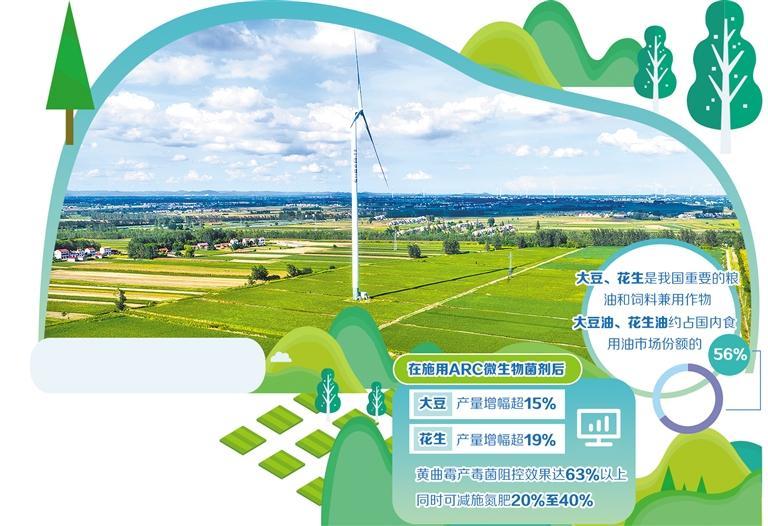
Core Viewpoint - The ARC biological coupling technology, developed by a team led by Li Peiwu, addresses two major challenges in the soybean and peanut industries: aflatoxin contamination and low nitrogen-fixing efficiency, thereby enhancing both yield and quality of these crops [2][4][5]. Group 1: Technology Breakthrough - The ARC technology combines aflatoxin control and nitrogen fixation induction, achieving simultaneous improvements in crop yield and safety [4][5]. - The technology allows for a reduction in chemical fertilizer use by 20% to 40%, while increasing soybean and peanut yields by over 15% and 19% respectively, and achieving a 63% effectiveness in controlling aflatoxin-producing fungi [7][8]. Group 2: Industry Significance - Soybeans and peanuts are crucial for China's edible oil market, accounting for approximately 56% of the market share, highlighting the importance of enhancing domestic production to ensure food security [2][3]. - The technology has been implemented in 22 provinces, demonstrating strong resistance and yield enhancement characteristics, with reports of increased income of about 300 yuan per mu in affected areas [7][8]. Group 3: Policy Support - Since 2021, the Chinese government has emphasized the importance of increasing soybean and peanut production through various policy initiatives, with specific mentions in the Central No. 1 Document for 2025 and 2026 [7]. - The ongoing support for the ARC technology aligns with national goals for agricultural innovation and food safety, aiming for a demonstration area expansion to 3 million to 5 million mu in the next 3 to 5 years [8].

我国粮油作物单产提升效果显著 “吨半粮”装满农户“粮袋子”
Yang Shi Wang· 2025-10-13 02:13
Core Insights - The article highlights the significant improvements in crop yields across various regions in China due to the implementation of advanced agricultural techniques and technologies [1][3][5][7]. Group 1: Crop Yield Improvements - A total of 702 counties in China have implemented large-scale actions to enhance the single yield of grain and oil crops, leading to notable improvements in crop production nationwide [1]. - In Xinjiang's Ili region, a team of 64 corn experts conducted yield measurements on 200,000 acres of corn fields, achieving an average yield of 1,209.1 kg per mu, with some areas exceeding 1,500 kg per mu [3]. - In Guangde City, Anhui Province, the introduction of precision sowing techniques in collaboration with the China Rice Research Institute has resulted in rice yields reaching 700 kg per mu during the harvest season [5]. Group 2: Technological Innovations - The Beidahuang Group's Sifangshan Farm has successfully cultivated soybeans on 1,260 acres of saline-alkali land using ARC biological coupling technology, resulting in a yield increase of 47.7% compared to the national average for soybeans [7]. - The ARC biological coupling technology, developed independently in China, significantly enhances soybean and peanut yields while allowing for a reduction of 3-5 kg of urea fertilizer per mu [9].

良种良技赋能大豆油料产能提升
Ke Ji Ri Bao· 2025-09-23 08:52
Core Insights - The Chinese Academy of Agricultural Sciences (CAAS) has showcased significant advancements in soybean and peanut production through the implementation of ARC biological coupling technology and new crop varieties, resulting in substantial yield increases despite adverse weather conditions [1][2][3] Group 1: Technology and Innovation - The ARC biological coupling technology, developed by a team led by Academician Li Peiwu, has been demonstrated to enhance nitrogen fixation, root development, and overall plant growth while reducing harmful biological abundance [3] - The new soybean variety, Zhongdou 63, is characterized by high yield, quality, and adaptability to various climatic conditions, making it suitable for multiple regions in China [3] - The new peanut variety, Zhonghua 16, exhibits high yield and oil content, along with resistance to drought and diseases, and has been recognized as a leading variety in national agricultural standards [3] Group 2: Yield and Economic Impact - In demonstration plots, the application of ARC technology with Zhongdou 63 resulted in a yield of 308.1 kg per mu, representing a 17.56% increase over traditional methods and a 36.9% increase compared to local conventional soybean varieties [2] - For peanuts, the integration of ARC technology with Zhonghua 16 achieved a yield of 447.04 kg per mu, marking an 18.9% increase over non-ARC plots and a 51.23% increase compared to local conventional varieties [2] - The average income increase for farmers using these integrated technologies is approximately 400 yuan per mu for soybeans and 700 yuan per mu for peanuts, enhancing farmers' motivation and promoting industry quality and efficiency [2]
新品种新技术助力大豆大面积单产提升
Xin Jing Bao· 2025-07-03 15:20
Group 1 - The core viewpoint of the news is the introduction of a new green production technology for soybeans, which has shown an average yield increase of 15% across various demonstration sites in China [1][3]. - The Chinese Academy of Agricultural Sciences has emphasized the importance of increasing soybean production as a national strategic need, with the central government prioritizing this in its policy documents [2]. - New soybean varieties developed by the oilseed research institute have demonstrated significant yield potential, with "Zhongdou 57" achieving an average yield of 276.1 kg per mu and "Zhongdou 63" reaching 344.3 kg per mu in southern regions [2]. Group 2 - The ARC biological coupling technology, developed by the research team, addresses two major challenges in soybean production: quality improvement and nitrogen fixation, contributing to the overall yield increase [3]. - The new soybean varieties, such as "Zhongdou 62" and "Zhongdou 81," have high protein content, making them advantageous for soybean product processing [2]. - The oil content of varieties "You 6019" and "Zhongdou 79" has been reported at 22.55% and 23.54%, respectively, with a yield increase of over 10% compared to control varieties, showcasing their high yield and disease resistance [2].
新科技!可降低黄曲霉毒素含量
Zhong Guo Jing Ji Wang· 2025-06-18 11:28
Core Viewpoint - The collaboration between New Yangfeng and the research team led by Academician Li Peiwu has resulted in the development and commercialization of the "ARC Biological Coupling Technology," aimed at controlling aflatoxin contamination in crops, thereby enhancing food safety and agricultural productivity [1][3][10]. Group 1: Technology Development - The "ARC Biological Coupling Technology" has been in development for over 20 years and focuses on controlling the abundance of aflatoxin-producing fungi in the soil by regulating microbial communities without adding external bacteria [5][6]. - The technology has been recognized as one of the top ten major agricultural technologies by the Ministry of Agriculture and Rural Affairs in 2024, highlighting its significance in promoting food safety and green agriculture [5][10]. Group 2: Product Launch and Efficacy - New Yangfeng has successfully launched specialized fertilizers containing ARC bacteria, which have shown significant results in field trials, including a 40% increase in root nodule numbers for peanuts and a 12% yield increase for soybeans [8][10]. - The application of ARC compound fertilizers has led to an 80% reduction in aflatoxin contamination levels in peanuts and soybeans, demonstrating the technology's effectiveness in improving crop quality and safety [8][10]. Group 3: Strategic Collaboration and Innovation - New Yangfeng has established a comprehensive innovation model that integrates research, development, and commercialization, collaborating with various academic institutions to enhance technology transfer and practical application [10][11]. - The partnership with Academician Li Peiwu's team exemplifies the integration of government, industry, academia, and research, aiming to advance green and safe agricultural production in China [10][11].