Animate Anyone

Search documents
字节不需要物理学家
3 6 Ke· 2026-02-10 05:13
Core Insights - The article discusses the advancements in AI video generation technology, particularly focusing on ByteDance's Seedance 2.0, which is seen as a significant leap in the video industry, comparable to the impact of GPT-3.5 in text generation [1][8]. Group 1: AI Technology and Capabilities - Seedance 2.0 demonstrates remarkable capabilities in generating videos from simple prompts and images, showcasing a high level of understanding of user intent and context [2][8]. - The AI can create videos that closely mimic real individuals, including their voice and mannerisms, raising concerns about the authenticity and trustworthiness of generated content [6][8]. - The technology allows for seamless video production without the need for extensive human involvement, effectively reducing the traditional production workflow [26][28]. Group 2: Market Positioning and Competition - The article identifies a divergence in the approaches of leading AI video models, with OpenAI focusing on physical realism and ByteDance emphasizing narrative and emotional engagement [9][10]. - Other competitors like Kuaishou, Alibaba, Tencent, and Baidu are also mentioned, each with distinct strategies aligned with their core business models, such as Kuaishou's focus on realism and Alibaba's emphasis on e-commerce applications [16][18][20][22]. - The competition is framed as a battle of commercial genes, where each company's foundational philosophy shapes its AI offerings and market strategies [15][22]. Group 3: Industry Impact and Future Outlook - The emergence of AI video generation tools like Seedance 2.0 is expected to disrupt traditional content creation workflows, potentially leading to a significant reduction in the need for large production teams [24][28]. - The article suggests that the future workforce in the video production industry may consist of highly creative individuals or "super individuals" who can leverage AI tools effectively, while traditional roles may become obsolete [29]. - Ethical concerns are raised regarding the use of personal data for AI training, the implications for trust in media, and the potential for copyright issues in generated content [31][32].
“百度不做”,仅仅一年,李彦宏反悔了
Sou Hu Cai Jing· 2025-10-20 08:59
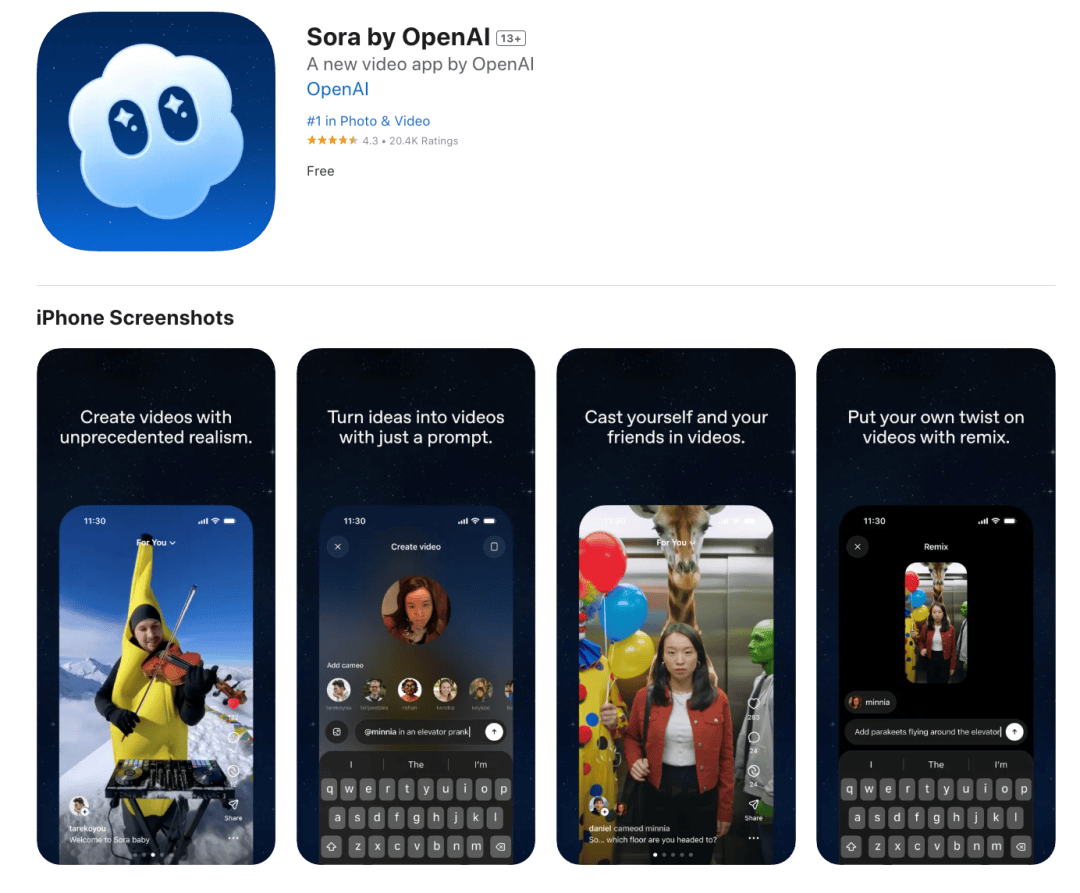
Core Viewpoint - The rapid evolution of AI video applications, particularly following the release of OpenAI's Sora 2, has prompted major Chinese tech companies, including Baidu, to pivot towards developing their own AI video models despite initial hesitations [1][4][24] Group 1: Industry Dynamics - The launch of Sora 2 has ignited competition among major players in the AI video space, with companies like Baidu and Google quickly promoting their own models [2][3] - Prior to Sora's release, Chinese tech giants were focused on catching up with GPT-4 rather than developing their own video generation models, reflecting a broader industry anxiety about capabilities [10][12] - The competitive landscape has shifted significantly, with over 20 video AI models now available in the Chinese market, indicating a rapid increase in development and deployment [12] Group 2: Technological Advancements - Sora distinguishes itself by achieving a level of realism in video generation that adheres to physical rules, setting a new standard for detail and authenticity in AI-generated content [5][9] - The evolution of video AI models is characterized by improvements in video quality and user editing capabilities, enhancing the overall user experience [15][16] - The integration of real-time audio generation in AI video tools addresses previous limitations, allowing for more dynamic and engaging content creation [16] Group 3: Market Opportunities - The potential for monetization in AI video applications is becoming clearer, with Sora 2 showcasing capabilities that could attract a large user base and create new revenue streams [18][22] - The user-friendly design of Sora 2 encourages widespread adoption, with features that allow for easy video creation and personalization, positioning it as a competitive platform in the market [22][24] - The success of platforms like TikTok suggests that the AI video market may consolidate around a few dominant players, intensifying competition as companies strive to establish themselves as leaders [24]