Apple II

Search documents
Apple’s 50 Years of Integration
Stratechery By Ben Thompson· 2026-03-31 10:00
Listen to this post:Log in to listenThere is a weird phenomenon as a sports fan where the athletes on the field or court are older than you…and then they’re your age…and then they’re all younger than you; for me the last athlete I could look up to, at least in terms of age, was Tom Brady.Tech companies are similar, in a way. I like to write about tech history, and the importance of origin stories for understanding company cultures, and I’m fortunate enough to have witnessed most of those origins. However, t ...


X @Forbes
Forbes· 2026-03-21 21:00
In the 1970s Steve Jobs ushered in the mass-market, consumer personal computer with the Apple II. Thirty years later he invented the smartphone. He's made the top five historic innovators on the #Forbes250 list.Get the full list: https://t.co/YMzxi4ftVmIllustration: Ricardo Santos for Forbes; Photo: Justin Sullivan via Getty Images ...
X @Forbes
Forbes· 2026-03-08 08:00
In the 1970s Steve Jobs ushered in the mass-market, consumer personal computer with the Apple II. Thirty years later he invented the smartphone. He's made the top five historic innovators on the #Forbes250 list.Get the full list: https://t.co/YMzxi4ftVmIllustration: Ricardo Santos for Forbes; Photo: Justin Sullivan via Getty Images ...
苹果库克纪念乔布斯71周年诞辰:一位卓越的领导者、创新者与挚友
Sou Hu Cai Jing· 2026-02-24 22:52
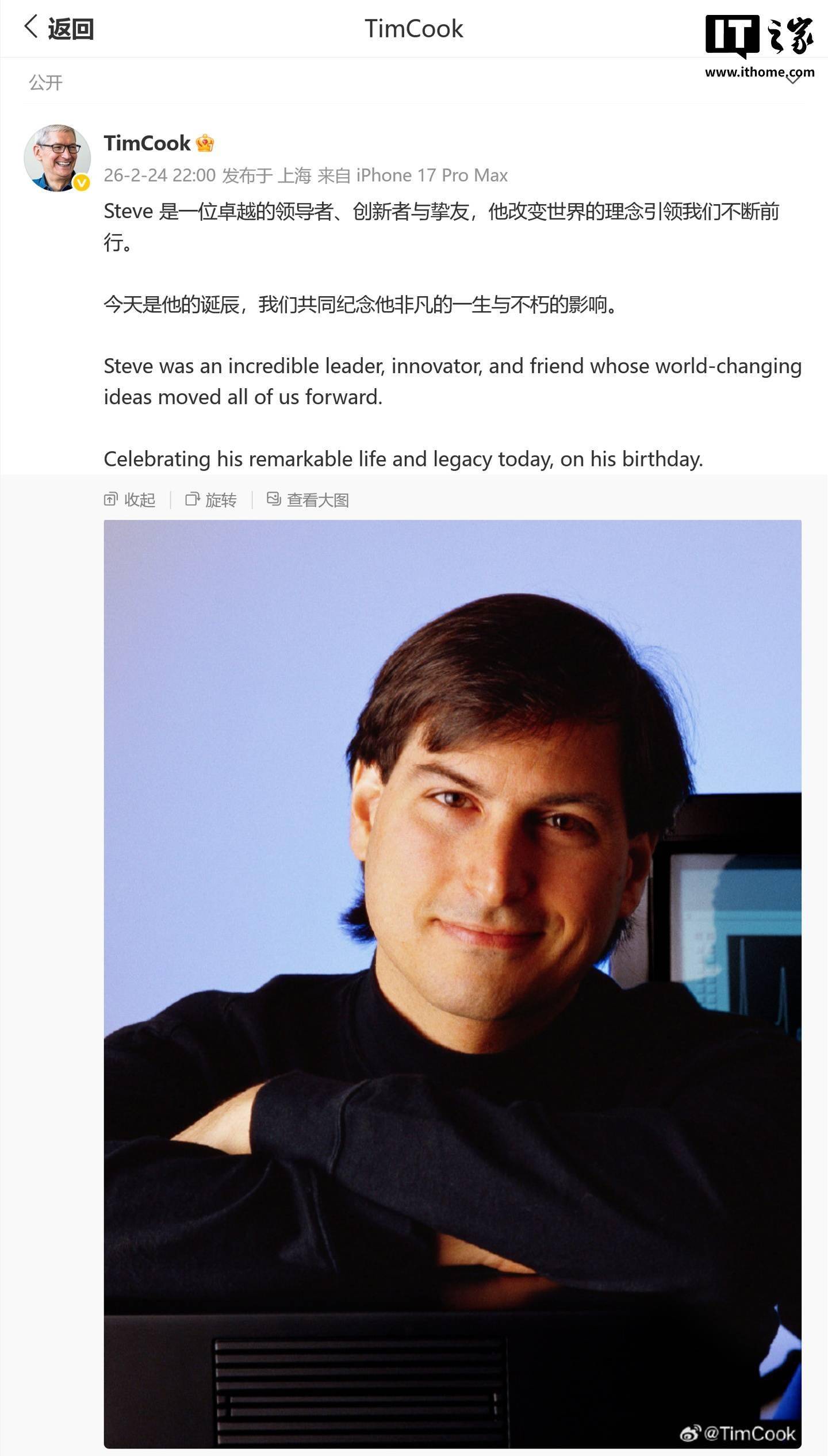
Core Viewpoint - Apple CEO Tim Cook commemorated the 71st birthday of co-founder Steve Jobs, highlighting his extraordinary leadership and innovative spirit that continue to inspire the company [1][6][7]. Group 1: Steve Jobs' Legacy - Steve Jobs is recognized as an incredible leader, innovator, and friend whose ideas have significantly influenced the world [7]. - He is celebrated for his minimalist design philosophy and focus on user experience, which led to the development of revolutionary products such as the Macintosh, iPod, iPhone, and iPad [8]. - Jobs co-founded Apple in 1976 with Steve Wozniak, launching the Apple I and Apple II, which set the course for personal computing [8]. Group 2: Career Highlights - After leaving Apple in 1985 due to internal conflicts, Jobs founded NeXT and Pixar Animation Studios [8]. - He returned to Apple in 1997 when the company was in crisis, revitalizing it with products like the iMac, iPod, and the iTunes Store [8]. - The launch of the iPhone in 2007 marked the beginning of the modern smartphone and mobile internet era [8].
Quote of the day by Steve Jobs: 'Let's go invent tomorrow rather than worrying about what happened yesterday'
The Economic Times· 2026-02-22 20:59
Core Insights - The essence of progress lies in action rather than regret, emphasizing the importance of focusing on future opportunities instead of past mistakes [1][10] - Companies can become complacent after a product's success, but challenging old ideas is crucial for innovation, as demonstrated by Jobs' leadership at Apple [2][10] Company History - Steve Jobs co-founded Apple in 1976 with Steve Wozniak, starting from a garage and achieving commercial success with the Apple II, leading to the company's public offering in 1980 [3][4] - Internal conflicts led to Jobs' departure from Apple in 1985, driven by his intense management style, which created tension within the leadership [5][10] - After leaving, Jobs founded NeXT and acquired Pixar, with Pixar achieving global success through films like Toy Story, while NeXT's technology later became significant for Apple [6][10] Product Development - Jobs' return to Apple in 1997 marked a pivotal moment, as he streamlined product lines and focused on branding, which revitalized the struggling company [6][10] - Under Jobs' leadership, Apple launched groundbreaking products such as the iMac, iPod, iTunes, and the iPhone in 2007, which transformed mobile device usage and set new industry standards [7][10] - The introduction of the iPad further expanded Apple's market reach, showcasing the effectiveness of Jobs' forward-thinking approach [8][10] Legacy - Steve Jobs passed away on October 5, 2011, but his philosophy of innovation and focus on future possibilities continues to influence the tech industry [9][10]

X @Forbes
Forbes· 2026-02-17 06:00
In the 1970s Steve Jobs ushered in the mass-market, consumer personal computer with the Apple II. Thirty years later he invented the smartphone. He's made the top five historic innovators on the #Forbes250 list.Get the full list: https://t.co/YMzxi4ftVmIllustration: Ricardo Santos for Forbes; Photo: Justin Sullivan via Getty Images ...
X @Forbes
Forbes· 2026-02-13 20:45
In the 1970s Steve Jobs ushered in the mass-market, consumer personal computer with the Apple II. Thirty years later he invented the smartphone. He's made the top five historic innovators on the #Forbes250 list.Get the full list: https://t.co/YMzxi4ftVmIllustration: Ricardo Santos for Forbes; Photo: Justin Sullivan via Getty Images ...
曾被乔布斯逼到崩溃,苹果8号工程师反手做了个工具“让老板自己设计”,竟在10分钟内定下Mac计算器原型,一用就是近20年
程序员的那些事· 2025-11-14 04:43
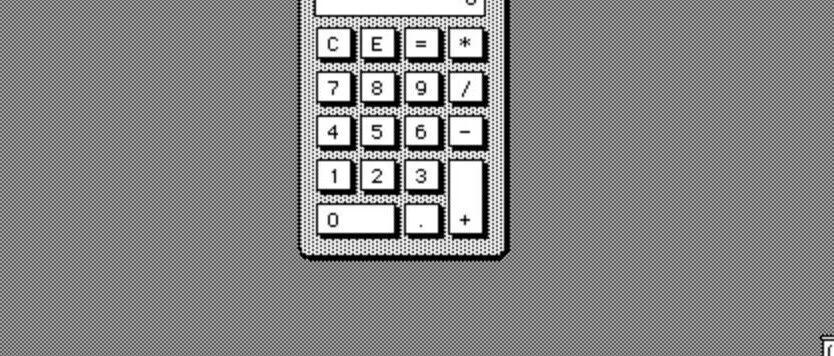
Core Insights - The article narrates a story about Chris Espinosa, one of Apple's earliest employees, who faced challenges in designing a calculator program for the Macintosh due to Steve Jobs' high standards and constant feedback [1][6][9] - Espinosa's innovative solution involved creating a "Steve Jobs Self-Made Calculator Kit," allowing Jobs to directly manipulate the design parameters, which ultimately led to a successful calculator interface for the Macintosh [11][12][22] Group 1: Background of Chris Espinosa - Chris Espinosa joined Apple at the age of 14, making him one of the youngest employees [2] - He initially left Apple to attend the University of California, Berkeley, but was persuaded by Jobs to return and join the Macintosh team [3][4] Group 2: Design Challenges and Solutions - Espinosa faced repeated criticism from Jobs regarding the design of the calculator, leading to a frustrating iterative process [9][10][21] - The breakthrough came when Espinosa created a toolkit that allowed Jobs to customize the design himself, which proved to be an effective communication method [11][12][22] Group 3: Impact and Legacy - The calculator design, finalized based on Jobs' preferences, was included in the first Macintosh released in 1984 and remained in use for nearly 20 years [16][22] - This incident highlighted a unique aspect of Jobs' management style, where he preferred hands-on interaction over verbal communication, influencing future software design practices at Apple [17][21][23]
The Pace of Innovation From Railroads to AI
Medium· 2025-10-04 16:57
Core Insights - The article discusses the timeline from the first demonstration of various technologies to their widespread usage, highlighting that newer inventions tend to achieve acceptance more quickly than older ones [2][3] Group 1: Railroads - The first railroads in England appeared around 1600, with the Merthyr Tramroad opening in 1802 and the Stockton & Darlington Railway in 1825, marking significant milestones in the adoption of steam locomotives [7][8] - The Liverpool and Manchester Railway, opened in 1830, is considered the start of widespread acceptance of railroads, taking 36 years from demonstration to widespread use [9] Group 2: Automobiles - The first gasoline automobile, the Benz Patent Motor Car, was invented in 1885 and went into production in 1886, leading to the introduction of assembly line production by Ford in 1913, which drastically reduced production time [11][12][13] Group 3: Airline Travel - It took 12 years from the Wright brothers' first flight in 1903 to the first scheduled airline service in 1913, with significant advancements occurring in the following decades [14][15][16] Group 4: Radio - The first radio broadcast occurred in 1895, but it took 13 years for commercial radio stations to emerge, with widespread usage also occurring in the same year [19][21][22] Group 5: Telephone - Alexander Graham Bell made the first telephone call in 1876, with commercial use starting in 1878 and widespread adoption achieved by 1880, just four years later [24] Group 6: Television - Electronic television was invented in 1927, with the first regular broadcasts starting in Germany in 1935 and widespread adoption in the US delayed until after WWII [25][28][29] Group 7: Color Television - Color television had a long development period, with CBS starting broadcasts in 1951, but widespread acceptance did not occur until 1961 [30][36] Group 8: Personal Computers - The first personal computer using a microprocessor was the Micral in 1973, with widespread adoption occurring just two years later in 1975 [37][42] Group 9: The Internet - The Internet's precursor, ARPANET, began in 1966, with commercial use starting in 1989 and widespread acceptance achieved by 1990 [44][45] Group 10: World Wide Web - The World Wide Web was developed in 1991, with commercial use and widespread adoption occurring within two years [46][47] Group 11: Artificial Intelligence - The field of artificial intelligence began with the Dartmouth Summer Research Project in 1956, with the first commercial product appearing in 1980 and widespread usage not occurring until 2010 [48][50][51]

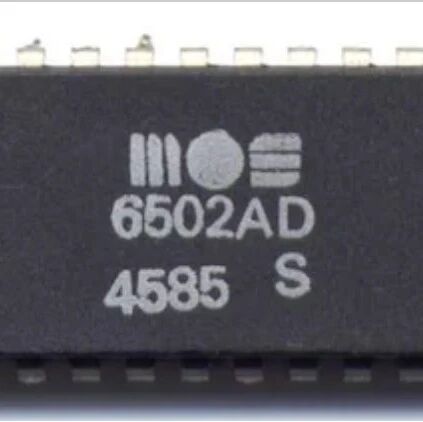
一个25美元的芯片,如何引发计算革命?
半导体行业观察· 2025-08-31 04:36
Core Insights - The introduction of the $25 MOS Technology 6502 processor in 1975 revolutionized the computing industry by making microprocessors affordable for hobbyists and startups, contrasting with the $175-200 price range of competitors like Intel's 8080 and Motorola's 6800 [1][3][6] Group 1: Historical Context - In the 1970s, microprocessors were expensive, limiting access to companies and laboratories, which prompted Chuck Peddle and his team to create a simpler, cheaper CPU [3][8] - The 6502 was first showcased at the WESCON exhibition in 1975, where it gained immediate attention, leading to a significant price reduction from competitors [6][11] Group 2: Design and Features - The 6502 utilized approximately 4,500 transistors, which was 25-40% fewer than its competitors, resulting in a smaller chip size and lower production costs [8][10] - It featured a minimalist architecture with essential components, including an 8-bit accumulator, two index registers, a stack pointer, and a 16-bit program counter, which contributed to its efficiency [8][10] - The instruction set was streamlined, retaining only 56 out of 72 instructions from the Motorola 6800, which improved execution speed despite requiring programmers to use simpler instructions for complex tasks [10][11] Group 3: Impact on the Industry - The 6502 became the preferred processor for early personal computers, being used in products like the Apple I, Apple II, Commodore PET, and Atari 2600, thus democratizing computing [10][11][13] - Its design philosophy foreshadowed the RISC movement, emphasizing simplicity and efficiency, which influenced the development of modern CPU architectures, including ARM [13][14] Group 4: Legacy - The 6502's design principles continue to resonate today, with Western Design Center still producing derivatives of the chip, highlighting its enduring relevance in retro computing and embedded systems [14]