Macintosh

Search documents
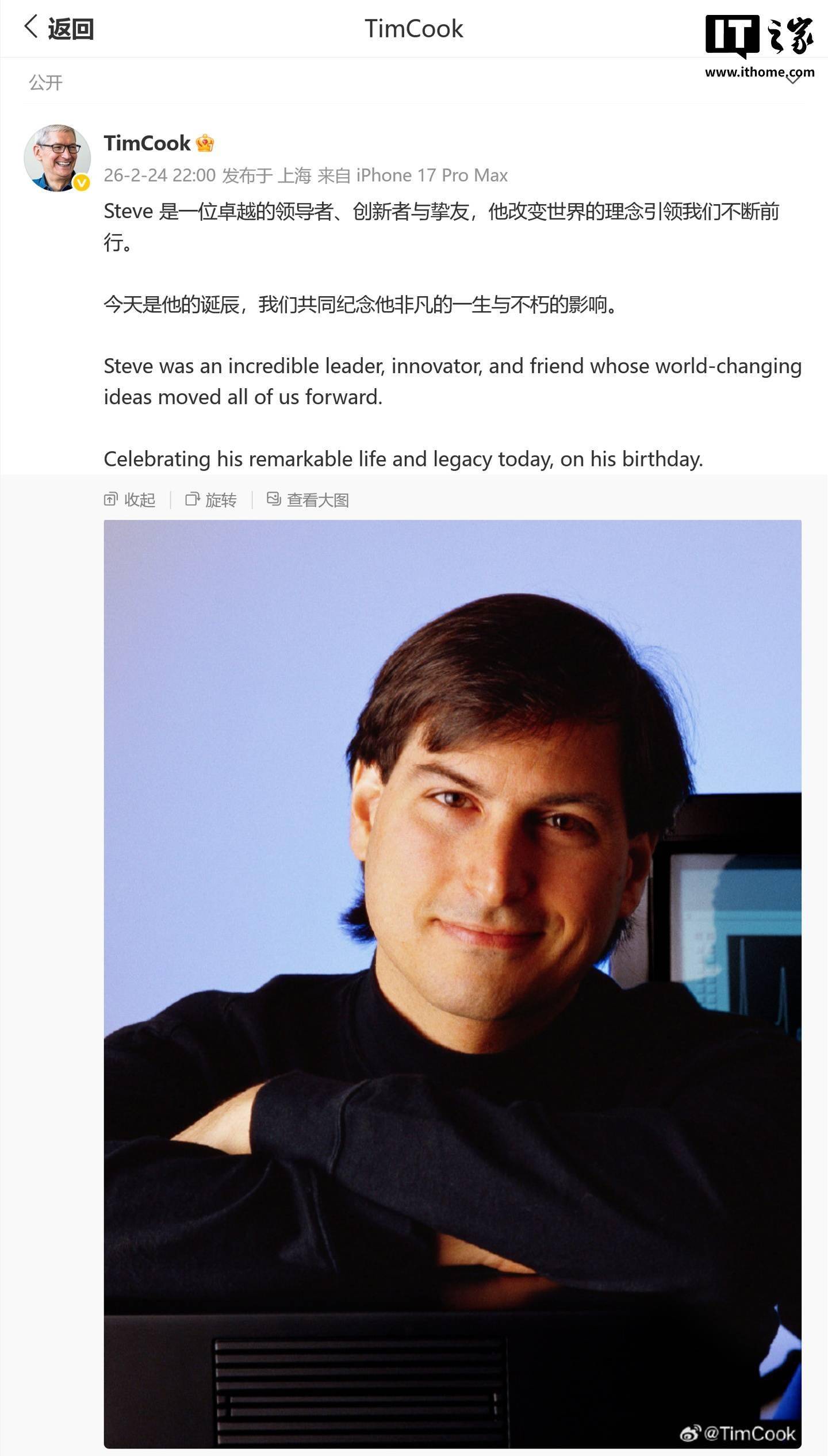
50 Years of Apple in 5 Minutes
CNET· 2026-04-01 11:00
We got another really cool piece of hardware. We're really excited about this. It's one of the most amazing things we've ever created. One of the most beautiful things we've ever made.This is really hot. An all new design. Let me show it to you now.This is it right here. This is what it looks like. This is the result.Let me show it to you now. There it is. Introducing Macintosh.I'd like to let Macintosh speak for itself. Hello, I am Macintosh. These are not three separate devices.This is one device and we a ...


Quote of the day by former CEO of Apple Steve Jobs: ‘Don’t let the noise of others’ opinions…’
The Economic Times· 2026-04-01 05:24
Company Overview - Steve Jobs was a co-founder of Apple Inc., born in 1955, and played a pivotal role in the personal computer revolution with the introduction of the Macintosh in 1984, which popularized graphical user interfaces [5] - After being ousted from Apple in 1985, Jobs founded NeXT and acquired Pixar, which became a significant player in animated filmmaking [5] - Jobs returned to Apple in 1997 and transformed the company into one of the world's most valuable technology firms, launching groundbreaking products such as the iPod, iPhone, and iPad, which reshaped industries from music to mobile communications [5] Leadership and Innovation - Under Jobs' leadership, Apple was recognized for its focus on design, innovation, and user experience until his death in 2011 [5] - The quote "Don't let the noise of others' opinions drown out your own inner voice" reflects Jobs' emphasis on trusting one's instincts and convictions, highlighting the importance of self-awareness and independent thinking in the face of external pressures [2][5] Relevance in Today's Context - The message of Jobs' quote is particularly relevant in today's world, where individuals are constantly exposed to social media, public opinion, and digital influence, which can lead to a loss of personal direction and confidence [4][5] - The emphasis on staying grounded in one's own values and judgment rather than being shaped by trends or collective pressure is crucial for maintaining personal integrity and direction [5]

Apple Turns 50 — From Near Bankruptcy To $3.6T, Now The AI Test Begins
Benzinga· 2026-03-31 15:41
Core Insights - Apple has a strong legacy in technology, controlling the entire tech stack with 2.5 billion iOS devices globally, positioning itself to lead in AI [1] - The company is expected to generate over $1 billion in AI revenue this year from commissions alone, with a focus on enhancing Siri into a more personalized assistant [3] - Anticipation is building for Apple's AI strategy to be unveiled at the upcoming WWDC, with expectations for new developer tools and deeper AI integration [3][4] Historical Context - In 1997, Apple faced significant challenges, including a $1 billion loss, but was revitalized by Steve Jobs' return and a $150 million investment from Microsoft [2] - The company's transformation since then has led it to become one of the most valuable companies globally [3] Future Outlook - 2026 is projected to be a pivotal year for Apple, with advancements in AI-ready devices and a potential foldable iPhone as key catalysts [5] - The company aims to evolve its ecosystem into a leading AI powerhouse, focusing on subscription-driven AI services [5]
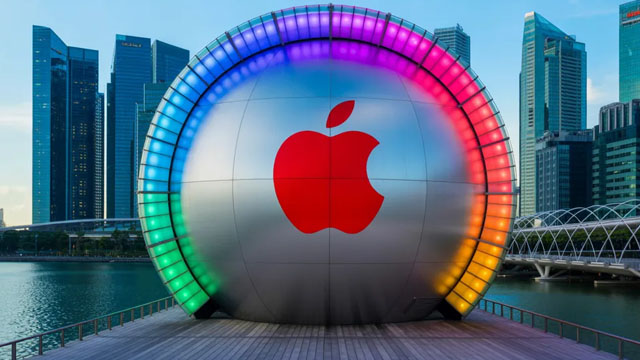
Apple Inc. Turns 50 on April 1: A look back at its journey
BusinessLine· 2026-03-31 06:38
Core Insights - Apple, founded on April 1, 1976, has evolved from a small garage operation into a leading technology brand, celebrating its 50th anniversary on April 1, 2026 [1] Group 1: Historical Milestones - In 1976, Apple Computer, Inc. was established by Steve Jobs and Steve Wozniak, introducing the Apple I priced at $666.66, marking its entry into personal computing [4] - The Apple II, launched in 1977, was Apple's first true consumer product, featuring color graphics and user-friendly software [6] - The Macintosh was introduced in 1984, popularizing the "point and click" mouse interface [7] - Steve Jobs returned to Apple in 1997, initiating a significant corporate turnaround [10] - The iMac was launched in 1998, characterized by its colorful design and USB connectivity, moving away from traditional beige computers [13] - In 2001, Apple expanded into portable music with the iPod and launched Mac OS X, while also opening its first retail stores [16] - The iPhone was unveiled in 2007, revolutionizing mobile technology with its touchscreen design [18] - The App Store was launched in 2008, initially featuring 500 apps, and the MacBook Air was introduced [21] - The iPad was released in 2010, bringing multitouch technology to a larger device [23] - The Apple Watch and Apple Music were introduced in 2015, solidifying Apple's position in both hardware and software [26] - In 2020, Apple began transitioning to its own custom silicon with the M1 chip, enhancing performance and efficiency [29] - The Vision Pro, Apple's first spatial computer, was launched in 2024, marking the beginning of spatial computing [32] Group 2: Recent Developments - By 2025, demand for the iPhone 17 reached record highs, with the Services division surpassing $100 billion annually, driven by Apple Music, Apple TV+, and the App Store [34] - Apple's focus on India has intensified, with smartphone shipment share increasing to 12% in Q4 2025 from 9% in Q3 2025, and five iPhone manufacturing plants now operational in Tamil Nadu and Karnataka [35]
Quote of the Day by Apple founder Steve Jobs: ‘We're just enthusiastic about what…’
The Economic Times· 2026-03-29 03:18
Core Insights - The quote from Steve Jobs emphasizes that true excellence is driven by enthusiasm, which leads to better outcomes and fosters creativity and risk-taking [4][6][7] Company Background - Steve Jobs was a cofounder of Apple Inc. and a pivotal figure in modern technology, known for his visionary approach and relentless pursuit of perfection [7] - Jobs played a significant role in the evolution of personal computing, smartphones, and digital media, launching transformative products like the Macintosh, iPhone, and iPad [7] Innovation and Impact - Jobs' leadership at Apple not only revived the company during challenging times but also established new benchmarks for design, user experience, and branding within the tech industry [6][7] - His legacy continues to influence how companies approach creativity and innovation, even after his passing [6][7] Passion and Commitment - A genuine love for work is crucial for achieving success and fulfillment, as it leads to deeper satisfaction and improved results [5][6] - When enthusiasm is combined with commitment, it enhances the quality of effort and outcomes, driving innovation and meaningful breakthroughs [5][6]
INDUSTRY ALERT: Apple co-founder drops BLUNT warning on the future of AI
Youtube· 2026-03-24 01:00
Core Insights - Apple is celebrating its 50th anniversary this year, with global events including a performance by Alicia Keys in New York City and a return to Apple Park in California for the official anniversary on April 1st [1] Company History - Apple was co-founded by Steve Jobs and Steve Wozniak, with Jobs being the marketing visionary and Wozniak the engineering mastermind behind the first computers, Apple 1 and Apple 2, contributing to Apple's current valuation of $3.7 trillion [2] - The Apple 1 was released on April 1, 1976, and was notable for lacking a case, power supply, keyboard, and display, requiring users to provide these components [3][4] Technological Evolution - Wozniak's vision was to create a more user-friendly computer that could be used like a typewriter, leading to the development of the Apple 1, which integrated a microprocessor and memory to make computing more accessible [5][6][7] - The evolution of computers from large room-sized machines to handheld devices is highlighted, with the smartphone being described as a "baby computer" [11][12] Cultural Impact - Apple has been associated with creativity, particularly in the graphic arts, due to software like Adobe Photoshop that required the advanced memory capabilities of Macintosh computers [17][18] - The company has also made significant cultural contributions, such as the US Festival, which combined music and technology in innovative ways [20][21] Current Perspectives - Wozniak expresses concerns about the current business models of technology, where users do not truly own their products and must subscribe to services, contrasting this with the earlier model of personal computer ownership [25][26] - He emphasizes the importance of honesty in technology and expresses skepticism about the reliance on AI, suggesting that it may lead to a decline in critical thinking skills [15][24]
中金• 全球研究 | 跨国公司成长启示录上篇(二):美欧日跨国公司观察
中金点睛· 2026-03-19 23:55
Core Insights - The article summarizes the successful experiences of multinational corporations (MNCs) from the US, Europe, and Japan, providing insights for Chinese companies in their globalization efforts. It highlights the common motivations for going global, such as overcoming growth ceilings, avoiding trade barriers, and optimizing cost structures, while also noting the distinct paths taken by different economies based on their unique resources and institutional frameworks [3]. Group 1: United States - US companies focus on high value-added sectors and technological leadership, driven by the need to counter domestic antitrust regulations and optimize production factors. The emphasis on supply chain security has become increasingly important in overseas investment decisions [3][4]. - The US has established a strong technological moat in high value-added fields, particularly in the tech industry, characterized by leading advantages, global tech discourse control, and a shift towards digital economy-driven globalization [3][4][18]. - As of 2022, US MNCs had nearly 40,000 foreign affiliates, generating over $27 trillion in revenue and $3 trillion in net profit, with significant contributions from Europe and the Asia-Pacific region [10][12]. Group 2: Europe - European companies expand overseas primarily due to limited domestic resources and high production costs, necessitating global resource integration to maintain competitiveness [4][42]. - The technological foundation of European firms is characterized by comprehensive capabilities that span from basic research to industrial application, creating significant barriers across the value chain [4][44]. - As of 2023, EU MNCs had over 200,000 foreign affiliates, generating nearly €20 trillion in revenue, with a significant portion coming from intra-European markets [45][49]. Group 3: Japan - Japanese companies transitioned from a "trade nation" to an "investment nation," driven by internal market saturation and external pressures such as trade friction and currency appreciation, prompting a shift towards overseas production [5][65]. - The localization of production has been crucial for Japanese firms, particularly in the automotive sector, achieving an 80% localization rate in overseas production [5][66]. - Japan's unique globalization path emphasizes capital and knowledge-intensive industries, with a focus on lean manufacturing and integrated support from trading companies [5][66].






Quote of the day by Steve Jobs: ‘The only way to do great work is to love what you do’
MINT· 2026-03-14 16:08
Core Insights - The essence of achieving great work lies in loving the process, which requires stamina and dedication rather than just seeking fun [1][2] - Passion is crucial for enduring challenges and maintaining motivation in the face of setbacks, especially in complex projects [2][3] - In a workforce increasingly dominated by AI and automation, the human element of passion becomes a competitive advantage, shifting motivation from extrinsic to intrinsic [3] Steve Jobs' Philosophy - Steve Jobs emphasized the importance of finding the intersection of skills and genuine interests, encouraging individuals to persist in their search for passion [4] - His life story, from founding Apple in a garage to his remarkable comeback after being fired, exemplifies resilience and visionary leadership [5] - Jobs' influence on technology and design continues to shape Apple's identity, with his philosophies being revisited through new AI-driven biographies for future entrepreneurs [6]
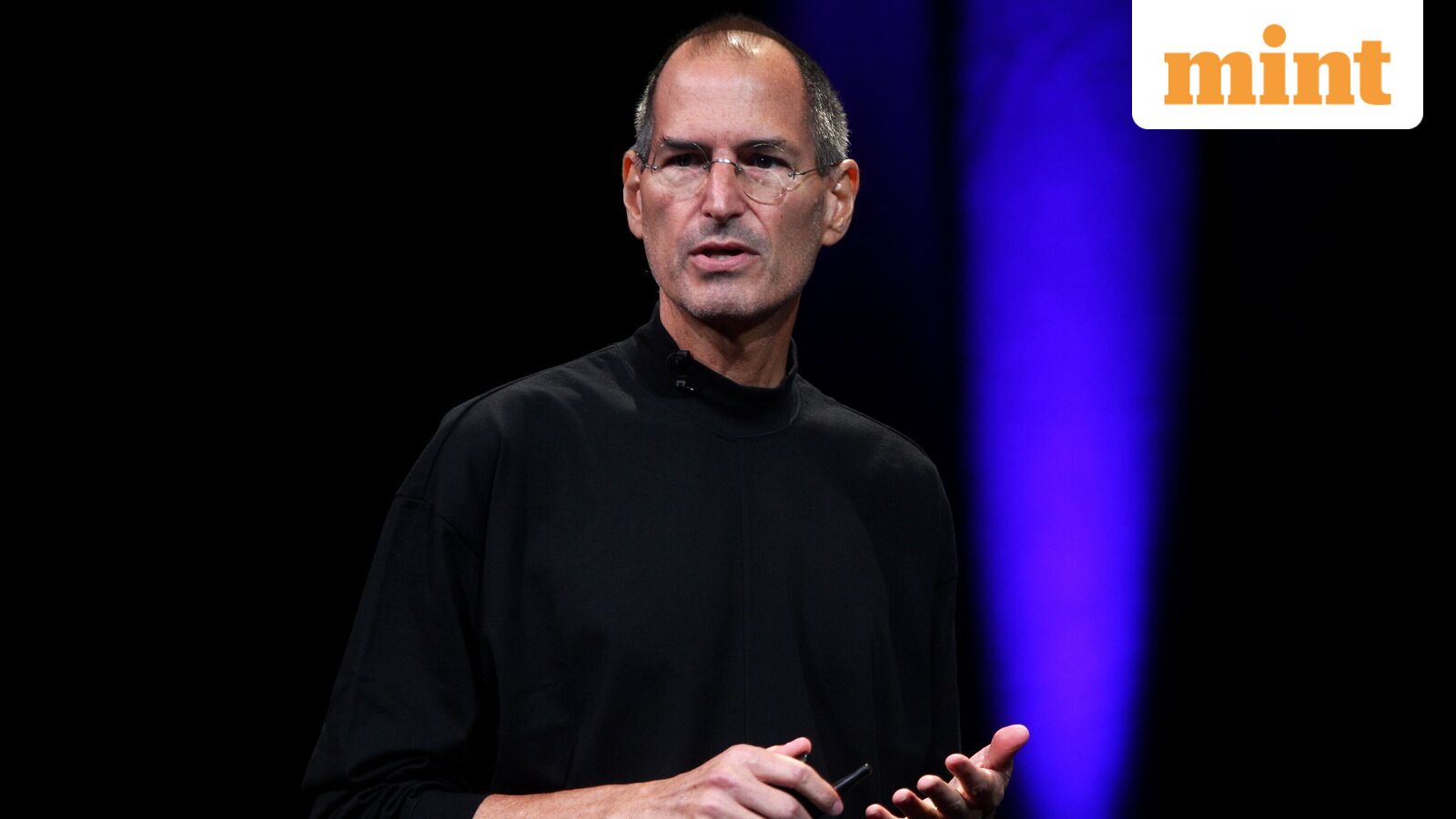
Quote of the day by Steve Jobs: “The only way to do great work is to love what you do. If you haven't found it yet...”
The Economic Times· 2026-02-25 05:30
Core Message - The essence of Steve Jobs' message is that passion fuels excellence, and genuine love for one's work leads to perseverance and success [2][4]. Group 1: Importance of Passion - Jobs emphasized that when individuals are passionate about their work, effort feels natural and unforced, allowing them to overcome challenges [2]. - The phrase "Don't settle" highlights the importance of purpose over comfort, encouraging individuals to seek fulfillment in their careers [3]. Group 2: Relevance Today - In a society focused on deadlines and financial stability, many prioritize security over personal satisfaction, but Jobs' message serves as a reminder that emotional connection to work is crucial for long-term success [4][6]. - Jobs' own life exemplifies this principle; despite being fired from Apple, he returned to transform it into a leading company, driven by his passion for innovation [6]. Group 3: Application of the Message - Following Jobs' advice does not require launching a tech empire; it can involve aligning one's career with personal strengths or finding meaning in existing roles [7]. - The message encourages ongoing exploration and reassessment of one's career path, asserting that changing direction is a sign of growth rather than failure [7][9]. Group 4: Universal Appeal - Jobs' life and message resonate universally, addressing the common fear of making the wrong career choice and advocating for continuous searching until one finds the right fit [8][9]. - Great work is characterized not just by talent but by passion, suggesting that the journey to find what inspires individuals is ongoing [9].
苹果库克纪念乔布斯71周年诞辰:一位卓越的领导者、创新者与挚友
Sou Hu Cai Jing· 2026-02-24 22:52
Core Viewpoint - Apple CEO Tim Cook commemorated the 71st birthday of co-founder Steve Jobs, highlighting his extraordinary leadership and innovative spirit that continue to inspire the company [1][6][7]. Group 1: Steve Jobs' Legacy - Steve Jobs is recognized as an incredible leader, innovator, and friend whose ideas have significantly influenced the world [7]. - He is celebrated for his minimalist design philosophy and focus on user experience, which led to the development of revolutionary products such as the Macintosh, iPod, iPhone, and iPad [8]. - Jobs co-founded Apple in 1976 with Steve Wozniak, launching the Apple I and Apple II, which set the course for personal computing [8]. Group 2: Career Highlights - After leaving Apple in 1985 due to internal conflicts, Jobs founded NeXT and Pixar Animation Studios [8]. - He returned to Apple in 1997 when the company was in crisis, revitalizing it with products like the iMac, iPod, and the iTunes Store [8]. - The launch of the iPhone in 2007 marked the beginning of the modern smartphone and mobile internet era [8].