Arene软件平台

Search documents
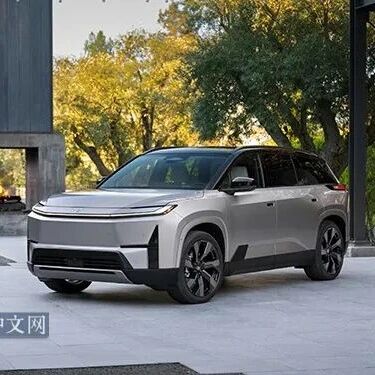
丰田发布首款美国本土产纯电动汽车
日经中文网· 2026-02-11 08:00
Core Viewpoint - Toyota is set to launch its first locally produced electric vehicle (EV), the electric version of the Highlander SUV, in the second half of 2026, marking a significant step in its North American operations [2][6]. Group 1: Product Details - The new electric Highlander will be a large SUV with three rows of seats, expected to have the largest dimensions among Toyota's global electric passenger vehicles [4]. - It will feature the latest lithium-ion battery technology, offering a maximum range of 320 miles (approximately 515 kilometers), which is the longest for EVs sold in North America [4]. - The vehicle will support the standard charging interface "NACS" in the U.S. and will utilize Toyota's proprietary software platform "Arene" [4]. Group 2: Production and Supply Chain - Production of the Highlander EV will take place at Toyota's assembly plant in Kentucky, USA, with batteries sourced from both its own facility in North Carolina and LG Energy Solution's factory in the U.S. [6]. - This initiative represents Toyota's first foray into producing electric vehicles locally in the U.S., as the company currently sells two EV models imported from Japan [2][6]. Group 3: Market Strategy - Despite a decrease in demand for EVs following the U.S. government's elimination of purchase subsidies, Toyota is focusing on the long-term growth potential of the electric vehicle market [2]. - The existing gasoline and hybrid versions of the Highlander will continue to be sold alongside the new electric model, although future product lines beyond electric vehicles remain uncertain [5].


研发投入比下滑,日本车企没钱了?
Zhong Guo Qi Che Bao Wang· 2025-10-20 09:57
Core Insights - Japanese automakers are expected to adopt a conservative approach to R&D spending in the fiscal year 2025, with R&D expenditure projected to be less than 4% of sales, significantly lower than their overseas competitors [2][11] - The R&D spending of Japan's seven major automakers is projected to total 3.94 trillion yen, a slight increase of 2% year-on-year, with the R&D expenditure ratio at 3.92%, marking the second consecutive year below 4% [2][3] R&D Spending Breakdown - Honda leads the group with an R&D expenditure ratio of 5.7%, while Toyota ranks last at 2.8%. However, in terms of total R&D spending, Toyota remains the highest at 1.37 trillion yen, a 3.3% increase year-on-year [3][4] - Nissan plans to invest 630 billion yen in R&D, a 1.8% increase, with a ratio of 5% of expected sales. Suzuki's R&D spending is expected to rise by 13% to 300 billion yen, with a ratio of 5.2% [3][4] - Subaru anticipates a 12.5% decline in R&D spending, while Mitsubishi's spending remains unchanged from the previous year [3] Market Challenges - Japan's automotive industry faces significant challenges, including a 13.8% year-on-year decline in exports to the U.S., with automotive exports dropping by 28.4% due to U.S. tariff policies [6] - The seven major Japanese automakers are expected to see a combined operating profit reduction of approximately 2.67 trillion yen in the fiscal year 2025, which is over 30% of their total operating profit for the fiscal year 2024 [6] Strategic Shifts - Japanese automakers are adjusting their R&D strategies in response to the global slowdown in electric vehicle market growth, with some projects being postponed or scaled down [6][13] - Toyota plans to diversify its investments in carbon neutrality, focusing on hybrid and hydrogen technologies alongside electric vehicles, while also developing a software-defined vehicle platform [13][14] - Honda is prioritizing R&D in software-defined vehicles and advanced driver-assistance systems (ADAS), collaborating with Chinese companies to adapt to local market needs [13][14] Competitive Landscape - German automakers are significantly outpacing Japanese firms in R&D spending, with Volkswagen, BMW, and Mercedes-Benz leading the global rankings [7][8] - BYD has emerged as a strong competitor, ranking seventh in global R&D spending, reflecting the aggressive investment strategies of Chinese automakers in the electric and smart vehicle sectors [8]