AudioNoise

Search documents
“手写代码已不再必要!”Redis之父罕见表态:AI将永远改变编程,网友质疑:我怎么没遇到这么好用的AI!
猿大侠· 2026-01-19 04:11
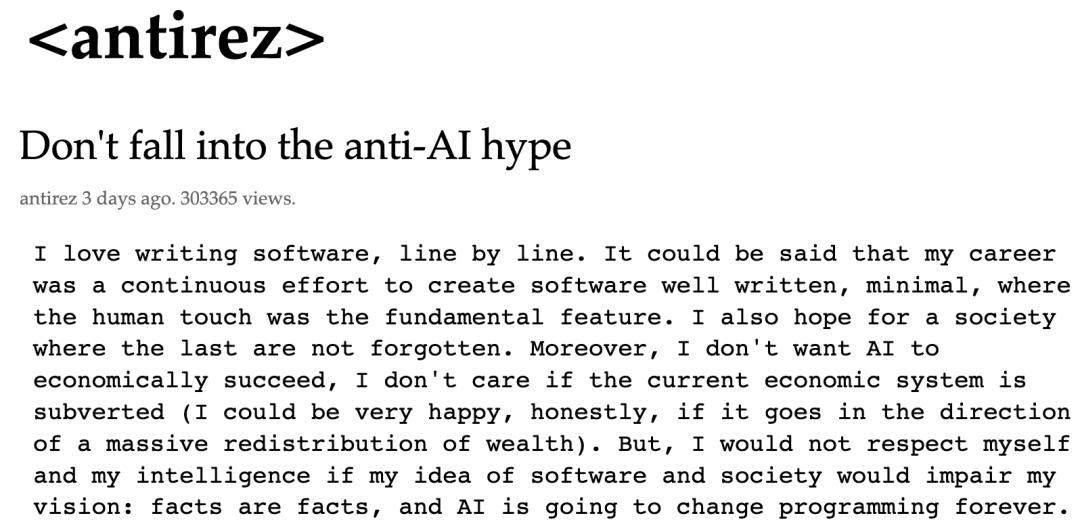
Core Viewpoint - The article discusses the transformative impact of AI on programming, highlighting differing opinions among industry leaders regarding the necessity of traditional coding practices and the potential for AI to enhance creativity and efficiency in software development [1][2][4][5]. Group 1: Perspectives on AI in Coding - Google engineer Jaana Dogan emphasizes the efficiency of AI, noting that a task taking a year for a team was completed by AI in just one hour [1]. - Linus Torvalds expresses skepticism about AI writing code, preferring AI to assist in code maintenance rather than creation [1]. - Salvatore Sanfilippo (antirez) provocatively claims that writing code is often no longer a necessary task, urging developers to embrace the ongoing industry transformation [2][4]. Group 2: Embracing Change - Antirez questions the resistance to AI, suggesting that developers risk missing out on significant industry changes if they do not adapt [4]. - He argues that the true passion in programming lies in creation, and AI can expedite reaching creative goals [5]. - Antirez's article has gained significant traction, with over 300,000 views, indicating a strong interest in the topic [5]. Group 3: AI's Practical Applications - Antirez shares personal experiences where AI significantly reduced the time required for coding tasks, such as improving the linenoise library and fixing Redis test failures [12][13]. - He notes that AI can effectively handle independent tasks with clear descriptions, making it a valuable tool for developers [10][15]. - The ability of AI to replicate complex coding tasks in a fraction of the time previously required marks a significant shift in programming practices [16]. Group 4: Concerns and Critiques - Some developers express skepticism about AI's capabilities, particularly in complex system design and long-term maintenance, highlighting ongoing challenges in AI-generated code quality [20][22][27]. - Concerns arise regarding the potential for over-reliance on AI to diminish engineers' understanding of systems, suggesting that AI may be more suited for prototyping than production environments [27][28]. - The debate continues on the balance between AI's benefits and its limitations, indicating that the role of AI in engineering is still evolving [28]. Group 5: Future Outlook - Antirez acknowledges the inevitability of AI's impact on programming, urging developers to adapt rather than resist [29]. - He emphasizes the importance of understanding how to effectively use AI tools to enhance creativity and productivity in software development [30]. - The article concludes with a call for developers to engage with AI technologies thoughtfully, suggesting that the future of programming will increasingly involve collaboration with AI [31].


“手写代码已不再必要,”Redis之父罕见表态:AI将永远改变编程,网友质疑:我怎么没遇到这么好用的AI
3 6 Ke· 2026-01-15 13:21
Core Viewpoint - The emergence of AI in coding raises questions about the future role of programmers, with contrasting opinions from industry leaders on whether AI will enhance or replace traditional coding practices [1][2]. Group 1: Perspectives on AI in Coding - Google engineer Jaana Dogan highlights the efficiency of AI, noting that a task taking a year for a team was completed by AI in just one hour [1]. - Linus Torvalds expresses skepticism about AI writing code, emphasizing the importance of code maintenance over code generation [1]. - Salvatore Sanfilippo (antirez) argues that writing code is no longer a necessary task in most cases, suggesting that developers who resist AI may miss out on significant industry changes [2][4]. Group 2: Antirez's Insights and Experiences - Antirez shares his journey from writing code to collaborating with AI, stating that his career has focused on creating well-structured and readable software [4][5]. - He acknowledges the potential for AI to disrupt economic structures and wealth distribution, expressing indifference to the consequences as long as it promotes fairness [4]. - Antirez emphasizes that AI will permanently change programming, making it irrational to write all code manually unless for personal enjoyment [8][10]. Group 3: Practical Applications of AI - Antirez describes his recent experiences where he completed tasks in hours that would have taken weeks, such as improving the linenoise library and fixing Redis test failures [10][11]. - He successfully built a pure C implementation of a BERT inference library in just five minutes using AI, demonstrating the efficiency of AI in coding tasks [12]. - Antirez notes that AI can replicate complex implementations quickly, allowing developers to focus on understanding project requirements rather than writing code [13]. Group 4: Concerns and Critiques from the Developer Community - Some developers express skepticism about AI's ability to handle complex system designs and long-term maintenance, citing issues with code quality and architectural problems [17][18]. - Concerns are raised about over-reliance on AI potentially diminishing engineers' understanding of systems, with some suggesting AI is better suited for prototyping rather than production environments [21][22]. - The debate continues on whether AI will replace programmers or simply change their roles, with some predicting a shift towards AI as a team replacement solution [24].
腾讯研究院AI速递 20260113
腾讯研究院· 2026-01-12 16:37
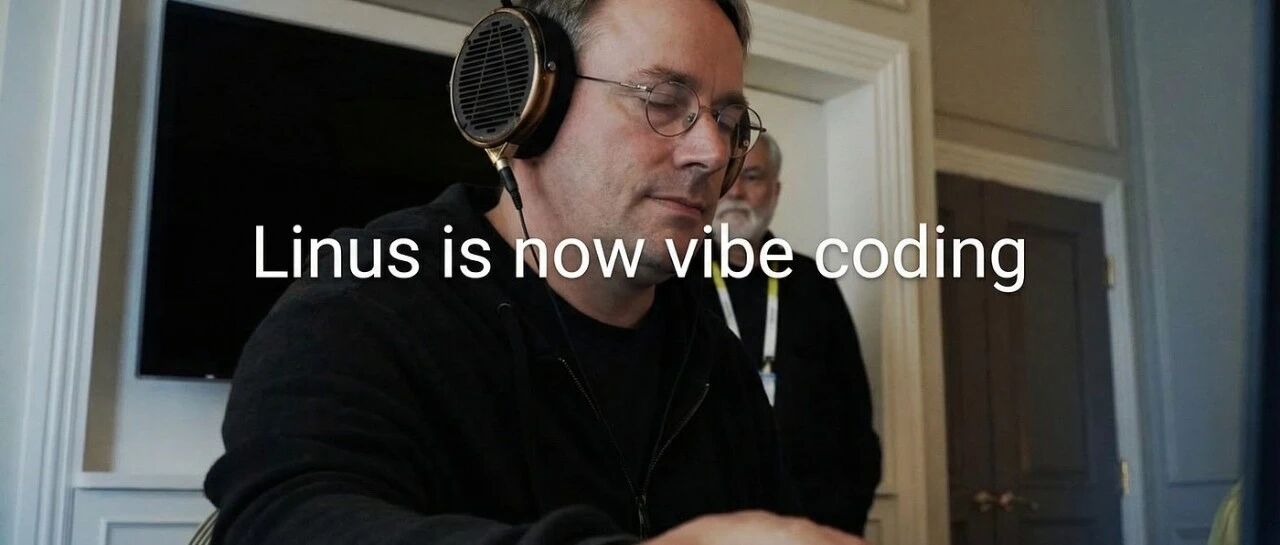
Group 1 - Google has launched and open-sourced the Universal Commercial Protocol (UCP) in collaboration with over 20 retail giants, including Shopify and Walmart, to establish a unified open standard for AI agents in shopping, covering the entire process from product discovery to after-sales service [1] - The UCP has been implemented in Google's search AI mode and the Gemini application, featuring "agent checkout" functionality that supports Google Pay and will soon integrate with PayPal, allowing retailers to maintain their transaction identity [1] - By fully open-sourcing the UCP, Google aims to lower the barriers for ecosystem participation, enabling small and medium-sized businesses to benefit from AI shopping [1] Group 2 - Midjourney has updated its Niji model to version 7, focusing on anime-specific features, correcting the previous version's tendency towards realism, and enhancing details in expressions, dynamic poses, and material textures [2] - The new sref style reference feature allows users to upload three reference images to maintain a consistent art style, significantly improving the model's understanding and ability to accurately interpret complex prompts [2] - Testing shows that version 7 surpasses version 6 in light and shadow details, stability in complex poses, and the quality of pure anime line art, making it particularly suitable for storyboard generation and series creation [2] Group 3 - UniPat AI, in collaboration with Sequoia China and xbench, has released the BabyVision benchmark, which breaks down visual capabilities into four categories and 22 sub-tasks [3] - The evaluation results indicate that Gemini-3-Pro-Preview is the only model exceeding the baseline of a 3-year-old child, but it still falls short by 20 percentage points compared to a 6-year-old child, with many models struggling on simple tasks [3] - The research highlights a major shortcoming of Visual Language Models (VLMs), which is their inability to fully verbalize visual information, leading to loss of detail when compressing into tokens, making it difficult for models to perform tasks like tracing lines or stacking blocks [3] Group 4 - Kunlun Wanwei has launched Skywork Video v1.0 on the Tiangong Super Intelligent Agent platform, integrating the creative process into a "project-based" model where all materials are automatically collected and added to a multi-track editor [4] - The platform offers five initiation methods, including text generation, image animation, frame completion, multi-image style reference generation, and digital human video generation, with a built-in multi-track editor supporting detailed operations like splitting and replacing [4] - The Skywork product matrix now covers a full range of modalities from documents, spreadsheets, and presentations to video generation, creating a smart office platform that supports multiple scenarios and modalities [4] Group 5 - The world's first embodied Agentic OS, named COSA, has been released by Zhujidi Dynamics, featuring a three-layer architecture that integrates basic models, high-level skill layers, and cognitive decision-making layers [6] - COSA endows robots with three core capabilities: understanding vague instructions, cross-temporal semantic memory, and the ability to execute tasks seamlessly [6] - Unlike Figure AI's Helix end-to-end VLA model, COSA is built from the ground up as an operating system for the physical world, demonstrating significant advantages in the integration of movement and operation capabilities [6] Group 6 - Qianxun Intelligent has open-sourced its VLA base model Spirit v1.5, ranking first on the RoboChallenge Table30 leaderboard, surpassing Pi0.5 and receiving praise from NVIDIA's Jim Fan [7] - The core breakthrough of Spirit v1.5 lies in its "open, goal-driven" data collection strategy, moving away from "clean data" to internalizing physical common sense, resulting in a 40% improvement in fine-tuning convergence speed [7] - The unstructured collection method has increased the average effective collection time per person by 200% and reduced reliance on algorithm experts by 60%, with open-source weights and inference code available for community exploration [7] Group 7 - Anthropic co-founder Jack Clark revealed conflicting internal survey data indicating that while 60% of Claude users report a 50% increase in productivity, METR research shows that developers familiar with codebases experience a 20% decrease in AI tool-assisted PR merge speed [8] - Clark pointed out the "barrel principle" in code production, where writing speed may increase tenfold, but review speed only doubles, preventing an explosive overall efficiency increase, with no truly self-improving AI expected by January 2026 [8] - He emphasized that if the Scaling Law hits a wall, it would be shocking, as current massive infrastructure investments suggest most are betting on the opposite outcome, and breakthroughs in distributed pre-training could alter the political and economic structure of AI [8] Group 8 - Linus Torvalds, the creator of Linux, has released his first Vibe Coding project, AudioNoise, on GitHub, utilizing Google's Antigravity to generate a Python visualization tool, admitting it performs better than his own coding [9] - The project originates from the design of a guitar effects pedal and primarily explores foundational knowledge in digital audio processing, including IIR filters and delay loops for zero-latency single-sample processing [9] - Just five days prior, Torvalds criticized AI-generated code as "ridiculously stupid," making his subsequent use of AI tools a topic of discussion in the tech community, marking a "true fragrance moment" [9] Group 9 - Elon Musk predicts that AGI will be achieved by 2026 and that by 2030, AI will surpass the total intelligence of all humanity, with AI performance improving tenfold each year, and xAI's Memphis Colossus 2 data center reaching 1 gigawatt power by mid-January [10] - He introduced three key terms for AI safety: truth, curiosity, and beauty, forecasting that within three years, the surgical capabilities of robots will exceed those of top surgeons, and within five years, robots will transition from scarcity to abundance, with 10 billion units by 2040 [10] - Musk emphasized the view that "the sun is everything" in terms of energy, praised China's solar energy capacity of 1,500 gigawatts annually, and predicted that the essence of currency will become watts, with white-collar jobs being the first to be replaced by AI, ultimately leading to universal prosperity [10]

真香,刚骂完AI,Linux之父的首个Vibe Coding项目上线
3 6 Ke· 2026-01-12 08:32
Core Insights - Linus Torvalds has launched a new project called AudioNoise on GitHub, which focuses on digital audio effects and utilizes AI technology for audio sample visualization [1][5][10]. Project Overview - The AudioNoise project was uploaded to GitHub five days ago and has already garnered 1.4k stars, indicating significant interest from the developer community [5][6]. - This project is derived from Torvalds' earlier work on a random guitar effects pedal design, which included circuit schematics and code, showcasing his exploration of operational amplifier circuit design principles [7][9]. Technical Details - AudioNoise primarily employs IIR (Infinite Impulse Response) filters and basic delay loops, focusing on single-sample input and output with zero latency, without complex real-time processing [9][10]. - The project does not utilize advanced AI techniques for sound synthesis but instead simulates analog circuits through digital all-pass filters [10]. AI Integration - Torvalds has adopted a new AI programming tool called Antigravity, developed by Google, which allows for a more streamlined coding process by enabling AI to assist in writing code [13][15]. - His experience with Antigravity has been positive, noting that it improved the coding process significantly compared to traditional methods [10][11]. Industry Reactions - The use of AI programming tools by a prominent figure like Torvalds has sparked considerable discussion within the tech community, with many expressing surprise at his shift in perspective regarding AI in programming [15][20]. - Despite his initial skepticism about AI-generated code, Torvalds' engagement with AI tools in this project marks a notable change in his stance, reflecting broader trends in the industry [22][23].

真香!刚骂完AI,Linux之父的首个Vibe Coding项目上线
机器之心· 2026-01-12 06:35
Core Viewpoint - Linus Torvalds has embraced "Vibe Coding" with the launch of his new project "AudioNoise," which utilizes AI technology for audio processing, marking a significant shift in his programming approach [3][10][30]. Group 1: Project Overview - The "AudioNoise" project, released on GitHub, has gained 1.4k stars within five days, showcasing its popularity [10][11]. - This project is related to guitar effects and aims to simulate audio effects using AI, specifically through a Python visualization tool [6][12]. - Torvalds' previous project, "GuitarPedal," served as a foundation for "AudioNoise," focusing on learning about analog circuits and audio processing [12][14]. Group 2: Programming Approach - Torvalds initially used traditional programming methods but later adopted a more streamlined approach by utilizing Google Antigravity for coding, which he refers to as "Vibe Coding" [8][17]. - He expressed satisfaction with the results of using AI tools, noting that the outcomes were better than his manual coding efforts [18][20]. - Despite his positive experience with AI in this project, Torvalds maintains a cautious stance regarding AI in production environments, emphasizing the importance of understanding code logic [30][31]. Group 3: Industry Reactions - The programming community has reacted with a mix of enthusiasm and skepticism regarding Torvalds' use of AI, highlighting a shift in attitudes towards AI-generated code [22][30]. - Notable figures in the tech industry, including the creator of Antigravity, have expressed admiration for Torvalds' decision to incorporate AI into his work [23][24]. - Torvalds' previous criticisms of AI-generated code have sparked discussions about the implications of AI in software development, particularly in relation to quality and accountability [28][30].