Redis

Search documents
Redis之父:手写代码?醒醒吧除非你图一乐
猿大侠· 2026-01-27 04:11
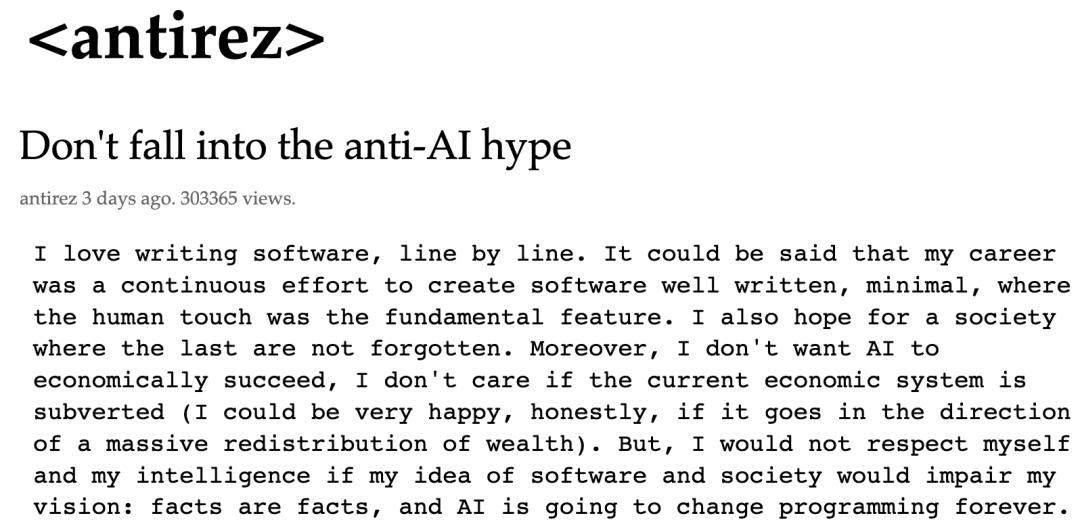
编辑:倾倾 【导读】 昨夜,编程界「最后一位武士」Antirez放下手中刀:手工写码,已不再明智。当Redis 之父都开始把代码外包给Claude,你还在固执「纯手写」?别做2026年的「清朝程序员」了—— 汽车都来了,你还挥马鞭呢? 昨夜,全球程序员的「精神祠堂」塌了一角。 Salvatore Sanfilippo(网名 Antirez),他创造了Redis、把C语言玩成「指针艺术」,一直被视为古 典编程美学的最后一位守夜人。 在过去的职业生涯里,他拒绝任何黑盒,坚持用最原始的C语言逐行雕琢出Redis这座性能摩天大 楼。 但就在15小时前,这位「旧神」亲自发布了一封投降书——更准确地说,是一份给全人类程序员的 最后通牒。 在博文《Don't fall into the anti-AI hype》中,他用一种近乎残酷的冷静撕开了行业的遮羞布: 虽然我热爱手工写码,虽然我私心并不希望AI颠覆当下的经济体系,但事实就是事实。编程已 经被永远改变了。 原文链接:https://antirez.com/news/158 连这个星球上最硬核的C语言大师都承认「自己写代码已不再明智」,普通程序员的「代码洁癖」和 「工匠 ...


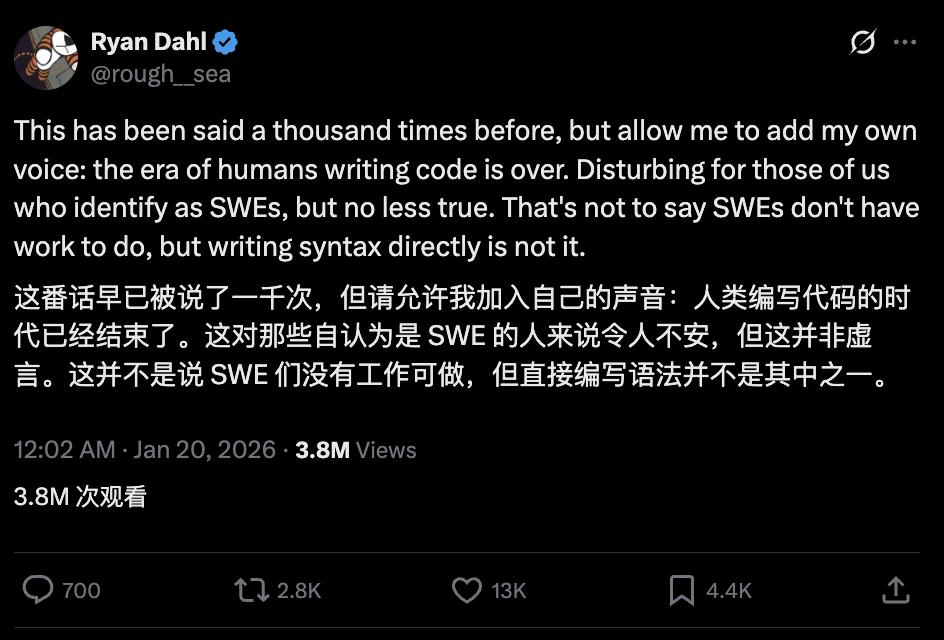
Node.js之父:手写代码已死
3 6 Ke· 2026-01-21 11:08
Core Viewpoint - The era of human-written code is coming to an end, as AI is fundamentally changing programming practices and roles within the industry [1][4][14]. Group 1: Key Figures and Contributions - Ryan Dahl, the creator of Node.js, emphasized that the age of human coding is over, having previously revolutionized backend development with his framework [3][4]. - Salvatore Sanfilippo, co-founder of Redis, highlighted that programming has been permanently altered by AI, marking a significant shift in the industry [4][5]. - The AI programming tool Copilot, based on OpenAI Codex, has reportedly accelerated development speed by over 50% [8]. Group 2: AI Programming Trends - AI programming and concepts like Vibe Coding have gained significant traction, with tools like Claude Code enabling full-stack development and optimization [8][9]. - ByteDance's native programming tool TRAE generated 100 billion lines of code in 2025, equivalent to the output of 3 million programmers working continuously for a year [10]. - A Stack Overflow report indicated that 84% of developers use AI tools, with 69% believing these tools enhance productivity [10]. Group 3: Future of Programming Roles - The programming landscape is shifting from syntax-focused coding to intent-driven development, where human roles are evolving from code writers to requirement editors [7][20]. - Despite the rise of AI, industry leaders assert that programmers will not be replaced but will instead focus on maintaining and improving AI-generated code [16][20]. - Linus Torvalds, initially critical of AI-generated code, acknowledged its potential as a valuable entry point for new programmers, reinforcing the idea that human oversight remains essential [18][20].
Node.js之父:手写代码已死
量子位· 2026-01-21 10:00
Core Viewpoint - The era of human-written code is coming to an end, as AI programming tools are increasingly taking over coding tasks, fundamentally changing the programming landscape [1][28]. Group 1: Influential Figures and Their Statements - Ryan Dahl, the creator of Node.js, stated that the era of human coding is over, which garnered significant attention with over four million views [2][4]. - Salvatore Sanfilippo, the creator of Redis, echoed this sentiment by asserting that programming has been permanently altered by AI [7][8]. - Linus Torvalds, initially critical of AI-generated code, has shifted his stance, acknowledging the effectiveness of AI in coding while emphasizing that programmers will still be needed for maintenance and oversight [30][34]. Group 2: AI Programming Tools and Their Impact - AI programming tools like OpenAI Codex's Copilot have accelerated development speed by over 50% [15]. - Companies are increasingly adopting AI tools for development, with ByteDance's TRAE generating 100 billion lines of code in 2025, equivalent to the output of 3 million programmers working continuously for a year [22][23]. - A Stack Overflow report indicated that 84% of developers use AI tools, with 69% believing these tools enhance productivity [24]. Group 3: Future Trends and Predictions - Gartner predicts that by 2030, over 80% of enterprises will deeply integrate AI for coding tasks [26]. - The demand for programmers is evolving, with companies now seeking candidates proficient in AI programming tools [28]. - The shift in programming focus is moving from syntax to intent, indicating a transformation in how coding is approached in the AI era [12].
“手写代码已不再必要!”Redis之父罕见表态:AI将永远改变编程,网友质疑:我怎么没遇到这么好用的AI!
猿大侠· 2026-01-19 04:11
Core Viewpoint - The article discusses the transformative impact of AI on programming, highlighting differing opinions among industry leaders regarding the necessity of traditional coding practices and the potential for AI to enhance creativity and efficiency in software development [1][2][4][5]. Group 1: Perspectives on AI in Coding - Google engineer Jaana Dogan emphasizes the efficiency of AI, noting that a task taking a year for a team was completed by AI in just one hour [1]. - Linus Torvalds expresses skepticism about AI writing code, preferring AI to assist in code maintenance rather than creation [1]. - Salvatore Sanfilippo (antirez) provocatively claims that writing code is often no longer a necessary task, urging developers to embrace the ongoing industry transformation [2][4]. Group 2: Embracing Change - Antirez questions the resistance to AI, suggesting that developers risk missing out on significant industry changes if they do not adapt [4]. - He argues that the true passion in programming lies in creation, and AI can expedite reaching creative goals [5]. - Antirez's article has gained significant traction, with over 300,000 views, indicating a strong interest in the topic [5]. Group 3: AI's Practical Applications - Antirez shares personal experiences where AI significantly reduced the time required for coding tasks, such as improving the linenoise library and fixing Redis test failures [12][13]. - He notes that AI can effectively handle independent tasks with clear descriptions, making it a valuable tool for developers [10][15]. - The ability of AI to replicate complex coding tasks in a fraction of the time previously required marks a significant shift in programming practices [16]. Group 4: Concerns and Critiques - Some developers express skepticism about AI's capabilities, particularly in complex system design and long-term maintenance, highlighting ongoing challenges in AI-generated code quality [20][22][27]. - Concerns arise regarding the potential for over-reliance on AI to diminish engineers' understanding of systems, suggesting that AI may be more suited for prototyping than production environments [27][28]. - The debate continues on the balance between AI's benefits and its limitations, indicating that the role of AI in engineering is still evolving [28]. Group 5: Future Outlook - Antirez acknowledges the inevitability of AI's impact on programming, urging developers to adapt rather than resist [29]. - He emphasizes the importance of understanding how to effectively use AI tools to enhance creativity and productivity in software development [30]. - The article concludes with a call for developers to engage with AI technologies thoughtfully, suggesting that the future of programming will increasingly involve collaboration with AI [31].

“手写代码已不再必要,”Redis之父罕见表态:AI将永远改变编程,网友质疑:我怎么没遇到这么好用的AI
3 6 Ke· 2026-01-15 13:21
Core Viewpoint - The emergence of AI in coding raises questions about the future role of programmers, with contrasting opinions from industry leaders on whether AI will enhance or replace traditional coding practices [1][2]. Group 1: Perspectives on AI in Coding - Google engineer Jaana Dogan highlights the efficiency of AI, noting that a task taking a year for a team was completed by AI in just one hour [1]. - Linus Torvalds expresses skepticism about AI writing code, emphasizing the importance of code maintenance over code generation [1]. - Salvatore Sanfilippo (antirez) argues that writing code is no longer a necessary task in most cases, suggesting that developers who resist AI may miss out on significant industry changes [2][4]. Group 2: Antirez's Insights and Experiences - Antirez shares his journey from writing code to collaborating with AI, stating that his career has focused on creating well-structured and readable software [4][5]. - He acknowledges the potential for AI to disrupt economic structures and wealth distribution, expressing indifference to the consequences as long as it promotes fairness [4]. - Antirez emphasizes that AI will permanently change programming, making it irrational to write all code manually unless for personal enjoyment [8][10]. Group 3: Practical Applications of AI - Antirez describes his recent experiences where he completed tasks in hours that would have taken weeks, such as improving the linenoise library and fixing Redis test failures [10][11]. - He successfully built a pure C implementation of a BERT inference library in just five minutes using AI, demonstrating the efficiency of AI in coding tasks [12]. - Antirez notes that AI can replicate complex implementations quickly, allowing developers to focus on understanding project requirements rather than writing code [13]. Group 4: Concerns and Critiques from the Developer Community - Some developers express skepticism about AI's ability to handle complex system designs and long-term maintenance, citing issues with code quality and architectural problems [17][18]. - Concerns are raised about over-reliance on AI potentially diminishing engineers' understanding of systems, with some suggesting AI is better suited for prototyping rather than production environments [21][22]. - The debate continues on whether AI will replace programmers or simply change their roles, with some predicting a shift towards AI as a team replacement solution [24].
Redis宣布闭源后,中国技术人的“上游时刻”
Tai Mei Ti A P P· 2026-01-05 03:24
Core Viewpoint - The announcement by Redis to change its licensing from a permissive BSD license to commercial restrictions (SSPLv1 and RSALv2) marks a significant shift towards commercialization, impacting cloud service providers and the open-source community [1][2]. Group 1: Impact on the Community - The tightening of Redis's licensing has prompted cloud service providers to collaborate rapidly, leading to the creation of a new project named "Valkey" within just six days [2]. - Valkey aims to maintain compatibility with existing Redis protocols and data formats, ensuring minimal migration costs for users [3]. - The project is hosted under the Linux Foundation, which prevents any single commercial entity from unilaterally changing the rules, providing a sense of security for enterprise users [3]. Group 2: Role of Chinese Engineers - Chinese engineers have transitioned from being mere contributors to leading the development of core solutions, such as the "Slot Atomic Migration" feature, which addresses long-standing issues with Redis [4][5]. - The collaboration between Tencent Cloud and Google resulted in refining this solution, showcasing a shift in the role of Chinese technology teams from beneficiaries to leaders in the open-source community [5]. Group 3: Challenges and Considerations - The decision to support Valkey involved significant internal deliberation within Tencent Cloud, weighing the options of continuing with Redis or joining a new community [6]. - Concerns about market acceptance of the new Valkey brand and the sustainability of the project were prevalent among the Tencent Cloud team [6]. Group 4: Open Source Resilience - The closure of Redis has deeply affected community trust, and while Redis has made attempts to reintroduce open-source elements, the damage to trust is significant [7]. - Valkey's emergence serves as a reminder that there are no permanent safe havens in the open-source world, and the ongoing struggle for community voice and technical investment is just beginning [7][8]. Group 5: Future of Technology Collaboration - The evolution of Valkey reflects a broader trend where companies are encouraged to share core technologies to enhance global competitiveness [8]. - The rise of Valkey illustrates a shift towards a collaborative model of technology development, where public infrastructure is supported by multiple competitors rather than being owned by a single entity [9].

66%的程序员被AI坑惨,改bug比自己写还花时间
3 6 Ke· 2025-12-29 03:23
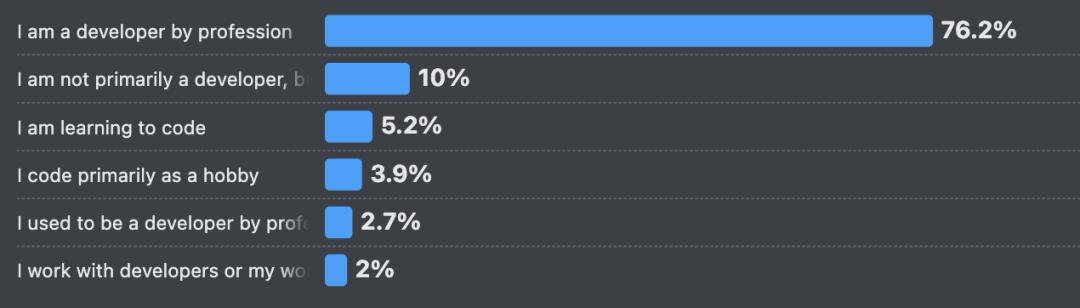
Core Insights - The 2025 Stack Overflow Developer Survey reveals a stark reality behind the AI hype: while 84% of developers have integrated AI into their workflows, their favorability towards AI has significantly dropped from over 70% to 60% [1][21] - The report highlights the challenges developers face with AI-generated code, with 66% expressing frustration over "almost correct" AI solutions, leading to increased debugging time compared to hand-written code [1][22] Developer Demographics - The survey included over 49,000 developers from 177 countries, with 76.2% identifying as professional developers [5] - The majority of developers are aged between 25 and 44, accounting for over 60% of respondents [5] - A notable trend is the increasing educational attainment among learners, with 30% of those learning programming holding a Bachelor of Science degree, up from 24% the previous year [7] Learning and Development - 69% of developers reported dedicating time to learn new coding techniques or languages in the past year, indicating a strong commitment to continuous learning [9] - Technical documentation remains the preferred learning resource for 68% of respondents, reflecting a preference for authoritative materials over casual content [9] - Over 36% of developers are specifically learning to use AI-powered tools, with 52% using AI-driven applications as their primary means of understanding artificial intelligence [11] Technology Stack Changes - Python has emerged as the leading programming language, with a usage rate of 57.9%, marking a 7 percentage point increase [12][14] - Docker's usage has surged by 17 percentage points to 71.1%, solidifying its status as an essential infrastructure tool [14] - Redis has seen an 8% increase in usage, highlighting its importance for high concurrency and low latency needs in complex application architectures [16] AI Tool Adoption and Sentiment - 84% of developers are using or planning to use AI tools, with 51% integrating them into their daily workflows [19] - Despite high adoption rates, trust in AI tools has declined, with only 60% expressing positive sentiments, down from over 70% in previous years [21] - 66% of developers find AI-generated solutions frustrating due to their inaccuracy, leading to increased debugging time [22] AI Agents and Their Challenges - AI agents, designed for autonomous decision-making, have not yet become mainstream, with 52% of developers either not using them or only using basic AI tools [26][28] - The primary barriers to adopting AI agents include concerns over accuracy (57.1%) and data security (81%) [30] - The leading frameworks for AI agent orchestration are open-source tools, with Ollama and LangChain being the most widely used [31] Developer Preferences and Practices - The majority of developers (72.2%) reject the concept of "vibe coding," emphasizing the importance of rigorous engineering practices [37] - The report indicates a shift towards rational pragmatism in the developer community, moving away from blind faith in AI technologies [38]
敏捷大佬:AI 大模型彻底改写编程规则,这一变化颠覆所有人认知
程序员的那些事· 2025-09-05 01:08
Core Viewpoint - The emergence of large language models (LLMs) represents a transformative change in software development, comparable to the shift from assembly language to the first generation of high-level programming languages [5][10]. Group 1: Impact of LLMs on Programming - LLMs not only enhance the level of abstraction in programming but also compel a reevaluation of what it means to program with non-deterministic tools [7][10]. - The transition from deterministic to non-deterministic programming paradigms expands the dimensions of programming practices [8][10]. Group 2: Historical Context of Programming Languages - High-level programming languages (HLLs) introduced a new level of abstraction, allowing programmers to think in terms of sequences, conditions, and iterations rather than specific machine instructions [8][9]. - Despite advancements in programming languages, the fundamental nature of programming has not changed significantly until the advent of LLMs [6][9]. Group 3: Embracing Non-Determinism - The introduction of non-deterministic abstractions means that results from LLMs cannot be reliably reproduced, contrasting with the consistent outcomes from traditional programming [10][13]. - The industry is experiencing a radical transformation as developers learn to navigate this non-deterministic environment, which is unprecedented in the history of software development [13].

数据库工具哪家强?这个显眼包,一用就回不去!
菜鸟教程· 2025-07-16 02:14
Core Viewpoint - DBeaver is an open-source, cross-platform database management tool that supports nearly all mainstream databases, making it a versatile choice for database management and development needs [2][3][10]. Group 1: Product Overview - DBeaver supports a wide range of databases including MySQL, PostgreSQL, Oracle, SQL Server, SQLite, MongoDB, and many others, totaling over 80 supported databases [3][15]. - The tool is available in two versions: DBeaver Community (free) and DBeaver PRO (paid), with the PRO version offering advanced features and support for more databases [8][10]. - DBeaver runs on Windows, Linux, and macOS, providing flexibility for users across different operating systems [11]. Group 2: Features and Functionalities - The Community version includes essential features such as data editing, SQL editing, basic ER diagrams, and data import/export capabilities [9]. - The PRO version enhances security, supports more databases via ODBC, includes NoSQL database support, and offers cloud database integration [12]. - Advanced functionalities in the PRO version include a visual query builder, SQL AI assistant, performance visualization tools, and task scheduling capabilities [18][19]. Group 3: Installation and Usage - DBeaver can be easily downloaded from its official website, with installation instructions provided for various operating systems [6][20]. - Users can connect to databases through a user-friendly interface that allows for easy navigation and management of database connections [28].

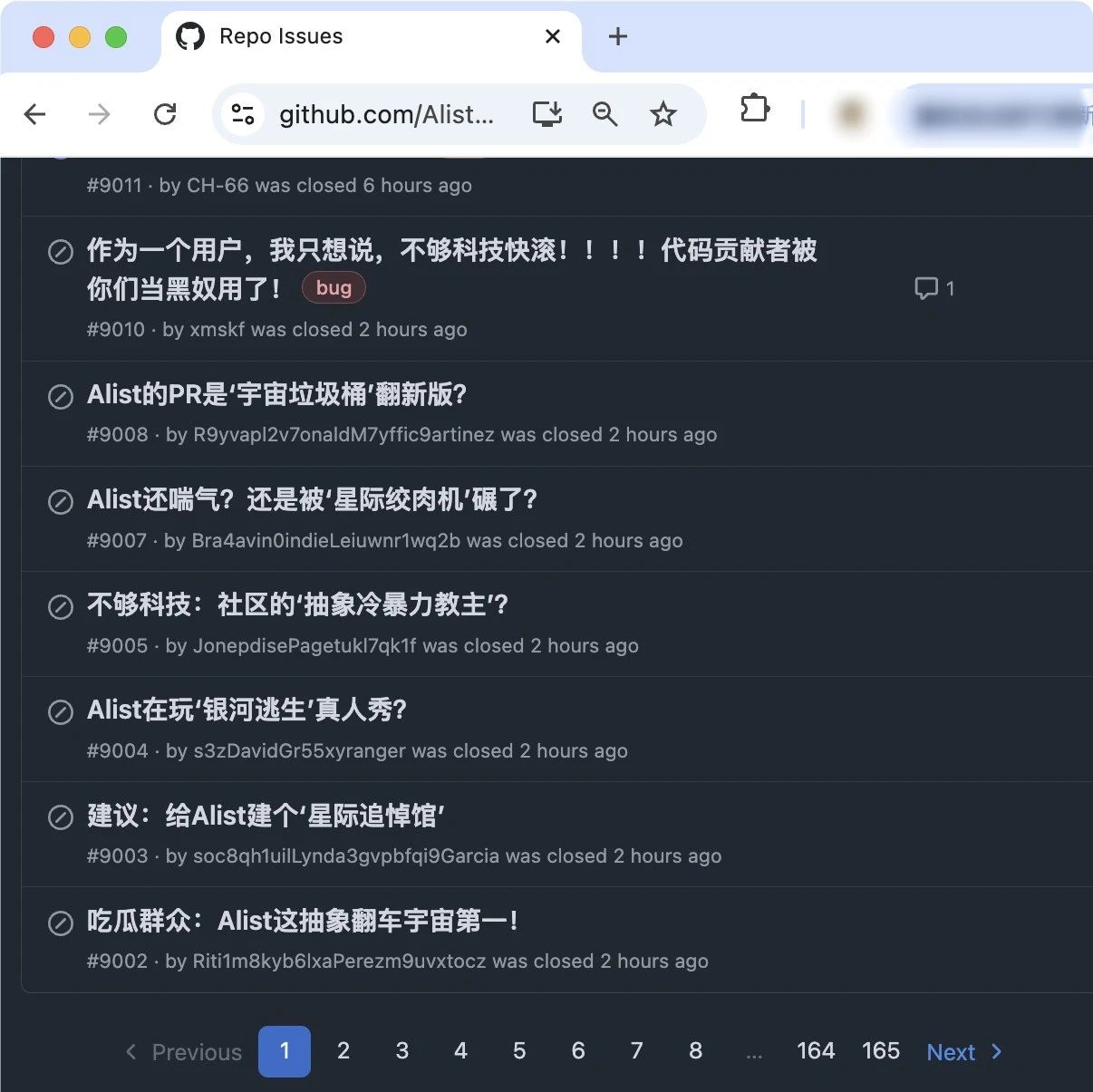
网友怒了!Alist 开源项目 Issues 被屠版了
程序员的那些事· 2025-06-12 08:43
Core Viewpoint - The article discusses the recent controversy surrounding the open-source tool AList, which has reportedly been sold and is now facing significant backlash due to the new owner's questionable history [1]. Group 1 - AList has been taken down, leading to a surge of discussions and complaints, with approximately 350 posts in a closed issue thread [1]. - The closure of the issue thread indicates a significant level of user dissatisfaction and concern regarding the future of AList under new ownership [1].