通用商业协议(UCP)

Search documents
计算机行业“一周解码”:AI商业化加速落地,核心科技自主可控需求再燃
Bank of China Securities· 2026-01-19 10:24
Investment Rating - The report rates the computer industry as "Outperform the Market" [2] Core Insights - The commercialization of AI is accelerating, with significant developments in intelligent agents and video generation technologies [2][10][12] - Ant Group and Google have launched a Universal Commercial Protocol (UCP) to standardize AI-driven commercial interactions, enhancing seamless collaboration across various systems [10][11] - Kuaishou's Keling AI has achieved a monthly revenue of over $20 million (approximately 140 million RMB) as of December 2025, indicating rapid commercialization in the video generation sector [12][13] - Alibaba's Qianwen App has integrated deeply with its ecosystem, transitioning AI capabilities from simple chat functions to executing complex tasks, marking a new era in AI applications [15][16] - Shanghai's "Mosu Zhixing" initiative aims to scale L4 autonomous driving applications by 2027, establishing a leading position in the global smart connected vehicle industry [19][20] - The U.S. has threatened storage chip manufacturers with a 100% tariff unless they increase domestic production, highlighting the geopolitical dynamics in the semiconductor industry [22][23] Summary by Sections AI Commercialization - Ant Group and Google have introduced UCP, a new open standard for intelligent agents that facilitates seamless commercial interactions across various platforms [10][11] - Kuaishou's Keling AI has seen a significant increase in revenue, reaching an annual run rate of $240 million (approximately 1.68 billion RMB) by December 2025, driven by enhanced product capabilities and computational power [12][13][14] Integration of AI in Ecosystems - Alibaba's Qianwen App has integrated with major services like Taobao and Alipay, enabling it to perform real-world tasks such as ordering food and booking travel, thus evolving into a comprehensive AI assistant [15][16][17] Autonomous Driving Initiatives - Shanghai's "Mosu Zhixing" plan aims for large-scale deployment of L4 autonomous driving technology by 2027, with specific targets for passenger and freight transport [19][20][21] Semiconductor Industry Dynamics - The U.S. Commerce Secretary has warned storage chip manufacturers of potential tariffs, emphasizing the need for increased domestic production and the strategic importance of semiconductor independence [22][23]



计算机行业周报20260118:计算机行业2025年业绩前瞻-20260118
Guolian Minsheng Securities· 2026-01-18 14:39
Investment Rating - The report maintains a "Recommended" rating for the computer industry [4] Core Insights - A new growth trend driven by the AI technology revolution is emerging, with significant development opportunities in areas such as domestic computing power, AI applications, commercial aerospace, and embodied intelligence [3][12] - The demand for domestic AI computing power remains a key focus, with specific companies recommended for attention, including Cambrian, Haiguang Information, Inspur Information, China Great Wall, and Loongson Technology [3][12] - The report highlights expected revenue or profit growth rates for key companies in 2025, with some companies projected to achieve over 30% year-on-year growth in net profit, such as Zhuoyi Information (yoy +150%) and Zhongke Information (yoy +40%) [12][13] Summary by Sections Weekly Market Review - During the week of January 12-16, the CSI 300 index fell by 0.57%, while the small and medium-sized board index rose by 1.55%, and the ChiNext index increased by 1.00%. The computer sector (CITIC) saw a rise of 4.31% [22] - The top five gainers in the sector included Shiji Information (+28.69%), Guangyun Technology (+28.43%), and Wanxing Technology (+19.64) [22][28] - The top five decliners were Aerospace Changfeng (-21.02%), Aerospace Information (-14.46%), and Haixia Innovation (-13.40%) [22][28] Industry News - The U.S. Department of Commerce has relaxed export restrictions on Nvidia's H200 chips to China, shifting to a case-by-case review mechanism, which marks a significant policy change [16] - Alibaba's Qianwen app has launched a "Task Assistant" feature, enabling AI agents to manage daily tasks across various services [17] - Zhiyuan AI has partnered with Huawei to open-source the GLM-Image model, marking a significant step in the domestic computing power ecosystem [15] Company News - Hanbang High-Tech is progressing with a major asset restructuring plan, intending to acquire a 51% stake in Anhui Yilu Micro-Travel Technology [18] - The report notes various shareholder actions, including share reduction plans by major stakeholders in companies like Anheng Information and Bosi Software, which are not expected to impact company governance [19][20]


谷歌开启AI购物意向截流战,电商格局要变天?
格隆汇APP· 2026-01-15 11:15
Core Viewpoint - Google has launched the Universal Commercial Protocol (UCP) to standardize interactions between AI agents and retailers, aiming to transform AI shopping from a niche experience into a fundamental industry standard, akin to the HTTP protocol for the internet [4][9][10]. Group 1: UCP Overview - UCP is an open-source protocol that provides a unified standard for product discovery, ordering, payment, and after-sales service, allowing different platforms and merchants to be accessed by a common AI agent [5]. - The protocol enables consumers to complete shopping through natural language across various platforms, moving the decision-making process from individual platforms to AI agents [5][11]. Group 2: Comparison with Previous Protocols - UCP builds on the earlier Agent Commerce Protocol (ACP) introduced by OpenAI, which had limitations in its closed ecosystem, restricting access to specific merchants [7][9]. - UCP aims to democratize AI shopping by breaking down entry points and leveraging Google's vast user base of 3 billion, allowing purchases across multiple interfaces like Gemini, Android, and YouTube [13][19]. Group 3: Enhanced Capabilities - UCP connects to Google's Shopping Graph, which contains 50 billion data points, enabling AI agents to understand dynamic inventory, size recommendations, and trending accessories, thus enhancing the shopping experience [14][15]. - The protocol also improves after-sales service by allowing AI agents to handle returns, delivery modifications, and logistics tracking, evolving from a temporary guide to a personal shopping assistant [18]. Group 4: Market Implications - In the short term, UCP is expected to drive significant traffic to participating merchants by utilizing Google's ecosystem, potentially leading to a surge in sales [20][22]. - However, there is a concern that this could lead to the dilution of brand identity, as AI agents prioritize hard metrics over emotional connections, reducing brands to mere data points in a comparison list [24][25]. Group 5: Competitive Landscape - Amazon is identified as the most affected competitor, facing challenges from Google's strategy to intercept traffic before it reaches Amazon, leveraging partnerships with traditional retailers [28][30]. - In response, Amazon is enhancing its AI shopping capabilities through Alexa, aiming to secure user engagement at the initial shopping thought stage [34][35]. Group 6: Domestic Market Dynamics - In the domestic market, Alibaba is actively pursuing AI shopping integration across its ecosystem, while ByteDance faces strategic challenges due to conflicting business models between content-driven commerce and efficiency-focused AI shopping [39][41]. - Alibaba's recent app updates have led to rapid user growth, while ByteDance's hesitation reflects the complexities of balancing its existing content ecosystem with emerging AI shopping trends [43][45]. Group 7: Future Outlook - Both Google and OpenAI are in the early stages of implementing their shopping experiences, with full functionality expected to roll out in the near future [47]. - The true commercial potential will be realized once these technologies are fully operational and consumer acceptance is established, indicating a significant market opportunity in the evolving landscape of AI-driven commerce [48].



谷歌开启AI购物意向截流战,电商格局要变天?
Sou Hu Cai Jing· 2026-01-15 10:41
Core Insights - Google launched the Universal Commercial Protocol (UCP) to standardize interactions between AI agents and retailers, aiming to automate the entire shopping process from product discovery to post-purchase support [1][3][4] Group 1: UCP Overview - UCP is an open-source protocol that allows AI shopping agents to interact with various platforms and merchants, providing a unified standard for product discovery, ordering, payment, and after-sales service [1][3] - The protocol aims to redefine AI shopping from a limited experience to a comprehensive industry standard, similar to how the HTTP protocol defined the internet [3][4] Group 2: Advantages of UCP - UCP enables seamless shopping experiences across multiple platforms, allowing users to make purchases through various Google services, including Gemini chat, Android search, and YouTube [4][6] - The protocol connects to Google's Shopping Graph, which contains 50 billion data points, allowing AI agents to understand dynamic inventory, size recommendations, and trending accessories, enhancing the shopping experience [4][6] Group 3: Impact on Retailers - UCP provides a dual-edged sword for retailers, offering increased sales through Google's vast user base while simultaneously risking brand dilution as AI agents take over the decision-making process [7][9] - Retailers, especially mid-sized ones, may experience a surge in traffic and sales due to UCP, but they could also face challenges in maintaining brand identity as AI agents prioritize efficiency over emotional connections [10][12] Group 4: Competitive Landscape - Amazon is positioned as a significant competitor, facing challenges from Google's strategy to redirect traffic before it reaches Amazon, effectively disrupting the traditional shopping flow [15][17] - In response, Amazon is enhancing its Alexa AI shopping capabilities to retain user engagement and ensure that customers turn to its platform first for shopping inquiries [17][18] Group 5: Domestic Market Dynamics - In the domestic market, Alibaba is aggressively pursuing AI shopping integration, aiming to establish itself as the first to implement a comprehensive AI shopping interface [19] - Conversely, ByteDance faces strategic challenges due to its content-driven business model conflicting with the efficiency-driven nature of AI shopping, leading to hesitance in adopting similar protocols [20][21] Group 6: Future Outlook - Both Google and GPT are in the early stages of implementing their shopping experiences, with significant user growth and functionality expected in the near future [22][23] - The true commercial potential of AI shopping will only be realized once these technologies are fully operational and consumer acceptance is established, indicating a transformative shift in the retail landscape [25]
电商Agent来了,谷歌发布UCP,亚马逊拒绝加入,阿里积极拥抱
3 6 Ke· 2026-01-14 02:58
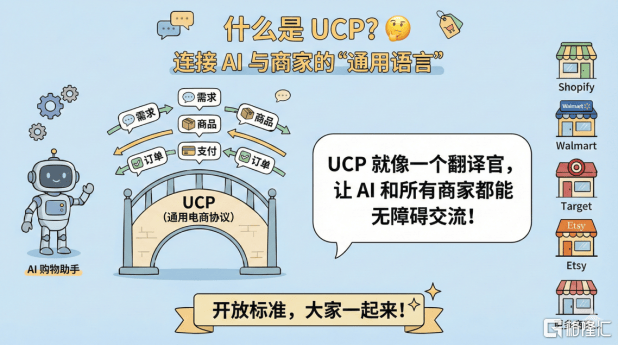
Core Insights - The launch of the Universal Commerce Protocol (UCP) by Google in collaboration with Shopify, Walmart, Target, Visa, and Stripe marks a significant shift in the e-commerce industry towards a new era of "conversation as transaction" [1][6][11] - Traditional e-commerce giants are facing immediate challenges as the UCP aims to standardize interactions that were previously controlled by centralized platforms [2][4][8] Group 1: UCP Overview and Implications - UCP is not just an API specification; it aims to create a universal language for e-commerce transactions, allowing AI agents to interact seamlessly with merchant systems [6][10] - The protocol threatens centralized e-commerce platforms by reducing the necessity for consumers to visit sites like Amazon or Taobao, as they can interact directly with AI agents [6][8] - UCP redefines human-computer interaction from a graphical interface to an intent-based interface, potentially diminishing the value of traditional platform features like homepage traffic and personalized recommendations [8][11] Group 2: Strategic Responses from Major Players - Amazon's absence from the UCP alliance signals a strategic choice to maintain its closed ecosystem, focusing on internal AI developments and reinforcing its control over its platform [13][14] - In contrast, Alibaba's Ant International actively embraces UCP, leveraging its extensive commercial ecosystem and payment capabilities to support AI-driven business growth [19][21] - The differing strategies highlight a fundamental divergence: Amazon seeks to fortify its existing model, while Alibaba aims to become a foundational infrastructure provider within the new open ecosystem [25][31] Group 3: Future Competitive Landscape - The competition in e-commerce will evolve across three levels: entry points dominated by AI assistants, infrastructure provided by companies like Shopify and Ant International, and the transformation of product information and service capabilities to be AI-friendly [27][28][29] - The UCP's establishment signals a shift from platform-centric competition to a broader contest over who can define the next generation of consumer interactions [29][39] - The future of commerce will require businesses to prepare for AI agents, marking a transition from an "attention economy" to an "intention economy" [40][41]
AI日报丨马斯克旗下AI聊天机器人将接入五角大楼系统;Alphabet盘中市值突破4万亿美元
美股研究社· 2026-01-13 12:16
Group 1 - The article highlights the rapid development of artificial intelligence (AI) technology, presenting significant opportunities in the market [3] - The U.S. Department of Defense plans to integrate Elon Musk's AI chatbot "Grok" into its systems, alongside Google's generative AI, indicating a strong governmental interest in AI applications [5] - Ant Group and Google have launched a new open standard called the Universal Commercial Protocol (UCP) to streamline the entire AI shopping process, from product discovery to post-purchase support [6] Group 2 - Meta Platforms Inc. has formed a new executive team to focus on AI infrastructure, appointing Dina Powell McCormick to lead collaborations with governments and investors, emphasizing investment in AI infrastructure [8] - Alphabet's market capitalization has surpassed $4 trillion for the first time, with a recent stock price increase of 1.7% to $334.04, reflecting its strong position in the AI sector [9] - Apple has partnered with Google to utilize the Gemini model for its upcoming AI-driven Siri, marking a significant collaboration in AI technology development [10]

蚂蚁国际联手谷歌推出“通用商业协议”,金融科技ETF华夏(516100) 有望受益行情及AI双重催化
Sou Hu Cai Jing· 2026-01-13 06:52
Group 1 - The three major indices collectively declined, with the healthcare, CRO, and weight loss sectors leading the gains, while cryptocurrency and brokerage sectors experienced fluctuations and corrections [1] - Ant International is set to collaborate with Google on a new open standard in the field of Agentic Commerce, known as the Universal Commerce Protocol (UCP), aimed at enhancing AI agent technology to support the entire shopping process [1] - Dongwu Securities indicates that the fintech sector is experiencing a dual opportunity of "short-term market activity + mid-term policy drive," suggesting that internet brokerages may see performance elasticity due to sustained trading activity [1] Group 2 - The Huaxia Financial Technology ETF (516100) closely tracks the CSI Financial Technology Theme Index, covering software development, internet finance, and the digital currency industry, and is expected to benefit from market recovery and AI-driven catalysts [2]
巨头联手!沃尔玛、谷歌宣布:合作
Huan Qiu Wang Zi Xun· 2026-01-12 23:20
Group 1 - Walmart and Google announced a collaboration to integrate Google's generative AI chatbot Gemini into Walmart's shopping process, allowing consumers to discover products, compare prices, and complete purchases more efficiently [1][3] - The partnership reflects a shift in consumer behavior in the U.S., where more shoppers are now consulting AI before accessing shopping apps or e-commerce websites [3][5] - Walmart's CEO stated that the retail industry is transitioning from traditional web or app searches to AI-driven business models, marking a significant evolution in retail [5] Group 2 - Google is enhancing its AI e-commerce strategy, having introduced a new open technology standard called the Universal Commercial Protocol (UCP) in collaboration with several retailers, including Walmart [5][6] - The UCP aims to establish a common language and interaction standards for AI-driven shopping processes, facilitating direct connections between AI shopping agents, retailers, and payment systems [6] - Other AI companies are also embedding e-commerce functionalities into their chatbots, with OpenAI and Stripe developing a similar open-source solution, indicating potential competition with UCP [8][10] Group 3 - A McKinsey report projects that the global retail market could reach a potential size of $3 trillion to $5 trillion by 2030, driven by AI tools and "agent commerce" [10]

腾讯研究院AI速递 20260113
腾讯研究院· 2026-01-12 16:37
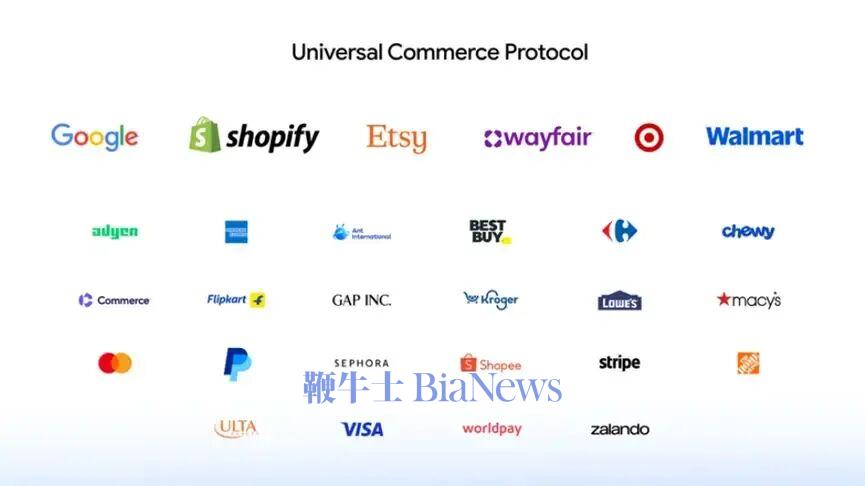
Group 1 - Google has launched and open-sourced the Universal Commercial Protocol (UCP) in collaboration with over 20 retail giants, including Shopify and Walmart, to establish a unified open standard for AI agents in shopping, covering the entire process from product discovery to after-sales service [1] - The UCP has been implemented in Google's search AI mode and the Gemini application, featuring "agent checkout" functionality that supports Google Pay and will soon integrate with PayPal, allowing retailers to maintain their transaction identity [1] - By fully open-sourcing the UCP, Google aims to lower the barriers for ecosystem participation, enabling small and medium-sized businesses to benefit from AI shopping [1] Group 2 - Midjourney has updated its Niji model to version 7, focusing on anime-specific features, correcting the previous version's tendency towards realism, and enhancing details in expressions, dynamic poses, and material textures [2] - The new sref style reference feature allows users to upload three reference images to maintain a consistent art style, significantly improving the model's understanding and ability to accurately interpret complex prompts [2] - Testing shows that version 7 surpasses version 6 in light and shadow details, stability in complex poses, and the quality of pure anime line art, making it particularly suitable for storyboard generation and series creation [2] Group 3 - UniPat AI, in collaboration with Sequoia China and xbench, has released the BabyVision benchmark, which breaks down visual capabilities into four categories and 22 sub-tasks [3] - The evaluation results indicate that Gemini-3-Pro-Preview is the only model exceeding the baseline of a 3-year-old child, but it still falls short by 20 percentage points compared to a 6-year-old child, with many models struggling on simple tasks [3] - The research highlights a major shortcoming of Visual Language Models (VLMs), which is their inability to fully verbalize visual information, leading to loss of detail when compressing into tokens, making it difficult for models to perform tasks like tracing lines or stacking blocks [3] Group 4 - Kunlun Wanwei has launched Skywork Video v1.0 on the Tiangong Super Intelligent Agent platform, integrating the creative process into a "project-based" model where all materials are automatically collected and added to a multi-track editor [4] - The platform offers five initiation methods, including text generation, image animation, frame completion, multi-image style reference generation, and digital human video generation, with a built-in multi-track editor supporting detailed operations like splitting and replacing [4] - The Skywork product matrix now covers a full range of modalities from documents, spreadsheets, and presentations to video generation, creating a smart office platform that supports multiple scenarios and modalities [4] Group 5 - The world's first embodied Agentic OS, named COSA, has been released by Zhujidi Dynamics, featuring a three-layer architecture that integrates basic models, high-level skill layers, and cognitive decision-making layers [6] - COSA endows robots with three core capabilities: understanding vague instructions, cross-temporal semantic memory, and the ability to execute tasks seamlessly [6] - Unlike Figure AI's Helix end-to-end VLA model, COSA is built from the ground up as an operating system for the physical world, demonstrating significant advantages in the integration of movement and operation capabilities [6] Group 6 - Qianxun Intelligent has open-sourced its VLA base model Spirit v1.5, ranking first on the RoboChallenge Table30 leaderboard, surpassing Pi0.5 and receiving praise from NVIDIA's Jim Fan [7] - The core breakthrough of Spirit v1.5 lies in its "open, goal-driven" data collection strategy, moving away from "clean data" to internalizing physical common sense, resulting in a 40% improvement in fine-tuning convergence speed [7] - The unstructured collection method has increased the average effective collection time per person by 200% and reduced reliance on algorithm experts by 60%, with open-source weights and inference code available for community exploration [7] Group 7 - Anthropic co-founder Jack Clark revealed conflicting internal survey data indicating that while 60% of Claude users report a 50% increase in productivity, METR research shows that developers familiar with codebases experience a 20% decrease in AI tool-assisted PR merge speed [8] - Clark pointed out the "barrel principle" in code production, where writing speed may increase tenfold, but review speed only doubles, preventing an explosive overall efficiency increase, with no truly self-improving AI expected by January 2026 [8] - He emphasized that if the Scaling Law hits a wall, it would be shocking, as current massive infrastructure investments suggest most are betting on the opposite outcome, and breakthroughs in distributed pre-training could alter the political and economic structure of AI [8] Group 8 - Linus Torvalds, the creator of Linux, has released his first Vibe Coding project, AudioNoise, on GitHub, utilizing Google's Antigravity to generate a Python visualization tool, admitting it performs better than his own coding [9] - The project originates from the design of a guitar effects pedal and primarily explores foundational knowledge in digital audio processing, including IIR filters and delay loops for zero-latency single-sample processing [9] - Just five days prior, Torvalds criticized AI-generated code as "ridiculously stupid," making his subsequent use of AI tools a topic of discussion in the tech community, marking a "true fragrance moment" [9] Group 9 - Elon Musk predicts that AGI will be achieved by 2026 and that by 2030, AI will surpass the total intelligence of all humanity, with AI performance improving tenfold each year, and xAI's Memphis Colossus 2 data center reaching 1 gigawatt power by mid-January [10] - He introduced three key terms for AI safety: truth, curiosity, and beauty, forecasting that within three years, the surgical capabilities of robots will exceed those of top surgeons, and within five years, robots will transition from scarcity to abundance, with 10 billion units by 2040 [10] - Musk emphasized the view that "the sun is everything" in terms of energy, praised China's solar energy capacity of 1,500 gigawatts annually, and predicted that the essence of currency will become watts, with white-collar jobs being the first to be replaced by AI, ultimately leading to universal prosperity [10]
蚂蚁国际和谷歌共推“通用商业协议”,打通“AI购物”全流程
21世纪经济报道· 2026-01-12 12:22
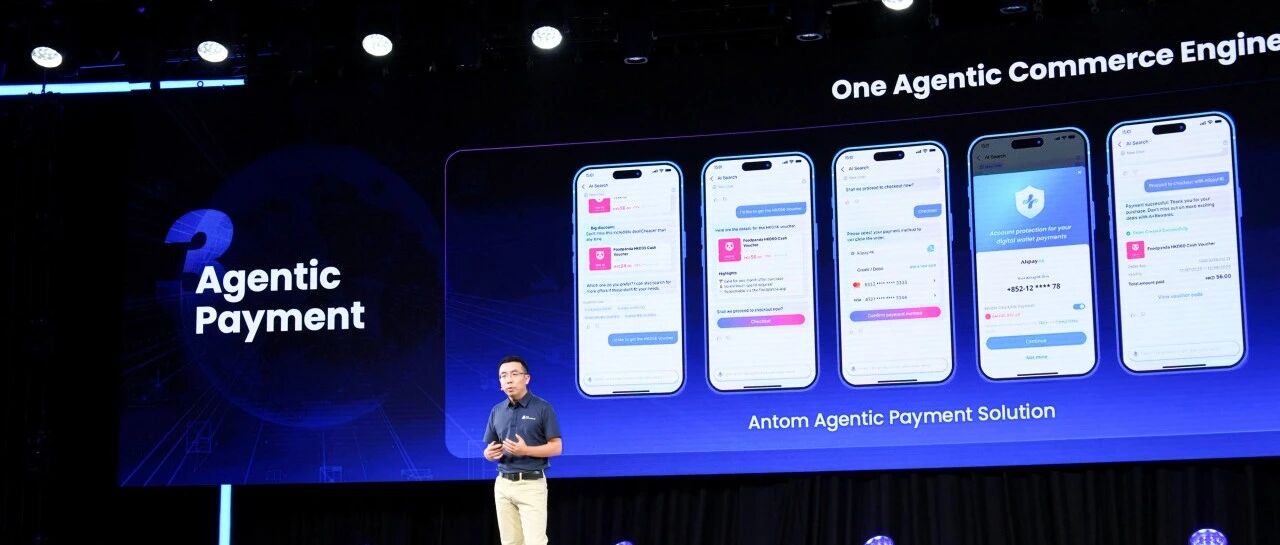
Core Viewpoint - Ant International is expanding its collaboration with leading global models to support the construction of an intelligent commercial ecosystem, focusing on the new Universal Commerce Protocol (UCP) to enhance AI-driven commercial activities [2][3]. Group 1: Collaboration and Protocol - Ant International is partnering with Google to develop the Universal Commerce Protocol (UCP), aimed at facilitating AI agents in the entire shopping process, including browsing, purchasing, and after-sales support [2]. - The UCP establishes a universal interaction language that allows AI agents to efficiently collaborate across systems, enhancing commercial activities without the need for separate connections for each agent [2]. Group 2: Intelligent Agent Solutions - Ant International's intelligent agent solutions provide three core capabilities for merchants: comprehensive management of AI algorithms, a specialized payment solution for e-wallets, and enhanced transaction security through AI technologies [3]. - The Antom EasySafePay solution allows e-wallet users to complete transactions without leaving the AI interaction interface, improving user experience [3]. Group 3: Market Reach and Applications - Ant International has collaborated with leading model providers like Qianwen and DeepSeek to explore scalable AI applications in various business scenarios, particularly in emerging markets with high economic growth and diverse payment ecosystems [4]. - The company operates in over 200 global markets, connecting more than 1.8 billion user accounts and 150 million merchants, positioning its global payment services and AI-as-a-service platform as key to the UCP's implementation [4].