BJ212

Search documents
真假“北汽”之争:一场迟到了十年的品牌切割
经济观察报· 2025-12-06 07:34
Core Viewpoint - The dispute between BAIC Group and Beijing Automotive Manufacturing Factory over the "BAIC" brand highlights that the division of a company is not merely resolved through a share transfer agreement, as the definition of intangible brand heritage can lead to more complex and enduring challenges [2][4]. Group 1: Background of the Dispute - BAIC Manufacturing was established in 1951 and became a significant player in China's automotive industry, with the "BAIC" brand gaining national recognition through the production of the BJ212 off-road vehicle in 1965 [4]. - In 2015, BAIC Group transferred 51% of BAIC Manufacturing's shares to a private entity, leading to BAIC Manufacturing becoming a private company [5]. - Following the share transfer, BAIC Manufacturing began to emphasize its historical connection to the "BAIC" brand, which led to tensions with BAIC Group [7]. Group 2: Legal Proceedings - Since 2021, BAIC Group has filed multiple lawsuits against BAIC Manufacturing for trademark infringement, claiming that BAIC Manufacturing has used the "Beijing" trademark without authorization [8]. - The court ruled in favor of BAIC Group, recognizing the brand's established market presence and the potential for consumer confusion [9]. - The lengthy duration of the legal proceedings is attributed to the extensive evidence required in trademark and unfair competition cases [9]. Group 3: Future Implications - BAIC Manufacturing has appealed the first-instance ruling, indicating that the legal battle is far from over [11]. - Experts suggest that companies should prioritize the clear delineation and protection of intangible assets during asset restructuring or divestiture to avoid similar disputes in the future [11][12]. - The case serves as a reminder for companies to include detailed contractual terms regarding the use of brand names and trademarks in share transfer agreements to prevent future conflicts [12].

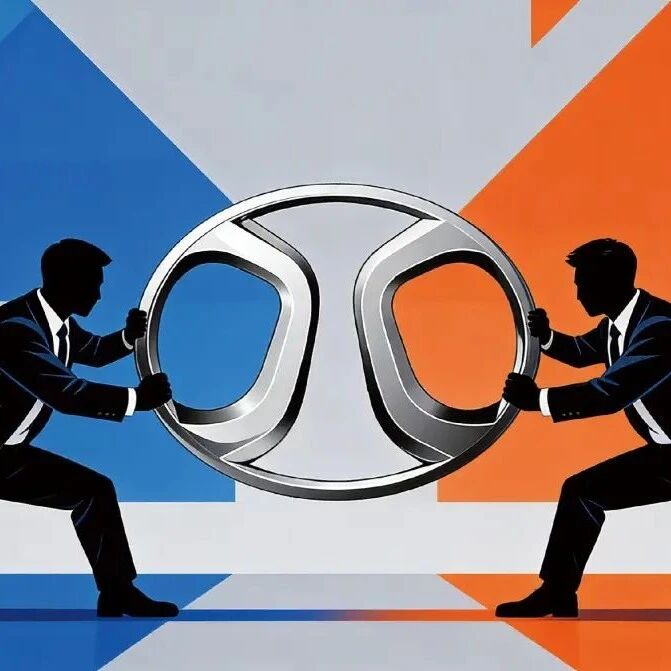
真假“北汽”之争
Jing Ji Guan Cha Wang· 2025-12-06 04:41
Core Viewpoint - The dispute between BAIC Group and Beijing Automotive Manufacturing (referred to as "BAIC Manufacturing") over the use of the "BAIC" brand has resulted in a first-instance victory for BAIC Group, although BAIC Manufacturing has appealed the decision. This case highlights the complexities of brand heritage ownership and the challenges that arise after corporate restructuring, indicating that the division of tangible assets does not resolve the issues surrounding intangible brand legacies [2][9]. Group 1: Background of the Dispute - BAIC Manufacturing was established in 1951 and is recognized as one of the early pioneers of China's automotive industry [3]. - The "BAIC" brand gained national recognition with the successful production of the BJ212 off-road vehicle in 1965, which became a symbol of Beijing's state-owned automotive industry [4]. - In 2015, BAIC Group transferred 51% of BAIC Manufacturing's shares to a private enterprise, leading to BAIC Manufacturing becoming a private company [5]. Group 2: Nature of the Dispute - The conflict arose when BAIC Manufacturing began using the "Beijing" brand in its marketing and vehicle models starting in 2021, which prompted BAIC Group to file a lawsuit [2][6]. - BAIC Group claims that BAIC Manufacturing's use of the "Beijing" trademark constitutes trademark infringement and has filed multiple lawsuits since 2021 [7]. - The court recognized BAIC Group's long-standing use of the "BAIC" brand and its associated trademarks, establishing its significant market presence and brand recognition [8]. Group 3: Future Implications - BAIC Manufacturing has announced its intention to appeal the first-instance ruling, indicating that the legal battle is far from over [9]. - Experts suggest that BAIC Group should learn from this case to ensure clearer delineation and protection of intangible assets during future asset restructuring [9]. - Similar disputes over brand usage rights are not uncommon in the industry, as evidenced by past cases involving other companies [10].
BJ40燃油新款上市售14.99万元起,北汽股份加码硬派越野产品布局
Xin Lang Cai Jing· 2025-07-23 06:56
Core Viewpoint - The launch of the new BJ40 fuel model marks a significant advancement in Beijing Off-road's product lineup, emphasizing its commitment to the off-road SUV market and aiming to set new performance standards in the segment [1][2][4]. Group 1: Product Launch and Features - The BJ40 fuel model is positioned as a "full-scene professional off-road SUV" with a price range of 149,900 to 159,900 yuan, featuring 14 class-leading or unique attributes [1][5]. - The vehicle dimensions are 4790mm in length, 1940mm in width, and 1949mm in height, with a wheelbase of 2760mm, and it is equipped with a 2.0T gasoline/diesel engine [5]. - The BJ40 fuel model includes unique features such as China's only mechanical full-time four-wheel drive (diesel), a towing capacity of 2.5 tons, and a 4.0 high-speed ratio transfer case [5]. Group 2: Historical Context and Company Vision - Beijing Off-road has a rich history of over 60 years, being the inventor of China's off-road vehicles, with the BJ212 model marking the beginning of the off-road era in China [4][10]. - The company aims to leverage its historical legacy and technical expertise to establish itself as a leading brand in the off-road SUV market, with a focus on innovation and consumer service [2][10]. Group 3: Market Performance and Strategy - In the first half of 2025, Beijing Off-road achieved a terminal sales volume of 58,000 units, reflecting a year-on-year growth of 29%, with the BJ40 model leading the market in its category [9]. - The company is committed to enhancing its operational efficiency and market presence through strategic initiatives focused on extreme marketing, cost management, and quality improvement [9].
北京汽车王昊:品牌建设需坚持长期主义,摒弃“流量主义”
Zhong Guo Jing Ying Bao· 2025-07-15 14:00
Core Viewpoint - Beijing Automotive aims to revitalize its brand and expand its market presence by transitioning from traditional off-road vehicles to a broader audience through a "five transformations" strategy [2] Group 1: Market Position and Challenges - Beijing Automotive, established in 1958, has a rich history but faces challenges such as low brand awareness and market presence [2] - The hard-core off-road vehicle market has seen a slight increase in market share from 1.98% in 2020 to 2.91% in Q1 2025, but it remains a niche segment within the overall SUV market [2] Group 2: Strategic Transformations - The company is focusing on making off-road vehicles more accessible by introducing smarter and more fuel-efficient models, aiming to shift from a niche to a mass market [5] - Beijing Automotive is leveraging new energy technologies to redefine off-road vehicles, addressing concerns about fuel consumption and range anxiety with extended-range technology [5][6] - The BJ40 extended-range version and BJ60 Thunder models achieve a remarkable 1200 km range, catering to both off-road and urban commuting needs [5] Group 3: User-Centric Approach - The company is transitioning from a production-oriented to a user-oriented business model, emphasizing direct communication with customers to better understand their needs [6] - Engaging with users through social media and direct feedback is a key strategy for building trust and improving product offerings [6][7] Group 4: Brand Building and Long-Term Vision - Brand building is viewed as a long-term commitment, with a focus on delivering high-quality products and reliable services to gain user trust [7] - The importance of user-centered brand development is highlighted, with a belief that genuine user engagement leads to better brand loyalty [7][8] - The company acknowledges the challenges of building a strong brand in a competitive market, emphasizing the need for consistent quality and service over time [8]