
CPO技术

Search documents
光库科技(300620) - 2026年3月31日投资者关系活动记录表
2026-04-01 08:20
Group 1: Company Overview - The company, Zhuhai Guangku Technology Co., Ltd., is listed under stock code 300620 and is known for its advanced optical communication devices and technologies [1]. - The main products include fiber laser devices, optical communication devices, and Lidar light source modules [5]. Group 2: Financial Performance - In 2025, the company achieved a net profit of CNY 180.37 million, representing a year-on-year increase of 148.83% [4]. - The net profit attributable to shareholders was CNY 176.67 million, up 163.76% compared to the previous year [4]. - The total operating revenue for 2025 was CNY 1.47 billion, reflecting a growth of 47.56% year-on-year [5]. Group 3: Market and Product Growth - Sales revenue from optical communication devices increased by 100.37% year-on-year in 2025 [4]. - The company is actively monitoring the optical module industry's capacity and demand changes, emphasizing technological innovation and product upgrades as core drivers [3]. Group 4: Shareholder Information - As of February 28, 2026, the total number of ordinary shareholders was 79,912 [3]. - The company has established a dividend policy, planning to distribute at least 30% of the average distributable profit over the last three years in cash dividends [10]. Group 5: Technological Advancements - The company has developed advanced technologies for lithium niobate modulators, capable of supporting data rates of 800Gbps and above [3][11]. - The company is focusing on the next-generation optical interconnect technology, particularly CPO (Co-packaged Optics), which is expected to see initial deployment between 2026 and 2027 [9]. Group 6: International Presence - In 2025, overseas revenue accounted for 49.96% of total revenue, with key international clients including Trumpf Group, Coherent, and Cisco [8][10].

光纤涨价背后的逻辑
傅里叶的猫· 2026-03-30 12:09
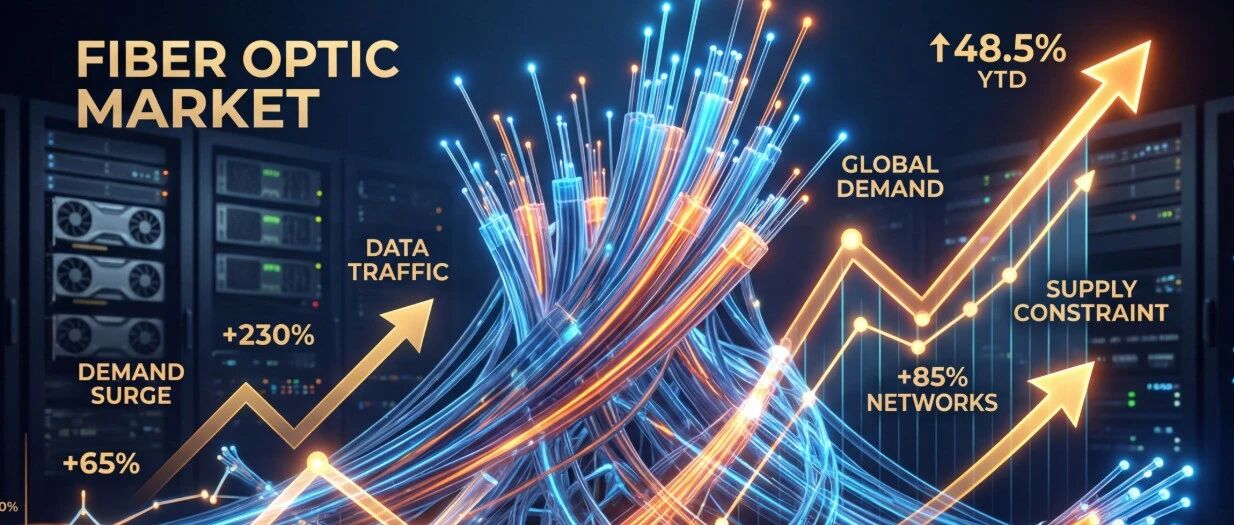
最近几个月,光纤价格一直在暴涨。在这个月初的时候,我们就写过光纤的涨价。 北美CSP大厂又来审厂、周末火热的openclaw、涨价的光纤 而且这种涨价不是那种温和的上涨,而是三个月内从 18 块钱涨到 85~120块钱的那种暴涨。更夸张的 是,市场上已经出现了"当日有效制"报价——就是今天报的价,明天就不算数了。这种场景,上一次 出现还是在 2017 年光纤行业的黄金时代。 但这一次,驱动力完全不同。 说明一下,本文中提到的这些价格和数据,都是参考业内公开可查的资料。 一、这三个月发生了什么 先看一下中邮证券的调研数据,感受一下这波涨价有多猛: G.652D (最普通的单模光纤):从 18 元/芯公里 → 85-120 元/芯公里,涨幅 450-567% G.657. A2 (弯曲不敏感光纤):从 35 元/芯公里 → 210-230 元/芯公里,涨幅 557% G.654. E (超低损耗光纤):涨幅更是突破天际 这不是某个地区的个别现象。全球最大的光纤公司康宁(Corning),今年 2 月跟 Meta 签了一个 60 亿美元的长期供应协议。 这里列一下常见的单模光纤的型号和用途。 型号 名称/特性 主要 ...


计算机行业周报:GPT-5.4mini与nano轻量登场,SkyReels-V4登顶全球AI视频大模型榜首
Huaxin Securities· 2026-03-26 00:24
Investment Rating - The report maintains a "Buy" rating for the companies mentioned, including 罗博特科 (300757.SZ), 唯科科技 (301196.SZ), 能科科技 (603859.SH), and 合合信息 (688615.SH) [9][60]. Core Insights - The AI video model SkyReels-V4 has topped the global rankings, surpassing competitors like OpenAI's Sora2 and Google's Veo3.1, indicating a significant advancement in AI video generation capabilities [3][24]. - OpenAI has launched two new lightweight models, GPT-5.4mini and GPT-5.4nano, which focus on reducing operational costs while maintaining response speed and output quality, thus accelerating the adoption of AI capabilities in real-world applications [33][41]. - Deeptune, an AI training platform, has completed a $43 million Series A funding round, highlighting the growing interest in interactive training environments for AI agents [4][48]. Summary by Sections Computing Power Dynamics - The rental prices for computing power remain stable, with specific configurations like A100-40G priced at 28.64 CNY/hour on Tencent Cloud and 31.58 CNY/hour on Alibaba Cloud [21]. - SkyReels-V4 has achieved the top position in the global AI video model rankings, showcasing its enhanced capabilities in video generation through a comprehensive reinforcement learning system [22][24]. AI Application Dynamics - Discord's weekly traffic increased by 2.09%, indicating a growing user engagement in AI-related platforms [31]. - The introduction of GPT-5.4mini and nano models aims to meet real-world production needs while significantly lowering costs, thus enhancing the accessibility of AI technologies [33][41]. AI Financing Trends - Deeptune's recent funding round reflects a shift towards creating high-fidelity interactive training environments for AI, addressing the challenges of traditional static data training methods [4][48]. Investment Recommendations - The report emphasizes the potential of the CPO sector, with Nvidia raising its AI chip revenue forecast to $1 trillion for 2025-2027, indicating strong growth prospects in AI computing [58]. - Companies such as 唯科科技 (301196.SZ), 合合信息 (688615.SH), 能科科技 (603859.SH), and 罗博特科 (300757.SZ) are highlighted as key investment opportunities due to their strong market positions and growth potential [59][60].




从GTC到OFC-模型和算力的奔跑
2026-03-24 01:27
Summary of Conference Call Records Industry Overview - The conference call discusses the advancements in AI applications and the optical communication industry, particularly focusing on the transition from copper to optical connections and the implications for various companies involved in these technologies. Key Points and Arguments AI Application Growth - The emergence of intelligent models is accelerating, with 2026 expected to be the year of AI application explosion, supported by existing commercial benefits that can sustain related companies for at least five years, alleviating concerns about returns on computing power investments [1][2][11]. Demand for Optical Modules - The demand for 1.6T optical modules is expected to double year-on-year by 2025, with companies like Zhongji Xuchuang and Xinyi Sheng projected to have a PE ratio below 20 in 2026, indicating a reasonable undervaluation [1][5]. Copper Connection Lifecycle - The lifecycle of copper connections is being extended, with Nvidia and Broadcom confirming that copper will remain dominant in Scale-up interconnections until at least 2027, transitioning to CPO (Co-packaged Optics) only after 2028 [1][7][8]. Technological Advancements - Significant advancements in pluggable optical module technology were noted, with breakthroughs in single-wave 400G silicon photonics and EML solutions, enhancing competition with CPO technologies [1][3][4]. Supply and Demand in Optical Chips - There is a current shortage of optical chips, with Lumentum expecting revenues exceeding $100 million by Q4 2026. Domestic manufacturers like Yuanjie Technology and Changguang Huaxin are making clear progress in the CW and EML sectors [1][6]. Investment Recommendations - The optical communication sector is experiencing high demand, with recommendations to invest in leading companies like Zhongji Xuchuang and Xinyi Sheng, which are expected to maintain high growth rates due to increasing demand for optical modules [5][11]. CPO Technology Development - CPO technology is anticipated to see significant developments, with Nvidia announcing the mass production of its CPO switch chips in collaboration with TSMC. The technology is expected to be implemented in Scale-out applications by Q4 2026 [7][8]. Market Dynamics - Nvidia and Broadcom support the continued use of copper connections due to their cost-effectiveness and low power consumption, with expectations that this trend will persist until at least 2028 [9][10]. Long-term Outlook for AI Computing Power - The long-term sustainability of AI computing power investments is viewed positively, with expectations of continued growth over the next 3 to 5 years, driven by the ongoing demand for computing power in AI applications [11]. Additional Important Insights - The conference highlighted the competitive landscape between copper and optical connections, emphasizing that while copper has advantages in short-distance applications, optical connections are superior for long-distance and high-bandwidth needs [2][3]. - The potential for domestic companies to capture market share in the optical chip sector is significant, given the high barriers to entry and the current supply-demand imbalance [6]. - The introduction of new applications, such as Nvidia's Groq LPU, is expected to provide new growth opportunities for copper connections, reinforcing their relevance in the market [10].


“光”速下挫,天孚通信为何领跌光模块板块?
第一财经· 2026-03-17 14:04
Core Viewpoint - The article discusses the significant market reaction to Nvidia's new AI chip architecture unveiled at the GTC conference, particularly the sharp decline in the stock price of Tianfu Communication, a leading player in the optical module sector, raising concerns about its future growth prospects due to the introduction of CPO technology [3][5]. Group 1: Market Reaction - On March 17, Tianfu Communication's stock opened with a drop of nearly 11%, closing down over 10%, marking a new low since February 10, with a total market value loss of approximately 24 billion yuan [3][5]. - In contrast, other companies in the optical module sector, such as Zhongji Xuchuang and Xinyi Sheng, showed relatively stable performance, with minor declines [5][3]. - The market's reaction is attributed to profit-taking and concerns over Tianfu Communication's long-term growth following Nvidia's announcement of CPO technology, which may reduce the company's product value and bargaining power [3][5]. Group 2: CPO Technology Impact - Nvidia's introduction of CPO technology, which integrates optical and electrical chips, poses a potential threat to Tianfu Communication's existing product offerings, as these components may be integrated into GPU designs, diminishing their market relevance [7][8]. - Despite Tianfu Communication's current market share in both CPO and NPO sectors, there are concerns about its ability to maintain its position in the face of evolving technology and competition from manufacturers with advanced design and integration capabilities [8][9]. - Analysts suggest that the recent stock decline reflects market sentiment and uncertainty regarding future technological shifts rather than immediate performance issues, emphasizing the importance of order fulfillment and actual performance in determining stock prices [9][8].


算力新变量-CPO-LPU-算电协同
2026-03-16 02:20
Summary of Key Points from Conference Call Records Industry Overview - The conference call discusses the developments in the computing power industry, particularly focusing on advancements in CPO (Co-Packaged Optics) and LPU (Language Processing Unit) technologies, as well as the strategic shifts in major companies like Tencent and Nvidia [1][2][3][4][5][6]. Core Insights and Arguments - **Tencent's Price Adjustment**: Tencent Cloud announced a price adjustment on March 11, marking a potential turning point in the industry. This includes ending free trials for certain domestic models and increasing inference prices for its Mix Yuan series. This shift indicates a strategic move from market share acquisition to profitability enhancement, suggesting the end of the free model era by 2026 [2][6]. - **CPO Technology Developments**: Nvidia's Quantum X800, the first CPO switch, is expected to be commercially available by 2026-2027. By 2029, the penetration rates for 3.2T CPO are projected to reach 50.6%. This technology is anticipated to significantly impact the competitive landscape of existing optical modules and switches, benefiting cloud and model vendors by optimizing computing costs [1][3][4]. - **LPU Product Expectations**: Nvidia is expected to release its first LPU product, which utilizes SRAM for model parameter storage, offering a bandwidth of 80TB/s. This innovation is aimed at low-latency, large-scale AI inference applications, potentially accelerating demand for inference computing power [4][5]. - **"Computing Power and Electricity Synergy" Strategy**: This concept has been included in the government work report, emphasizing the integration of computing power and electricity as a national strategy. This will enhance opportunities for IDC companies in the western regions of China, which have abundant green electricity resources, and increase demand for AI monitoring and control products in the power IT sector [5][6]. Additional Important Insights - **Market Transition**: The domestic computing power industry is transitioning from a reliance on foreign chips to a dominance of domestic chips, particularly from 2024 to 2026. This shift is expected to enhance the resilience of the supply chain and increase investment opportunities across the entire industry chain, including servers, switches, storage, IDC, and cloud computing [6]. - **Impact of Price Increases**: The increase in API costs due to the price adjustments may lead to a competitive divide among downstream application industries, with larger SaaS companies likely passing on costs to consumers while smaller firms may struggle to maintain competitiveness [2][6]. - **Future Investment Opportunities**: The anticipated growth in domestic computing power capabilities suggests that investment opportunities will expand beyond semiconductors to encompass the entire supply chain, including servers, switches, and IDC [1][6].
直击北美AI前线-一线调研反馈及GTC-OFC前瞻
2026-03-16 02:20
Summary of Conference Call Notes Industry Overview - The focus is on the AI hardware sector, particularly in North America, with key players including Celestica, Cisco, and Coherent. The demand for AI hardware is expected to remain strong through 2027-2028 due to corporate AI token allocations and established payment habits [1][3][4]. Key Insights and Arguments - **AI Hardware Demand**: Companies like Celestica and Cisco have seen significant increases in AI-related orders, with Cisco's orders tripling in the past six months. Celestica has revised its capital expenditure plans based on clear order visibility from 2026 to 2028 [3][4]. - **Supply Chain Dynamics**: The supply chain bottlenecks have shifted from GPUs to components like memory, power, and liquid cooling systems. Major cloud service providers (CSPs) are actively securing resources to mitigate risks from potential shortages [3][4]. - **Market Trends**: The Scale Up and Scale Across scenarios are identified as significant growth areas for AI hardware, with expectations for explosive demand for network hardware, including optical devices and switches [5][6]. - **CPO Technology**: Co-Packaged Optics (CPO) is viewed as a long-term trend, but its adoption in Scale Out scenarios is slower than anticipated due to supply chain integration challenges. In contrast, CPO is expected to see more urgent application in Scale Up scenarios [6][9]. - **OCS Positioning**: Optical Circuit Switches (OCS) are transitioning from custom tools for specific cloud vendors to potentially universal components in AI data centers. However, traditional switch manufacturers view OCS as complementary rather than a replacement for Ethernet switches [9][10]. Additional Important Points - **Investment Opportunities**: The current recommendation for the communication sector ranks light communication, AI custom chips, liquid cooling, and switches. The growth in light communication is driven by the rollout of 800G and 1.6T optical modules, while AI custom chips are expected to see increased demand from companies like Google [21]. - **Celestica's Growth Drivers**: Celestica is expanding its capacity in the U.S. and Thailand, with new capacity expected to come online in late 2026. The company anticipates significant revenue potential from cloud-native customers like OpenAI [18][19]. - **Arista's Competitive Edge**: Arista believes its experience in DCI gives it an advantage in Scale Across networks, outperforming competitors in latency, congestion, and load balancing [14]. - **NVIDIA's GTC 2026 Expectations**: Anticipated announcements include the introduction of new architectures and products, particularly focusing on the integration of LPU (Linear Processing Unit) with GPU systems [22][23][24]. This summary encapsulates the key points from the conference call, highlighting the dynamics within the AI hardware industry and the strategic positions of leading companies.
CPO产业进展更新
2026-03-13 04:46
CPO Industry Update Summary Industry Overview - The CPO (Co-packaged Optics) supply chain has secured substantial orders, with mass production expected in H2 2026 and a projected market penetration rate of 10% by 2027, equating to approximately 100,000 units shipped. By 2030, the long-term penetration rate is anticipated to reach 40%-50% [2][3]. Core Insights and Arguments - **Market Impact**: The CPO technology is not expected to significantly impact the 1.6T optical module and copper cable markets in 2026-2027 due to low absolute shipment volumes and high overall capital expenditure in the industry. However, a notable replacement effect is expected post-2028 as the 3.2T era begins [2][3][4]. - **Growth Projections**: CPO shipments are projected to grow from approximately 500 units in 2025 to 20,000 units in 2026, achieving a market penetration rate of about 2%. By 2027, shipments could increase by 4 to 5 times, reaching a 10% penetration rate [3][4]. - **Competitive Landscape**: The CPO technology will compete directly with 3.2T optical modules in the high-end market starting in 2028, as its performance and power consumption advantages become more pronounced [4]. Key Components and Market Dynamics - **Optical Engine**: The optical engine is a core component, with a single 1.2T switch valued at approximately $30,000. The market for optical engines could reach $40 billion by 2030, surpassing the current optical module market size [2][5]. - **CW Light Source Module**: The value of CW light source modules is approximately ten times higher than traditional solutions, with gross margins of 40%-50%. This segment is primarily dominated by overseas leaders like Lumentum and Coherent, while domestic players like Yuanjie Technology are seeking partnerships to enter the North American supply chain [2][5]. - **Passive Components Demand**: The demand for passive components is surging, with each device requiring thousands of optical fibers, leading to increased demand for optical connectors (e.g., Zhishang Technology), FAU couplers (e.g., Tianfu Communication), and flexible optical boards (e.g., Tai Chen Light) [2][5][6]. Additional Important Insights - **Supply Chain Changes**: CPO technology restructures traditional plug-and-play optical modules into independent modules, significantly altering product forms and supply chain dynamics. This change presents opportunities for traditional optical module manufacturers and core component suppliers to participate in the new market landscape [4][5]. - **Future Opportunities**: Domestic manufacturers have a high participation rate in the passive components sector, indicating substantial growth opportunities in the future as the CPO market expands [6].
群雄争霸CPO
半导体行业观察· 2026-03-13 01:53
Core Insights - The article discusses the transition from copper wiring to Co-Packaged Optics (CPO) in AI data centers to reduce energy consumption per bit and improve bandwidth [2][3][4] - CPO is expected to play a crucial role in meeting the projected $5.2 trillion investment needed for global AI data centers by 2030, as it addresses power and bandwidth challenges [3][4] Group 1: CPO Advantages and Implementation - CPO allows optical connections to be placed closer to ASICs, GPUs, or CPUs, reducing the need for long and inefficient electrical wires, thus lowering energy consumption per bit [2][4] - Companies leading in CPO adoption include Broadcom, NVIDIA, Intel, Marvell, and Ayar Labs, supported by foundries like GlobalFoundries, IBM, and TSMC [3] - CPO technology is seen as a solution to the high power demands of AI data centers, with significant implications for performance and efficiency [4][6] Group 2: Technical Challenges and Solutions - The integration of optical components into high-performance ASICs, CPUs, or GPUs requires specialized design methods to manage the physical and functional fusion of light and electricity [14][25] - High power consumption is a major challenge, with some chips consuming up to 35,000 amperes and 35 kilowatts, necessitating innovative power management solutions [6][7] - CPO design significantly reduces I/O power consumption while maintaining processing power, addressing bandwidth challenges through multiple channels [12][25] Group 3: Future Directions and Industry Developments - Advanced packaging issues need to be resolved for CPO to become more widespread, including thermal management, laser reliability, and manufacturing yield [22][25] - Major EDA companies are focusing on integrating optical simulation tools into their existing platforms to support CPO development [20][21] - The article emphasizes the importance of temperature stability and stress management in optical circuits to ensure reliable performance in AI systems [25][23]



英伟达重磅GTC大会将至,算力再迎预热
Shang Hai Zheng Quan Bao· 2026-03-11 06:54
Core Insights - The upcoming NVIDIA GTC 2026 conference is set to showcase groundbreaking advancements in AI computing, including a new GPU architecture called Rubin and the next-generation Feynman architecture [1] - NVIDIA is expected to introduce a new inference chip integrating Groq LPU technology, aimed at enhancing performance and reducing costs in AI inference, which could expand its product line and drive demand for SRAM and PCB materials [1] - The increasing power consumption of GPUs is pushing for advancements in interconnect technology, with the Rubin GPU expected to have significantly higher power, and the Feynman architecture potentially reaching 5000W [1] Group 1: NVIDIA's Technological Advancements - The GTC 2026 conference will focus on showcasing the Rubin platform and advancements in GPU, CPO switches, power architecture, and liquid cooling technologies [1] - NVIDIA is accelerating the development of CPO switches and optical interconnect solutions, collaborating with companies like Coherent and Lumentum to build a robust supply chain for AI computing infrastructure [2] - The conference is anticipated to provide a clear roadmap for the commercialization of CPO technology, with products like QuantumX3450 and SpectrumX being highlighted [2] Group 2: Market Implications and Investment Opportunities - The demand for high-speed optical modules is expected to grow as AI computing clusters expand, benefiting companies such as Zhongji Xuchuang, Xinyi Technology, Tianfu Communication, Guangxun Technology, and Yuanjie Technology [2] - The advancement of CPO switches and optical interconnect technologies will likely increase the demand for optical engines, external lasers, modulators, and fiber connections, benefiting companies like Taicheng Technology, Tengjing Technology, Dekeli, and Liante Technology [3] - The year 2026 is projected to be a pivotal year for silicon photonics commercialization, with ongoing developments in 3.2T optical modules further driving growth in the optical communication industry [2]