ChatBot

Search documents
AI圈贩卖焦虑已经过于离谱了
创业邦· 2026-03-10 03:47
Core Viewpoint - The article discusses the phenomenon of "lobster fever" driven by OpenClaw, highlighting its role as an innovative tool for enhancing AI capabilities rather than democratizing access to AI for the general public [5][10]. Group 1: AI Utilization and Market Dynamics - OpenClaw is positioned as a means to push the limits of AI usage for those who have already maximized existing AI tools, rather than a universal solution for all users [5][8]. - The disparity between theoretical and actual utilization rates of AI across industries is emphasized, indicating that many users still do not fully engage with AI capabilities [8]. - The article notes that the monetization of AI coding surpasses other sectors due to the high individual productivity of programmers, suggesting a correlation between time cost and the acceptance of token-based outsourcing models [8][10]. Group 2: Societal Implications and Trends - The emergence of subsidy policies for "raising lobsters" reflects a surreal integration of AI projects into governmental frameworks, raising questions about the sustainability of such initiatives [10][11]. - The article critiques the notion that AI can create genuine demand, arguing that the fear of missing out (FOMO) has become a driving force for engagement with AI tools [10][11]. - The narrative suggests that the AI industry is experiencing a significant divide, with a clear distinction between cutting-edge developments and mainstream adoption [10][14]. Group 3: Industry Behavior and Future Outlook - The article observes that major internet companies in China have spent over 6 billion RMB to boost daily active users (DAU) for AI applications, while smaller firms are pivoting towards international API sales [14][15]. - A notable divergence is highlighted between Chinese and American AI companies, with the former often absent from global industry discussions, reflecting geopolitical tensions [15][16]. - The article concludes with a recommendation for individuals to engage with AI out of curiosity rather than pressure, suggesting that the current landscape is more about personal exploration than collective trends [16].


Agent Native的infra增长潜力有多大?
3 6 Ke· 2026-02-26 23:26
Core Insights - The article discusses the emerging trend of AI Agents, which are expected to surpass ChatBots as the primary application form in various fields due to their ability to enhance productivity significantly. Group 1: AI Agents vs. ChatBots - AI Agents can complete entire workflows and deliver results directly, unlike ChatBots, which assist with specific tasks within a workflow [1] - Agents can work in parallel, allowing experienced professionals to collaborate with multiple Agents simultaneously, greatly increasing efficiency [1] - The infrastructure for Agents is still in its infancy, lacking the necessary technology paradigm to support their operational needs [1] Group 2: Daytona's Innovations - Daytona has developed a new type of "composable computer" or "AI sandbox" that allows Agents to run code and manage computer operations with full control over the underlying environment [2] - Daytona recently secured $24 million in Series A funding, led by FirstMark, with participation from several other investors [2] - The founding team of Daytona has a history of creating developer tools and has pivoted from serving human developers to focusing on AI Agents [6][4] Group 3: Technical Specifications - Daytona's infrastructure is designed for speed and concurrency, achieving cold starts in under 60 milliseconds [8] - The system is built entirely in-house, tailored specifically for AI Agents, and does not rely on existing orchestration systems like Kubernetes [9] - Daytona's technology includes strict security boundaries, resource management, and observability, essential for the effective operation of AI Agents [9] Group 4: Market Potential and Future Outlook - The trend of Agentic AI is becoming increasingly prominent, with predictions that Agents will become a significant part of the workforce [17] - The market for Agent-based computing is expected to surpass human-centered computing markets due to the ability of one person to manage multiple Agents [18] - There is a substantial opportunity for entrepreneurs in this space, as the market potential is vast and competition is relatively low [19][20]

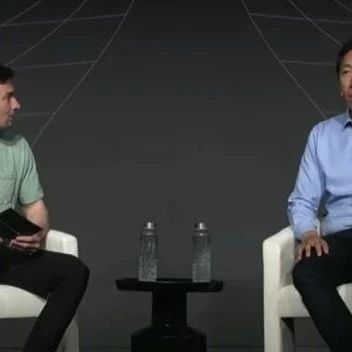
深度|吴恩达:语音是一种更自然、更轻量的输入方式,尤其适合Agentic应用;未来最关键的技能,是能准确告诉计算机你想要什么
Z Potentials· 2025-06-16 03:11
Core Insights - The discussion at the LangChain Agent Conference highlighted the evolution of Agentic systems and the importance of focusing on the degree of Agentic capability rather than simply categorizing systems as "Agents" [2][3][4] - Andrew Ng emphasized the need for practical skills in breaking down complex processes into manageable tasks and establishing effective evaluation systems for AI systems [8][10][12] Group 1: Agentic Systems - The conversation shifted from whether a system qualifies as an "Agent" to discussing the spectrum of Agentic capabilities, suggesting that all systems can be classified as Agentic regardless of their level of autonomy [4][5] - There is a significant opportunity in automating simple, linear processes within enterprises, as many workflows remain manual and under-automated [6][7] Group 2: Skills for Building Agents - Key skills for building Agents include the ability to integrate various tools like LangGraph and establish a comprehensive data flow and evaluation system [8][9] - The importance of a structured evaluation process was highlighted, as many teams still rely on manual assessments, which can lead to inefficiencies [10][11] Group 3: Emerging Technologies - The MCP (Multi-Context Protocol) is seen as a transformative standard that simplifies the integration of Agents with various data sources, aiming to reduce the complexity of data pipelines [21][22] - Voice technology is identified as an underutilized component with significant potential, particularly in enterprise applications, where it can lower user interaction barriers [15][19] Group 4: Future of AI Programming - The concept of "Vibe Coding" reflects a shift in programming practices, where developers increasingly rely on AI assistants, emphasizing the need for a solid understanding of programming fundamentals [23][24] - The establishment of AI Fund aims to accelerate startup growth by focusing on speed and deep technical knowledge as key success factors [26]