Chiplet(小芯片)

Search documents
先进封装迎AI驱动黄金期,国产链加速突破赋能高集成未来
Sou Hu Cai Jing· 2026-01-28 04:05
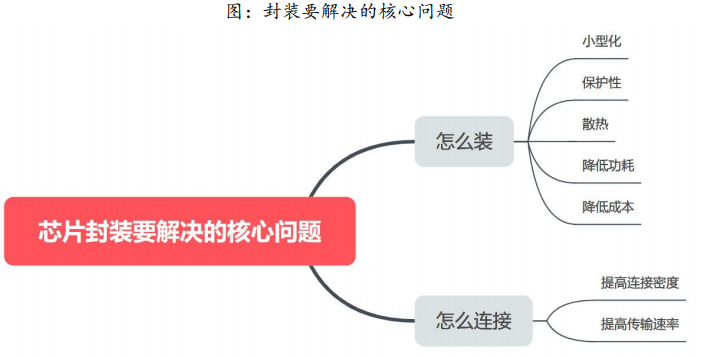
Core Insights - TSMC has raised its 2026 capital expenditure to $52-56 billion, with 10-20% allocated to advanced packaging, indicating a high growth cycle driven by AI chip demand [1] - The advanced packaging market is expected to grow at a CAGR of 8.9% from 2019 to 2029, increasing its share from 45.6% to 50.9%, surpassing traditional packaging [1] Industry Trends - Technological advancements focus on enhancing electrical performance, integration, thermal management, and cost reduction, with key enabling technologies including Bump, RDL, Wafer-level packaging, and TSV [3] - Current trends include 2.5D/3D packaging and Chiplet technology, which offer significant advantages in yield improvement, cost reduction, and compatibility across multiple processes [3] Market Dynamics - Advanced packaging addresses multiple bottlenecks in the post-Moore's Law era, such as alleviating the "memory wall" with 2.5D/3D integration of high bandwidth memory, breaking the "area wall" through multi-chip stacking, and optimizing power consumption and heat dissipation to tackle the "power wall" [5] - The global packaging revenue is dominated by Taiwan (43.7%), the USA (21%), and mainland China (20.2%), with mainland China's advanced packaging share at approximately 15.5% [7] Growth Projections - The advanced packaging market in mainland China is projected to grow from 51.4 billion yuan in 2024 to 100.6 billion yuan in 2029, with a CAGR of 14.4% [7] - The global advanced packaging market is expected to reach approximately $45 billion in 2024, accounting for 55% of the packaging market, and is projected to grow to $80 billion by 2030, with a CAGR of 9.4% from 2024 to 2030 [7] Company Developments - Changdian Technology has launched the XDFOI® chip integration process and has begun mass production [8] - Tongfu Microelectronics plans to expand production through a private placement, with a 55.7% increase in net profit for the first three quarters of 2025 [8] - Huada Semiconductor has acquired Huayi Microelectronics to expand its power device packaging and has established a subsidiary to enhance 2.5D/3D advanced packaging [8] - Yongxi Electronics is leveraging the FH-BSAP platform to meet diverse advanced packaging needs, with expected revenue of 4.2-4.6 billion yuan in 2025 [8]

为何都盯上了Chiplet?
半导体行业观察· 2025-02-28 03:08
Core Insights - The article discusses the increasing demand for smaller chips due to the need for more transistors and higher processing power, particularly in the context of large-scale language models [1][2] - It highlights the challenges in semiconductor manufacturing, particularly the limitations in increasing transistor density and the difficulties in wiring connections between transistors [4][6] - The article compares different chip architectures, specifically the WSE-3 and Nvidia H100, emphasizing the trade-offs in performance, memory capacity, and cost-effectiveness [9][10] Group 1: Chip Architecture and Performance - The trend towards using smaller chips is driven by the desire to increase the number of transistors within a limited area, with current limits around 800 square millimeters for manufacturing [2][3] - The WSE-3 chip, while having a larger size and more on-chip memory, faces challenges in storing all necessary weights for large language models, leading to a complex external memory configuration [10][8] - The performance comparison shows that WSE-3 has a memory capacity 880 times greater than H100, but only achieves 20 times the performance, indicating a complex balance between cost and value [10][8] Group 2: Cost and Value Considerations - The article discusses the cost implications of using chiplets versus monolithic designs, noting that chiplets can potentially reduce manufacturing costs while allowing for greater flexibility in product design [15][16] - It emphasizes the importance of evaluating the value derived from using chiplets, as the benefits must outweigh the additional costs associated with their implementation [24][26] - The article also mentions that the value of chiplets can vary significantly between companies, depending on their specific manufacturing processes and technologies [26]