后摩尔时代

Search documents
限时免费报名!第三代/第四代半导体+先进封装+热管理,就在FINE2026先进半导体大会
DT新材料· 2026-03-24 16:05
Core Viewpoint - The 2026 Advanced Semiconductor Industry Conference aims to lead global innovation in new materials, focusing on key technologies and industry trends in the post-Moore era, emphasizing system-level collaborative innovation in semiconductor materials, device architecture, advanced packaging, and heterogeneous integration [2][21]. Event Overview - The event will take place from June 10 to June 12, 2026, at the Shanghai New International Expo Center, covering an exhibition area of 50,000 square meters and expecting over 100,000 attendees [5][21]. - The conference will feature over 300 strategic and cutting-edge technology reports, showcasing innovations applicable to various industries such as artificial intelligence, smart computing, aerospace, and new energy [21][23]. Key Themes and Forums - The conference will include multiple forums focusing on advanced semiconductor applications, including: - Diamond-based electronic devices and quantum sensing technologies [7]. - Advanced packaging and reliability, including discussions on laser processing and ultra-precision grinding [8][24]. - AI chip thermal management and power device thermal management forums [8][9][24]. Participating Organizations - Major semiconductor companies expected to participate include Intel, NVIDIA, AMD, Huawei, TSMC, and many others from the consumer electronics and communication technology sectors [9][10]. - The event will also attract data center enterprises and intelligent automotive companies, highlighting the broad interest across various technology sectors [10][11]. Registration and Pricing - Registration fees are set at ¥3000 for enterprises and universities, with early bird pricing available until April 30, 2026 [11][12]. - Students can register for ¥1500, with additional discounts for group registrations [11]. Supporting Organizations - The event is organized by DT New Materials and supported by various associations and media outlets, emphasizing its significance in the new materials and semiconductor sectors [4][21].

湾芯展:执棋破局,筑就中国集成电路全球引领新标杆
半导体行业观察· 2026-03-23 02:10
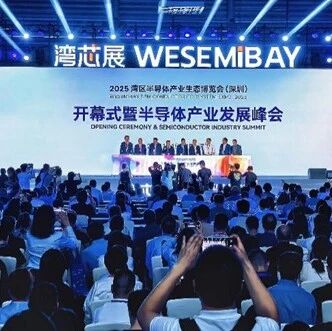
Core Viewpoint - The article emphasizes the strategic importance of the semiconductor industry in the context of global technological competition and highlights China's efforts to enhance its semiconductor capabilities through the "14th Five-Year Plan" and the upcoming Bay Area Semiconductor Industry Expo (Bay Chip Expo) [1][12]. Group 1: Market Overview - The global semiconductor market is projected to reach $980 billion by 2026, with a year-on-year growth rate of 27% [1]. - The Guangdong-Hong Kong-Macao Greater Bay Area has become a significant growth engine for China's semiconductor industry, housing over 12,000 industry-related enterprises [1]. Group 2: Bay Chip Expo Achievements - In 2025, the Bay Chip Expo covered over 60,000 square meters, featured more than 600 global exhibitors, and attracted 112,300 professional visitors, marking it as a focal point in the industry [5]. - The event received extensive media coverage, with over 1 billion online exposures, and introduced the "Bay Chip Award," which engaged nearly 4 million professional votes [5]. Group 3: Industry Collaboration - The Bay Chip Expo aims to break down barriers across the semiconductor supply chain, creating a collaborative platform that encompasses chip design, wafer manufacturing, compound semiconductors, and advanced packaging [3]. - The expo facilitates efficient connections between global semiconductor resources, promoting both "bringing in" and "going out" strategies [7]. Group 4: Future Developments - The 2026 Bay Chip Expo is set to take place from October 14-16 in Shenzhen, with an exhibition area exceeding 70,000 square meters and over 800 exhibitors expected [12]. - The event will focus on key areas such as AI chips, RISC-V ecosystems, and advanced packaging, aligning with industry upgrade needs [14]. Group 5: International Strategy - The expo plans to enhance its international strategy by targeting semiconductor core regions in Japan, South Korea, and Southeast Asia, aiming to increase overseas participation significantly [9]. - It will invite top global semiconductor experts and executives to discuss industry trends and share insights on advanced technologies [10].




直击2026上海光博会,解锁后摩尔时代创新密码
半导体行业观察· 2026-03-22 02:42
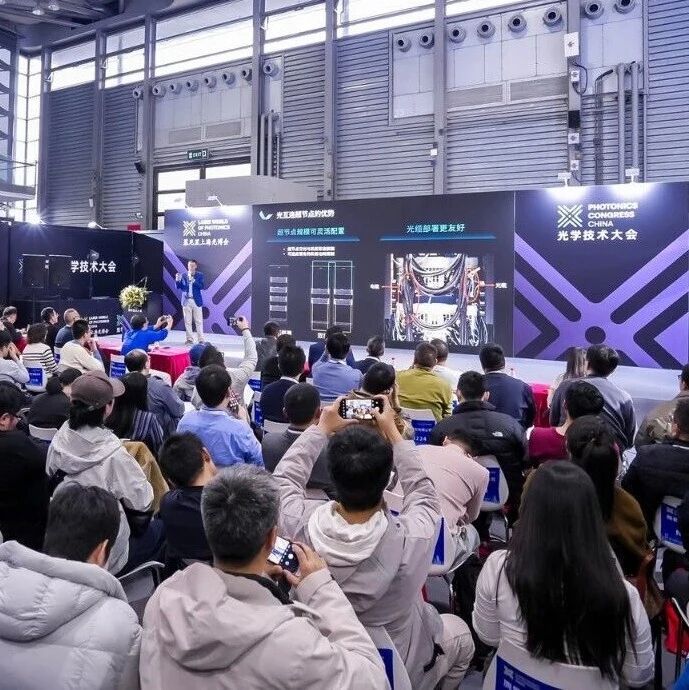
Core Viewpoint - The integration of semiconductor and optoelectronic technologies is becoming a central theme in industry development, driven by the post-Moore era and the explosive demand for AI computing power, emphasizing the importance of collaboration across the entire industry chain [1][3]. Group 1: Forum Insights - The "Industry Collaboration and Communication Upgrade" forum gathered top experts and industry leaders to discuss core topics across the semiconductor and optoelectronic fields, sharing cutting-edge technological achievements and insights into industry development opportunities [3]. - The forum highlighted the need for collaborative innovation across materials, devices, packaging, testing, and system applications to inject new ideas and directions for high-quality industry development [3]. Group 2: Two-Dimensional Semiconductors - Two-dimensional semiconductors are identified as a key technology in the post-Moore era, offering significant advantages over silicon-based semiconductors, including reduced difficulty and cost in advanced processes [6][7]. - Major companies like TSMC, Intel, and Samsung are actively investing in two-dimensional semiconductor technology, which is expected to be integrated into heterogeneous systems after the 1nm node, with potential low-power applications by 2029 [6][7]. - Original Microelectronics has launched China's first engineering demonstration line for two-dimensional semiconductors, with plans for small-batch production of 90nm CMOS processes by September this year [7]. Group 3: Silicon Photonics - Silicon photonics technology is poised for explosive growth, driven by the demand for high-speed AI interconnects, with the market for 1.6T products expected to reach $4.5 billion by 2028 [10]. - The establishment of an 8-inch low-loss silicon nitride production platform has enabled the mass production of silicon photonic chips, addressing key challenges in traditional silicon photonics [10][11]. Group 4: Capacitor Innovations - Silicon capacitors are emerging as a solution to energy integrity challenges in AI applications, with a projected market size of $11.7 billion by 2027 [14]. - Their superior temperature stability and long lifespan make them ideal for high-density power delivery networks in AI chips and optical modules [14]. Group 5: Optical Interconnects - Optical interconnects are seen as a solution to the bandwidth, power, and topology challenges faced by traditional electrical interconnects, with the optical interconnect market expected to exceed $23 billion by 2025 [21]. - Companies are developing integrated optical solutions to enhance bandwidth and reduce power consumption, with significant advancements in optical computing technologies [21][22]. Group 6: Advanced Packaging - The "EDA+" paradigm is proposed to address the limitations of traditional EDA tools in advanced packaging, enabling collaborative design across multiple chiplets and layers [24][25]. - This new approach supports various packaging forms and integrates multiple physical field analyses, enhancing the efficiency of heterogeneous integration in chip design [24][25]. Group 7: Photonic Chips for AI and Quantum Computing - Photonic chips are positioned as a core hardware support for AI and quantum computing, with significant advantages in bandwidth and energy efficiency [36][37]. - The development of a fully controllable technology system based on lithium niobate thin films aims to facilitate the mass production of photonic chips for various applications [36][37]. Group 8: Testing Innovations - The transition from hardware to software-defined testing solutions is reshaping the testing and measurement industry, with platforms like Moku enabling customizable instrument solutions [28][29]. - High-speed oscilloscopes are being developed to meet the rigorous testing demands of optical communication technologies, ensuring reliable performance in high-speed applications [40][41]. Conclusion - The forum underscored the importance of collaborative innovation across the semiconductor and optoelectronic industries, addressing the core demands of computing power and communication upgrades in the post-Moore era, while outlining a clear blueprint for future industry development [42].
全球半导体万亿时代提前到来:SEMICON China 2026启幕在即
半导体芯闻· 2026-03-16 10:26
Core Insights - The SEMICON/FPD China 2026 event will take place on March 25, 2026, in Shanghai, featuring over 1,500 exhibitors and covering the entire semiconductor industry chain [1] - The global semiconductor market is projected to reach $791.7 billion by 2025, with the potential to exceed $1 trillion as early as 2026, driven by a structural explosion in AI computing demand [3][5] - China's semiconductor capacity is undergoing significant expansion, with wafer production expected to triple from 4.9 million to 14.1 million units between 2020 and 2030, increasing its global market share from 20% to 32% [8] Market Growth - The semiconductor market has accelerated from $200 billion in 2000 to nearly $1 trillion in just four years, with AI infrastructure spending expected to reach $450 billion by 2026 [5] - The storage market is anticipated to surpass wafer foundry services for the first time by 2026, with HBM growth rates nearing 60% [6] China's Position - China is set to dominate the new wafer fabrication plants, with 47 out of 108 new facilities expected to be built by 2028, representing over half of Asia's new capacity [8] - Chinese semiconductor equipment companies are gaining prominence, with North Huachuang expected to enter the global top ten equipment firms [8] Industry Events - The SEMICON China event serves as a barometer for the semiconductor industry's development, with the 2026 exhibition expanding to 12 halls and featuring over 1,500 exhibitors [10] - The event will include various forums covering topics such as AI computing, automotive chips, and sustainable manufacturing, with participation from industry leaders and analysts [10] Talent Development - The semiconductor industry faces a structural talent gap, with an estimated shortage of 300,000 professionals as of 2018 [11] - SEMI China is addressing this issue through initiatives like the CXO Forum and talent summits to connect students with industry opportunities [12]
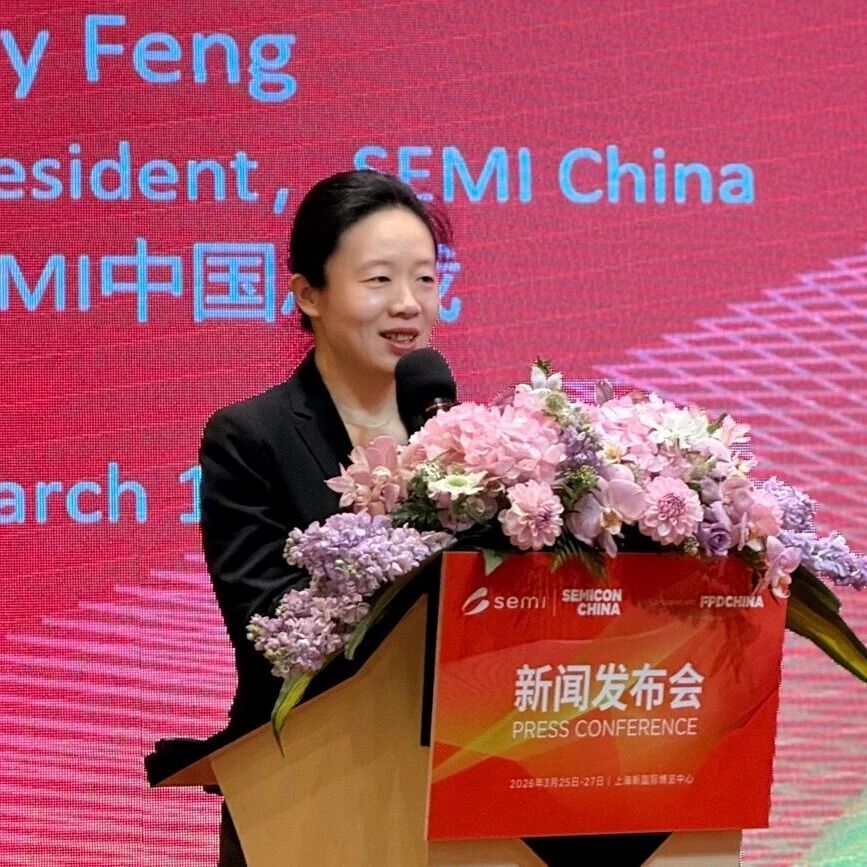
郝跃院士:建议推动化合物半导体、光电显示、新型传感器等产业形成规模化、高竞争力的全球布局
DT新材料· 2026-03-08 16:05
Core Viewpoint - The article emphasizes the importance of focusing on both overcoming key technological bottlenecks in the semiconductor industry and strengthening areas where China is already competitive to secure a leading position globally in the integrated circuit sector during the 14th Five-Year Plan period [1]. Group 1: Semiconductor Industry Development - The 14th Five-Year Plan is seen as a critical turning point for China's integrated circuit industry, transitioning from a follower to a leader in certain emerging sectors [1]. - Key areas where China has competitive advantages include third-generation semiconductors (such as gallium nitride and silicon carbide), fourth-generation semiconductors (like gallium oxide and diamond), photonic chips, and low-dimensional semiconductor materials [1]. - China controls over 95% of the global gallium resources and has implemented export controls on key semiconductor materials, which provides a unique industrial leverage [1]. Group 2: Emerging Memory Technologies - In the emerging memory sector, China has made significant technological progress in Flash memory, ferroelectric memory, magnetic RAM (MRAM), and phase-change memory (PCM), which have gained global influence [2]. - There is a need for increased support for emerging fields such as fourth-generation semiconductors and new memory technologies, as current investment mechanisms tend to favor more mature companies [2]. Group 3: Talent Development - The cultivation of innovative talent that meets industry needs is urgent, especially in light of the 14th Five-Year Plan and future demands [3]. - Universities are encouraged to enhance their educational frameworks by integrating science and education, fostering international cooperation, and focusing on developing students' responsibility, innovative thinking, and practical skills [3].
限时免费报名启动!FINE2026 先进半导体大会丨金刚石+碳化硅+氮化镓+氮化镓+氮化铝
DT新材料· 2026-03-03 16:29
Core Viewpoint - The 2026 Advanced Semiconductor Industry Conference aims to lead global innovation in new materials, focusing on key technologies and industry trends in the post-Moore era, driven by emerging industries such as AI, electric vehicles, and aerospace [2][21]. Event Overview - The event will take place from June 10 to June 12, 2026, at the Shanghai New International Expo Center, covering an exhibition area of 50,000 square meters and expecting over 100,000 attendees [5][21]. - The conference will feature over 300 strategic and cutting-edge technology reports, showcasing innovations in AI, data centers, intelligent robotics, and more [21][23]. Key Themes and Forums - The conference will focus on third and fourth-generation semiconductors, advanced packaging, and system-level collaborative innovation [2][21]. - Major forums include: - Diamond Frontier Applications Forum - Ultra-Precision Processing Forum - Third and Fourth Generation Semiconductor Crystal Growth Forum [6][7][24]. Participating Organizations - The event is organized by DT New Materials and supported by various associations and institutions, including the Chinese Academy of Sciences and several industry alliances [4][21]. - Notable invited companies include Intel, NVIDIA, Huawei, and TSMC, among others from semiconductor, consumer electronics, and data center sectors [10][11]. Registration and Pricing - Registration fees are set at ¥3000 for enterprises and universities, with early bird prices available [12][14]. - Students can register for ¥1500, with additional discounts for group registrations [12][14]. Additional Information - The event will also include specialized forums on topics such as AI chip thermal management, power device thermal management, and advanced battery technologies [8][24]. - The conference aims to create a comprehensive platform for collaboration and procurement in the new materials sector [21][23].


构建自主可控的集成电路产业体系
半导体行业观察· 2026-03-03 15:30
Core Viewpoint - The article emphasizes the evolution of the integrated circuit industry in China from the "Sixth Five-Year Plan" to the "Fourteenth Five-Year Plan," highlighting its development, current status, and global competitive landscape, while identifying challenges and proposing strategies for the "Fifteenth Five-Year Plan" [1]. Group 1: Economic Long Wave Cycle - The world economy exhibits a 50-year long wave cycle, known as the Kondratiev cycle, with the fifth cycle driven by the information industry, particularly the integrated circuit sector [3][4]. - China's GDP has shown a steady increase since the late 20th century, with projections indicating that by 2035, China's GDP could reach approximately $33.8 trillion, potentially rivaling that of the United States [5][6][7]. Group 2: Integrated Circuit Industry Development - The integrated circuit industry in China has evolved significantly since the 1950s, with key milestones including the establishment of major companies like SMIC and the rapid growth of the industry post-2001 [19][20]. - The sales revenue of China's integrated circuit industry has increased dramatically, with projections for the "Fifteenth Five-Year Plan" indicating an average annual sales revenue of 104 billion yuan [20][22]. Group 3: Current Status and Challenges - The integrated circuit industry in China has achieved 100% self-sufficiency in critical areas related to national security, with significant advancements in electronic design automation (EDA) and chip design [28][30]. - Despite progress, the industry faces challenges such as fragmentation, lack of collaboration between upstream and downstream enterprises, and the need for improved data statistics and industry standards [50][51][52]. Group 4: Key Segments of the Integrated Circuit Industry - The EDA market is dominated by three major foreign companies, while domestic firms like Beijing Huada Jiutian Technology Co., Ltd. have made significant strides, ranking sixth globally [28][29]. - In chip design, domestic companies are increasingly competitive, with firms like HiSilicon and Unisoc leading in smartphone processor design [30][32]. - The manufacturing segment is represented by SMIC, which has achieved a global market share of 33% for chips with a process node of 28 nm or larger, ranking third globally [33]. - The packaging and testing segment is led by companies like Jiangsu Changjiang Electronics Technology Co., Ltd., which ranks third globally in revenue [34]. - The semiconductor equipment sector is witnessing a trend towards localization, with companies like North Huachuang Technology Group Co., Ltd. ranking sixth globally [35][36]. Group 5: Investment and Future Outlook - The National Integrated Circuit Industry Investment Fund has played a crucial role in supporting the industry's development, with significant capital allocations planned for the future [44][47]. - The article stresses the importance of addressing the challenges of small and fragmented enterprises, enhancing collaboration, and improving data accuracy to foster a more robust integrated circuit industry in China [50][52].



2026年中国ALD设备行业发展历程、市场规模、重点企业及行业趋势分析:后摩尔时代,ALD技术凭原子级精度跃居芯片制造核心[图]
Chan Ye Xin Xi Wang· 2026-02-23 01:38
Core Insights - The article highlights the rising importance of Atomic Layer Deposition (ALD) technology in the semiconductor industry, transitioning from a supporting process to a core technology for manufacturing advanced 3D chip structures. [1] - The Chinese ALD equipment market is projected to reach approximately 4.522 billion yuan in 2024, reflecting a year-on-year growth of 7.23%. This growth is driven by the increasing complexity of semiconductor manufacturing processes and the expanding applications of ALD technology beyond traditional semiconductor fields. [1][9] Industry Overview - ALD (Atomic Layer Deposition) is an advanced thin-film deposition technology that utilizes alternating gas pulses of two precursors to create highly uniform and dense nanometer-scale films on substrates. [4] - The ALD equipment industry in China has evolved from reliance on imported technology to achieving significant breakthroughs through domestic innovation over several decades. [4][5] Industry Development History - The development of the ALD equipment industry in China began in the 1970s, with early reliance on imports until domestic companies like North Huachuang and Weidao Nano initiated independent research and development efforts around 2010. [4][5] - From 2019 to 2022, significant industrialization breakthroughs were achieved, with domestic companies successfully delivering ALD equipment for various applications, including semiconductor production. [5] Industry Value Chain - The upstream of the ALD equipment industry includes raw materials such as metal-organic precursors, oxidizers, and reaction gases, as well as key systems like high-precision mass flow controllers and vacuum pumps. The midstream focuses on the R&D and production of ALD equipment, while the downstream applications span semiconductor manufacturing, photovoltaics, new energy, and more. [7] Market Size - The ALD equipment market in China is expected to grow significantly, driven by advancements in semiconductor manufacturing and the adoption of ALD technology in new applications such as high-efficiency solar cells and flexible OLED displays. [1][9] Key Companies' Performance - Weidao Nano reported a revenue of 1.722 billion yuan in the first three quarters of 2025, marking an 11.48% year-on-year increase, with a net profit of 248 million yuan, up 64.83%. [11] - North Huachuang achieved a revenue of 27.301 billion yuan in the same period, reflecting a 32.97% increase, with a net profit of 5.130 billion yuan, up 14.83%. [11][12] Industry Trends - The ALD technology is transitioning from a supporting role to a core manufacturing process as semiconductor manufacturing moves towards 3nm nodes and 3D structures. [12] - Domestic manufacturers are increasingly focusing on independent development and have begun to lead in the market, particularly in the production of advanced chips. [13] - The expansion of application scenarios for ALD technology is expected to drive growth in new fields beyond traditional semiconductor applications, including powder atomic layer deposition technology and specialized ALD equipment for emerging applications. [15]




未来10年中国战略必争领域与新材料发展的重点任务
材料汇· 2026-02-19 13:19
Core Viewpoint - The article emphasizes the critical role of new materials in driving the transformation of emerging and future industries, highlighting China's potential to lead global innovation in materials science, particularly in key strategic areas such as information technology, energy, and healthcare [2]. Group 1: New Information Technology - The development of artificial intelligence and digital infrastructure necessitates new information materials, particularly for advanced computing and storage, as traditional silicon-based materials are nearing their performance limits [2][3]. - Emerging materials such as graphene, carbon nanotubes, and transition metal dichalcogenides are expected to replace silicon in next-generation chips, especially as semiconductor technology approaches physical limits [3][4]. - Quantum computing materials, including superconductors and topological materials, are advancing rapidly, with significant breakthroughs in silicon spin qubits and other quantum phenomena [4]. Group 2: Communication and Networking - The next decade will see the exploration of new communication technologies, requiring the development of new devices and materials, such as gallium nitride and diamond semiconductors [5]. - High-performance optical devices for F6G communication are becoming essential, with China achieving self-sufficiency in many materials but still relying on imports for specific components [5]. Group 3: Energy Materials - The photovoltaic industry is a competitive sector for China, with N-type monocrystalline silicon batteries becoming mainstream, necessitating further optimization in production processes [8][9]. - The development of new battery technologies, including sodium-ion and solid-state batteries, is crucial for enhancing energy density and safety in electric vehicles and energy storage systems [9]. Group 4: Advanced Manufacturing and Aerospace - High-end manufacturing requires specialized structural and functional materials, particularly for humanoid robots and aerospace applications, where performance and weight reduction are critical [18][19]. - The aerospace sector demands advanced materials to improve the performance of heavy-lift rockets and aircraft, with a focus on high-strength alloys and composites [19]. Group 5: Healthcare and Biomanufacturing - The development of regenerative biomaterials is essential for meeting clinical needs, with a focus on materials that can induce tissue regeneration [24]. - The push for biomanufacturing aims to replace petrochemical plastics with bio-based alternatives, aligning with sustainability goals and reducing reliance on fossil resources [26].

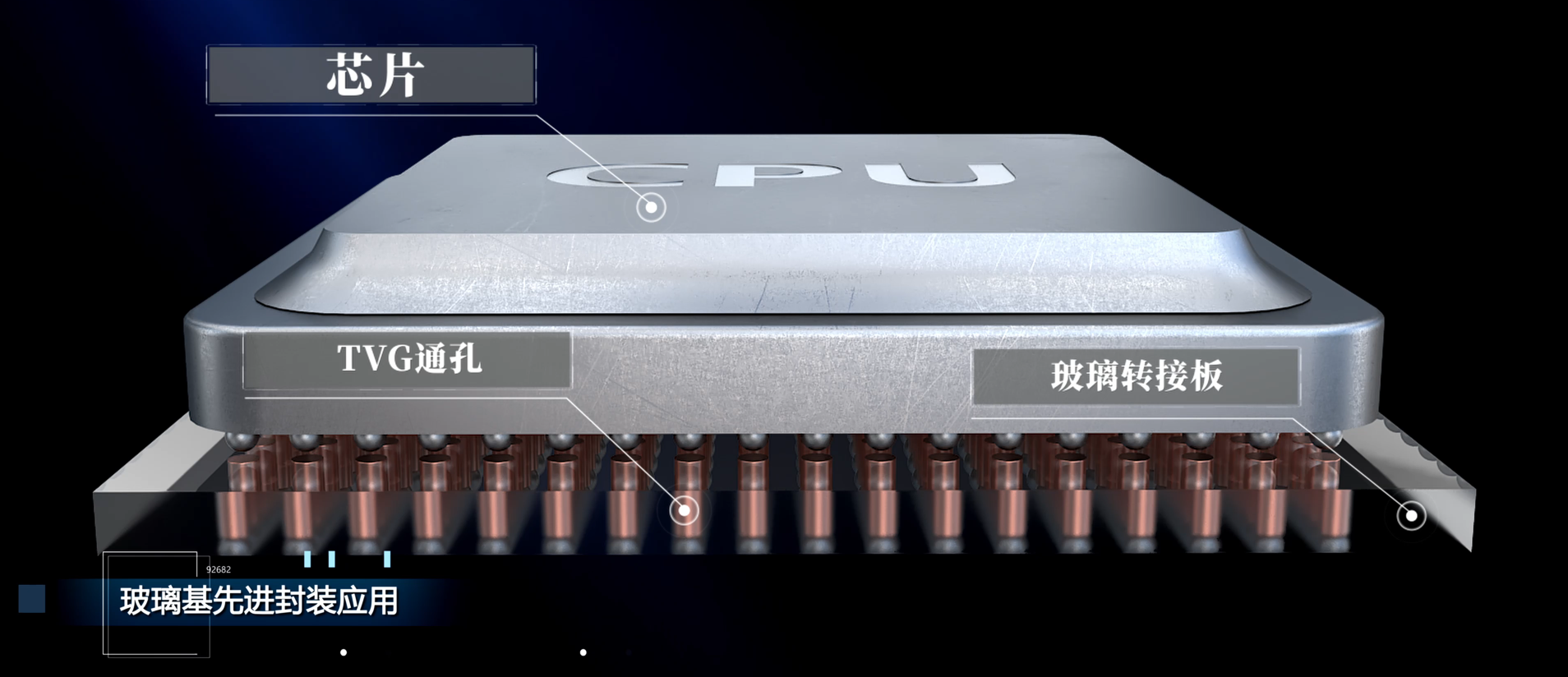
破局“后摩尔时代”:玻璃基板迈向全球商业化新纪元
Jin Rong Jie· 2026-02-10 03:54
Core Insights - The demand for computing power driven by generative AI is pushing the limits of chip packaging, leading to a shift from traditional organic substrates to glass substrates, which offer superior flatness, thermal stability, and insulation properties [1] - 2026 is identified as a critical year for the transition of glass substrates from small-scale validation to mass production [1] Industry Dynamics - Intel is advancing its glass substrate commercialization plans and showcased a large glass chip substrate prototype at a recent exhibition in Japan, targeting mass production post-2026 [2] - Samsung is actively pursuing glass substrate development, announcing a joint venture and a commercialization roadmap, while also investing in building a glass substrate ecosystem [2] - Companies from Japan and mainland China, such as BOE and Lens Technology, are making significant progress in glass substrate technology, with predictions of over 10% annual growth in semiconductor glass wafer shipments from 2025 to 2030 [2] Technical Challenges - The main hurdle for the commercialization of glass substrates, particularly for advanced semiconductor packaging, lies in the TGV (Through Glass Via) process, which requires creating micro-sized vias in thin glass and perfect metallization [3] - The current process heavily relies on hydrofluoric acid, posing safety and environmental compliance challenges, prompting experts to explore alternatives like high-temperature alkaline solutions [3] Competitive Advantages - Chinese companies, exemplified by Woge Optoelectronics, are leveraging their extensive experience in chemical management to overcome challenges associated with TGV processing, significantly reducing initial investment and operational costs [6][7] - Woge Optoelectronics has developed a comprehensive management system for handling hazardous chemicals, allowing for a smoother transition to TGV production lines [6] Future Prospects - Woge Optoelectronics is leading the development of GCP (Glass Circuit Board) technology, which is becoming a crucial component in the global electronic information supply chain [7] - The commercialization wave of glass substrates is gaining momentum, with Chinese firms poised to leverage their unique advantages in core processes to compete in the high-end semiconductor packaging materials market [8]