Doubao 2.0

Search documents
Top China Tech Plays Worth Adding to Your Portfolio Right Now
ZACKS· 2026-03-31 16:31
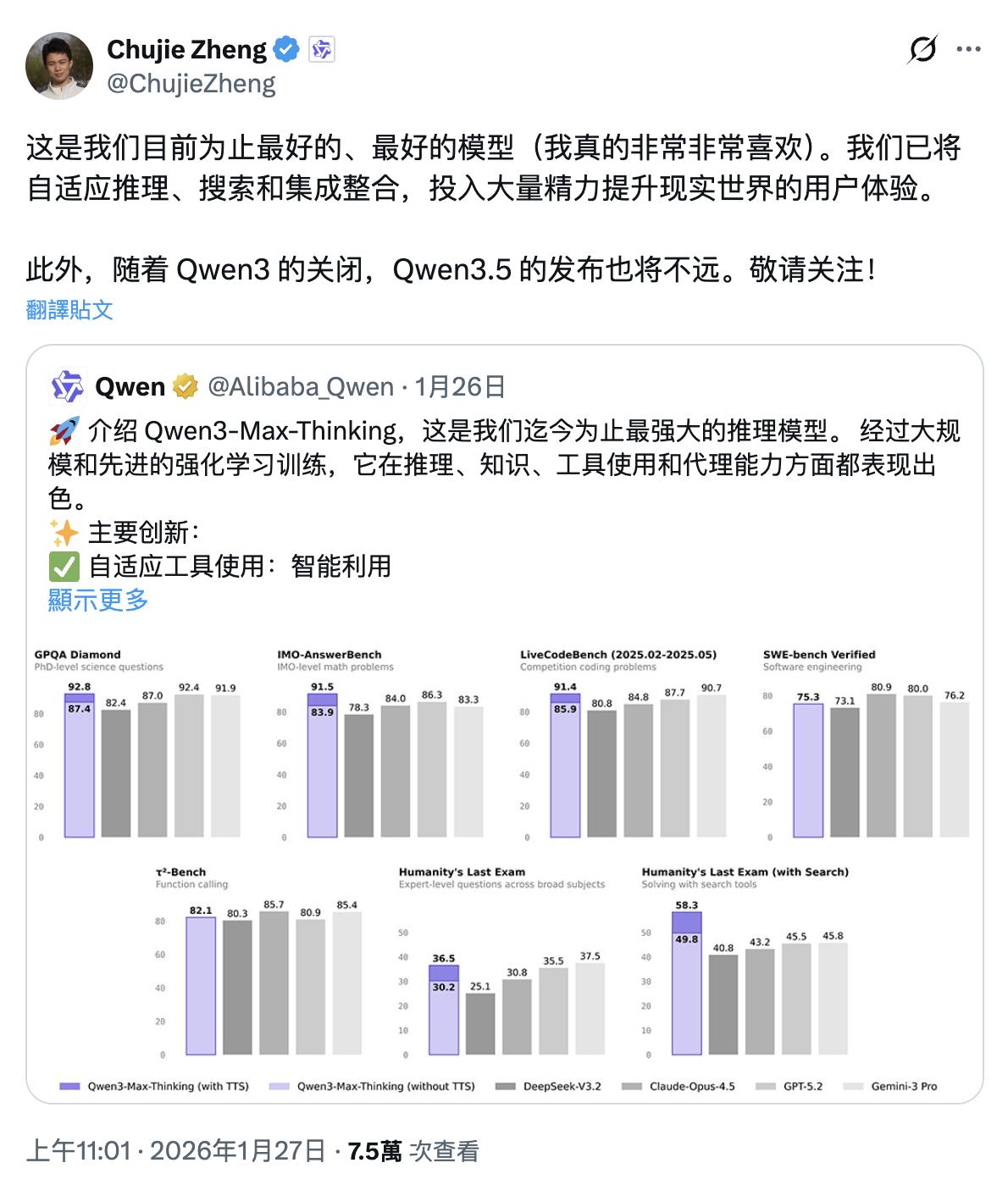
Group 1: U.S.-China Trade and Technology Landscape - Chinese technology stocks are gaining momentum entering 2026 due to the November 2025 Busan trade agreement, which stabilized the investment landscape until November 2026 [1] - Average U.S. tariff rates on Chinese goods decreased to approximately 47%, and rare earth export controls were suspended for a year, enhancing investor confidence [1] - The U.S. Supreme Court's ruling in February 2026 to repeal broad tariffs on Chinese exports further reinforced this confidence [1] Group 2: Semiconductor Sector - Semiconductor Manufacturing International Corporation (SMIC) continued its consolidation efforts into 2026, pursuing full acquisition of SMIC North, while Hua Hong Semiconductor aimed to acquire 97.5% of Shanghai Huali Microelectronics [2] - SMIC maintained 7nm chip production using deep ultraviolet lithography, and the Bureau of Industry and Security's shift to case-by-case AI chip export license evaluations indicated a measured easing of restrictions [2] - China's 15th Five-Year Plan emphasizes domestic self-sufficiency in semiconductor production [2] Group 3: Electric Vehicles - BYD's sales in January-February 2026 fell approximately 36% year over year due to a reinstated 5% purchase tax, but February marked a milestone with exports surpassing domestic deliveries for the first time [3] - The integration of DeepSeek AI into various models, including vehicles priced under $10,000, highlights the convergence of AI and electric vehicles [3] Group 4: Artificial Intelligence - Alibaba launched Qwen3-Max-Thinking in January 2026, claiming performance on par with leading global models, while ByteDance introduced several AI products during the Lunar New Year [4] - Chinese AI models captured around 15% of the global market share by late 2025 [4] Group 5: Humanoid Robots - The Spring Festival Gala in February 2026 showcased China's dominance in humanoid robots, with the country holding 90% of the global market share [5] - Morgan Stanley forecasts a 133% sales growth in humanoid robots to 28,000 units in 2026, supported by the publication of national standards for embodied intelligence [5] Group 6: Aerospace and Defense - The Commercial Aircraft Corporation of China (COMAC) is projected to deliver approximately 25 C919 narrow-body aircraft in 2026 amid supply chain constraints [6] - China's defense budget reached approximately $277 billion, reflecting a 7% increase, with funding directed towards hypersonic and drone systems [6] Group 7: Medical Devices and Advanced Materials - The domestic medical device market approached $172.9 billion, with over 33,000 active enterprises [7] - Investment in new synthetic materials, particularly for aerospace and electric vehicle applications, gained state-backed momentum [7] Group 8: Investment Opportunities - Chinese technology companies are positioned as compelling investment opportunities amid geopolitical volatility, with a focus on identifying stocks with significant growth prospects [8] - Specific companies highlighted include ACM Research, GDS Holdings, Kingsoft Cloud, and Weibo, each demonstrating strong growth trajectories and strategic positioning [10][11][12][13]



中国人工智能-春节至今:模型智能体化与 Token 消耗加速,上调智谱 AIMiniMax 目标价至 800-China Artificial Intelligence_ CNY-to-date_ model agentization with accelerating token consumption, raise Zhipu_MiniMax PT to HK$800_1000. Thu Feb 26 2026
2026-03-03 08:28
Summary of Key Points from the Conference Call Industry Overview - The conference call focuses on the **China Artificial Intelligence** sector, particularly the companies **Knowledge Atlas (Zhipu AI)** and **MiniMax**. The discussion highlights the rapid growth and evolving dynamics of the AI market in China, emphasizing the shift towards agent-driven applications and monetization strategies. Core Insights and Arguments - **Stock Performance**: Shares of Knowledge Atlas and MiniMax have increased five-fold since their IPOs, outperforming the Hang Seng Index (HSI) which rose by 4.3% during the same period. This surge is attributed to strong investor interest in pure-play Generative AI (GenAI) companies and the belief that AI will significantly disrupt various industries [1][3]. - **Monetization Dynamics**: The release of the CNY model marks a pivotal change in monetization strategies, with increasing token consumption and agent-driven workloads. There are early signs of pricing discipline in higher-value segments, which is expected to benefit upstream foundation model providers [1][3]. - **Revenue Forecasts**: Revenue forecasts for Knowledge Atlas and MiniMax for 2026-2030 have been raised by 12-59% and 8-35%, respectively. This adjustment reflects stronger assumptions regarding agent-based workload intensity and pricing power [1][3]. - **Price Targets**: The price targets for Knowledge Atlas and MiniMax have been increased to HK$800 (from HK$400) and HK$1,000 (from HK$700), respectively. This is based on a 30x P/E ratio for 2030E earnings, discounted back at 15% [1][3]. - **Earnings and Profitability**: Both companies are positioned to break even by 2029, with their ability to capture API revenue from expanding downstream usage becoming more evident. Agent and coding-centric applications are driving higher token consumption, supporting upward price movements in premium segments [1][3]. Additional Important Insights - **Valuation Frameworks**: Two cross-check frameworks are provided to contextualize potential trading ranges for Zhipu AI and MiniMax. The first framework benchmarks historical ARR multiples of U.S. companies like Anthropic and OpenAI, while the second compares Chinese model leaders to U.S. peers' valuations, accounting for market size and competitive landscape [5][18]. - **Token Consumption Trends**: Weekly global token consumption has doubled year-to-date, with agent-based applications now consuming more tokens than coding assistants. This indicates a shift from single-turn tasks to more complex, workflow-centric automation [3][49]. - **Competitive Landscape**: The competitive environment in China is noted to be more crowded than in the U.S., which may necessitate a discount to U.S. historical multiples. However, the rapid adoption of AI in China is supported by better-educated users and clearer commercialization pathways [13][20]. - **Model Positioning and Pricing Strategies**: Zhipu AI has repositioned its GLM-5 model with a significant price increase, indicating a focus on higher-end applications. MiniMax maintains a low-cost approach to prioritize broad adoption, while Alibaba's Qwen 3.5 emphasizes cost reduction and large workload handling [35][38][65]. - **Market Size and TAM**: The total addressable market (TAM) for AI is estimated at US$1,414 billion, with U.S. players capturing a larger share compared to Chinese players. The structural opportunity for Chinese players is approximately half that of their U.S. counterparts [19][22]. This summary encapsulates the key points discussed in the conference call, providing insights into the current state and future outlook of the AI industry in China, particularly focusing on Knowledge Atlas and MiniMax.
Alibaba unveils new Qwen3.5 model for 'agentic AI era'
Reuters· 2026-02-16 09:01
Core Insights - Alibaba has launched a new AI model, Qwen 3.5, which is designed for the "agentic AI era" and claims to outperform major U.S. competitors in several benchmarks [1][5] - The new model is reported to be 60% cheaper to use and eight times more efficient at processing large workloads compared to its predecessor [2][3] Company Developments - Qwen 3.5 aims to enhance user engagement with Alibaba's Qwen chatbot app, which is currently facing competition from ByteDance's Doubao and DeepSeek [1][3] - The rollout of Qwen 3.5 follows a successful coupon campaign that resulted in a seven-fold increase in active users for the Qwen chatbot [4] Competitive Landscape - ByteDance has recently upgraded its chatbot app to Doubao 2.0, which has a user base nearing 200 million, positioning itself as a strong competitor in the AI space [3] - Alibaba's previous model, Qwen 2.5-Max, was one of the first responses to DeepSeek's rise, indicating the competitive nature of the AI model market in China [5]

未知机构:国金计算机科技东阳光字节AI全栈革新算力底座万变不离其宗-20260213
未知机构· 2026-02-13 02:25
Summary of Key Points from Conference Call Company and Industry Overview - **Company**: Dongyangguang (东阳光) - **Industry**: AI and Data Center Infrastructure Core Insights and Arguments - **Establishment of National AI Ecosystem**: ByteDance has made significant moves by launching Seedance 2.0, Doubao 2.0, and the multimodal model Seedream 5.0, solidifying its position as a national-level AI traffic entry point. The strategic intent to build a national AI ecosystem is clear, with user penetration rates increasing exponentially, indicating a qualitative change in the AI ecosystem's prosperity [1][1]. - **Increased Demand for Computing Power**: The rapid iteration of models and diverse applications highlight an extreme demand for computing power. Once Doubao establishes its national-level status, the consumption of inference-side computing power is expected to increase significantly. The training and deployment of multimodal models like Seedance and Seedream will also consume substantial computing resources. By 2026, data centers, as core computing power carriers, are anticipated to enter a significant expansion phase [2][2]. - **Transition to AI Computing Power Service Provider**: Dongyangguang has successfully transitioned from traditional manufacturing to an AI computing power service provider. The core asset value is becoming more prominent: - **IDC Operations**: The company has completed the asset transfer of Qinhuai Data, improving governance structure. As a core IDC supplier for ByteDance, the revenue share is high, and Qinhuai Data's resource reserves in key areas will benefit from increased capital expenditures in computing power, leading to expected performance elasticity [2][2]. - **Liquid Cooling Technology**: The company has made substantial progress in the liquid cooling sector, transitioning from a materials supplier to a comprehensive solution provider through self-research and acquisitions, aiming to capture a larger share in the global supply chain of leading manufacturers [2][2]. - **Development of High-End Components**: To address the miniaturization challenges in AI power supplies, the company has established a new research and production base for supercapacitors [3][3]. Additional Important Content - **Industrialization of Layered Foil Technology**: The move signifies that layered foil technology has transitioned from the laboratory to large-scale industrialization, with customized solutions deeply integrated into data center power supply systems [4][4]. - **Risk Factors**: Potential risks include the underperformance of AI large models and user growth, fluctuations in capital expenditures from downstream internet giants, and significant volatility in raw material prices [4][4].

Top China Tech Plays in the US That Could Boost Returns in 2026
ZACKS· 2026-02-09 16:56
Core Insights - Chinese technology stocks are gaining strategic momentum as the U.S.-China trade détente provides operational stability, with tariff rates stabilized at 31% and rare earth export controls suspended for another year, creating investment opportunities in 2026 [2][9] Semiconductor Sector - China's semiconductor consolidation accelerated with SMIC's $5.8 billion acquisition of SMIC Jingcheng and Hua Hong Semiconductor's acquisition of 97.5% of Shanghai Huali Microelectronics for $1.2 billion, consolidating domestic capacity at mature process nodes where Chinese foundries command over 25% of global capacity [4] Electric Vehicle Sector - BYD's January sales fell 30% year over year to 210,051 vehicles, the lowest since February 2024, while battery-electric passenger car sales dropped 33.6% to 83,249 units due to policy shifts; however, export momentum remained strong with a 51.4% increase to 100,482 vehicles [5] Artificial Intelligence Sector - Chinese AI advancements accelerated with multiple flagship releases, including Alibaba's Qwen3-Max-Thinking and Moonshot AI's Kimi K2.5, positioning Chinese companies competitively in the global AI landscape [6] Humanoid Robotics Sector - China holds 90% of global humanoid robot sales, with over 140 companies producing at scale; Morgan Stanley forecasts a 133% surge in sales to 28,000 units in 2026, with the domestic market reaching $1.4 billion [7] Other Strategic Sectors - COMAC targets 50 C919 units annually, the defense budget reached $249 billion with a 7.2% increase, and the medical device market approached $172.9 billion with over 33,000 enterprises [8] Company-Specific Insights - Agora is positioned for growth in conversational AI infrastructure, with strategic partnerships expanding its market beyond traditional communication [10] - Kingsoft Cloud is experiencing triple-digit growth in its intelligent computing cloud business, with gross billings reaching RMB782 million in Q3 2025 [11] - Tencent's growth is bolstered by AI integration and international cloud expansion, with significant revenue growth in marketing and gaming [12] - XPeng's strategic transformation includes the launch of the 2026 P7+ flagship and localized supply chain teams, enhancing operational efficiency and market reach [13]


一切为了Agent:千问、阶跃、Gemini打响“3.5模型大战”,春节将成关键节点?
3 6 Ke· 2026-02-06 10:15
Core Insights - The AI model competition is heating up with multiple new releases expected around the Chinese New Year in early 2026, including significant updates from major players like OpenAI, Anthropic, and domestic companies such as Qwen and DeepSeek [1][2][20]. Group 1: Upcoming Model Releases - Major updates are anticipated from Qwen, with Qwen3-Max-Thinking being highlighted as the best model to date, and Qwen 3.5 expected soon [2][4]. - Other companies like ByteDance are also set to release new models, including Doubao 2.0 and Seedream 5.0, in March [5]. - The upcoming releases are not just limited to minor iterations but represent a broader trend of simultaneous major updates across the industry [7][21]. Group 2: Shift in Model Capabilities - The focus of the new generation of models is shifting from merely larger and stronger models to practical applications and enhanced reasoning capabilities [8][23]. - Reinforcement learning is being reintroduced, and reasoning is becoming a default capability rather than a unique selling point [9][10]. - Long context handling is emphasized as a core upgrade, with models like GLM-5 and Gemini 3.5 designed for real-world applications rather than just performance metrics [14][16]. Group 3: The Role of Agents - Agents are evolving from demonstration tools to central components of AI systems, with a focus on completing complex tasks with minimal human intervention [17][19]. - New models are being designed to enhance multi-agent collaboration and maintain context over long tasks, indicating a shift towards more integrated AI solutions [17][19]. - The success of these models will depend on their ability to be embedded into various systems, transforming them from simple assistants to essential engines of operation [19][25]. Group 4: Competitive Landscape and Market Dynamics - The timing of these releases is strategic, capitalizing on the heightened attention around the Chinese New Year, which previously saw significant developments in the AI sector [20][21]. - The upcoming model releases are expected to lead to rapid comparisons in real-world applications, with developers and users able to test capabilities almost immediately [22][23]. - The true measure of success will not be the initial release but rather the ability to integrate these models into everyday tools and systems, influencing the competitive landscape for the year ahead [25][26].
字节阿里DeepSeek决战春节:一场关乎14亿人的重磅AI大战
3 6 Ke· 2026-01-30 11:01
Core Insights - The upcoming Spring Festival marks a critical moment for AI in China, with major companies like ByteDance, Alibaba, and DeepSeek preparing to launch significant AI models, indicating a fierce competition for user engagement and future internet order [1][18]. ByteDance - ByteDance plans to release three flagship models during the Spring Festival: Doubao 2.0 (language model), Seedream 5.0 (image generation model), and SeedDance 2.0 (video generation model) [2]. - Doubao 2.0 has reached 155 million weekly active users, and the company aims to integrate AI into its ecosystem, particularly within Douyin, to maintain its dominance in content creation [3][4]. - The new models are expected to enhance ByteDance's cloud business, positioning it to compete more effectively with Alibaba Cloud [4]. Alibaba - Alibaba is set to launch its flagship model Qwen 3.5, focusing on enhancing user experience and capabilities in mathematics and coding [5][6]. - The Qwen app is evolving into a multifunctional assistant, integrating services like food delivery and travel booking, aiming to capture users' daily life services [7]. - Alibaba's strategy includes a goal to deeply integrate all its services with the Qwen app by 2026, with the app's monthly active users surpassing 100 million [8]. DeepSeek - DeepSeek plans to unveil its new model, V4, which is expected to excel in coding and long-context processing, potentially surpassing competitors like OpenAI's GPT and Google's Gemini [9][10]. - The V4 model is designed to handle extensive code prompts and maintain data integrity during training, crucial for developing complex software systems [10]. - DeepSeek's unique training architecture allows for larger models without proportionally increasing chip numbers, showcasing its capability in logical reasoning and code generation [13]. Industry Implications - The competition among these tech giants is not solely about financial gains but about establishing a dominant entry point in the AI era, which will define the internet landscape for the next decade [17][18]. - The integration of AI into everyday life is anticipated to transform user interactions, from generating festive videos to planning family trips and writing complex code [16].