
E20机型

Search documents
上海低空经济独角兽,获3亿元融资 | 融资周报(2025年第41期)
Sou Hu Cai Jing· 2025-11-11 07:09
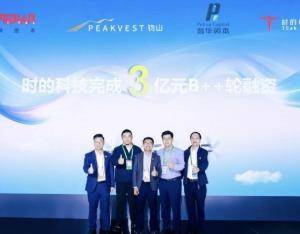
Financing Overview - A total of 19 financing events occurred in Shanghai this week, with 9 disclosing amounts totaling approximately 825.5 million yuan [3][6] - The number of financing events increased by 2 compared to the previous week, which had 17 events [3] - The majority of financing events took place in the Pudong New Area, with 8 events totaling 435 million yuan, followed by Minhang District with 6 events [3] Company Dynamics - Times Technology completed a 300 million yuan B++ round of financing on November 7, with investments from Huaying Capital, Junshan Capital, and PwC Capital [12][13] - Weitao Bio secured over 100 million yuan in angel round financing on November 5, led by Qiming Venture Partners, with participation from B Capital, Shunxi Fund, and Xingze Capital [14][15] - Juyue Testing completed nearly 100 million yuan in A+ round financing on November 6, led by Dongfang Jiafu, with participation from Guoxin Hongsheng and Tianbao Investment [16][17] - Yuesai Biotechnology completed nearly 100 million yuan in strategic financing on November 6, with investments from Shanghai Guotou Xiandao and Pudong Investment Holdings [18][19] Industry Focus - The healthcare sector saw the most financing events this week, with 5 occurrences, followed by integrated circuits with 4 [9][20] - The biopharmaceutical industry is a key focus in Shanghai, highlighted by the recent China International Import Expo where major companies showcased innovative products [20][21] - The Shanghai government has implemented policies to support the development of high-end medical devices, emphasizing the need for advancements in AI medical devices and diagnostic equipment [21]


时的科技完成3亿元B++轮投资,加速领跑低空经济全球新赛道
Sou Hu Cai Jing· 2025-11-07 06:28
Core Insights - The article highlights that Shide Technology, a leading Chinese electric vertical takeoff and landing (eVTOL) aircraft company, has completed a 300 million RMB B++ round of financing, marking its seventh round of funding overall [2][4] - This financing is noted as the first large-scale investment in the low-altitude economy sector following the "14th Five-Year Plan," which aims to develop strategic emerging industries in this area [4] Company Overview - Shide Technology focuses on tilt-rotor technology, which is considered the optimal path for urban air mobility (UAM), and aims to avoid risks associated with trial-and-error in technology routes [4] - The company has developed the E20 model, which boasts a cruising speed of 320 km/h, a range of 200 km, and a payload capacity of 450 kg [4] - As of now, the E20 has completed over 1,000 test flights and achieved the world's first eVTOL multi-passenger flight, including a verification flight with the founder and CEO [4] Industry Context - The financing is seen as a significant step for Shide Technology as it enters a phase of accelerated commercial application, supported by both policy and capital [4] - The company is currently in the compliance verification stage for airworthiness, laying a solid foundation for its certification goal set for 2027 [4] - Junshan Capital's partner, Wang Meng, expressed confidence in the low-altitude economy sector and highlighted Shide Technology's comprehensive engineering capabilities, which combine cutting-edge technology development with large-scale product realization [4]
倾转旋翼eVTOL加速商业化落地
2025-08-05 03:17
Summary of Conference Call Notes Company and Industry Overview - The conference discusses the investment value of Joby Aviation and the technology path of eVTOL (electric Vertical Take-Off and Landing) vehicles, focusing on the advantages of light rotorcraft technology and its future market positioning and commercialization strategies [1][2] Key Points and Arguments - **Record Orders in eVTOL Sector**: A recent order has set a new record in China's eVTOL sector, tracing back to a collaboration agreement signed with AutoCraft during the 7th Jinjing Conference last November, aimed at exploring diverse commercial applications in low-altitude tourism and air travel [3] - **Regulatory Challenges for International Expansion**: eVTOL companies face significant regulatory hurdles when expanding internationally, requiring bilateral flight agreements and local partnerships to navigate compliance issues [4][5] - **Technical Specifications of Light Rotorcraft**: Light rotorcraft technology relies on multiple rotors for lift and thrust, with limitations in speed and range compared to other configurations. The design allows for efficient cruising at speeds below 140 km/h and ranges under 100 km [6][7][8] - **Market Trends and Product Design**: There are currently 350 light rotorcraft designs globally, with a trend favoring this configuration. Domestic models like A200 and 120 are comparable to Joby in key performance metrics, although they lag in flight certification progress [10][11] - **Performance Advantages**: Light rotorcraft can achieve higher speeds (up to 250 km/h) and lower operational costs compared to composite wing designs, enhancing operational efficiency [12] - **Market Potential and Regulatory Framework**: The market for eVTOL is projected to reach a valuation of $20-30 billion by 2025, with ongoing efforts to establish unified certification standards in China based on international benchmarks [13][19] - **Application Scenarios**: The focus is on short-distance travel (30-100 km) for tourism and emergency services, although the market potential for these applications may be limited [15][16] - **Challenges in Emergency Services**: The feasibility of using eVTOL for emergency services is questioned due to limitations in power supply for prolonged hovering, which is critical for such operations [16] - **Urban Transportation Solutions**: eVTOL could alleviate urban congestion, particularly in areas where traditional transport options are inadequate, enhancing the travel experience for users [17] - **Government Support and Policy Initiatives**: The Chinese government is actively promoting the low-altitude economy through various policies and funding initiatives, aiming to establish air traffic hubs and facilitate regulatory compliance [18][20] - **Future of Autonomous Flight**: Current eVTOL operations will likely require human pilots due to safety concerns, with full autonomy still being a distant goal [21][22] - **Hybrid vs. Electric Propulsion**: The discussion highlights the challenges of hybrid systems in eVTOL applications, emphasizing that electric propulsion is currently more viable for passenger transport [23] Additional Important Content - The conference emphasizes the need for precise targeting of application scenarios for eVTOL, suggesting that not all proposed uses are practical or scalable [15][16] - The importance of integrating safety, supply chain, and regulatory frameworks to create a sustainable commercial ecosystem for eVTOL is highlighted [14][19] This summary encapsulates the critical insights and discussions from the conference call, providing a comprehensive overview of the current state and future prospects of the eVTOL industry.