ECS

Search documents
涨价视角下解读火山云和行业竞争格局
2026-01-28 03:01
Summary of Conference Call Records Industry Overview - The cloud service industry is facing significant challenges due to rising costs, with large firms like ByteDance, Alibaba, and Baidu potentially benefiting from price increases, while smaller firms like Kingsoft, Qcloud, and UCloud are adversely affected due to weaker bargaining power [1][4][5]. Key Points and Arguments Price Increase Strategies - Domestic cloud service providers are experiencing pressure to raise prices due to increased costs of key components, with delivery times for general CPU machines in mainland China reaching approximately 40 weeks [2][11]. - Major cloud service providers like AWS, Alibaba, and Baidu are raising prices primarily due to rising costs in critical components, which increases overall supply chain pressure [2][11]. - ByteDance's procurement budget for 2026 has increased from 65 billion to 80 billion RMB due to rising storage costs, which now account for 30%-40% of overall operational costs [3][12]. Market Dynamics - The domestic cloud service market is in the early stages of price negotiations, with downstream customers reacting strongly against price increases, believing they should not bear the costs of expansion [8][14]. - Firefly Engine is adopting a counter-cyclical expansion strategy, maintaining lower prices to attract customers while competitors raise their prices [9]. Profitability and Cost Management - The ability to increase gross margins through price hikes depends on various factors, including the scale of operations and supply chain negotiation power. Large companies may see some revenue benefits, while smaller firms may struggle to maintain profitability [4][7]. - Alibaba is facing internal resource pressures and must manage costs effectively to avoid losses in its cloud business. The company can accept a price increase of 20%-25% for most clients, but this may only offset rising storage costs without significantly improving gross margins [10][11]. Customer Reactions and Acceptance - Different customer segments are responding variably to price increases, with large, profitable firms less sensitive to price hikes compared to smaller end-users who are more affected by cost increases [13][14]. - Many companies are reluctant to migrate resources to other cloud platforms due to operational complexities and the challenges of purchasing and maintaining their own hardware [15]. Additional Important Insights - The pricing strategies of major cloud service providers vary significantly, with discounts for different customer tiers reflecting their bargaining power [16]. - The overall impact of rising storage costs is substantial, with storage costs now comprising 20%-30% of total server costs, significantly affecting the cloud computing ecosystem [11][12]. - Future demand for cloud resources is expected to increase, potentially leading to more companies opting for public cloud services rather than private deployments due to procurement difficulties [18]. Conclusion - The cloud service industry is navigating a complex landscape of rising costs and competitive pressures, with large firms leveraging their scale to manage price increases while smaller firms face significant challenges. The market dynamics suggest a cautious approach to pricing strategies, with varying customer reactions influencing the overall landscape.


ASGN Incorporated Announces Plan to Transition to Everforth
Businesswire· 2025-11-20 21:05
Core Insights - ASGN Incorporated is transitioning to a new parent brand named Everforth, which will unify its six current brands under a single identity [1] Company Strategy - The transition to Everforth represents a significant milestone in ASGN's ongoing evolution, aiming to merge complementary strengths and resources [1]



BGC(BGC) - 2025 Q3 - Earnings Call Transcript
2025-11-06 16:02
Financial Data and Key Metrics Changes - The company reported record third quarter revenues of $737 million, a 31% increase from $561 million a year ago [4] - Adjusted earnings grew by 22.4% to $155.1 million, with post-tax adjusted earnings increasing by 11.5% to $141.1 million, resulting in post-tax adjusted earnings per share of $0.29 [12] - Adjusted EBITDA increased by 10.7% to $167.6 million [12] Business Line Data and Key Metrics Changes - ECS revenues grew by 114% to $241.6 million, driven by OTC and strong organic growth [6] - Rates revenues increased by 12.1% to $195.3 million, reflecting higher volumes across major interest rate products [7] - Foreign exchange revenues were up 15.9% to $106.7 million, primarily due to strong growth in emerging market currencies [7] - Credit revenues increased by 1.6% to $69.1 million, driven by higher credit derivative and structured credit volumes [7] - Equities revenues grew by 13.2% to $60.4 million, reflecting strong European and U.S. equity volumes [7] - Data, network, and post-trade revenues grew by 11.9% to $34.3 million, excluding Capital Lab [8] Market Data and Key Metrics Changes - EMEA revenues increased by 37.4%, Americas revenues increased by 28.1%, and Asia-Pacific revenues increased by 17.4% [11] - The U.S. Treasury market share grew to an all-time high of 37%, significantly outpacing the market [5] - FMX UST generated record third quarter average daily volume of $59.4 billion, more than 12% higher compared to last year [9] Company Strategy and Development Direction - The company is focused on enhancing profitability and margins through a $25 million cost reduction program, expected to be completed by year-end [5] - The company aims to continue growing SOFR ADV and open interest, with expectations for similar adoption in U.S. Treasury Futures offerings in 2026 [9][20] Management's Comments on Operating Environment and Future Outlook - Management expressed confidence in the company's ability to deliver strong growth in a mixed macro environment, highlighting the strength and scale of its global platform [4] - The company anticipates generating revenues of between $720 million and $770 million in the fourth quarter of 2025, representing approximately 30% revenue growth at the midpoint [13] Other Important Information - The company’s liquidity was reported at $924.7 million as of September 30, compared to $897.8 million at year-end 2024 [12] - The board reapproved a share repurchase authorization for up to $400 million [12] Q&A Session Summary Question: What allowed BGC to outperform some of the industry proxies despite a slowdown in on-exchange volumes? - Management attributed the strong performance to targeted growth within the ECS sector and the hiring of around 150 new brokers, which enabled market share gains [16] Question: Can you elaborate on the strong growth in FMX and expectations for FCM onboardings? - Management noted that FMX has successfully onboarded 11 FCMs and achieved significant growth in SOFR futures ADV and open interest, with expectations for continued growth in U.S. Treasuries [18][20] Question: What contributed to the strong share growth in FMX cash markets? - Management indicated that the growth was due to the hard work over several years and the viability of FMX as a second choice in the market, leading to a market share increase to 37% [23] Question: How much leverage does the energy segment have to higher adoption of cloud and AI? - Management acknowledged involvement in energy procurement for data centers, benefiting from relationships established through Newmark [25] Question: Can electronic credit revenues grow at a similar pace as Tradeweb or MarketAxess? - Management expressed confidence that electronic credit revenues can grow at competitive rates, with ongoing launches of new electronic protocols [27]

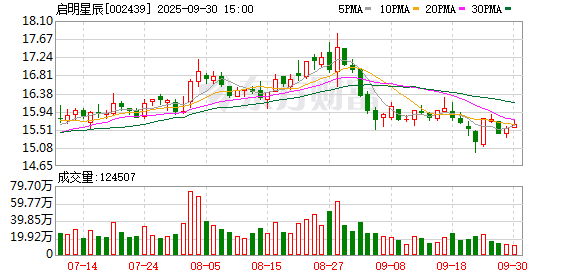
启明星辰:公司的云安全资源池已经与移动云ECSO、EIS、ECS深度适配
Zheng Quan Ri Bao· 2025-09-30 12:16
Core Viewpoint - The company is actively involved in enhancing cloud security capabilities, particularly in collaboration with mobile cloud services, to improve the efficiency and intelligence of cloud service scenarios [2] Group 1: Company Initiatives - The company is deeply engaged in the security capability construction of mobile cloud services [2] - It has fully undertaken the research and development of mobile cloud security and product capability supply [2] - The collaboration aims to build a mobile cloud native security technology system based on the CNASA adaptive native security foundation, covering infrastructure, platform, data, and applications [2] Group 2: Technology and Infrastructure - The initiative enhances the intelligent level of cloud security services across various cloud service scenarios [2] - The company's cloud security resource pool has been deeply adapted to mobile cloud ECSO, EIS, and ECS, addressing the needs of small, medium, and large enterprises [2]

阿里云代理商返点多少?解读渠道代理返点专属叠加优惠
Sou Hu Cai Jing· 2025-07-30 04:34
Core Insights - The article discusses the rebate policy of Alibaba Cloud agents and related channel-specific discounts, highlighting that rebates typically range from 5% to 15% based on agent level and sales volume, with potential quarterly subsidies for new customers or specific products [1][4][6]. Group 1: Rebate Structure - Alibaba Cloud's rebate policy has multiple tiers and varies by time and product category, with a common range of 5%-15% for basic cloud products [4][5]. - Entry-level agents typically receive a rebate of 8%-10% for annual sales starting at 200,000 yuan, while higher-tier partners can receive up to 15% based on sales volume [4][6]. - Special operational activities, such as "new customer exclusive subsidies," can temporarily increase rebates to around 20% [4][6]. Group 2: Importance of Overall Cost Savings - Companies should focus not only on the rebate percentage but also on how to achieve overall cost savings through channel-specific services and value-added packages [1][6]. - A case study in the education sector demonstrated that a bundled service package could lead to a total savings of nearly 18%, despite a rebate of only 10% [6][8]. Group 3: Challenges in Pricing Transparency - Large companies often face challenges regarding the transparency of rebate policies, leading to concerns about pricing discrepancies among different agents [7][8]. - Companies may prefer to negotiate directly with Alibaba Cloud to avoid issues like "dual pricing," where different agents offer varying final prices [7][8]. Group 4: Best Practices in Procurement - Mature companies often combine rebate negotiations with project implementation and long-term maintenance discussions to achieve better overall value [8]. - The focus should be on the quality of post-sale services and additional value-added offerings rather than solely on the rebate percentage [8][9]. Group 5: Regulatory Compliance - Alibaba Cloud's rebate mechanisms are subject to annual adjustments and must comply with regulatory requirements regarding channel agent rebates [9]. - Companies must ensure that all financial records are accurate and compliant with regulations to avoid issues related to inflated invoices [9].

阿里云合作伙伴名单代理折扣新政策,企业叠加购买省更多
Sou Hu Cai Jing· 2025-07-17 08:11
Group 1 - Alibaba Cloud has introduced a new agency discount policy, allowing enterprises to reduce procurement costs through certified partners, potentially saving 10-30% [1][5][7] - Common misconceptions include confusing cloud services with traditional hardware procurement and misunderstanding the partner list, as many believe cloud products can only be purchased through official channels [6][9] - The new policy allows for higher discounts on core cloud services and the ability to combine various procurement plans, which many enterprises have yet to fully understand [6][7] Group 2 - Chuangyun Technology, established in 2015, is a leading cloud computing and security value-added service provider in China, serving over 10,000 enterprise clients with annual public cloud sales reaching hundreds of millions [3] - The company focuses on providing full-stack hybrid cloud solutions and has a nationwide service coverage across 34 provincial-level administrative regions [3] - The procurement process for different industries varies, with manufacturing clients prioritizing stability and compliance, while healthcare and internet sectors emphasize billing cycles and rapid deployment capabilities [10][11] Group 3 - The new agency discount policy includes various promotional packages, allowing enterprises to save significantly on IT budgets by effectively combining different benefits [11][12] - Enterprises are encouraged to choose reliable agents from the official partner list to ensure compliance and quality of service, as well as to utilize the full range of available discounts [11][13] - The importance of timely submission of required documentation for maximizing benefits is highlighted, as incomplete information can hinder the procurement process [11][12]