
FFC

Search documents
西典新能20260329
2026-03-30 05:15
Company and Industry Summary Company Overview - The company discussed is Xidian New Energy, focusing on energy storage and CCS (Carbon Capture and Storage) business segments. Key Points Industry and Business Growth - The energy storage business is projected to become a core growth driver, with expected revenue exceeding 900 million yuan (+45%) by 2025, and CCS's share is anticipated to rise above 60% by 2026 [2][11]. - The FFC (Flexible Flat Cable) new product is entering a ramp-up phase, with plans to expand production lines by 50%-80% in 2026, potentially contributing an additional 400-500 million yuan in revenue [2][6]. Financial Performance - In 2025, the company achieved nearly 2.8 billion yuan in total revenue, with CCS business revenue at 2.3 billion yuan (+40% YoY) and energy storage revenue at over 900 million yuan (+45% YoY) [3]. - The fourth quarter of 2025 saw a slight decline in revenue and gross margin due to raw material price fluctuations, particularly in copper and aluminum [3][4]. Cost Structure and Margins - The gross margin for the energy storage business is around 15%, while the automotive CCS business has a lower margin affected by product mix changes [5][12]. - FFC products have a cost advantage of 10%-15% over traditional solutions, with a gross margin target of 14%-15% [6][7]. Customer Base and Orders - Major customers for the energy storage segment include Tesla (contributing over 600 million yuan) and Sungrow (over 300 million yuan) [4][9]. - The company expects to maintain a strong order flow from Tesla and Volkswagen, with anticipated revenue of around 400 million yuan from Volkswagen in 2026 [8]. Market Dynamics and Competitive Position - The company is well-positioned to benefit from Tesla's shift to direct supply models, which may lead to increased orders despite potential supply chain adjustments due to the IRA Act [9][10]. - The company has a technological lead of approximately 1.5 years over competitors in the FFC product space, with ongoing capacity expansion plans [14][15]. Future Outlook - The energy storage business is expected to account for nearly 50% of total revenue in 2025, with potential growth to over 60% in 2026 [11]. - The company is actively pursuing new clients, including Yiwei Lithium Energy and Aotai, to ensure continuous growth [13]. - The anticipated revenue growth trajectory suggests a potential target of 5 billion yuan within the next couple of years, driven by new technology launches [18]. Challenges and Risks - The company faces challenges in price transmission mechanisms, particularly in non-standardized products like electric control motherboards, which may affect order volumes [4]. - The overall automotive market is projected to decline by 15%-20% in early 2026, posing risks to revenue growth in the automotive segment [5]. Conclusion - Xidian New Energy is strategically positioned for growth in the energy storage and CCS markets, with a strong focus on innovation and customer relationships. The company is navigating challenges in raw material costs and market dynamics while maintaining a positive outlook for future revenue growth.

鹤山首富获顺德上市公司非独立董事提名
Sou Hu Cai Jing· 2026-01-13 11:43
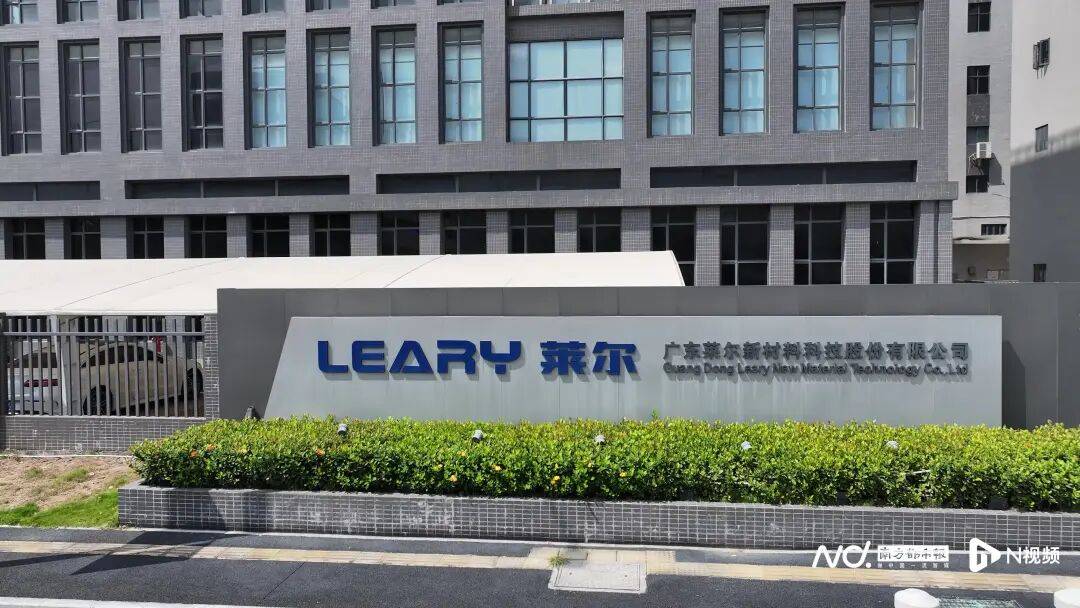
Group 1 - The board of Guangdong Lier New Materials Technology Co., Ltd. has nominated Mr. She Yingjie, founder and general manager of Guangdong Shiyun Circuit Technology Co., Ltd., as a non-independent director candidate for its third board, marking a significant transition from "capital marriage" to "governance integration" in their alliance with German capital [1] - Lier Technology, established in 2004, focuses on the research, manufacturing, and sales of functional adhesive films, flexible circuit boards, new energy coating foils, and carbon nanotubes, positioning itself as a high-tech enterprise in the functional materials sector [1] - The company has established three major industrial bases centered in Guangdong, radiating to central and southwestern regions, and is recognized as a leading player in the domestic functional materials niche [1] Group 2 - Mr. She Yingjie, born in 1957, has held various leadership roles, including general manager of Shenzhen Shiyun Circuit and chairman of Heshan Shiyun, and currently serves as chairman and general manager of Guangdong Shiyun Circuit Technology Co., Ltd. [3] - He founded Shiyun Circuit in Hong Kong in 1985 and expanded to Shenzhen in 1991, focusing on PCB and early investments in the new energy vehicle and AI sectors, becoming a supplier for major international companies like Tesla and Siemens [5] - In 2025, he was listed on the Hurun Rich List with a net worth of 7.5 billion yuan, maintaining his status as the richest person in Heshan, and has donated over 5 million yuan to support education and rural development [5]


莱尔科技:世运电路创始人佘英杰提名公司董事 战略协同迈出关键一步
Zhong Zheng Wang· 2026-01-12 11:25
Core Viewpoint - The nomination of She Yingjie as a non-independent director of Lair Technology marks a significant step in the governance collaboration between Lair Technology and Shiyun Circuit, following their strategic partnership established in July 2025, indicating a new phase of strategic synergy [1][2] Group 1: Strategic Collaboration - The entry of She Yingjie into Lair Technology's board is expected to enhance collaboration in customer and market aspects between the two companies [1] - Both companies aim to leverage their customer resources and market networks to jointly expand in the new energy vehicle market and strengthen their presence in emerging fields such as AI servers and low-altitude economy [1] Group 2: Market Positioning - Shiyun Circuit specializes in automotive-grade PCB products and has entered the supply chains of several global automotive companies, while Lair Technology's products are widely used in automotive electronics and new energy battery sectors [1] - The collaboration is anticipated to facilitate the integration of domestic and international markets, enhancing resource allocation and development [1] Group 3: Supply Chain Synergy - Both companies share a high degree of commonality in raw material usage, including significant quantities of copper and film substrates, which could lead to improved procurement scale advantages and enhanced supply chain resilience through joint purchasing and resource sharing [1]
西典新能20251106
2025-11-07 01:28
Summary of the Conference Call for Xidian New Energy Industry and Company Overview - Xidian New Energy focuses on the power battery and energy storage market, with integrated busbars as its main source of revenue. The revenue split is 60% from new energy vehicles and 40% from energy storage, with rapid growth in the energy storage business, particularly benefiting from increased demand in the North American market [2][4][11]. Core Points and Arguments - **Integrated Busbar Technology**: The main technology routes for integrated busbars include harness connection, hot pressing, and vacuum forming. The domestic market predominantly uses vacuum forming, but the next-generation CCS technology is expected to evolve towards FCC (Flexible Circuit Carrier) technology, which Xidian New Energy has already achieved mass production for [2][5][6]. - **Market Position**: Xidian New Energy holds a dominant position in the high-end hot pressing process, with a market share of 70%-80%. The company excels in providing large-size components for clients like Tesla. However, competition in the vacuum forming process is intense due to low entry barriers [2][7]. - **Future of FCC Technology**: The transition to FCC technology is anticipated to be embraced by major players like CATL, with Xidian New Energy expected to capture a significant market share initially due to its mass production capabilities [8]. - **Cost and Equipment Competitiveness**: The company's core competitiveness lies in its cost structure and equipment processing capabilities, allowing for flexible production and new product iterations. Xidian New Energy plans to extend upstream by self-manufacturing core components (FFC), which is expected to reduce costs by an additional 10% and generate extra revenue by supplying competitors [9][14]. Financial Projections - **Revenue Expectations**: By 2026, the company anticipates overall performance to exceed 400 million, with energy storage revenue projected at 1.5 to 1.6 billion and new energy vehicle revenue nearing 2 billion. Stable income from industrial busbars and BYD small busbars is expected to contribute 400 to 500 million [3][15]. - **Growth in Energy Storage**: The energy storage business is expected to reach 900 million in 2025, a 50% year-on-year increase, and further grow to 1.4 to 1.5 billion in 2026, driven by strong demand in North America [12][15]. - **New Energy Vehicle Strategy**: The company aims to enhance its market share through new technologies and expansion into overseas markets. The introduction of the next-generation FCC technology and partnerships with major automakers are expected to facilitate growth [13]. Market Dynamics - **Integrated Busbar Market**: The market is relatively fragmented, with leading companies holding less than 20% market share each. The ongoing technological iterations and the shift to SPC technology are expected to consolidate the market further [10]. - **Long-term Market Potential**: The mid-term market size for new energy vehicles is projected to reach 25 to 30 billion, while the energy storage market could approach 10 billion, totaling 30 to 40 billion. Xidian New Energy's current revenue is below 3 billion, indicating significant growth potential [16]. Overall Evaluation - Xidian New Energy possesses strong advantages in the energy storage sector and is well-positioned to benefit from U.S. energy storage policies. The company is expected to significantly increase its market share and achieve substantial growth through technological innovation and strong customer relationships. The outlook for Xidian New Energy is optimistic, and it remains a recommended investment target [17].
西典新能20251029
2025-10-30 01:56
Company and Industry Summary Company: 奇点新能 (Singularity New Energy) Key Points - **Revenue Growth and Market Dynamics** In Q3 2025, the revenue growth rate of Singularity New Energy slowed down, primarily due to fluctuations in Tesla's sales and high customer concentration in the energy storage sector. However, the company expects to benefit from increased industry penetration, new customer acquisition, and the application of new technologies in Q4 and 2026 [2][3][4] - **Optimistic Outlook for Energy Storage Market** The company holds an optimistic view for the energy storage market in 2026, anticipating significant contributions from new clients such as Haibosi and Jinko. The growth rate of the energy storage business is expected to surpass that of the automotive sector, with a revenue target of 1-1.5 billion RMB for energy storage in 2026 [2][5][13] - **Volkswagen Demand Recovery** Volkswagen's demand is recovering, with quarterly sales reaching 200-250 million RMB in 2025, and an annual forecast exceeding 500 million RMB. The company expects a further growth of 20%-30% in 2026 [2][14] - **Self-Manufactured FCC Products** The company produces its own Flexible Copper Clad (FCC) products, eliminating reliance on external suppliers, which provides quality and yield advantages. Currently, competitors have not reached mass production stages, and the company has 16 FCC production lines with an estimated annual output value of approximately 160 million RMB [2][21][17] - **Automated Production Lines** The company utilizes fully automated production lines, which enhance production efficiency and cost control compared to competitors. This allows for rapid capacity expansion, with the value of each vehicle's FCC component estimated at around 1,000 RMB [2][22][23] - **Customer Expansion** The company is actively expanding its customer base, including partnerships with Hongqi, Changan, Great Wall, Xiaopeng, Jianghuai, Chery, and Geely, with expectations for gradual mass production in the second half of next year [2][18][25] - **Energy Storage Revenue Projections** The energy storage business is projected to generate approximately 900 million RMB in 2025, with a target of 1-1.5 billion RMB in 2026, contingent on the growth of existing clients and contributions from new customers [2][13] - **Market Penetration of CCS** The current penetration rate of Battery Connection Systems (CCS) in the energy storage sector is estimated to be around 34%-40%, indicating room for growth [2][29] - **Profitability Improvement** The company reported a quarter-on-quarter improvement in profitability in Q3, driven by increased energy storage shipments and a higher proportion of FCC products, which have a higher gross margin compared to traditional products [3][30][31] Additional Insights - **Challenges with New Technology Adoption** The adoption of new technologies in the automotive sector is influenced by the sales performance of specific models, with manufacturers more likely to switch to cost-saving technologies for high-selling models [15] - **International Expansion Efforts** The company is engaging with several overseas automakers and battery manufacturers, including Mercedes-Benz, BMW, Ford, and LG, to explore business opportunities [27] - **Production Capacity and Future Plans** The company plans to establish a factory in Thailand, with expectations for small-scale trial production by mid-2026 [26] This summary encapsulates the key insights and projections regarding Singularity New Energy's performance, market dynamics, and strategic initiatives in the energy storage and automotive sectors.