
Falcon 9 火箭

Search documents
空天的NV链-SpaceX
2026-01-19 02:29
Summary of Key Points from the Conference Call Industry Overview - The conference call discusses the space photovoltaic industry, highlighting significant developments in North America, particularly in the renewable energy sector and the photovoltaic supply chain, which is expected to benefit from emerging opportunities [1][5][22]. Core Insights and Arguments - **Market Growth**: The space photovoltaic industry aims for an annual capacity of 200-300 GW, with projections for 2026 estimating a scale of 10-15 GW. The HJT technology route is expected to dominate, presenting clear opportunities for both listed and unlisted companies [1][5]. - **Investment Requirements**: Space photovoltaic projects require equipment that is thin, light, and flat, with potential investment costs reaching several hundred million dollars per GW. Traditional solutions may see price premiums that could double, significantly impacting profit margins and competitiveness [1][7]. - **Key Companies**: Companies such as Maiwei Co., Yujing Co., and Xinyi Communication are identified as aligning with North American industry standards and are expected to enter the space photovoltaic sector, showing substantial performance elasticity [1][8]. - **3D Printing Technology**: This technology addresses key pain points in rocket engine manufacturing, such as material redundancy, long delivery cycles, and high costs, making it a crucial technology route for commercial space endeavors [1][12][13]. - **SpaceX's Strategy**: SpaceX's vertical integration strategy relies on a global supply chain network, utilizing consumer electronics-grade supply chains for large-scale production of aerospace hardware, which enhances cost efficiency [1][31]. Additional Important Insights - **User Growth for Starlink**: Starlink's user terminals are produced using consumer electronics manufacturing logic, with user numbers expected to exceed 9 million by the end of 2025, indicating a shift towards large-scale production [1][32]. - **Investment Opportunities**: The call suggests focusing on companies involved in specific satellite constellation projects, such as Starlink, and those with high barriers to entry in laser communication technology [1][20]. - **Challenges in the Photovoltaic Supply Chain**: The U.S. photovoltaic market faces challenges, including a shortage of battery cell production capacity, which is critical for building photovoltaic capacity [1][28]. - **Future Trends**: The call anticipates rapid growth in the space photovoltaic sector, with expectations of exceeding 30 GW by 2027, emphasizing the need for close attention to regulatory pressures and market dynamics [1][9]. This summary encapsulates the key points discussed in the conference call, providing insights into the space photovoltaic industry, the role of technology, and potential investment opportunities.
奥特曼和马斯克的竞争打到了天上:拟收购可回收火箭公司,为太空数据中心铺路
Sou Hu Cai Jing· 2025-12-04 11:03
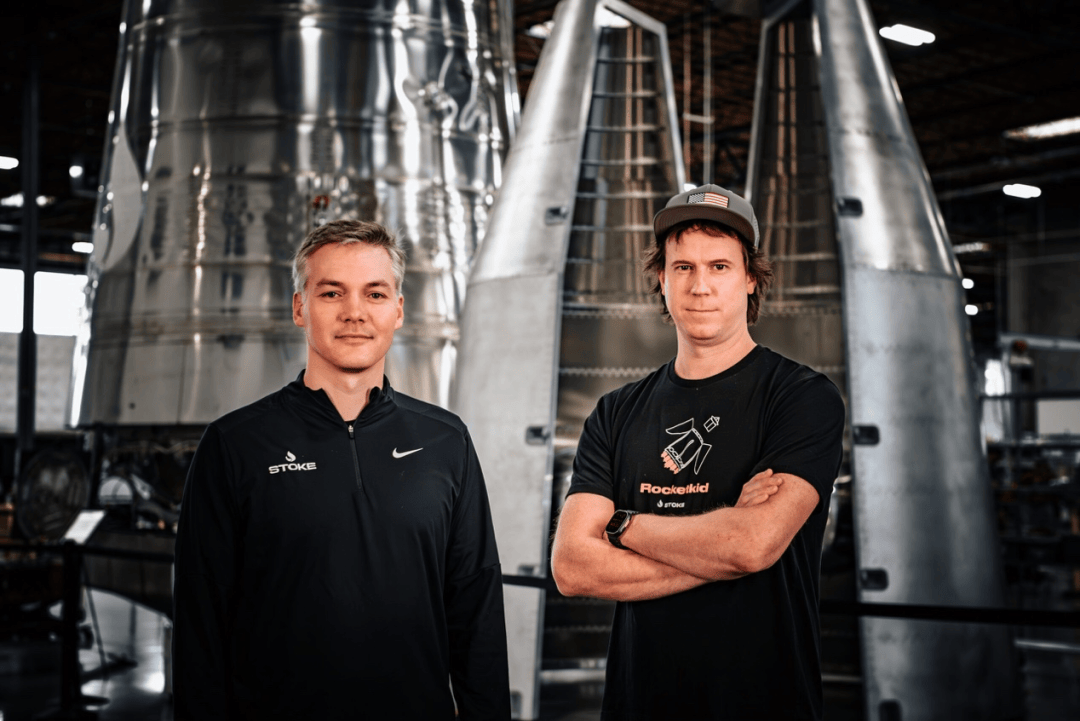
Core Insights - Elon Musk is considered one of the key drivers of technological advancement in the U.S., not only through his own companies but also by fostering competition among peers [1] - Sam Altman, CEO of OpenAI, has shown interest in entering the space launch sector, potentially competing with Musk's SpaceX, through discussions with rocket manufacturer Stoke Space [1][5] - Stoke Space, founded by former Blue Origin engineers, aims to develop a reusable rocket system that could outperform SpaceX [2][3] Company Developments - Stoke Space was established in 2019 and is working on the Nova rocket, which aims for both first and second-stage reusability [2] - The Nova rocket can deliver payloads of 3 tons to low Earth orbit in fully reusable mode, and up to 7 tons in expendable mode, filling a market gap between Rocket Lab's Electron and SpaceX's Falcon 9 [3] - In October, Stoke Space completed a $510 million Series D funding round, along with $100 million in debt financing, led by the U.S. Innovative Technology Fund [3] Industry Context - In March, the U.S. Space Force selected Stoke Space for the National Security Space Launch program, allowing it to compete for $5.6 billion in launch contracts over the next decade [4] - Altman's interest in space is partly driven by his vision of building data centers in space, a concept he has publicly discussed [4] - Other companies, including Google and Axiom Space, are also exploring similar space-based data center initiatives [4] Competitive Landscape - Although discussions between Altman and Stoke Space did not materialize, OpenAI is currently facing significant competitive pressure from Google's Gemini 3, which has rapidly gained market share [5] - Altman is also an investor in Longshot Space, a company developing a unique launch system using a large pneumatic cannon, which could drastically reduce launch costs [5][7] - Longshot's technology aims to achieve speeds of 25 to 30 Mach, with initial tests already reaching 4.6 Mach [8]

当前时点如何看商业航天?
2025-11-25 01:19
Summary of Commercial Aerospace Industry Conference Call Industry Overview - The satellite internet industry relies on downstream capital expansion for revenue growth, with a peak performance expected around 2027 or 2028 due to the issuance of 6G licenses and the replacement of base stations, which will enhance satellite network applications in remote areas [1][2][3] - The profitability model in commercial aerospace is heavily dependent on cost control, with significant differences in launch costs between domestic and international players. A major milestone is anticipated with the first flight of a large-thrust reusable rocket by the end of 2025, which is expected to commercialize by around 2028, significantly reducing costs [1][2][3] Key Insights and Arguments - The International Telecommunication Union (ITU) has set clear requirements for satellite launches, with most orbital applications concentrated in 2019-2020. By 2027, experimental satellites must be launched, achieving a new measurement of 10%-50% [1][3] - The commercial aerospace sector is influenced by multiple factors, including interest from major international companies like Nvidia and Google in space data centers, and the end-of-year fund performance assessments that may shift capital from high to low positions [1][4] - The first flight of the large-thrust reusable rocket in late 2025 is a significant event for China's commercial aerospace sector, symbolizing a major step forward despite limited short-term impacts on cost reduction and rocket capacity improvement [1][5] Emerging Trends - The satellite industry is experiencing several catalytic factors, including movements from AI-related companies overseas, high domestic capital discount rates, and positive internal changes within the satellite industry [1][6] - In the communication sector, companies like Canqin Technology, which produces ceramic filters, and Haige Communication, which has a broad market layout and unique advantages in the chip sector, are highlighted as key investment opportunities [2][7] Related Industries - The construction industry is also entering the commercial aerospace field, with companies like Shanghai Port Bay investing in perovskite battery technology for satellite solar wings and energy management systems. The company has secured approximately 34 million RMB in new orders as of mid-2025 [2][8] - Perovskite batteries show promise in commercial aerospace due to their potential for increased efficiency and reduced costs. The company has successfully launched 16 satellites powered by its energy systems, with over 40 products operating reliably [2][9]
全球新工业周报:SpaceX宣布2025年发射目标为170次轨道发射,同比2024年实际发射记录增长27%
海通国际· 2025-06-06 03:00
Investment Rating - The report suggests a positive outlook for the aerospace and defense sectors, recommending a focus on high-performance structural component manufacturers and defense contractors [4]. Core Insights - The aerospace industry is experiencing a robust recovery, with SpaceX targeting 170 orbital launches in 2025, a 27% increase from 2024 [1][18]. - The U.S. is establishing a significant AI data center in the UAE, marking a shift towards global standard output in the AI data center industry [13]. - The industrial robotics sector is expected to maintain a steady installation level of 541,302 units in 2023, with a projected increase in demand driven by re-industrialization and AI data center developments [32][36]. Summary by Sections Global Market Review - The U.S. stock market shows a steady upward trend, with the S&P 500 and Dow Jones Industrial Average reaching significant highs [7][12]. Infrastructure - **Data Centers**: The U.S. and UAE are collaborating on a 5GW AI super data center, involving major tech companies like OpenAI and Nvidia [13][14]. - **Energy Construction**: The U.S. is facing challenges with competitive transmission bidding and has seen a significant increase in solar and wind energy curtailments [16][17]. Aerospace - The aerospace sector is marked by increased launch frequencies and advancements in military drone technology, with notable developments from SpaceX and China's aerospace initiatives [18][19]. Defense - The defense industry is witnessing enhanced cooperation among NATO allies and significant investments in autonomous weapon systems and military technology [29][30]. Robotics - The industrial robotics market is projected to see continued growth, with a focus on automotive and electronics sectors, despite a slight decline in installations in 2023 [32][36]. Industrial Equipment - The price indices for various industrial equipment categories, including motors and generators, show stable trends with some fluctuations, indicating a resilient manufacturing sector [33][41].
全球新工业周报:SpaceX宣布2025年发射目标为170次轨道发射,同比2024年实际发射记录增长27%-20250606
Haitong Securities International· 2025-06-06 02:23
Investment Rating - The report suggests a positive outlook for the aerospace and defense sectors, recommending a focus on high-performance structural component manufacturers and defense contractors [4]. Core Insights - The aerospace industry is experiencing a robust recovery, with SpaceX targeting 170 orbital launches in 2025, a 27% increase from 2024 [1][18]. - The industrial robotics sector is expected to maintain a global installation level of 541,302 units in 2024, with a projected increase in demand driven by the re-industrialization trend and AI data center developments [32][36]. - The energy sector is facing challenges with the cancellation of $3.7 billion in carbon capture and decarbonization incentives by the U.S. Department of Energy, impacting several companies [16][17]. Summary by Sections Global Market Review - The U.S. stock market shows a steady upward trend, with the S&P 500 and Dow Jones Industrial Average reaching significant highs [7][8]. Infrastructure - **Data Centers**: The U.S. is collaborating with the UAE to build a 5GW AI super data center, marking a shift towards global standard output in AI infrastructure [13][14]. - **Energy Construction**: The California Independent System Operator (CAISO) faces regulatory challenges that could impact competitive transmission bidding [16]. Industrial Equipment - **Industrial Equipment Price Index**: The price index for electric motors and generators in the U.S. shows a 20% year-on-year increase, indicating strong demand [2][33]. Global Energy - **U.S. Electricity Market**: The average retail price of electricity in March 2025 was $0.13/kWh, reflecting a 0.38% increase [4]. Aerospace - The aerospace sector is marked by significant advancements, including the launch of China's Tianwen-2 Mars probe and the development of new drone technologies [18][29]. Defense - The defense industry is seeing increased collaboration among NATO allies, with a focus on advanced technologies such as AI and unmanned systems [29][30]. Robotics - The industrial robotics market is projected to grow, with the automotive sector regaining its position as the largest customer for industrial robots [32][36].