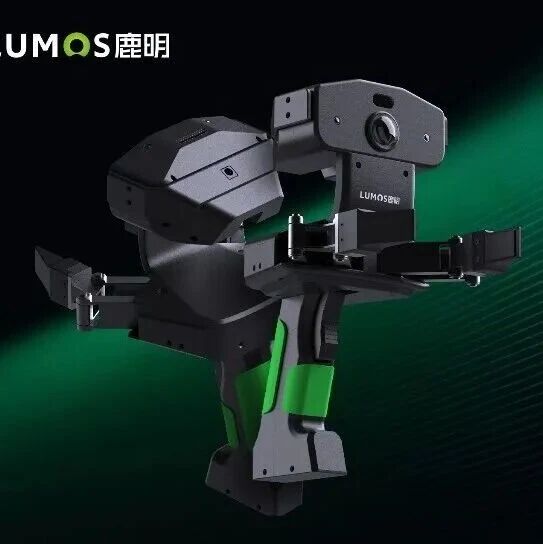
FastUMI Pro

Search documents
对话穹彻、鹿明:UMI登场,具身智能数据的平权时刻
3 6 Ke· 2026-01-23 07:43
Core Insights - The article discusses the emergence of Universal Manipulation Interface (UMI) as a transformative approach to data collection in the field of embodied intelligence, addressing previous limitations in data quality and accessibility [3][5][10]. Group 1: UMI Overview - UMI is described as a low-cost data collection solution that utilizes handheld grippers, cameras, and pose estimation algorithms to convert human gestures into learnable trajectories for robots [3][7]. - The UMI paradigm significantly reduces the cost and complexity of data collection, making high-quality data more accessible to a broader range of companies beyond just industry leaders [4][12]. Group 2: Industry Impact - UMI is expected to democratize data access, allowing second and third-tier companies to compete in data collection, which was previously dominated by financially strong firms [14][26]. - The cost efficiency of UMI is highlighted, with UMI solutions reportedly costing 1/5 of traditional remote operation methods in terms of labor and 1/200 in hardware costs, while also tripling data collection efficiency [12][14]. Group 3: Data Quality Concerns - Despite the advantages of UMI, there are concerns regarding the quality of data collected, with previous estimates suggesting that only 10% of UMI-collected data was usable [16][18]. - The industry is shifting focus from merely collecting large volumes of data to ensuring the quality of that data, which is crucial for training effective models [18][19]. Group 4: Future Directions - Companies like 鹿明机器人 and 穹彻智能 are developing robust data governance frameworks to enhance data quality, including standard operating procedures (SOPs) and real-time validation during data collection [19][21]. - UMI is seen as a complementary approach to traditional data collection methods, rather than a replacement, suggesting a future where multiple data collection strategies coexist [28][29].

训具身模型遇到的很多问题,在数据采集时就已经注定了丨鹿明联席CTO丁琰分享
量子位· 2026-01-08 12:08
Core Viewpoint - The article emphasizes the critical importance of data quality in embodied intelligence, highlighting that many issues arise from the data generation stage rather than the training phase itself [1][7][30]. Group 1: UMI Overview - Universal Manipulation Interface (UMI) is a framework proposed by Stanford in February 2024, designed to decouple robot bodies from human operation behaviors, integrating "operational intent + motion trajectory + multimodal perception" into a universal interface for various robots [5][8]. - UMI has gained traction since September 2023, with companies like Luming Robotics leading the way in this field [6][8]. Group 2: Data Collection Challenges - The cost of data collection for training is exceptionally high, with estimates of $100-200 per hour in the U.S., requiring vast amounts of data (e.g., 270,000 hours for Generalist's GEN 0) to train models comparable to GPT-3, which could cost hundreds of billions of dollars [19][21]. - Data collection efficiency is low, with remote operation yielding only about 35 data points per hour, leading to issues like data silos due to the unique designs of different robots [21][22]. Group 3: FastUMI Pro Product - Luming Robotics has developed FastUMI Pro, a data collection hardware that is lightweight (over 600 grams) yet capable of handling 2-3 kg objects, suitable for both industrial and domestic applications [10][12]. - FastUMI Pro supports multimodal inputs, including tactile, auditory, and six-dimensional force data, and boasts a spatial precision of 1mm, claimed to be the highest globally [11][12]. Group 4: Data Quality and Training Issues - The article discusses the misconception that UMI data collection is simple, emphasizing that high-quality data must meet strict alignment and synchronization criteria across multiple sensors [34][39]. - Many UMI devices fail to produce usable data due to inadequate hardware capabilities, leading to poor image quality and frame rate issues that disrupt the learning process [43][46]. - The distinction between "dirty data" and "waste data" is made, with waste data being unstructured and lacking design, making it unsuitable for training models [50][59]. Group 5: Systemic Approach to UMI - The article argues that UMI requires a systemic approach where hardware, data, and algorithms are interdependent, and any failure in one area can prevent the successful training of models [63][65]. - Luming Robotics aims to break the "impossible triangle" of high-quality data acquisition at low costs to accelerate the development of the embodied intelligence industry [68].

深扒了具身的数据路线,四小龙的格局已经形成......
具身智能之心· 2025-12-24 10:04
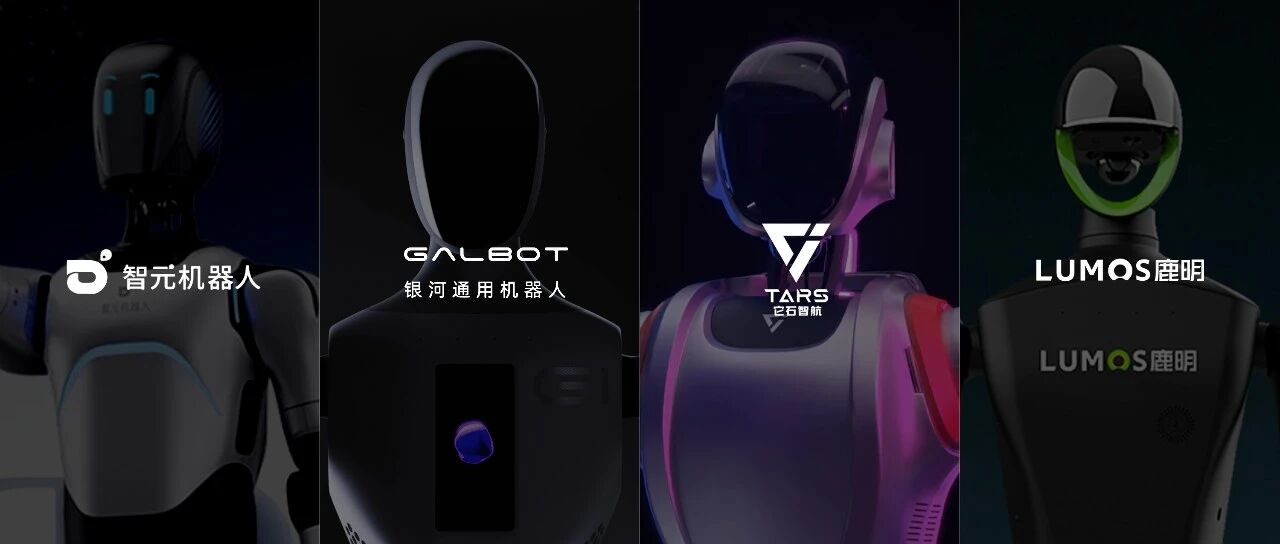
Core Viewpoint - The development of embodied intelligence over the past 25 years has focused on a closed-loop process of data collection, model training, data scaling, and model optimization, with data remaining a key focus for future advancements [1][5]. Group 1: Data Routes - The industry is not selecting a single optimal solution but is progressing along four distinct data routes simultaneously, each addressing different constraints and stages [3]. - The four data routes have led to the emergence of a competitive landscape termed the "Four Little Dragons of Embodied Data," with key players including Zhiyuan, Galaxy, Tashi, and Luming [4][34]. Group 2: Data Route Descriptions - **Remote Control Real Machine**: This route provides the most authentic data but is also the most expensive and slow, requiring real robots and specialized operators, making it difficult to scale [8][12][14]. - **Simulation Data**: Offers high efficiency and scalability, but faces challenges due to the domain gap, limiting its effectiveness in real-world applications [16][18][20]. - **Human Video**: This route is cost-effective and covers a wide range of scenarios but lacks critical feedback mechanisms and is not a primary data source for initial capabilities [22][25]. - **UMI Data**: This approach decouples real interaction data from specific robots, allowing for more versatile and scalable data collection, thus becoming a foundational infrastructure for embodied data [27][30][31]. Group 3: Industry Practices - In the remote control real machine data direction, Tesla is advancing its remote operation system, while Zhiyuan Robotics is deepening its focus on real bodies and task loops [35]. - In the simulation data route, Galaxy General is expanding synthetic data scale through computational power and simulation engines [35]. - In the human video data direction, Tashi is developing large-scale human behavior video datasets to enhance semantic coverage [35]. - The UMI route is represented by Luming Robotics, which has made significant strides in scaling and engineering UMI data collection systems [35][39]. Group 4: Future Implications - As the industry transitions from proving feasibility to continuous evolution, the ability to consistently produce high-quality real data will become increasingly critical [37]. - The four data routes are not mutually exclusive; they each play distinct roles in the overall ecosystem, contributing to a clearer path forward for embodied intelligence [38][40]. - The importance of time accumulation is emphasized, particularly for the UMI route, which relies heavily on early choices and sustained investment [41][42]. - The current landscape of the "Four Little Dragons" serves as a structural description of the industry, with future success dependent on which routes and teams can maintain operational continuity and data advantages [44][45].
引领革新!鹿明机器人发布FastUMI Pro,定义具身智能数据采集新范式
机器人大讲堂· 2025-12-01 09:36
Core Viewpoint - Lumos Robotics has launched a revolutionary product, the FastUMI Pro, which addresses the critical bottleneck in acquiring high-quality, large-scale, multi-modal data essential for the advancement of embodied intelligence [1][21]. Group 1: Product Features - FastUMI Pro features a lightweight design with a total weight of only 600g and a load capacity of up to 2kg, enhancing portability and enabling data collection in any scenario [3][10]. - The system boasts a global leading pure visual positioning technology with an accuracy of up to 3mm, eliminating reliance on heavy laser and fixed base stations [6][17]. - It supports multi-modal data collection, integrating pressure-sensitive and tactile sensors, which allows for comprehensive data capture during operations [8][19]. - FastUMI Pro can quickly adapt to various robots without the need for body replacement, showcasing high compatibility [9]. - The system significantly improves data collection efficiency by three times and reduces costs to one-fifth of traditional solutions, addressing the industry's high-cost and high-barrier challenges [11][21]. Group 2: Ecosystem and Integration - FastUMI Pro is not just a hardware device but a complete ecosystem that provides an end-to-end solution from hardware design to model training, facilitating a seamless data pipeline for researchers [13][21]. - The system includes a real-time pre-processing architecture that allows users to verify data validity during collection, thus preventing ineffective data acquisition [19][20]. - It features a four-eye vision system that enhances environmental feature capture, ensuring stable operation even in challenging lighting and occlusion conditions [19]. Group 3: Market Impact - The introduction of FastUMI Pro marks a significant step for Lumos Robotics in the core infrastructure of embodied intelligence, aiming to lower the barriers for acquiring high-quality data [21]. - The product is positioned to accelerate the scaling process of intelligent systems by enabling global research teams to obtain diverse data at lower costs and higher efficiency [21].