
Federal Funds Rate

Search documents
LPR暂无调整的必要?
Jing Ji Wang· 2026-01-30 07:39
Core Viewpoint - The Federal Reserve has decided to maintain the current interest rate, pausing any rate cuts, while China's Loan Prime Rate (LPR) remains unchanged for eight consecutive months, reducing the likelihood of short-term mortgage rate decreases for homebuyers [1][3]. Group 1: Impact of Federal Reserve's Decisions - The Federal Reserve's interest rate, known as the federal funds rate, serves as a benchmark for the financial market and influences global capital flows due to the dollar's status as the world currency [3]. - A pause in rate cuts by the Federal Reserve stabilizes dollar asset yields, which slows capital movement and alleviates pressure on the Renminbi exchange rate [3][5]. Group 2: China's Monetary Policy Context - China's monetary policy is primarily driven by domestic economic conditions, contrasting with the Federal Reserve's aggressive rate hikes from March 2022 to July 2023 to combat inflation [6]. - The Chinese economy is expected to grow at a GDP rate of 5% by 2025, supported by a shift in policy focus from monetary to fiscal measures, which are more direct and effective in stimulating specific sectors [6][11]. Group 3: Banking Sector Considerations - As of Q3 2025, the net interest margin for commercial banks in China is only 1.42%, indicating pressure on banks to maintain profitability while managing deposit and loan rates [7]. - Continuous reductions in loan rates have been made to support the real economy, but banks face challenges in lowering deposit rates without risking a loss of savings [7][10]. Group 4: Future Interest Rate Outlook - There is still potential for rate cuts, as indicated by the Deputy Governor of the People's Bank of China, with room for adjustments in reserve requirements and funding costs [10][11]. - However, the likelihood of comprehensive rate cuts in the short term is low, as the current mortgage rates are already at historical lows, and the market is in a transitional phase [11].

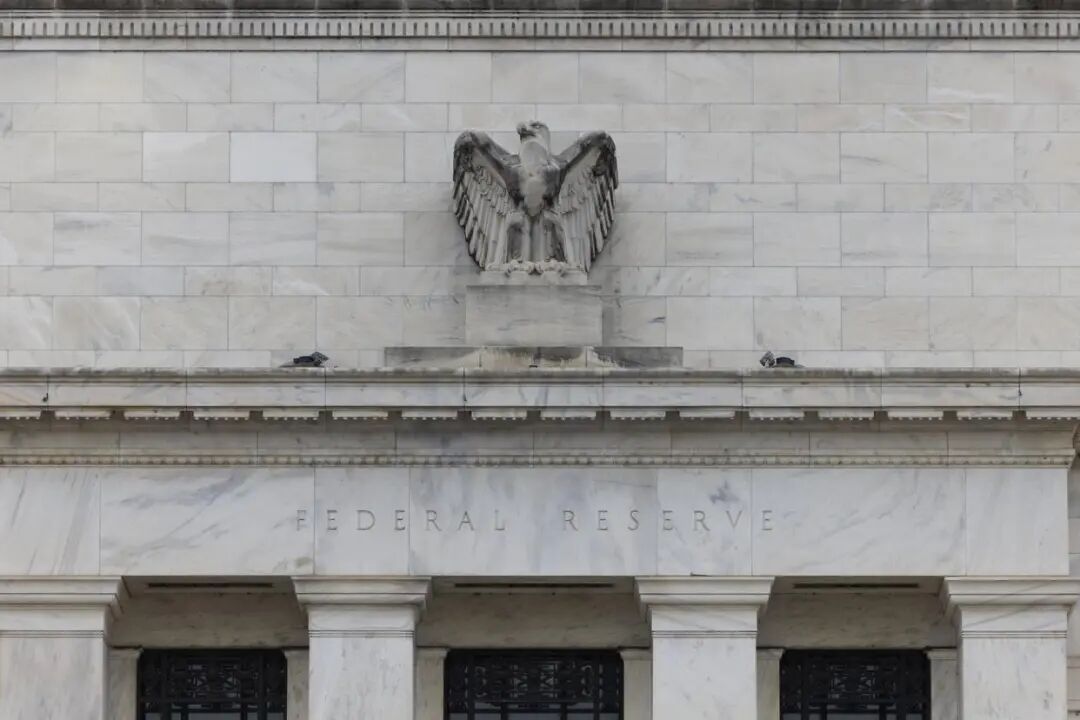
刚刚,美联储宣布:不降息!
Jin Rong Shi Bao· 2026-01-29 00:27
Core Viewpoint - The Federal Reserve has paused interest rate cuts after three consecutive reductions, maintaining the federal funds rate in the range of 3.5% to 3.75% [1] Group 1: Federal Reserve Decision - The Federal Open Market Committee (FOMC) voted 10 to 2 to keep the interest rate unchanged, marking the first pause after three consecutive 25 basis point cuts [1] - Since September 2025, the Federal Reserve has cut rates by a total of 175 basis points, with 75 basis points cut in 2025 alone [1] Group 2: Economic Indicators - Current indicators show low employment growth and signs of stabilization in the unemployment rate, while inflation remains high [1] - The statement reflects a more cautious approach from the Federal Reserve, indicating improvements in economic conditions, particularly in unemployment [2] Group 3: Chairman's Remarks - Federal Reserve Chairman Jerome Powell expressed a slightly optimistic view on the economic outlook, noting that the impact of tariff increases on consumer prices has largely been transmitted [2] - Powell emphasized that the Federal Reserve has not made any decisions regarding further easing policies [2]
美联储降息预期释放 非农数据成政策关键
Jin Tou Wang· 2026-01-09 10:48
Group 1 - The Federal Reserve maintains the federal funds rate target range at 4.25%-4.5% with no new rate adjustment announced, while signaling a significant rate cut of 150 basis points in 2026, which is expected to create approximately one million jobs without triggering inflation rebound [1][2] - The Federal Reserve's balance sheet has been steadily shrinking, with a reduction of $276.59 billion in 2025, bringing the total to $6.54 trillion, including a decrease of $192.59 billion in mortgage-backed securities and $76.16 billion in Treasury holdings [1] - There is a notable divergence between market expectations and the Federal Reserve's internal discussions regarding future rate paths, with some officials advocating for maintaining rates while the market anticipates two rate cuts in 2026 [2][3] Group 2 - The upcoming non-farm payroll data, expected to show an increase of 73,000 jobs and a slight decrease in the unemployment rate to 4.5%, is seen as a critical indicator for the timing of the rate cut cycle [2] - The Federal Reserve is currently in a "policy wait-and-see" phase, with stable rates and gradual balance sheet reduction as the short-term focus, while the 150 basis points rate cut expectation sets the medium to long-term policy direction [3] - The management strategy of the balance sheet remains contentious, with some potential leadership candidates advocating for a more aggressive reduction, raising concerns about market liquidity fluctuations [2]
Fed official forecasts bold path for interest rates, GDP in 2026
Yahoo Finance· 2025-12-16 14:33
Core Viewpoint - The U.S. economy is expected to show resilience and potential growth in 2026, despite uncertainties in the labor market and inflation [3][4]. Economic Outlook - New York Fed President John C. Williams anticipates fewer economic fluctuations in the upcoming year, emphasizing the balance between price stability and low unemployment [4][5]. - The Federal Open Market Committee (FOMC) recently cut the benchmark Federal Funds Rate to a target range of approximately 3.50%–3.75%, marking the third quarter-percentage-point cut of the year [6][7]. Labor Market Insights - The labor market is showing signs of cooling, with job growth described as anemic and the unemployment rate steadily increasing [11]. - Williams noted that labor demand is softening more than supply, raising concerns about the overall health of the job market [11]. Monetary Policy Considerations - The FOMC's cautious approach to monetary policy has been influenced by tariff inflation and trade policy, leading to a "wait-and-see" strategy before implementing rate cuts [12]. - The recent interest rate cuts are aimed at supporting hiring while managing inflation risks, highlighting the delicate balance policymakers must maintain [10].
物价上涨 就业趋冷 美联储货币政策遭受多重困扰
Sou Hu Cai Jing· 2025-12-11 04:21
Group 1 - The Federal Reserve announced a 25 basis point reduction in the federal funds rate target range to 3.50% to 3.75%, marking the third rate cut of the year and the sixth since September 2024 [1] - The decision to lower rates is influenced by the dual mandate of stabilizing prices and achieving full employment, with recent data indicating a cooling labor market and a notable decline in private sector employment [2] - The Fed's decision-making is complicated by the lack of official employment and inflation data due to the recent government shutdown, leading to reliance on unofficial data and increasing the risk of misjudgment [2] Group 2 - There are internal divisions within the Fed, with the mainstream faction believing the current rate cut is sufficient to address employment risks while maintaining policy flexibility [2] - The more aggressive faction advocates for larger rate cuts, citing a more severe employment situation than reflected in official data, while the cautious faction worries that rapid rate cuts could prolong inflation cycles or trigger asset bubbles [2] - The effectiveness of rate cuts is subject to delays and is constrained by external factors such as global economic slowdown and geopolitical risks [2]
美联储释放鹰派信号,降息节奏或将转向平缓?
Sou Hu Cai Jing· 2025-10-30 02:55
Core Viewpoint - The Federal Reserve's decision to lower the federal funds rate by 25 basis points reveals internal divisions among decision-makers regarding the economic outlook and monetary policy direction [1][3]. Group 1: Federal Reserve's Decision - The Federal Reserve announced a 25 basis point cut in the federal funds rate, aligning with market expectations, but highlighted growing disagreements among its members [1]. - Board member Milan advocated for a more significant cut of 50 basis points to address potential economic downturns, while Kansas Fed President Schmidt preferred to maintain current rates [1]. Group 2: Inflation and Employment - Fed Chair Powell indicated a hawkish stance, emphasizing uncertainty about future rate cuts despite the recent decision, with the September PCE inflation rate at 2.8%, above the Fed's long-term target [3][4]. - The labor market shows signs of slowing but remains resilient, with no large-scale weakness detected, leading the Fed to adopt a cautious approach to avoid premature policy easing that could raise inflation expectations [4]. Group 3: Future Rate Cut Expectations - Market expectations suggest that while the Fed has room for further monetary easing, the pace may slow significantly, potentially shifting from "action at every meeting" to "quarterly adjustments" [5]. - This change reflects the complexity of economic fundamentals and the Fed's intention to minimize excessive market volatility [5]. Group 4: Impact of Rate Cuts - The effectiveness of rate cuts in stimulating the economy may be limited, particularly in real estate and interest-sensitive consumer sectors, due to a weakened refinancing effect [7]. - Relying solely on interest rate tools may not achieve the desired economic boost, indicating that structural policy measures may become crucial in the future [7]. Group 5: Quantitative Tightening - The Fed plans to officially end its quantitative tightening (QT) policy on December 1, ceasing the monthly reduction of $50 billion in Treasury securities and continuing to reinvest in maturing MBS and short-term Treasury bills [8]. - This decision aims to alleviate market concerns about liquidity and marks a transition towards the normalization of monetary policy, providing more flexibility for future policy adjustments [8].
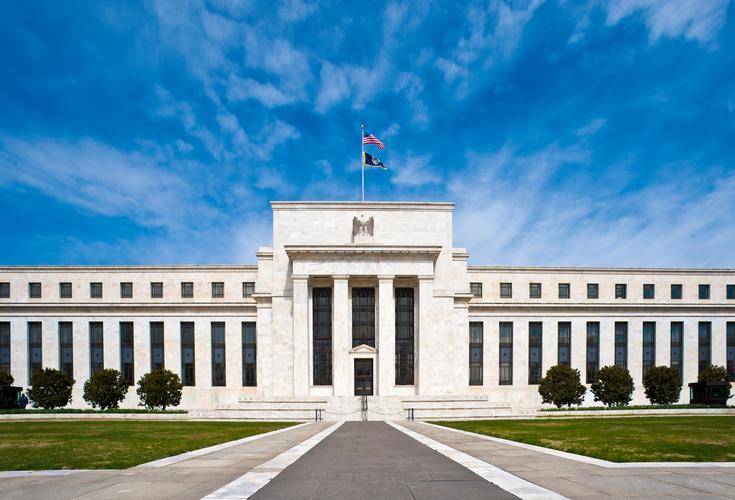
Dallas Fed chief's rate target reform welcomed amid very uncertain timetable
Yahoo Finance· 2025-10-23 10:11
Core Viewpoint - A proposal by Dallas Fed President Lorie Logan to shift the Federal Reserve's interest rate target from the federal funds rate to the tri-party general collateral rate (TGCR) is gaining attention but faces challenges as the Fed's balance sheet reduction nears completion and leadership changes are expected next year [1][2]. Group 1 - Logan's proposal suggests that the TGCR, which reflects short-term loans collateralized by bonds, is a more accurate indicator of money market conditions impacting the broader economy compared to the federal funds rate [4]. - The TGCR market sees over $1 trillion in daily volumes, significantly higher than the $100 billion in daily fed funds trading, indicating a shift in market dynamics [3]. - The Fed has been reducing liquidity for three years, and as this process continues, short-term borrowing rates may become more volatile, making the timing for a change favorable [5]. Group 2 - Influential figures in monetary policy, including former Fed staffer Ellen Meade and former New York Fed head William Dudley, have expressed support for Logan's proposal, noting its technical nature and potential merits [6]. - Despite Logan's influence, the extent of support for her idea within the Fed remains uncertain, highlighting potential headwinds to implementing the change [6].
When is the Fed's next meeting?
Yahoo Finance· 2024-06-06 15:07
Core Viewpoint - The Federal Open Market Committee (FOMC) is set to meet again to assess the economy and make decisions on the federal funds rate, with expectations of further rate cuts before the end of 2025 [1][5]. Group 1: FOMC Meetings and Decisions - The FOMC holds eight scheduled meetings annually, with the next meeting planned for late October 2025 [3][9]. - The most recent meeting occurred on September 16-17, 2025, where the Fed cut its benchmark rate for the first time this year [1][5]. - The FOMC's policy decisions are released at 2 p.m. Eastern time, followed by a press conference at 2:30 p.m. [5]. Group 2: Economic Indicators and Policy Assessment - Policymakers evaluate economic indicators such as the Consumer Price Index (CPI), gross domestic product (GDP), and unemployment rate to shape monetary policy [4]. - The FOMC is committed to supporting maximum employment and returning inflation to a 2% target [7]. Group 3: Future Expectations - Experts anticipate that the Fed will likely reduce the federal funds rate again in 2025, with a strong possibility of a rate cut in October [7][8]. - The current target range for the federal funds rate is set at 4% to 4.25% [10].