GOVY AirJet

Search documents
两会专访丨全国人大代表、广汽集团董事长冯兴亚:“番禺行动”进入“内部装修”阶段,2026年广汽集团产销规模要重回200万辆
Mei Ri Jing Ji Xin Wen· 2026-03-09 07:39
Core Viewpoint - The rural market is identified as a strategic area for the national unified market and a key engine for domestic economic circulation, presenting significant consumption growth potential and stable supply capabilities [1] Group 1: Rural New Energy Vehicle Market - The activation of the rural new energy vehicle market can enhance transportation convenience for rural residents, assist in energy conservation and emission reduction, and inject new momentum into economic growth [1] - Challenges faced by rural consumers include sparse charging networks, insufficient fast-charging stations, inadequate after-sales service, and lack of financial support [1] - Recommendations include addressing energy supply bottlenecks, improving rural charging and swapping networks, establishing robust after-sales systems, and enhancing support for rural vehicle consumption [1] Group 2: Charging and Swapping Models - The swapping model is recognized as a major energy supply method for new energy vehicles, aligning with carbon neutrality strategies and addressing charging difficulties [3] - The strategic value of the swapping model is increasingly acknowledged at the national level, with expectations of forming a trillion-yuan industry ecosystem by 2030 [3] - Recommendations for the swapping model include establishing a unified national standard, enhancing operational subsidies, and coordinating the layout of swapping networks [3] Group 3: Overseas Market Expansion - GAC plans to increase its overseas sales of self-owned brands to nearly 130,000 units by 2025, representing a 47% year-on-year increase [4] - The company aims to cover over 90% of county markets in China by adding 600 full-brand experience stores by 2026 [2] - GAC's overseas strategy includes strengthening its presence in Europe, expanding into Australia, New Zealand, South Africa, and Southeast Asia, and establishing over 1,000 sales and service points globally [4] Group 4: Challenges in Overseas Expansion - GAC faces challenges in overseas markets due to differing standards, which necessitate product redevelopment, impacting efficiency and cost [5] - Localizing talent, supply chains, and sales service networks, as well as building logistics systems, are critical issues to overcome [5] Group 5: AI and Robotics Integration - GAC is integrating artificial intelligence into its strategy, focusing on product experience, operational efficiency, and digital transformation [8] - The company has initiated the commercial validation of humanoid robots in security and healthcare applications, with plans for mass production of the GoMate Mini robot [9] - GAC is also developing flying cars, with significant customer orders and production milestones expected by 2026 [9] Group 6: Production and Sales Goals - GAC aims to achieve a production and sales scale of 2 million vehicles by 2026, with a focus on enhancing self-owned brand sales to account for 60% of total sales [11] - The "Panyu Action" reform initiative is designed to transform the organization into a user-demand-oriented structure, enhancing innovation and efficiency [11] - In 2025, GAC's product planning efficiency improved by 30%, and the time for developing new models was reduced to 18-21 months [11]

两会声音 | 全国人大代表、广汽集团董事长冯兴亚:以“制度软实力”护航智能驾驶产业发展
Zhong Guo Zheng Quan Bao· 2026-03-05 00:06
Group 1: Autonomous Driving Development - The core viewpoint emphasizes the need for accelerating the improvement of laws and regulations related to autonomous driving, and establishing a unified national standard and evaluation system to support the large-scale implementation of autonomous vehicles in China [1][3] - GAC Group has developed L4-level mass production capabilities and commercial operation results through a comprehensive strategy of "self-research + ecological cooperation + platform operation," collaborating with companies like WeRide and Didi to promote the deployment of Robotaxi and Robobus [4] - GAC Aion and Didi have jointly launched the new generation Robotaxi—R2, with over 300 Robotaxis currently in operation across cities like Guangzhou and Shenzhen, and plans to expand to 100 core cities with a fleet of over 10,000 Robotaxis in the next five years [4] Group 2: Battery Swapping and Energy Solutions - With the increasing penetration and ownership of new energy vehicles, battery swapping has emerged as a new challenge, and GAC Group suggests accelerating the establishment of a unified battery swapping standard and enhancing operational subsidies for swapping stations [5] - The proposal includes a comprehensive layout of the battery swapping network and the establishment of a vehicle-battery separation system to promote the scale effect of battery swapping [5] Group 3: Low-altitude Economy Development - The low-altitude economy is identified as a strategic emerging industry, with GAC Group advocating for a high-quality development approach through planning, regulatory standards, and application scenario expansion [6][7] - GAC Group is advancing the industrialization of low-altitude economy technologies, with its flying car brand GOVY planning to launch its first model in March 2023 and has received nearly 2,000 customer orders for its flying vehicles [7] Group 4: Enhancing International Competitiveness - GAC Group has maintained its position as the world's largest automobile exporter for three consecutive years, and it is crucial to accelerate the internationalization of industry standards to enhance competitiveness [8] - The company has expanded its global channels to 650, covering 86 countries and regions, and plans to innovate in product development and operational methods to support its transition from a major exporter to a strong automotive nation [8]

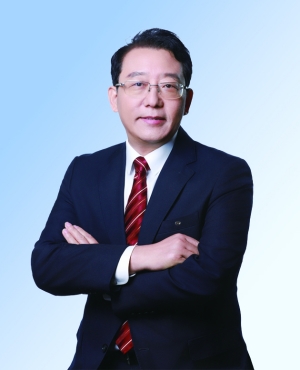
广汽集团冯兴亚:建议加快构建全国统一的换电标准,健全车电分离制度框架
Xin Lang Cai Jing· 2026-03-04 14:04
Group 1: Automotive Industry Development - The core suggestions from the chairman of GAC Group focus on high-quality development in the automotive industry, emphasizing new energy vehicle (NEV) battery swapping, autonomous driving, and the construction of Chinese automotive brands [2][3] - The battery swapping model is entering its initial stage of large-scale development, with recommendations to accelerate the establishment of a unified national battery swapping standard and enhance operational subsidies for swapping stations [2] - The autonomous driving industry in China is moving towards large-scale application, with calls to improve relevant laws and regulations, and to create a unified national standard and evaluation system to support the rapid development of smart driving technology [3] Group 2: Low-altitude Economy - The low-altitude economy in China has a market size exceeding 600 billion yuan, but it is still in its early stages of development [4] - Suggestions to promote high-quality development in the low-altitude economy include strengthening planning, establishing a "14th Five-Year" development plan, and creating a low-altitude airspace network [4] - Recommendations also include improving regulatory mechanisms and expanding application scenarios in logistics, medical emergencies, and urban transportation to foster sustainable business models [4] Group 3: Rural and Elderly Mobility - The potential for rural new energy vehicle markets is significant, but there are deficiencies in infrastructure; suggestions include enhancing charging and swapping networks and increasing support for rural automotive consumption [5] - Addressing the travel needs of the elderly population, which numbers 323 million, recommendations include implementing a "digital inclusion + human support" travel service model and optimizing travel applications for elderly users [5]

事关无人机!强制性国家标准发布 产业链投资机会获关注(附概念股)
Zhi Tong Cai Jing· 2025-12-22 23:31
Group 1: Regulatory Developments - The Civil Aviation Administration of China has released two mandatory national standards for civil unmanned aerial vehicles (UAVs), effective from May 1, 2026, aimed at promoting a safer and more orderly industry development [1] - The standards include requirements for real-name registration and activation of UAVs, detailing the relationship, processes, and technical requirements for various systems involved in registration and activation [1] - The operational identification standard mandates UAV systems to actively report their identity, location, speed, and status throughout their operation, providing unified technical standards for design, production, and testing [1] Group 2: Market Opportunities - The drone industry is reshaping engineering operation and maintenance services in China's infrastructure sector, addressing challenges in high-risk inspections and supporting intelligent monitoring of energy pipelines and telecom base stations [2] - The low-altitude economy, encompassing UAVs and eVTOLs, is a significant area of growth, with 969 companies registered and over 478,000 UAVs documented in China [2] - The low-altitude economy is projected to grow at a compound annual growth rate of over 25%, potentially reaching a market size of 1.5 trillion yuan by 2025 and 3.5 trillion yuan by 2035 [3] Group 3: Policy Support and Industry Growth - Recent policies have intensified focus on the low-altitude economy, with local governments releasing standards for low-altitude communication networks and UAV traffic management [3] - The national "14th Five-Year Plan" emphasizes the development of the aerospace and low-altitude economy sectors, with state-owned enterprises establishing low-altitude economic companies [4] - The market for low-altitude economy is expected to reach a trillion yuan by 2030, with significant investments in infrastructure and technology to support this growth [4] Group 4: Key Players and Innovations - AVIC (Aviation Industry Corporation of China) is a leading player in the aerospace sector, involved in various UAV and aviation-related businesses [6] - ZTE Corporation is advancing its low-altitude sensing technology and has completed pilot projects for 5G-A sensing systems [6] - XPeng Motors has launched a low-altitude flight camp and plans to establish a flying car store, marking a significant step in the practical application of low-altitude economy technologies [6] - GAC Group's GOVY AirJet, a composite wing flying car, has successfully completed its first flight, showcasing advanced technology and performance [7]



广汽飞行汽车GOVY AirCab启动适航审定,2026年有望实现量产交付
Huan Qiu Wang· 2025-12-16 02:18
Core Insights - GAC Group's flying car brand GOVY has made significant progress with its "short-distance multi-rotor + intercity composite wing" flying car product matrix, with the first mass-production model, GOVY AirCab, entering the airworthiness certification stage and expected to be delivered by 2026, marking a key step towards commercialization of domestically developed flying cars [1] Group 1: Product Development - GOVY has released three self-developed flying car products: GOVY AirCar, GOVY AirCab, and GOVY AirJet, covering various travel scenarios [3] - The GOVY AirCab, designed for sightseeing and short-distance travel, has completed prototype deliveries in Beijing and Hong Kong, with an official price not exceeding 1.68 million yuan [3] - The GOVY AirCab features a lightweight design using over 90% aerospace-grade carbon fiber composite materials, reducing weight by over 30% compared to traditional materials, enhancing energy efficiency and safety for low-altitude flight [3] Group 2: Performance and Features - GOVY AirCab incorporates a top-mounted rotor and gull-wing door design, with excellent charging efficiency, supporting a 25-minute fast charge and a 15-minute charge from 50% to 100% [3] - The cabin is designed for two seats and includes 5G connectivity, smart assistant, and comfort features, along with a redundant flight control navigation system, full monitoring, and cloud self-check capabilities, achieving L4-level autonomous driving with computing power exceeding 500 TOPS and a maximum detection range of over 300 meters [3] Group 3: Future Plans and Market Strategy - Besides GOVY AirCab, the GOVY AirJet is set to roll off the assembly line by the end of 2024, with plans for commercial operation by 2028 [4] - GAC Group is actively exploring applications for flying cars in tourism, emergency rescue, and logistics, with a clear regional promotion plan to launch demonstration operations in 2-3 cities in the Guangdong-Hong Kong-Macao Greater Bay Area by 2027, contributing to the "40-minute living circle" initiative [4] - The development of flying cars is a focal point in the low-altitude economy, with GAC Group committed to advancing technology research and airworthiness certification to accelerate the commercialization process and provide safer, more efficient, and convenient low-altitude travel options [4]
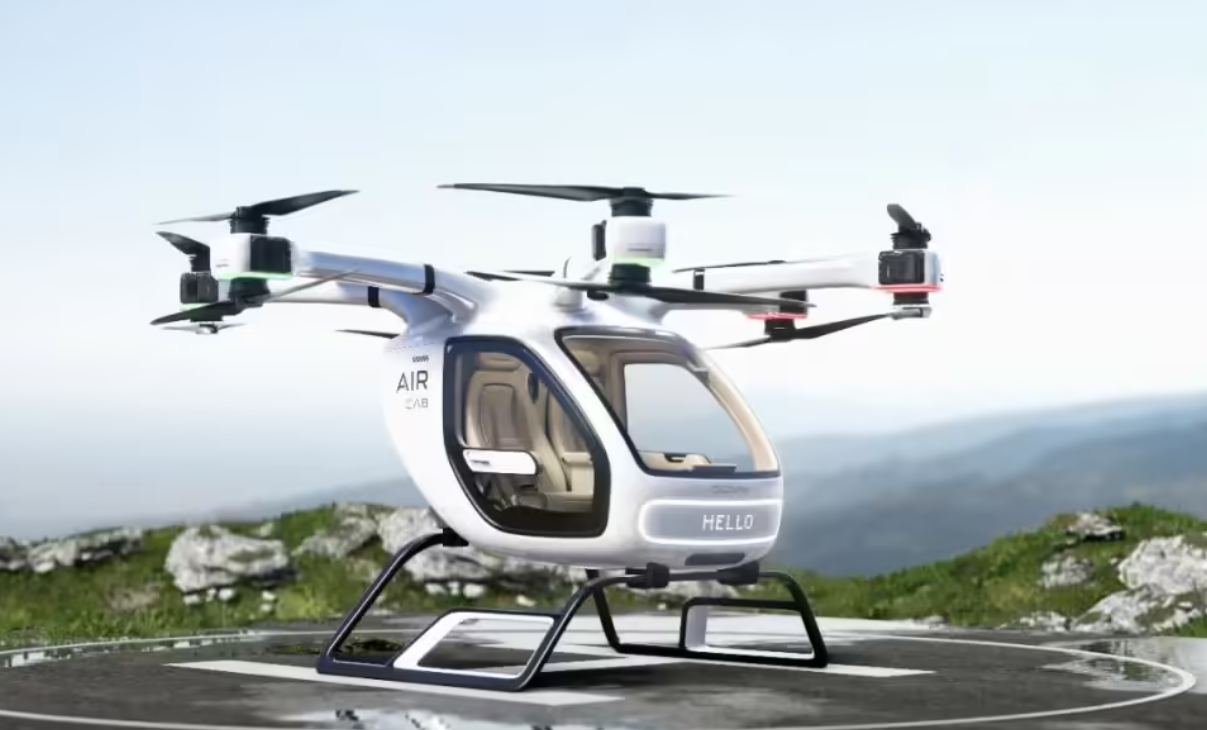
广汽集团:飞行汽车GOVY AirCab进入适航审定阶段 预计2026年实现量产交付
Zheng Quan Shi Bao Wang· 2025-12-15 09:26
Core Viewpoint - GAC Group is expanding its low-altitude travel technology brand GOVY with a product matrix that includes "short-distance multi-rotor + intercity composite wing" aircraft, aiming to create a comprehensive ecosystem for air-ground transportation [1] Group 1: Product Development - The company has launched three self-developed flying car products: GOVY AirCar, GOVY AirCab, and GOVY AirJet [1] - The multi-rotor GOVY AirCab, focused on sightseeing tourism and short-distance travel, is the first mass-production flying car product and is currently undergoing airworthiness certification [1] Group 2: Market Strategy - GOVY aims to establish a full-chain ecosystem covering research and development, production, and operation to realize a new mode of vertical transportation [1] - The GOVY AirCab has already completed prototype deliveries in Beijing and Hong Kong, with mass production expected to commence in 2026 [1]
168万元!广汽飞行汽车即将量产,明年将建首个示范运营点
Nan Fang Du Shi Bao· 2025-10-31 08:39
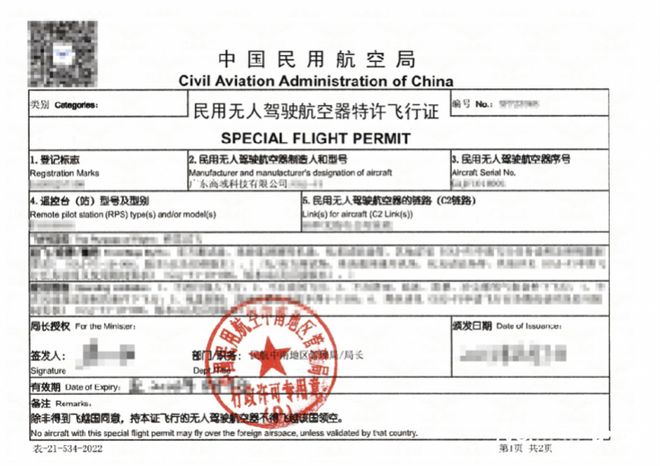
Core Viewpoint - The event showcased the advancements in flying cars, particularly the GOVY AirJet and GOVY AirCab, highlighting their potential for urban transportation and emergency services [2][4][5][7]. Group 1: GOVY AirJet - The GOVY AirJet features a "1+1+X" seating layout, accommodating 3 to 4 passengers, and is constructed with over 90% carbon fiber to reduce weight [4]. - It can reach speeds of up to 250 km/h and has a range exceeding 200 km, with a quick recharge time of 30 minutes [4]. - The flying car can significantly reduce travel time, for example, from Guangzhou to Hong Kong, which typically takes over 2 hours by ground transport, to just 40 minutes [4][5]. - The GOVY AirJet has completed over 200 flights and received a special flight permit from the Civil Aviation Administration of China [5]. Group 2: GOVY AirCab - The GOVY AirCab is a smaller multi-rotor flying car designed for 1-2 passengers, suitable for short-distance travel within 20 km, and is currently undergoing airworthiness certification [7]. - The pre-sale price for the AirCab is set at no more than 1.68 million yuan, which is half the price of similar helicopters [7]. - There are over 1,000 global intent orders for the AirCab, primarily from B-end customers, with interest from clients in Hong Kong and the Middle East [7]. Group 3: Additional Innovations - During the 15th National Games and the Special Olympics, the company will provide services using innovative technologies, including humanoid robots and flying cars [9]. - The GoMate Mini humanoid robot will assist in reception, security checks, and emergency responses during the events [9].

利好不断!广东发文支持低空经济高质量发展 产业链投资机遇凸显(附概念股)
Zhi Tong Cai Jing· 2025-10-27 02:10
Core Viewpoint - The low-altitude economy is experiencing significant policy and industry support in China, with various measures being implemented to promote its development and innovation [1][2][3]. Policy Support - Guangdong Province has introduced 16 specific measures to support the high-quality development of the low-altitude economy, including accelerating key technology breakthroughs and enhancing financial services [1]. - The Chinese Civil Aviation Administration predicts that the low-altitude economy market will reach 1.5 trillion yuan by 2025 and 3.5 trillion yuan by 2035, indicating a strong growth trajectory [2]. - Various provinces, including Anhui and Henan, have launched cooperative development plans to leverage regional advantages for low-altitude economic growth [2]. Industry Developments - EHang Intelligent plans to introduce China's low-altitude economic experience to Portuguese-speaking countries, aiming to expand its international market through technological cooperation [3]. - Air China announced a joint venture to enhance its competitiveness in the low-altitude economy by integrating drone transportation and maritime services [3]. - The low-altitude economy is seen as a mature industry with increasing investment opportunities as policies become more refined and supportive [3][4]. Investment Opportunities - Companies like AVIC (Aviation Industry Corporation of China) and ZTE are positioned to benefit from the low-altitude economy, with AVIC being a key player in aviation technology and ZTE focusing on integrated sensing and computing technologies [5][6]. - Xiaopeng Motors has launched China's first comprehensive low-altitude flight camp, marking a significant step in the practical application of low-altitude economic technologies [6]. - GAC Group's GOVY AirJet has successfully completed its maiden flight, showcasing advanced technology in the low-altitude vehicle sector [6].
港股概念追踪 | 利好不断!广东发文支持低空经济高质量发展 产业链投资机遇凸显(附概念股)
智通财经网· 2025-10-26 23:27
Core Insights - The low-altitude economy is experiencing significant policy and industry support in China, with various measures being implemented to promote its development [1][2][4] Policy Support - Guangdong Province has introduced 16 specific measures to support the high-quality development of the low-altitude economy, including accelerating key technology breakthroughs and enhancing financial services [1] - The Chinese Civil Aviation Administration predicts that the low-altitude economy market will reach 1.5 trillion yuan by 2025 and 3.5 trillion yuan by 2035 [2] - Anhui and Henan provinces have launched a cooperative development plan with 18 initiatives to leverage their geographical advantages for low-altitude economic growth [2] Industry Developments - EHang Intelligent plans to introduce China's low-altitude economic experience to Portuguese-speaking countries, focusing on technology cooperation and market expansion [3] - Air China announced a joint venture to enhance its capabilities in low-altitude economic services, including drone transportation and maritime services [3] Investment Opportunities - Analysts suggest that the low-altitude economy is maturing, with increasing investment value in related industries as policies become more refined [4] - The focus on low-altitude logistics and tourism applications is gaining traction, with major eVTOL manufacturers receiving orders and expanding their market presence [4] Related Companies - AVIC Technology (02357) is a leading player in the aviation high-tech sector, involved in various aviation-related businesses [5] - ZTE Corporation (00763) is advancing its technology in low-altitude perception and detection systems [5] - XPeng Motors has launched China's first comprehensive low-altitude flight camp, marking a significant step in the practical application of low-altitude technology [6] - GAC Group's GOVY AirJet has successfully completed its maiden flight, showcasing advanced technology in urban air mobility [6]
广汽高域复合翼飞行汽车获颁特许飞行证,低空出行再提速
Nan Fang Du Shi Bao· 2025-08-23 03:09
Core Insights - GAC Gaoyue's GOVY AirJet has received a special flight permit from the Civil Aviation Administration of China, marking a significant milestone in the certification and commercialization process of flying cars in the Greater Bay Area [1][2] Group 1: Product Development - GOVY AirJet is the first composite wing flying car developed by GAC Gaoyue, combining the advantages of fixed-wing long-range flight and multi-rotor vertical takeoff and landing capabilities [1] - The aircraft features an 8-axis, 8-rotor design with a dual duct composite wing structure, allowing for efficient cruising and flexible vertical takeoff and landing without the need for runways [1] Group 2: Performance and Capabilities - The GOVY AirJet is equipped with a high-performance electric drive system, achieving a maximum flight speed of 250 km/h and a range of 200 km, with a quick recharge capability of 25 minutes [2] - The aircraft is designed to meet the urban short to medium-distance travel needs within the Greater Bay Area [2] Group 3: Future Plans - GAC Gaoyue is actively exploring applications for flying cars in tourism, emergency rescue, and logistics, with plans to launch demonstration operations in 2-3 cities in the Greater Bay Area by 2027 [2] - The goal is to create a "40-minute living circle" within the Greater Bay Area [2]