
GameSir游戏手柄

Search documents
下一个电商黄金十年:他们在拉美找到了增长密码
创业邦· 2025-12-04 10:45
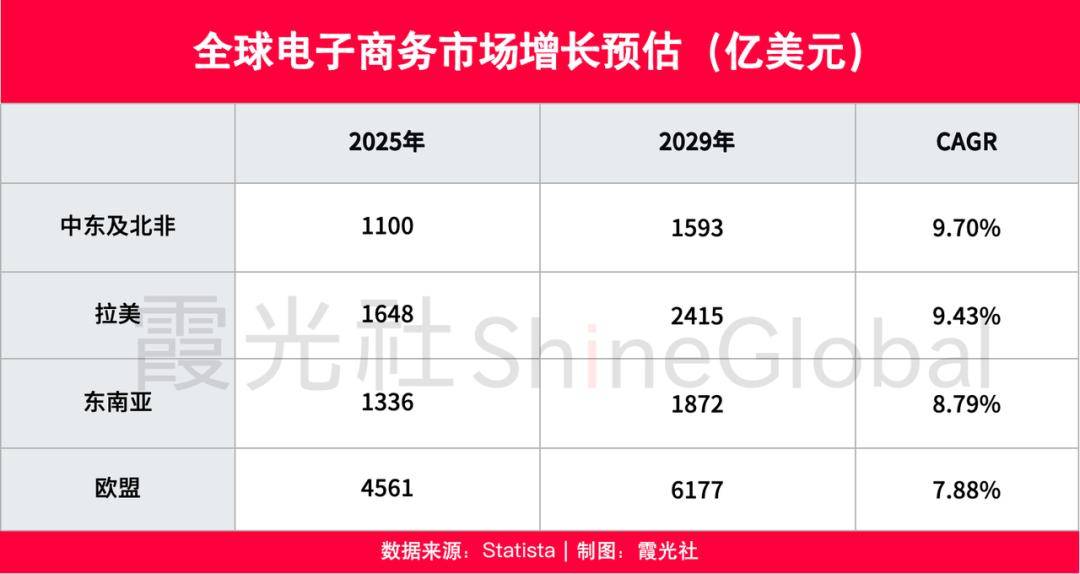
Core Insights - The article highlights the significant growth potential of the Latin American e-commerce market, particularly through the performance of major players like Mercado Libre, which reported a 70.8% year-on-year increase in sales in Mexico during the Buen Fin promotion [5][6]. - Despite a global slowdown in e-commerce growth, Latin America is projected to maintain a robust compound annual growth rate (CAGR) of 9.43% from 2025 to 2029, making it the second-highest growth region globally [6][7]. - The article emphasizes the importance of localization and understanding consumer preferences in Latin America, as successful brands adapt their products and marketing strategies to meet local demands [15][24]. E-commerce Growth in Latin America - Latin America's e-commerce market has shown consistent growth, with a projected total transaction value of $633 billion by 2024, reflecting a sustained annual growth rate of over 20% since 2019 [5][6]. - The region's e-commerce sales currently account for only 12-15% of total retail sales, indicating significant room for growth compared to more mature markets like China and North America [13][14]. - The demographic structure, with a large proportion of young consumers, coupled with improved digital infrastructure, is driving the rapid expansion of e-commerce in the region [14][15]. Consumer Behavior and Preferences - Latin American consumers exhibit a strong inclination towards online shopping, with 16% of the middle to high-income population shopping online daily and 53% weekly [14]. - The local culture emphasizes immediate consumption, influenced by the prevalence of weekly pay cycles, which encourages spending rather than saving [14]. - Consumer preferences in Latin America differ significantly from other regions, with a greater emphasis on product reviews and detailed information rather than promotional advertising [16][23]. Localization Strategies - Successful brands in Latin America, such as GameSir and Amazing Bloks, have tailored their products to meet local needs, demonstrating the importance of deep localization [15][24]. - For instance, GameSir adapted its gaming controllers to address specific consumer preferences in the region, leading to substantial sales increases during promotional periods [10][23]. - Understanding local aesthetics and cultural preferences is crucial, as evidenced by Amazing Bloks' shift to darker color themes that resonate more with Latin American consumers [21][24]. Competitive Landscape - The Latin American e-commerce market is becoming increasingly competitive, with major platforms like Mercado Libre capturing a significant market share of 26% in 2024 [28]. - The article stresses the necessity for brands to choose the right platforms for entry into the market, as local knowledge and infrastructure are vital for success [26][29]. - Long-term commitment and investment in product and service refinement are essential for brands aiming to thrive in the Latin American e-commerce landscape [29].

下一个电商黄金十年:他们在拉美找到了增长密码
Sou Hu Cai Jing· 2025-12-04 06:07
Core Insights - Latin America's e-commerce market is showing significant growth potential, with Mercado Libre reporting a 70.8% year-on-year increase in sales during the Buen Fin promotion in Mexico, reaching $780 million [1] - Despite a global slowdown in e-commerce growth, Latin America is projected to maintain a compound annual growth rate (CAGR) of 9.43% from 2025 to 2029, making it the second-highest growth region globally [2] - The e-commerce penetration in Latin America is still low, accounting for only 12-15% of total retail sales, indicating a vast opportunity for growth [9] E-commerce Growth in Latin America - The overall e-commerce scale in Latin America has consistently grown over 20% year-on-year from 2019 to 2024, with total transaction volume expected to reach $633 billion in 2024 [1] - The region's e-commerce market is projected to reach $769 billion by 2025 and potentially exceed $1 trillion by 2027 [6] - The demographic structure, with 65% of the population being young adults, supports a high labor participation rate and consumer spending potential [9] Local Market Dynamics - Localized product offerings are crucial for success in Latin America, as demonstrated by brands like Amazing Bloks and GameSir, which tailored their products to meet local consumer preferences [4][12] - The logistics infrastructure has improved significantly, with 75% of Mercado Libre's products now eligible for next-day delivery, enhancing the overall shopping experience [10][19] - Consumer behavior in Latin America shows a preference for immediate consumption, with many consumers shopping online frequently, driven by a culture of enjoying the present [9] Competitive Landscape - Mercado Libre holds a dominant market share of 26% in the Latin American e-commerce space, far surpassing its nearest competitor [19] - The competitive environment is characterized by a mix of established players and new entrants, with a focus on long-term investment and understanding local market nuances [17][22] - Brands are shifting from a "sell goods" mentality to a "brand building" approach, emphasizing the importance of local insights and consumer engagement [17] Strategic Recommendations - Companies looking to enter the Latin American market should prioritize partnerships with local platforms like Mercado Libre to leverage their established logistics and market knowledge [19][22] - A deep understanding of local consumer preferences and cultural nuances is essential for product development and marketing strategies [12][15] - Long-term commitment and continuous adaptation to local market conditions are necessary for sustained success in the region [22]
阿里速卖通正面挑战亚马逊,希望帮助品牌“一半成本,更高成交”
Sou Hu Cai Jing· 2025-09-24 11:05
Core Insights - The rapid growth of pool cleaning robots on AliExpress highlights the increasing demand for affordable and efficient cleaning solutions in Europe, with 70% of orders coming from this platform [2] - The launch of AliExpress's "Super Brand Going Global Plan" signifies a strategic move to attract well-known brands and compete directly with Amazon in the mid-to-high-end market [3][4] - AliExpress aims to reduce the cost of brand expansion by over 50% compared to Amazon, with lower commission rates and enhanced support for brands [5] Group 1: Market Trends - Pool cleaning robots have become a necessity for European middle-class households, with a market growth rate of 14.7% annually [2] - The demand for high-tech products that can command brand premiums is rising, as seen with the success of brands like LARESAR in Poland, which saw an 18-fold increase in market growth [2] Group 2: Strategic Initiatives - AliExpress is enhancing its infrastructure to support brands, including launching a "Brand+" channel and a "Brand Service Center" for better operational efficiency [5][6] - The platform is leveraging local marketing capabilities and has expanded its overseas management services to nearly 30 countries, improving logistics and customer experience [7][8] Group 3: Success Stories - Brands like Seauto and Comhoma are successfully utilizing AliExpress's overseas management services to achieve significant sales growth, with Seauto capturing 70% of its European orders through the platform [8][10] - The introduction of AI tools for brands has led to substantial sales increases, with some brands experiencing sales growth of up to 300% [6] Group 4: Future Outlook - The upcoming "Global Double 11" event by Taobao aims to further enhance international sales, with a budget of over 1 billion allocated for marketing and promotional activities [9] - The combination of overseas management and brand expansion strategies positions Chinese brands as leaders in the global consumer market, redefining the value of "Made in China" [10]

