GeForce NOW

Search documents
2026GTC:VITURE携手英伟达、斯坦福大学推出XR-AI解决方案
Huan Qiu Wang· 2026-03-17 09:34
斯坦福大学医学院丛教授表示:"通过XR+AI,我们有机会将过去需要数年的工作缩短至数周,将数百万美元的成本降低至数千美元,甚至实验培训周期也 可以从数月缩短为数天。我们非常激动能与英伟达和VITURE共同呈现这一成果。" 据了解,今年现场参加英伟达GTC大会的有3万多人,有1000多场涉及AI基础设施、推理、机器人等领域的会议。(勃潺) 【环球网科技综合报道】3月17日消息,在2026 英伟达(NVIDIA) GTC 全球 AI 峰会上,VITURE展示了其携手英伟达及斯坦福大学(Stanford University) Cong Lab推出的XR-AI Lab Automation解决方案。 此外,在GTC上,VITURE 还首次展示了将其旗舰级 AI 功能 Immersive 3D 结合英伟达GeForce NOW 云游戏服务提供的沉浸式游戏体验。该功能依托 VITURE 自研技术,可实时将 2D 内容转化为深度沉浸的 3D 画面,让用户通过 XR 眼镜随时随地享受沉浸式云游戏体验。 据了解,XR+AI解决方案让"Co-Scientist"人机协作科学家从概念变为现实,显著提升了科研的精确性与效率。目前, ...



NVIDIA Q4 Earnings Crush Estimates, Revenues Increase 73% Y/Y
ZACKS· 2026-02-26 13:22
Core Insights - NVIDIA Corporation (NVDA) reported strong fourth-quarter fiscal 2026 results, with both revenue and earnings exceeding expectations and showing significant year-over-year growth [1][2] Financial Performance - Fourth-quarter non-GAAP earnings reached $1.62 per share, surpassing the Zacks Consensus Estimate by 6.58%, and increased 82% year over year and 25% sequentially [1] - Revenues for the fourth quarter climbed 73% year over year and 20% sequentially to $68.13 billion, beating the consensus mark by 3.9% [2] Segment Analysis - NVIDIA's revenues are categorized into two segments: Graphics and Compute & Networking [3] - The Graphics segment accounted for 9.5% of fourth-quarter revenues, rising 97% year over year and 6% sequentially to $6.48 billion [4] - Compute & Networking represented 90.5% of revenues, with a 71% year-over-year and 21% sequential increase to $61.65 billion [5] Market Platform Performance - Data Center revenues, making up 91.5% of total revenues, surged 75% year over year and 22% sequentially to $62.31 billion, driven by increased shipments of Blackwell GPU computing platforms [6] - Gaming revenues increased 47% year over year but fell 13% sequentially to $3.73 billion, accounting for 5.5% of total revenues [7] - Professional Visualization revenues rose 159% year over year and 74% sequentially to $1.32 billion, while Automotive sales totaled $604 million, up 6% year over year [8] Operating Metrics - Non-GAAP gross margin improved to 75.2%, reflecting a 170 basis point increase year over year [9] - Non-GAAP operating income jumped 81% year over year and 22% sequentially to $46.12 billion, with an operating margin of 67.7% [11] Cash Flow and Balance Sheet - As of January 25, 2026, NVIDIA's cash, cash equivalents, and marketable securities totaled $62.6 billion, up from $60.6 billion [12] - The company generated $36.19 billion in operating cash flow during the fourth quarter and $102.72 billion for fiscal 2026 [13] Future Guidance - For the first quarter of fiscal 2027, NVIDIA anticipates revenues of $78 billion, indicating a year-over-year increase of 77% [14]
沪游观察|2025年PC游戏规模大了,令人失望之处也多了
Xin Lang Cai Jing· 2026-01-20 03:46
Core Insights - The PC gaming industry is experiencing significant growth in 2025, driven by players returning to the platform due to dissatisfaction with console gaming and the desire for greater freedom and performance [3][5] - Despite advancements, the overall gaming experience is hindered by rising hardware costs, inconsistent game optimization, and a fragmented ecosystem [2][28] Group 1: PC Gaming Trends - More players are shifting back to PC gaming, attracted by its longevity and upgradeability compared to rapidly evolving console hardware [3][5] - The ability to connect gaming PCs to televisions has made PC gaming more accessible in living spaces, breaking down previous barriers [3] - The emergence of compact gaming PCs and handheld devices has further enhanced the appeal of PC gaming, allowing for flexibility in shared living environments [3][6] Group 2: Handheld Devices - Handheld PCs have become a rapidly growing segment in PC gaming, with devices like Steam Deck and Lenovo Legion Go gaining popularity [6][8] - These devices are pushing game developers to optimize performance for lower power hardware, reshaping expectations for game efficiency [8][10] - Despite their advantages, handheld PCs face challenges such as variable battery life and high prices, yet they are becoming integral to the PC gaming ecosystem [6][10] Group 3: Cloud Gaming - Cloud gaming services like NVIDIA's GeForce NOW are emerging as essential support systems for PC gaming, allowing players with lower-end hardware to access high-quality games [10] - These services help extend the lifespan of older systems and reduce the need for frequent hardware upgrades, maintaining the accessibility of PC gaming [10] Group 4: Operating Systems - The competition between Windows and Linux for PC gaming is intensifying, with Linux gaining traction due to its performance and user experience improvements [11][14] - Linux systems are increasingly seen as viable alternatives for gamers, especially for handheld users, as they offer a more streamlined gaming experience [11][14] Group 5: Independent Games - Independent game developers continue to thrive, providing creative and stable titles that contrast with the often cumbersome development cycles of AAA games [15][17] - The success of independent games is contributing to the growth of handheld devices, as they typically require less hardware power and are more adaptable to various platforms [17][18] Group 6: AMD's Market Position - AMD is regaining relevance in the PC gaming market by focusing on mid-range and high-performance products, improving its competitive stance against NVIDIA [22][28] - The company's advancements in sampling technology are helping it to close the gap with NVIDIA, although challenges remain in high-end performance [22] Group 7: Fragmentation Issues - The PC gaming landscape is increasingly fragmented, with a multitude of game stores and platforms complicating the user experience [24][28] - This fragmentation leads to challenges for both players and developers, as they navigate compatibility and performance across diverse hardware configurations [24][28] Group 8: Optimization Challenges - Despite technological advancements, optimization remains a significant issue in PC gaming, with many high-profile releases suffering from performance problems at launch [25][27] - Players are often left relying on patches post-launch to address these issues, highlighting a persistent gap between hardware capabilities and software performance [25][27] Group 9: Cost Barriers - The rising costs of entry-level hardware and the increasing demands for higher specifications are creating a disparity between investment and gaming experience [28][29] - Players are facing challenges in justifying hardware upgrades when the gaming experience remains inconsistent, leading to frustration within the community [28][29]
英伟达想用AI接管游戏画面,还要让NPC“活”起来
2 1 Shi Ji Jing Ji Bao Dao· 2026-01-06 06:49
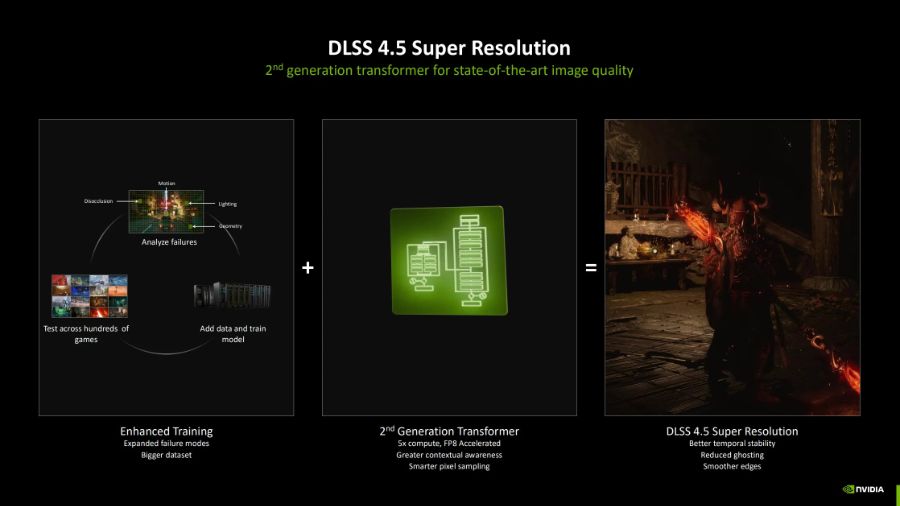
Core Insights - Nvidia is reshaping the gaming rendering process and interaction experience through continuous AI technology iterations without launching new graphics cards [1] - The focus of Nvidia's updates at CES this year was on software, particularly the release of DLSS 4.5 and advancements in NPC technology [1] Group 1: DLSS 4.5 Technology - The key highlight of the release is the update to DLSS (Deep Learning Super Sampling) technology, introducing "Dynamic Multi Frame Generation" and a new 6x multi-frame generation mode [2] - DLSS 4.5 utilizes a second-generation Transformer model to generate up to five additional frames for every traditional frame rendered, significantly increasing the pixel output compared to traditional rasterization or ray tracing [2] - DLSS 4.5 is expected to launch in spring 2024 and will be compatible with all RTX series graphics cards, with optimal performance on the latest RTX 40 and 50 series [4] - When combined with the GeForce RTX 50 series, DLSS 4.5 can achieve over 240 frames per second in 4K gaming with full path tracing enabled [4] - Over 250 games and applications currently support DLSS 4 technology, including new titles like "007: The Beginning" and "Resident Evil: The Resurrection" [4] Group 2: NPC Technology Advancements - Nvidia is enhancing game interaction logic through generative AI, expanding the ACE (Avatar Cloud Engine) technology suite to create autonomous NPCs with perception, planning, and action capabilities [5] - In collaboration with KRAFTON, Nvidia demonstrated an AI teammate in "PUBG" that can remember past player interactions and provide contextually relevant dialogue, with plans for limited testing in mid-2024 [5] - The AI advisor in the strategy game "Total War: Pharaoh" showcases enhanced logical capabilities, offering real-time tactical guidance based on the game's current situation [5] - Nvidia's architecture for NPC memory does not solely rely on cloud models but uses a local vector database to store player behavior and dialogue history, significantly reducing cloud inference costs and addressing privacy concerns [6] Group 3: Cloud Gaming and AI Acceleration - Nvidia's cloud gaming service GeForce NOW announced performance equivalent to RTX 5080 graphics cards and added native support for Linux systems and Amazon Fire TV Stick [8] - For content creators, Nvidia introduced AI acceleration solutions based on RTX GPUs, achieving up to a 3x performance improvement in video and image generation while reducing memory usage by 60% [8] - Nvidia also enhanced the inference speed of small language models like Llama.cpp by 35% and specifically optimized the domestic open-source model DeepSeek-R1 for high inference throughput on RTX graphics cards [8]
CES 2026 Opens: Samsung, Nvidia and AI Giants Reveal Tech That Changes Daily Life
International Business Times· 2026-01-05 12:22
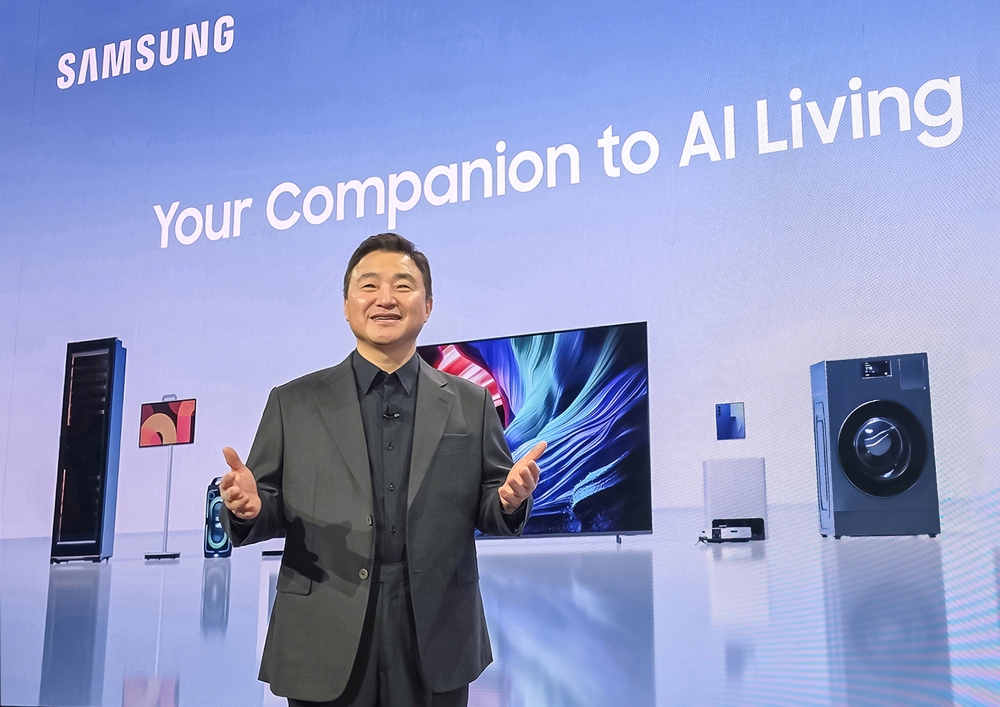
Core Insights - CES 2026, the largest technology event, officially launches on January 6, 2026, in Las Vegas, featuring over 4,000 exhibitors and more than 100,000 participants [1][2]. Group 1: Event Overview - CES 2026 is set to showcase major global tech firms like Samsung, LG, Nvidia, and others, focusing on integrating artificial intelligence (AI) into consumer technology [2][3]. - The event marks a significant shift towards AI as a foundational element in consumer technology, moving beyond being a niche [3]. Group 2: Key Company Announcements - Samsung's event on January 5, 2026, introduced its vision of 'AI as a Daily Companion,' emphasizing a connected ecosystem that enhances daily life through AI [5][6]. - Samsung unveiled the world's first 130-inch Micro RGB TV and highlighted its AI-enhanced displays and next-gen audio products, aiming for a unified user experience across devices [6][11]. - Nvidia's participation focuses on AI computing and robotics, with a keynote by CEO Jensen Huang discussing advanced AI infrastructure and generative AI [8][9]. Group 3: Innovations and Trends - CES 2026 features a range of AI innovations, including robot house helpers, interactive eyewear, and health monitoring technologies, indicating a redefined role for AI in daily routines [11]. - Other notable announcements include Pebble's new round watch, Clicks' phone, Dreame's electric supercar, and Dell's revival of the XPS laptop line, showcasing diverse technological advancements [12].

Why Is Nvidia (NVDA) Down 3.6% Since Last Earnings Report?
ZACKS· 2025-12-19 17:31
Core Insights - Nvidia reported better-than-expected third-quarter fiscal 2026 results, with non-GAAP earnings of $1.30 per share, surpassing estimates by 4.84% and showing a 60% year-over-year increase [2][3] - Total revenues for the third quarter reached $57.01 billion, a 62% increase year-over-year and 22% sequentially, beating the consensus mark by 4.14% [3][6] Financial Performance - Non-GAAP gross margin was 73.6%, reflecting a decline of 140 basis points year-over-year but an improvement of 90 basis points sequentially [13] - Non-GAAP operating income increased by 62% year-over-year and 25% sequentially to $37.75 billion, with a non-GAAP operating margin of 66.2% [15] - Operating cash flow for the third quarter was $23.75 billion, with free cash flow of $22.09 billion [17] Segment Performance - The Graphics segment accounted for 10.7% of revenues, rising 51% year-over-year to $6.1 billion, exceeding the consensus estimate of $5.65 billion [5] - Compute & Networking revenues represented 89.3% of total revenues, soaring 64% year-over-year to $50.91 billion, surpassing the consensus estimate of $48.59 billion [6] - Data Center revenues, a significant part of Compute & Networking, jumped 66% year-over-year to $51.22 billion, driven by increased shipments of Blackwell GPU computing platforms [7] Market Insights - Gaming revenues increased by 30% year-over-year to $4.27 billion, although they declined 1% sequentially due to normalized inventory levels [8][9] - Professional Visualization revenues rose 56% year-over-year to $760 million, driven by new product launches [10] - Automotive sales totaled $592 million, up 32% year-over-year, reflecting the adoption of self-driving platforms [11] Shareholder Returns - Nvidia returned $243 million to shareholders through dividends and repurchased $12.46 billion in stocks during the third quarter [18] - The company has a new $60 billion share repurchase authorization approved by its board [18] Future Guidance - For the fourth quarter of fiscal 2026, Nvidia anticipates revenues of $65 billion (+/-2%) and a non-GAAP gross margin of 75% (+/-50 bps) [19] - The consensus estimate has shifted upward by 8.31% in the past month, indicating positive sentiment among investors [20] Investment Outlook - Nvidia holds a Zacks Rank 1 (Strong Buy), suggesting an expectation of above-average returns in the coming months [23]
NVIDIA Stock Soars 6% as Q3 Earnings and Revenues Crush Estimates
ZACKS· 2025-11-20 13:56
Core Insights - NVIDIA Corporation (NVDA) shares increased nearly 6% after reporting better-than-expected third-quarter fiscal 2026 results, with non-GAAP earnings of $1.30 per share surpassing estimates by 4.84% and showing a 60% year-over-year increase [1][2] Financial Performance - Third-quarter revenues climbed 62% year over year and 22% sequentially to $57.01 billion, exceeding the consensus mark by 4.14% [2] - Non-GAAP gross margin was 73.6%, reflecting a decline of 140 basis points year over year but an improvement of 90 basis points sequentially [11] - Non-GAAP operating income rose 62% year over year and 25% sequentially to $37.75 billion, with a non-GAAP operating margin of 66.2% [13] Segment Performance - The Graphics segment accounted for 10.7% of revenues, rising 51% year over year to $6.1 billion, surpassing the consensus estimate of $5.65 billion [4] - Compute & Networking represented 89.3% of revenues, with revenues soaring 64% year over year to $50.91 billion, exceeding the consensus mark of $48.59 billion [5] - Data Center revenues, which make up 89.8% of total revenues, increased 66% year over year to $51.22 billion, driven by higher shipments of Blackwell GPU computing platforms [6] Market Insights - Gaming revenues increased 30% year over year to $4.27 billion, although they declined 1% sequentially due to normalized inventory levels [7][8] - Professional Visualization revenues rose 56% year over year to $760 million, driven by new product launches [8] - Automotive sales totaled $592 million, up 32% year over year, reflecting continued adoption of self-driving platforms [9] Cash Flow and Shareholder Returns - NVIDIA generated $23.75 billion in operating cash flow during the third quarter and $22.09 billion in free cash flow [15] - The company returned $243 million to shareholders through dividends and repurchased $12.46 billion in stocks during the quarter [16] Future Guidance - For the fourth quarter of fiscal 2026, NVIDIA anticipates revenues of $65 billion, higher than the Zacks Consensus Estimate of $60.3 billion, with a projected non-GAAP gross margin of 75% [17]

Why Is Nvidia (NVDA) Down 1.4% Since Last Earnings Report?
ZACKS· 2025-09-26 16:31
Core Viewpoint - Nvidia reported strong second-quarter fiscal 2026 results, with revenues and earnings exceeding expectations, driven by robust growth across all end markets and lower operating expenses [2][3][18]. Financial Performance - Non-GAAP earnings per share for Q2 fiscal 2026 were $1.05, surpassing the Zacks Consensus Estimate by 5%, and reflecting a 54% year-over-year increase and a 30% sequential increase [2]. - Total revenues for Q2 fiscal 2026 reached $46.74 billion, marking a 56% year-over-year increase and a 6% sequential increase, beating the consensus mark by 1.3% [3]. - Non-GAAP gross margin was 72.7%, down 3 percentage points year over year but up 11.7 percentage points sequentially [12]. Segment Performance - The Graphics segment contributed 11.6% of total revenues, with revenues increasing 51% year over year to $5.41 billion, exceeding the consensus estimate of $4.75 billion [5]. - Compute & Networking segment represented 88.4% of total revenues, with revenues soaring 56% year over year to $41.33 billion, surpassing the consensus estimate of $40.49 billion [6]. - Data Center revenues, a key component of Compute & Networking, accounted for 87.9% of total revenues, increasing 56% year over year to $41.1 billion, driven by demand for Blackwell GPU computing platforms [7]. Market Insights - Gaming revenues rose 49% year over year to $4.29 billion, reflecting strong demand from gamers and AI enthusiasts, and exceeding the consensus estimate of $3.83 billion [8]. - Professional Visualization revenues increased 32% year over year to $601 million, surpassing the consensus estimate of $524.8 million [9]. - Automotive sales totaled $586 million, up 69% year over year, driven by the adoption of self-driving platforms, exceeding the consensus estimate of $573.4 million [10]. Cash Flow and Shareholder Returns - Operating cash flow for Q2 was $15.37 billion, with free cash flow of $13.45 billion [16]. - The company returned $244 million to shareholders through dividends and repurchased $9.72 billion in stock during the quarter [17]. - A new $60 billion share repurchase authorization was approved, increasing the total limit to $74.7 billion [17]. Guidance and Market Outlook - For Q3 fiscal 2026, Nvidia anticipates revenues of $54 billion (+/-2%) and a non-GAAP gross margin of 73.5% (+/-50 bps) [18]. - Recent estimates have trended upward, with a 5.54% shift in consensus estimates [19]. - Nvidia holds a Zacks Rank 3 (Hold), indicating expectations for an in-line return in the coming months [22].
NVIDIA Blackwell Architecture Comes to GeForce NOW
Globenewswire· 2025-08-18 19:30
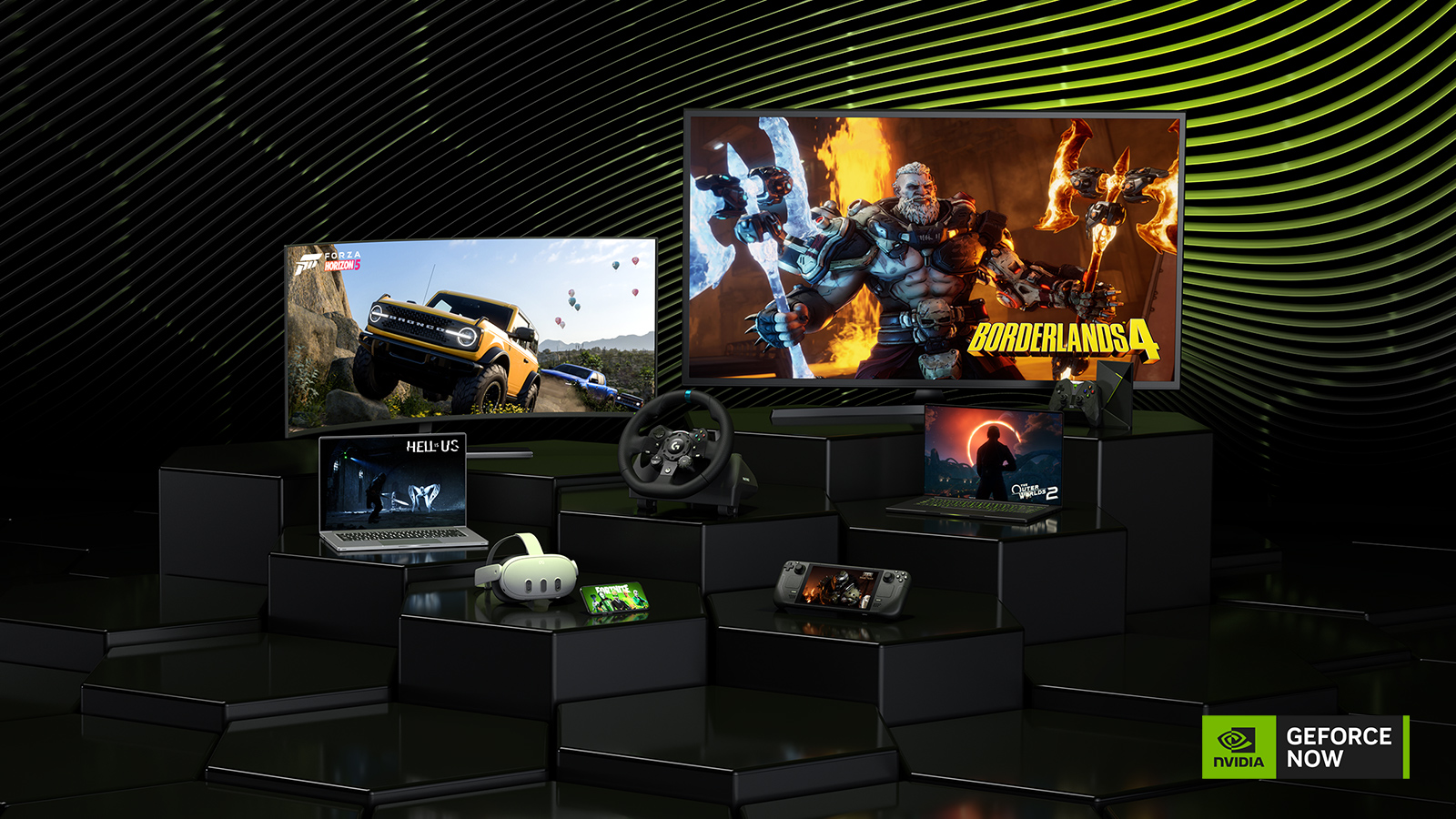
Core Viewpoint - NVIDIA's introduction of the Blackwell architecture to GeForce NOW marks a significant advancement in cloud gaming, offering enhanced performance and a larger game library without increasing membership prices [2][3][4]. Group 1: Performance Enhancements - The upgrade provides NVIDIA GeForce RTX 5080-class performance, enabling streaming up to 5K resolution at 120 frames per second (fps) with AI enhancements [3][4]. - The architecture supports up to 360 fps at 1080p with NVIDIA Reflex technology, achieving click-to-pixel response times as low as 30 milliseconds [5]. - The latest GPU architecture offers up to 2.8 times faster frame rates compared to previous-generation servers and outperforms the PlayStation 5 Pro by over 3 times [9]. Group 2: Game Library Expansion - GeForce NOW's game library will double to over 4,500 titles with the launch of the Install-to-Play feature, allowing access to more PC collections [15][19]. - Upcoming AAA games include Borderlands 4, Call of Duty: Black Ops 7, and The Outer Worlds 2, contributing to a total of more than 2,300 games available at launch [6][12]. Group 3: Technological Innovations - The Blackwell architecture features enhanced ray tracing and AI-powered rendering for more realistic graphics and faster computation [7]. - Cinematic-Quality Streaming (CQS) mode significantly improves image quality, providing stunning color accuracy and crystal-clear graphics [11][16]. Group 4: Connectivity and Partnerships - NVIDIA is expanding its broadband connectivity through partnerships with Comcast and Deutsche Telekom AG, enhancing low-latency gaming experiences [10]. - The integration with Discord allows gamers to discover and play games instantly without downloads, enhancing social gaming experiences [25][26]. Group 5: Pricing and Availability - The GeForce NOW upgrade will begin rolling out in September, with Ultimate memberships priced at $19.99 per month and Performance memberships at $9.99 per month [28]. - Members can also expand their cloud storage with options ranging from 200GB to 1TB at monthly rates [21].
NVIDIA Q1 Earnings Miss Expectations, Revenues Increase Y/Y
ZACKS· 2025-05-29 15:46
Core Viewpoint - NVIDIA Corporation reported mixed financial results for the first quarter of fiscal 2026, with earnings per share missing estimates but revenues showing significant year-over-year growth driven by strong performance across various segments [1][2]. Financial Performance - Non-GAAP earnings for the first quarter were 81 cents per share, missing the Zacks Consensus Estimate by 4.71%, but increased 32.8% year over year and declined 9% sequentially [1]. - Revenues reached $44.06 billion, up 69.2% year over year and 12% sequentially, surpassing the consensus estimate by 2.67% [2]. Segment Analysis - NVIDIA's revenues are categorized into two segments: Graphics and Compute & Networking [3]. - The Graphics segment contributed 10.2% of total revenues, with a year-over-year increase of 33% to $4.47 billion, although it fell short of estimates [4]. - Compute & Networking accounted for 89.8% of revenues, with a significant year-over-year growth of 75% to $39.6 billion, exceeding estimates [5]. Market Platform Performance - Data Center revenues, making up 88.8% of total revenues, increased 73.3% year over year to $39.1 billion, driven by demand for Blackwell GPU platforms [6]. - Gaming revenues rose 30.7% year over year to $3.76 billion, reflecting strong demand from various user groups [7]. - Professional Visualization revenues increased 19.2% year over year to $509 million, while Automotive sales grew 72.3% year over year to $567 million [8][9]. - OEM and Other revenues were up 42.3% year over year to $111 million [10]. Operating Metrics - Non-GAAP gross margin was 61%, down 17.9 percentage points year over year due to a $4.5 billion charge related to inventory issues [12]. - Non-GAAP operating expenses rose 43% year over year to $3.58 billion, but as a percentage of total revenues, they decreased to 8.1% [13]. - Non-GAAP operating income increased 29% year over year to $23.28 billion, with a decline in operating margin to 52.8% [14]. Balance Sheet and Cash Flow - As of April 27, 2025, NVIDIA had cash and marketable securities of $53.7 billion, up from $43.2 billion [14]. - Operating cash flow was $27.4 billion, significantly higher than the previous year [15]. - The company returned $244 million to shareholders through dividends and repurchased $14.1 billion in stocks [16]. Guidance - For the second quarter of fiscal 2026, NVIDIA anticipates revenues of $45 billion, slightly below the consensus estimate, with a projected non-GAAP gross margin of 72% [17].