Google Earth

Search documents
X @Demis Hassabis
Demis Hassabis· 2026-03-10 02:12
RT Google Earth (@googleearth)We are thrilled to announce that Google’s Satellite Embedding dataset, powered by @GoogleDeepMind's AlphaEarth Foundations model, has been updated for 2025. This additional year of coverage now unlocks the ability to look back, compare, and detect change across the planet with unprecedented clarity. Learn more here ➡️ https://t.co/yCHMhXCnq6Part of Google's Earth AI, the new data represents the state of the planet throughout 2025, distilling petabytes of multi-sensor data into ...
颠覆测绘界!游戏极客改写地图史,谷歌阿里把地图变数字孪生
Sou Hu Cai Jing· 2026-01-11 14:55
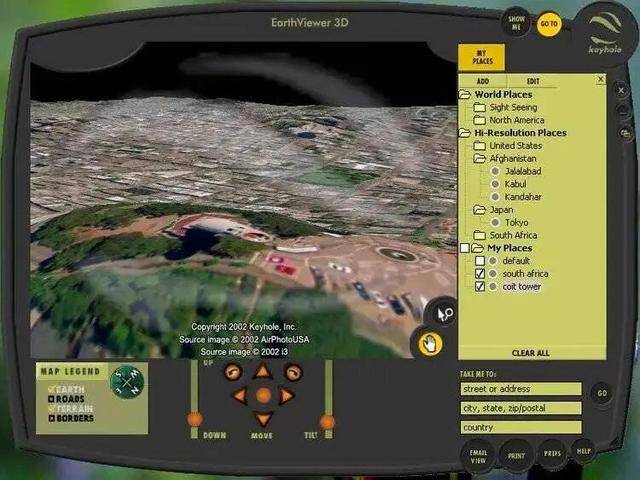
Core Insights - The evolution of maps from static paper versions to dynamic digital representations has transformed how people interact with their environment, making maps a vital part of daily life [1][3] Group 1: Historical Development - Maps were once expensive and slow to update, creating a disconnect with everyday users, until the advent of digital maps [3] - The founding of Keyhole in 2001 by a team skilled in 3D graphics and gaming marked a significant turning point, as they aimed to create an interactive digital globe [5] - NVIDIA's founder, Jensen Huang, recognized the potential of Keyhole's technology, leading to an investment that shifted the focus from geographic accuracy to computational power [5][8] Group 2: Google’s Acquisition and Innovation - Google acquired Keyhole, rebranding it as Google Earth, and recognized maps as the ultimate gateway to the physical world [8] - Google pushed the boundaries of web technology to create seamless map experiences, leading to the development of Google Street View [8][10] - This transformation elevated maps from mere navigation tools to comprehensive digital archives of human civilization [10] Group 3: Adaptation in China - In China, the rapid urban development and demand for real-time services forced map applications to evolve into essential urban infrastructure [10][12] - After Alibaba's acquisition, Amap (Gaode) transitioned from a navigation tool to a core component of ride-hailing and food delivery services [10][12] - Amap's introduction of the "world model" concept signifies a shift towards understanding urban dynamics, moving from static representation to predictive capabilities [12][13] Group 4: Future Implications - The ability to accurately reconstruct dynamic urban environments positions companies to influence the operational rules of the real world [13] - The ongoing evolution of mapping technology suggests that the disruption initiated by tech innovators is far from over [13]


图像地理定位新突破,缅因大学/谷歌/OpenAI等提出LocDiff框架,实现无需网格与参考库的全球级精准定位
3 6 Ke· 2025-11-19 10:14
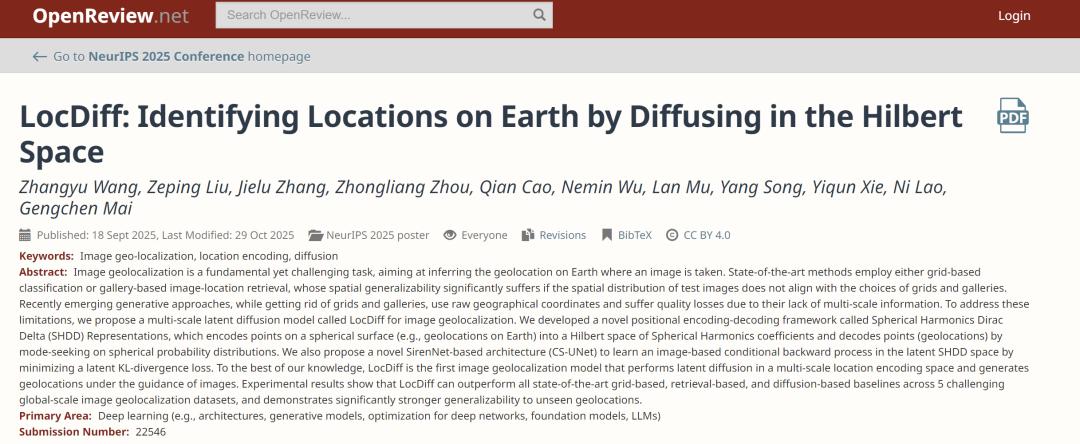
Core Insights - A collaborative team from the University of Maine, Google, and Harvard University has introduced the Spherical Harmonics Dirac Delta (SHDD) function and the integrated framework LocDiff, which enables precise location identification without relying on pre-defined grids or external image libraries, marking a significant technological advancement in the field [1][2]. Group 1: Technological Innovations - The SHDD and LocDiff framework utilize a coding method adapted to spherical geometry and a diffusion architecture to achieve accurate location decoding through contextual information inference [1][2]. - The research addresses the challenges of geographic coordinate modeling, which differs from conventional data due to its spatial properties, leading to the development of a new approach that overcomes limitations of traditional methods [2][5]. Group 2: Research Methodology - The study employs the GeoCLIP model as a benchmark, utilizing the MP16 dataset containing 4.72 million images with precise geographic annotations for training, and three global-scale datasets (Im2GPS3k, YFCC26k, GWS15k) for testing [3][4]. - The model's performance is evaluated across five spatial scales: street level (1 km), city level (25 km), regional level (200 km), national level (750 km), and continental level (2,500 km) [4]. Group 3: Model Performance - LocDiff demonstrates superior performance in most test scenarios, particularly when combined with a hybrid model (LocDiff-H) that limits GeoCLIP's search range to a 200 km radius around LocDiff-generated locations [14]. - The model's efficiency is highlighted by its ability to converge in approximately 2 million steps on the YFCC dataset, significantly faster than competing models that require up to 10 million steps [19]. Group 4: Industry Applications - The advancements in image geolocation technology are being translated into practical applications, with companies like NASA and Google leveraging these innovations to enhance their geospatial data processing capabilities [20][22]. - The integration of AI-driven semantic segmentation and dynamic optimization algorithms in platforms like PRISM Intelligence exemplifies the real-world impact of these academic breakthroughs [21][22].
X @Demis Hassabis
Demis Hassabis· 2025-10-24 19:22
RT Sundar Pichai (@sundarpichai)Google Earth AI, our collection of geospatial AI models and datasets, is expanding globally and adding new capabilities. That includes Geospatial Reasoning, powered by Gemini, which automatically connects different Earth AI models - like weather forecasts, population maps + satellite imagery - to answer complex questions.We’re also bringing new Earth AI models to Gemini capabilities in Google Earth, which make it easy to instantly find objects and discover patterns from satel ...

X @Demis Hassabis
Demis Hassabis· 2025-07-31 01:04
RT Google Earth (@googleearth)Introducing a new way to see our planet! 🌍 🛰️ Using Google DeepMind’s new geospatial AI model, AlphaEarth Foundations, we’re making satellite data more analysis-ready, packing a year of info into each pixel. https://t.co/bxqV7bnXkG #EarthEngine #AIforGood https://t.co/4ryHa6Frgp ...
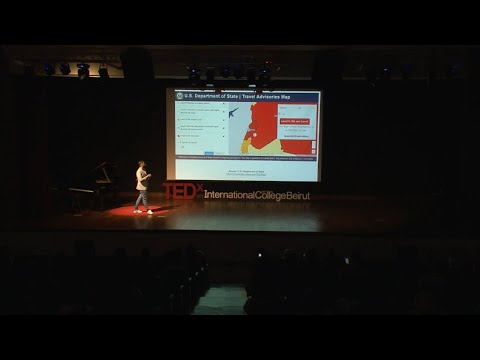
Unmapping the World: Seeing Beyond Stereotypes | David Lanza | TEDxInternationalCollegeBeirut
TEDx Talks· 2025-07-01 15:34
[Music] I'm here today to talk to you about maps. Maps. I love maps.I think they're a great tool. Uh those two students who just gave me the wonderful introduction, they'll tell you how I never shut up about maps in class. I think it's super important in a global politics class, in a history class, any class, you have to understand what's going on. You have to understand what's on the map.However, there's some things that maps leave out. Now, I've been into geography for a long time. It's something I've bee ...