H3运载火箭

Search documents
日航天机构公布H3运载火箭发射失败初步调查结果
Xin Hua She· 2026-01-20 15:22
Core Viewpoint - The Japan Aerospace Exploration Agency (JAXA) has released preliminary investigation results regarding the failure of the H3 rocket launch in December 2025, indicating that damage at the satellite and rocket connection point may have caused the failure [1] Group 1: Launch Details - On December 22, 2025, JAXA attempted to launch the "Guide 5" navigation satellite using the H3 rocket, but the mission failed when the second-stage engine stopped burning prematurely about 20 minutes after liftoff [1] - The failure resulted in the satellite not reaching its intended orbit [1] Group 2: Investigation Findings - Initial findings suggest that the satellite fairing separation may have caused damage to the rocket's satellite mounting mechanism, which affected the liquid hydrogen fuel tank's pressure, leading to the premature shutdown of the second-stage engine [1] - Images captured by onboard cameras indicate that the satellite may have detached from the rocket during the separation of the first and second stages, potentially falling into the designated ocean area for the first stage's descent [1] Group 3: Future Actions - JAXA plans to conduct further investigations to determine the specific reasons behind the damage at the satellite and rocket connection point during the fairing separation [1]
日本宣布 发射失败的导航卫星已损失
Xin Lang Cai Jing· 2025-12-25 17:23
Core Viewpoint - The Japan Aerospace Exploration Agency (JAXA) reported that the navigation satellite "Yinlu 5" and the H3 rocket, which failed to launch on December 22, are likely to have fallen into the Earth's atmosphere, resulting in the loss of the satellite [1] Group 1: Launch Failure Details - The preliminary investigation revealed that after the rocket's launch, the satellite fairing separated, and the pressure in the second-stage liquid hydrogen fuel tank began to drop, reaching only about 65% of the normal combustion pressure by the time of the first burn's termination [1] - The first burn lasted approximately 24 seconds longer than planned, and due to further decreases in engine intake pressure, the second burn failed to achieve stable combustion and was terminated prematurely [1] Group 2: Official Confirmation - The Japanese Cabinet Office confirmed the loss of the "Yinlu 5" satellite and stated that the second stage of the rocket had entered the Earth's atmosphere [1] - The Cabinet Office's space policy minister, Kimi Onoda, acknowledged the confirmation from JAXA regarding the loss of the satellite [1]
日本“引路5号”卫星发射失败
Xin Lang Cai Jing· 2025-12-22 06:23
Core Viewpoint - The Japan Ministry of Education, Culture, Sports, Science and Technology announced that the H3 rocket, carrying the sixth satellite of the Quasi-Zenith Satellite System, failed to deliver its payload to the intended orbit after launch [1][2]. Group 1: Launch Details - The H3 rocket was launched from the Tanegashima Space Center in Kagoshima Prefecture [1][2]. - The second-stage engine of the rocket experienced an abnormal shutdown shortly after launch [1][2]. - The launch of the "Rinri 5" satellite was initially scheduled for December 7 but was postponed due to detected anomalies in the rocket and ground facilities [1][2]. Group 2: Satellite System Objectives - The Japan Aerospace Exploration Agency (JAXA) aims to have a total of 11 positioning satellites in orbit to ensure redundancy in case of technical failures and to expand service coverage [1][2]. - Once the seven-satellite Quasi-Zenith Satellite System is fully operational, there will be continuous coverage of at least one satellite over Japan, with service extending to other regions in Asia and Oceania [1][2].
日本H3火箭在发射倒计时结束后未离开发射架
Xin Jing Bao· 2025-12-17 08:47
Core Viewpoint - The Japan Aerospace Exploration Agency (JAXA) was scheduled to launch an H3 rocket on December 17, but the launch was halted due to equipment anomalies, with the cause of the issue currently under investigation [1] Group 1 - The H3 rocket was intended to carry a Japanese navigation system satellite to enhance satellite positioning accuracy [1] - The launch was stopped after the countdown reached zero, indicating a significant operational setback for JAXA [1] - The agency is actively confirming the reasons behind the equipment malfunction that led to the launch cancellation [1]
日本版GPS系统卫星发射紧急停止
Xin Hua She· 2025-12-17 03:41
Core Viewpoint - The Japan Aerospace Exploration Agency (JAXA) has postponed the launch of the H3 rocket, which was scheduled to carry the sixth satellite of Japan's quasi-zenith satellite navigation system, due to equipment abnormalities detected just before the countdown ended [1] Group 1: Launch Details - The launch was originally planned for December 17 at 11:11 AM local time (10:11 AM Beijing time) [1] - The rocket did not lift off from the launch pad after the countdown concluded, as the mission was halted due to an equipment malfunction [1] - This launch was initially scheduled for December 7 but was delayed because of an issue with the inertial measurement unit on the second stage of the rocket [1] Group 2: Satellite System Information - The quasi-zenith satellite navigation system is referred to as Japan's version of GPS, designed to enhance the accuracy of satellite positioning [1] - The planned system consists of seven satellites, with the sixth satellite, named "Guidance" No. 5, being the focus of this launch [1] - The fifth satellite is part of a series, with the sixth satellite, "Guidance" No. 6, having been launched earlier in February of this year [1]
日本新构型H3运载火箭研发遭遇困难
Xin Hua She· 2025-09-30 11:33
Core Points - The Japan Aerospace Exploration Agency (JAXA) reported that the H3 rocket's sixth unit experienced a failure during an engine combustion test in July, potentially delaying its planned launch within the current fiscal year [1] - The H3 rocket is Japan's next-generation main launch vehicle, developed in collaboration with Mitsubishi Heavy Industries [1] - The sixth unit of the H3 rocket features a new "3-0" configuration, utilizing three liquid fuel engines without boosters, marking Japan's first launch of a large liquid-fueled rocket without boosters [1] Group 1 - The failure during the July test was due to insufficient pressure in the hydrogen and oxygen fuel tanks, which hindered the supply of adequate fuel to the main engine [1] - JAXA indicated that resolving this issue and conducting a new test will take time, which may prevent the sixth unit's launch as scheduled in the fiscal year 2025 (April 2025 to March 2026) [1] Group 2 - JAXA stated that the issues with the "3-0" configuration do not affect the H3 rocket's seventh unit, which is still scheduled for launch in late October this year [2] - Additionally, JAXA reported on the development of the small solid-fuel rocket "Epsilon S," which encountered combustion anomalies and a fire during a second-stage engine test in November 2024 [2] - To expedite the Epsilon S's operational readiness, JAXA is considering changing the second-stage engine from the currently developed E-21 to the M-35 engine used in its predecessor, the enhanced Epsilon, although this change may reduce its launch capacity below initial targets [2]
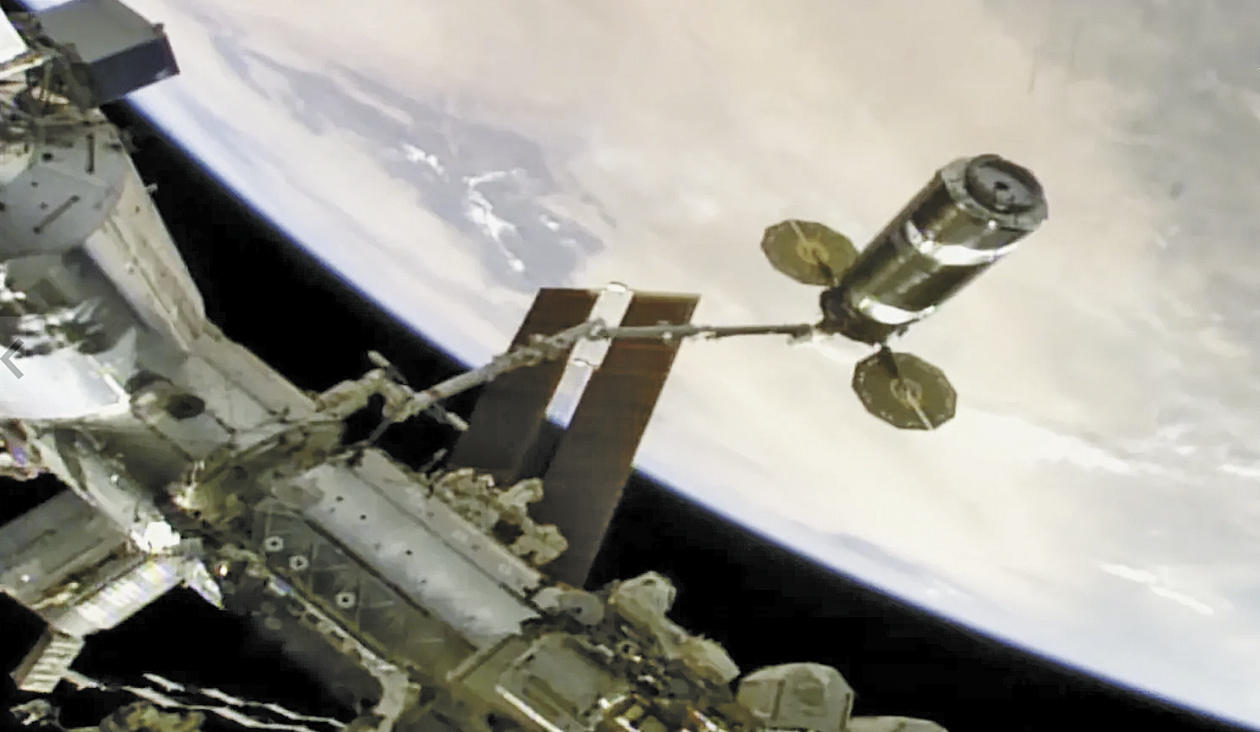
一波三折后,美“天鹅座”飞船抵达国际空间站“送快递”
Huan Qiu Shi Bao· 2025-09-18 22:34
Core Points - NASA announced that the Cygnus XL cargo spacecraft successfully reached the International Space Station (ISS) after overcoming initial launch issues, temporarily alleviating supply concerns for the ISS [1] - The Cygnus XL is Northrop Grumman's latest cargo spacecraft, designed to meet the growing demands of the ISS, with an increased cargo capacity of over 11,000 pounds, up from the standard 8,500 pounds [3] - The Cygnus XL mission is critical as it carries essential supplies, including nitrogen, oxygen, food, and spare parts for urine processing systems, to ensure the ISS's operational needs are met [4] Company and Industry Insights - The Cygnus XL mission faced challenges due to an early engine shutdown during its trajectory adjustments, highlighting potential vulnerabilities in U.S. near-Earth orbital transportation capabilities [5] - Currently, only Northrop Grumman and SpaceX have the capacity to deliver cargo to the ISS, indicating a limited supply chain resilience in the U.S. space logistics sector [5] - The next scheduled cargo delivery to the ISS will be from Japan's HTV-X spacecraft, set to launch in October, emphasizing the ongoing reliance on international partners for ISS resupply [4]


Neuralink预计“心灵感应”脑机设备将于2029年获批;日本新构型H3运载火箭完成静态点火试验丨智能制造日报
创业邦· 2025-07-25 03:11
Group 1 - Neuralink expects its "telepathy" brain-machine interface device to receive regulatory approval by 2029, with plans to implant chips in 20,000 people annually by 2031, generating at least $1 billion in annual revenue [1] - The first "Sichuan-made" earth pressure balance shield machine, Chuan Shan Jia No. 1, has been launched in Chengdu, marking a significant step in high-end equipment manufacturing in Sichuan [1] - The first large-scale continuous production project of wind power coupled with biomass green methanol has been launched in Taining, Jilin, with green methanol primarily sold to shipping companies for carbon reduction [1] Group 2 - Japan's new H3 rocket has completed a static ignition test, aiming to reduce launch costs to approximately 5 billion yen (around 240 million RMB), which is about half the cost of the retired H2A rocket [1]