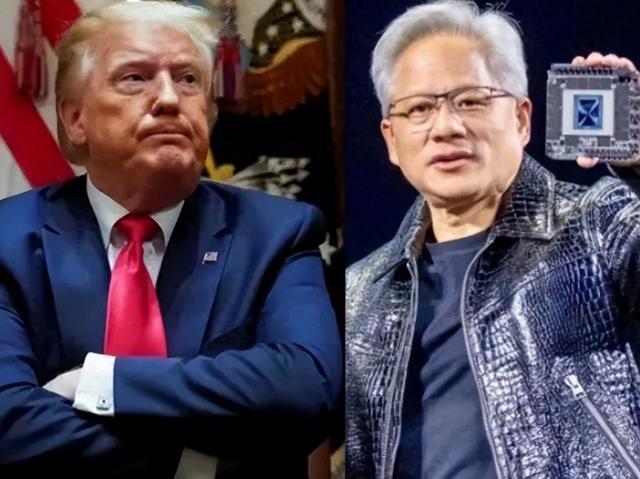
H800 芯片

Search documents
英伟达向左,寒武纪向右
Tai Mei Ti A P P· 2025-10-22 03:18
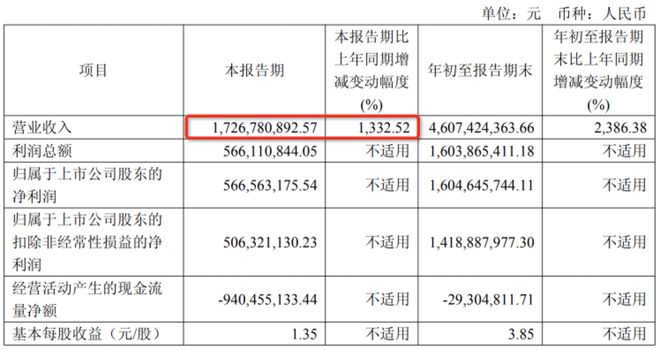
Core Viewpoint - The ongoing geopolitical tensions are causing a significant market split in the AI computing sector between the US and China, leading to a complete exit of Nvidia from the Chinese market, which presents a substantial opportunity for local AI chip companies like Cambricon [1][10]. Group 1: Nvidia's Market Exit - Nvidia's CEO Jensen Huang stated that the company's market share in China has dropped from 95% to 0%, indicating a complete withdrawal from the Chinese market [1][10]. - The US government's export restrictions on high-performance computing chips have severely impacted Nvidia's ability to operate in China, leading to the introduction of less capable products like the H20 platform, which has also faced declining demand [9][10][18]. Group 2: Opportunities for Local Companies - Cambricon, a Chinese AI chip company, has seen a dramatic increase in revenue, achieving 1.727 billion yuan in Q3 2025, a year-on-year growth of 1332.52% [2][22]. - The absence of Nvidia has allowed Cambricon to become a major beneficiary in the Chinese AI computing market, positioning itself as a leading supplier [3][10]. Group 3: Historical Context and Growth - The timeline of AI computing development highlights a significant shift since 2016, when Nvidia began its deep engagement in the Chinese market, which has now reversed due to geopolitical factors [4][6][7]. - Cambricon's growth trajectory has been marked by significant funding rounds and partnerships, including its early collaboration with Huawei, which helped establish its reputation in the AI chip sector [11][12]. Group 4: Financial Performance and Market Position - Despite previous losses, Cambricon has turned profitable, reporting a net profit of 1.038 billion yuan in the first half of 2025, a significant turnaround from a net loss of 530 million yuan in the previous year [16][22]. - The company's stock has surged dramatically, reflecting market confidence in its future growth potential, with its share price reaching a historical high of 1595.88 yuan in August 2025 [16][18]. Group 5: Competitive Landscape - Huawei is emerging as a formidable competitor in the AI computing space, with plans to challenge Nvidia directly through its Ascend chip series and advanced computing clusters [20][21]. - The rapid technological advancements and market responsiveness of local companies like Cambricon are contributing to a robust domestic AI computing ecosystem, further diminishing Nvidia's prospects in China [19][22].


黄仁勋:英伟达 100% 退出了中国市场,份额暴跌到 0!
程序员的那些事· 2025-10-17 14:37
Core Viewpoint - The article discusses the impact of U.S. export controls on NVIDIA's operations in China, highlighting the significant loss of market share and potential revenue due to legislative changes and restrictions on AI chip sales [1][2]. Group 1: Legislative Impact - The U.S. Congress is pushing for legislation that requires chip manufacturers like AMD and NVIDIA to prioritize domestic supply for AI chip products [1]. - NVIDIA's CEO, Jensen Huang, stated that due to U.S. export controls, the company has completely exited the Chinese market, with its market share dropping from 95% to 0% [1]. Group 2: Financial Consequences - Following the U.S. export controls initiated in October 2022, NVIDIA faced ongoing challenges in selling high-end AI chips in China [1]. - The introduction of compliant AI chips for China, such as A800, H800, and H20, was not sufficient to mitigate losses, as new regulations in April 2025 forced the discontinuation of the H20 chip, resulting in approximately $4.5 billion in inventory losses and $8 billion in potential revenue losses [1]. Group 3: Future Outlook - Despite the challenges, NVIDIA remains hopeful for a policy change and is actively communicating with the U.S. government regarding its operations in China [2]. - Huang emphasized that the U.S. has lost access to one of the largest markets globally, suggesting that policies aimed at China could also harm U.S. interests [2]. - He noted that China possesses about 50% of the world's AI researchers and has a strong focus on AI development, indicating the competitive landscape [2].

来了!特朗普再次出尔反尔,英伟达“跪”完死得更惨了
Xin Lang Cai Jing· 2025-04-17 08:25
Core Viewpoint - Nvidia is a key player in the global technology industry, particularly in the AI chip sector, but has faced significant challenges due to unpredictable U.S. government policies, particularly under the Trump administration [1][3]. Group 1: Impact of U.S. Government Policies - On April 15, Nvidia announced that the U.S. government required a license for the export of its H20 chip to China, which will indefinitely affect approximately $5.5 billion in quarterly expenses related to inventory and procurement commitments [1]. - Following the announcement, Nvidia's stock price dropped over 6% in after-hours trading, resulting in a market value loss of approximately $130 billion [1]. - The rapid policy changes have led to skepticism regarding the stability of Nvidia's market position and the potential manipulation of stock prices by the Trump administration [3]. Group 2: Financial Projections and Revenue Impact - Bloomberg estimates that Nvidia's revenue for 2025 could decrease by $14 billion to $18 billion due to these policy changes [4]. - The H20 chip, while not as powerful as Nvidia's flagship AI chips, is crucial for maintaining market share in China, projected to generate $12 billion to $15 billion in revenue in 2024 [5]. Group 3: Broader Industry Implications - The erratic U.S. policies not only harm Nvidia but also disrupt the global semiconductor supply chain, which relies on international collaboration for technological advancement [7]. - Companies like Nvidia are forced to invest resources into developing specialized chips to comply with U.S. regulations, which diverts innovation efforts and increases operational costs [7]. - The situation underscores the importance for global companies to be aware of geopolitical risks and to seek diversified and self-sustaining development paths [8].