
HUAWEI Mate XTs非凡大师

Search documents
实探三星三折叠首销:首批秒罄,全球限量2万台,一机难求,与华为贴身肉搏
3 6 Ke· 2025-12-10 04:10
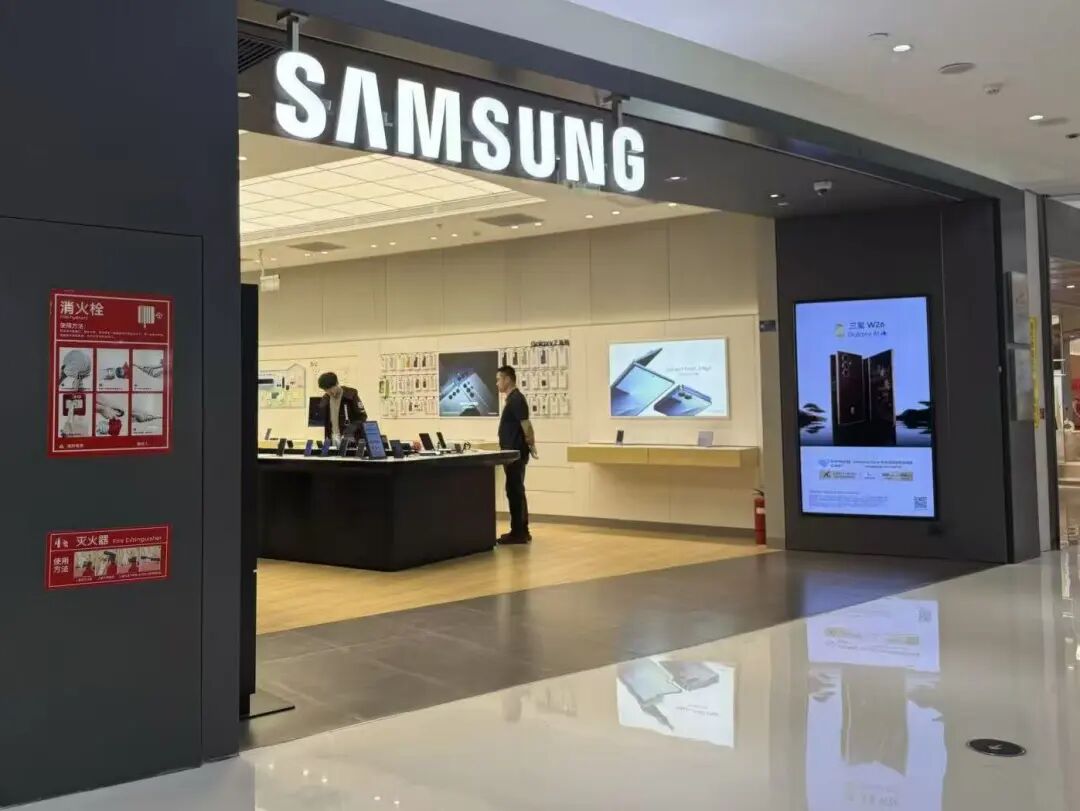
Core Viewpoint - The competition in the foldable smartphone market intensifies as Samsung launches its first tri-fold smartphone, the Galaxy Z TriFold, which features a dual-side inward folding design, contrasting with Huawei's Z-shaped foldable phone design [1][4]. Group 1: Product Launch and Market Response - Samsung's Galaxy Z TriFold is available for pre-order, with prices set at 19,999 yuan for the 16GB+512GB version and 21,999 yuan for the 16GB+1TB version, matching Huawei's pricing for its tri-fold model [1]. - The initial stock of the Galaxy Z TriFold sold out quickly, indicating strong market interest despite the high price point [1][2]. - The limited availability of the Galaxy Z TriFold is attributed to Samsung's cautious inventory strategy, with only 20,000 units produced globally, and a very limited number allocated to the Chinese market [2][4]. Group 2: Competitive Landscape - Samsung and Huawei have been in a competitive race in the foldable smartphone sector since 2019, with both companies continuously innovating in design and technology [4]. - Huawei's recent advancements, including the launch of the Mate XT, have allowed it to capture a larger market share, with Huawei achieving a 48% market share in the first half of 2025, significantly surpassing Samsung's 20% [6][7]. - The market share dynamics between Samsung and Huawei have shifted dramatically from 2022 to 2024, with Samsung's share decreasing from 78% to 45%, while Huawei's share increased from 14% to 24% [7]. Group 3: Strategic Implications - The limited initial stock of the Galaxy Z TriFold may serve as a strategic move for Samsung to test the market response and reinforce its brand positioning in the high-end segment [9]. - The foldable smartphone market is seen as a platform for demonstrating technological leadership rather than achieving immediate mass-market sales, with companies focusing on brand differentiation and long-term profitability [9]. - Samsung's challenge lies in regaining its former dominance in the foldable market against Huawei, which has established a strong brand presence and market position [9].

全场景创新点亮2025数智科技生态大会 华为鸿蒙生态构建智慧新生态
Cai Jing Wang· 2025-12-06 09:38
Core Insights - The 2025 Digital Intelligence Technology Ecological Conference was held in Guangzhou, showcasing Huawei's innovations in smart terminals and intelligent ecosystems, emphasizing the theme "Smart Navigation, Intelligent Coexistence" [1][5] Group 1: Exhibition Highlights - Huawei's exhibition area covered 468 square meters, featuring a "1+8" product matrix, HarmonyOS intelligent vehicles, and comprehensive smart home solutions [1] - The exhibition design was highly technological, with distinct areas for product displays, including the 1+8 product display table, HarmonyOS intelligent vehicle area, and smart home solutions [2][3] Group 2: Product Innovations - The HUAWEI Mate XTs showcased a lightweight foldable design with a near-crease-free screen, enhancing portability and durability [2] - The HUAWEI Mate80 series offered significant upgrades in performance and imaging, featuring a new processor and advanced imaging systems for professional-grade photography [2] - The HUAWEI WATCH Ultimate 2 provided real-time health monitoring and a new adventure mode for outdoor safety [3] - The HUAWEI MateBook Fold featured a versatile foldable screen design, enhancing user experience across different scenarios [3] Group 3: Intelligent Automotive Solutions - The HarmonyOS intelligent cockpit in three showcased models (Wenjie M9, Xiangjie S9, Zhijie R7) enabled seamless connectivity with personal devices, enhancing user experience [4] - Advanced driving assistance systems in these vehicles provided features like automatic avoidance, lane keeping, and smart parking for safer driving [4] Group 4: Smart Home and Enterprise Solutions - The HarmonyOS smart home solutions allowed users to control home devices remotely, enhancing convenience and security [4] - Huawei's enterprise solutions aimed to improve operational efficiency and reduce costs for businesses through digital transformation [4][5]
三星首款三折叠来了,比华为晚,还比华为厚
3 6 Ke· 2025-12-02 07:35
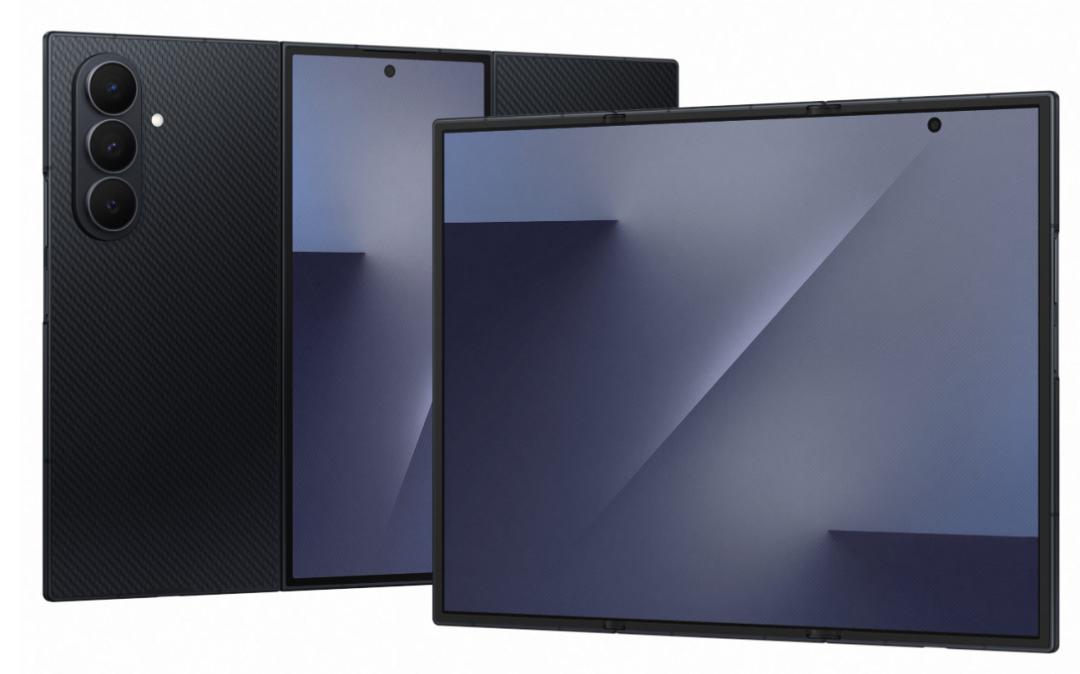
Core Viewpoint - Samsung has officially announced its first tri-fold smartphone, the Galaxy Z TriFold, becoming the second company globally to release such a device after Huawei, marking a significant advancement in the foldable smartphone market [1][18]. Group 1: Product Specifications - The Galaxy Z TriFold features an internal fold design that protects the main display, expanding to a size of 10 inches when fully opened, making it the largest screen in the Galaxy series to date [1]. - The device has a thickness of 3.9mm at its thinnest point and weighs 309g, which is 11g heavier than Huawei's tri-fold models [3][5]. - It is powered by the Snapdragon 8 Elite mobile platform and includes a 200MP camera, along with a battery capacity of 5600mAh, the largest for any Samsung foldable phone [7][5]. Group 2: Display and Technology - The Galaxy Z TriFold supports a 120Hz adaptive refresh rate on its dynamic 2X AMOLED cover screen, with peak brightness reaching 2600 nits for the cover display and 1600 nits for the main screen [9][7]. - Samsung has introduced advanced hinge technology, the Armor Flex Hinge, which allows for smoother and more stable folding, minimizing gaps and enhancing portability [11][13]. Group 3: AI and Software Features - The device is equipped with a comprehensive suite of Galaxy AI software features, optimized for the 10-inch display, including generative editing and writing assistance [14][17]. - It supports Samsung's DeX application, allowing users to create a full work environment with multiple workspaces and applications running simultaneously [15][14]. Group 4: Market Position and Competition - The launch of the Galaxy Z TriFold is expected to elevate the competition in the high-end foldable smartphone market, especially with Apple's anticipated entry into the foldable space next year [18]. - Despite the current early-stage market for foldable phones, Samsung's release is likely to push the boundaries of consumer acceptance and market growth [18].
基础化工行业周报:消费电子旺季来临,关注国产OLED材料放量-20250914
EBSCN· 2025-09-14 08:14
Investment Rating - The report maintains an "Accumulate" rating for the basic chemical industry [5] Core Insights - The consumer electronics sales season is set to begin with the launch of the iPhone 17 series, which is expected to stimulate global smartphone shipments [1][21] - The penetration rate of flexible OLED displays is steadily increasing, with domestic manufacturers gaining market share [2][23] - Revenue for OLED material manufacturers continues to grow, driven by the rising demand for organic materials [3][27] Summary by Sections Industry Overview - The iPhone 17 series was launched on September 10, 2025, marking the start of the consumer electronics sales season for the second half of 2025 [1][21] - Major brands like Huawei and Xiaomi are also expected to release flagship products, further boosting replacement demand in the smartphone market [1][21] Market Performance - In the first half of 2025, global smartphone panel shipments reached approximately 1.09 billion units, a year-on-year increase of 1.6% [2][23] - The flexible OLED panel shipments were about 298 million units, growing by 4.9% year-on-year, with a penetration rate of 27.4% [2][23] Domestic Market Dynamics - In the first half of 2025, China's OLED smartphone panel shipments totaled around 200 million units, accounting for 50.9% of the global market [2][23] - Major domestic manufacturers like BOE, Tianma, and TCL Huaxing have shown significant growth in shipments, with respective increases of 10.3%, 15.6%, and 8.6% [2][23] Revenue Growth in OLED Materials - OLED material manufacturers such as Aolai and Lite-On reported revenues of 257 million yuan and 276 million yuan respectively in the first half of 2025, reflecting year-on-year growth of 22.0% and 30.0% [3][25] - The overall market for OLED organic materials in mainland China is projected to reach 7.4 billion yuan in 2025, with a growth rate of 30% [3][27] Investment Recommendations - The report suggests focusing on companies within the OLED supply chain, including Aolai, Ruile New Materials, Wanrun Co., Lite-On, Puyang Huicheng, and Bayi Shikong [4][28]



