
Hopper架构GPU

Search documents
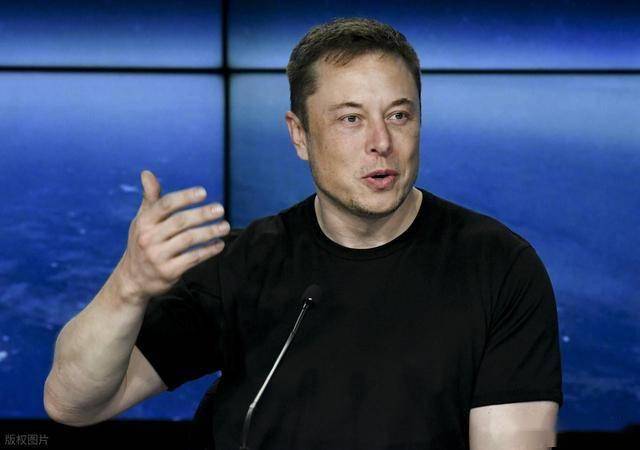
马斯克要把数据中心送太空!黄仁勋冷笑:散热成本比火箭还高!
Sou Hu Cai Jing· 2026-02-27 07:55
Group 1 - The core argument revolves around the increasing demand for AI computing power and the limitations of Earth's electrical supply, leading to the consideration of space-based data centers as a potential solution [2][7][9] - Elon Musk asserts that within 36 months, space will become the cheapest place to deploy AI due to the exponential growth of chip production contrasted with stagnant electrical output on Earth [2][3] - The global AI chip market is projected to exceed $120 billion by 2025, with GPU computing power expected to increase tenfold in three years, while global electricity growth remains around 3% [2][3] Group 2 - Jensen Huang highlights the challenges of cooling systems in space, emphasizing that heat dissipation in a vacuum requires large radiative cooling panels, which could be economically unfeasible for large-scale data centers [5][7] - The current best application for space-based GPUs is image processing, but large-scale data centers in space are not economically viable at present, although future improvements may change this [5][7] - The debate is not about whether space data centers are good or bad, but rather if Earth can sustain the growing appetite for AI computing power, with demand increasing at a rate of 50% annually [7][9] Group 3 - The discussion between Musk and Huang reflects a deeper question about whether humanity should conserve resources on Earth or expand into space to alleviate limitations [9][10] - Musk advocates for an aggressive approach to survival by exploring space, while Huang represents a more cautious engineering perspective, focusing on solving current technological challenges before venturing into space [9][10] - The evolution of technology may lead to breakthroughs that make space data centers feasible, similar to past advancements in telecommunications and computing [9][10]


重温《英伟达GTC 2025》:挖掘AI算力需求预期差?
2025-07-07 00:51
Summary of Key Points from the Conference Call Industry Overview - The conference focuses on the AI computing power sector, highlighting the significant growth driven by inference and training demands, emphasizing the importance of large models and applications rather than solely relying on industry chain data [1][2][3]. Core Insights and Arguments - **AI Computing Demand**: The demand for computing power is closely linked to the volume of tokens, with increasing computational needs driving this trend. The growth in overseas computing companies cannot be explained solely by traditional performance metrics, necessitating a deeper analysis of how token volume influences computing demand and future trends [1][4]. - **Agentic AI Concept**: Introduced as a new paradigm derived from reasoning models, agentic AI emphasizes task distribution, execution, and planning to achieve specific goals, capable of handling complex or simple tasks through a multi-step process [1][6]. - **GTC Conference Attendance**: The GTC conference saw a 50% increase in attendance compared to the previous year, with a notable rise in AI industry participants, indicating the growing importance of the event for the AI sector [3]. - **Token Explosion**: The global token volume is experiencing explosive growth, significantly impacting computing demand. The relationship between token consumption and computing power is complex and non-linear, with a potential for exponential increases in demand [12][17][21]. Important but Overlooked Content - **Skin Law**: Huang Renxun introduced the concept of "skin law," which describes the inflation of computing demand across three phases: pre-training, post-training, and test time, each contributing to increased computational needs [8][10]. - **Future Drivers of Computing Demand**: The shift from CPU to GPU architectures and the need for capital investment in software rather than just human resources are identified as key factors driving future computing demand [34][35]. - **Market Dynamics**: The competition among major tech companies to enhance user experience through faster response times and accurate outputs is leading to increased investments in computing power, indicating a shift towards a model where software relies heavily on computational resources [26][38]. Market Predictions - **Data Center Market Growth**: The data center market is expected to exceed $1 trillion by 2028, with 2025 being a pivotal year for rapid growth in demand [32]. - **GPU Demand**: Major cloud service providers have shown significant demand for GPUs, purchasing millions of units, indicating sustained growth in computing needs [31]. Conclusion - The AI computing power sector is at a critical juncture, with emerging paradigms like agentic AI and the explosive growth of token consumption reshaping the landscape. Understanding these dynamics is essential for accurately predicting future trends and making informed investment decisions in the sector [5][43][45].