JAKA Kargo

Search documents
又融一轮!节卡凭什么拿到产业资本的“生态选票”
机器人大讲堂· 2026-03-31 04:00
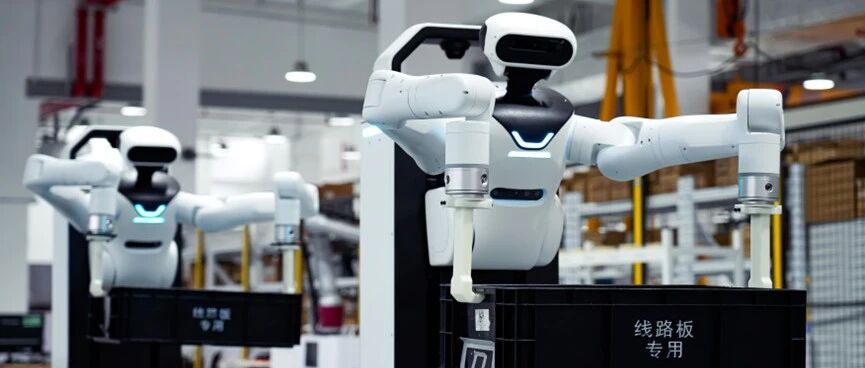
Core Viewpoint - The capital narrative in the robotics industry is shifting as "embodied intelligence" moves from concept to practical application, leading to stricter evaluation criteria from the capital market, where commercialization validation, core technology barriers, and industrial collaboration capabilities become essential entry tickets [1] Group 1: Investment Logic of Industrial Capital - The recent financing round for JAKA Robotics reflects a trend where capital is increasingly focused on companies with clear commercial scenarios, core technology barriers, and industrial collaboration capabilities [3] - The median amount of single financing in the domestic robotics sector has significantly increased, indicating a concentration of capital towards leading enterprises [3] - The investment from industrial capital, such as Dazero Bay and Guangyu Technology, highlights the importance of JAKA's ability to integrate technology development, industrial cooperation, and scene implementation [5] Group 2: JAKA's Industrial Capability - JAKA Robotics has established a comprehensive capability loop in technology research and development, industrial cooperation, and scene implementation, which is crucial for attracting investment [5] - The company has formed a multi-dimensional cooperation network that connects academic frontiers, computational power, and downstream applications, facilitating a complete loop from technology research to mass application [5] - JAKA's robots have been deployed in various industries, including automotive, 3C, semiconductor, new energy, healthcare, and home care, demonstrating their value in real-world scenarios [5] Group 3: Strategic Partnerships and Collaborations - JAKA has signed strategic cooperation agreements with key players like Xingyu Co. and Intel, focusing on innovation in embodied intelligent robots and smart manufacturing upgrades [6][7] - These partnerships are part of JAKA's strategy to deepen its industrial capabilities and expand its application fields, from automotive manufacturing to smart home solutions [6][7] Group 4: Historical Development and Technological Foundation - JAKA's success is rooted in its V1.0 phase, which established a solid foundation in product and industrial accumulation, leading to its current position as a leader in the robotics industry [11] - The company has developed a comprehensive product library that meets industry-leading performance standards, validated in extreme high-end scenarios [11] - JAKA's innovations in programming and user interaction have lowered the barriers to robot usage, aligning with its mission to "liberate human hands" [12] Group 5: Transition to V2.0 and Future Outlook - The transition from V1.0 to V2.0 represents a strategic leap for JAKA, as it aims to evolve from a manufacturer of industrial collaborative robots to a broader general intelligent robotics platform [14] - The company recognizes the need for robots that can understand tasks and adapt to changes, moving beyond mere tools to intelligent agents capable of solving real problems [14] - JAKA's positioning as a "general intelligent robotics company" reflects its insight into the future competitive landscape, emphasizing the importance of a comprehensive ecosystem that integrates hardware, software, data, and collaboration [14][16]

2025商用具身智能白皮书
艾瑞咨询· 2026-01-26 00:07
Core Insights - Embodied intelligence has gained significant traction globally, with Figure achieving a valuation of $39 billion despite zero revenue, while domestic players are securing commercial orders and projecting substantial revenue growth [1][9] - The Chinese government has integrated embodied intelligence into its key industrial strategies, indicating a robust market potential [1][9] Definition and Understanding - Embodied intelligence is recognized as a crucial development in artificial intelligence, characterized by agents that interact with their environment through a physical body, showcasing autonomy and adaptability [2] - It represents a convergence of machine learning, computer vision, and robotics, marking a significant step towards practical AI applications [2] Commercial Scene Classification - Different forms of embodied intelligent robots are evolving to meet diverse needs across retail, dining, manufacturing, logistics, education, and healthcare [4] - Commercial applications focus on enhancing service experiences in dynamic environments, while industrial applications emphasize precision and stability in structured settings [4] Strategic Significance - Embodied intelligence is pivotal in narrowing the technological gap between China and the U.S., driving innovation across various sectors [6] - It plays a vital role in upgrading the technology supply chain and fostering new industries, impacting long-term economic benefits and national competitiveness [6] Policy Incentives - The Chinese government is actively promoting the standardization and implementation of embodied intelligence through various supportive policies and funding initiatives [9] Development Stages - The evolution of embodied intelligence can be categorized into three phases: conceptual development (1950s), technological accumulation (2000-2020), and application expansion driven by large models (2020 onwards) [11] - The competition between China and the U.S. is intensifying, with both countries leveraging their unique strengths to advance in foundational models and application deployment [11] Bottlenecks and Challenges - The industry faces significant challenges, including data scarcity, technological maturity, high costs, and long ROI cycles, which hinder large-scale commercialization [13] - Data collection methods are varied but still insufficient for driving model generalization and practical applications [16] Data Breakthroughs - The industry is exploring solutions to data challenges through innovative approaches like "world models" and data collection training grounds, which are expected to alleviate data scarcity issues [19] Model Evolution - The VLA model is emerging as a consensus for development, integrating large language model reasoning with real-world perception and action capabilities [21] - This evolution is expected to lead to a significant leap in embodied intelligence capabilities, akin to the breakthroughs seen with large language models [21] Commercialization Trends - The commercialization of embodied intelligence is progressing through various application scenarios, with initial focus on low-complexity, high-ROI environments [31] - The industry is transitioning from hardware sales to service subscription models, indicating a shift in business strategies [35] Global Market Predictions - The global market for embodied intelligence is projected to reach 19.2 billion RMB by 2025, with a compound annual growth rate of 73% over the next five years [46] - China's market is expected to experience significant growth, potentially exceeding 280 billion RMB by 2035 [50] International Expansion - Chinese companies are accelerating their international presence, demonstrating the feasibility of their technologies in global markets [53] - Successful case studies highlight the adaptability and competitiveness of Chinese firms in high-standard international markets [53] Competitive Landscape - The competition in the embodied intelligence sector is characterized by three main forces: AI-native challengers, traditional industrial players, and cross-industry giants [55] - The market is witnessing early signs of product homogenization, suggesting an impending consolidation phase [57] Startup Strategies - Startups must leverage their agility and innovation to survive against established giants, focusing on strategic partnerships and long-term value creation [59]


2025商用具身智能白皮书
艾瑞咨询· 2025-12-14 00:04
Core Insights - Embodied intelligence has gained significant traction globally, with Figure achieving a valuation of $39 billion despite zero revenue, while domestic players are securing commercial orders and projecting substantial revenue growth [1][4] - The Chinese market is integrating embodied intelligence into its strategic development plans, indicating a shift towards a trillion-dollar market potential [1][9] Definition and Understanding - Embodied intelligence is recognized as a crucial development in artificial intelligence, characterized by agents that interact with their environment through a physical body, showcasing autonomy and adaptability [2][4] - It represents a convergence of machine learning, computer vision, and robotics, marking a significant step towards practical AI applications [2] Commercial Scene Classification - Different forms of embodied intelligent robots are evolving to meet diverse needs across retail, dining, manufacturing, logistics, education, and healthcare [4] - Commercial applications focus on enhancing service experiences in dynamic environments, while industrial applications emphasize precision and stability in structured settings [4] Strategic Significance - Embodied intelligence is pivotal in narrowing the technological gap between China and the U.S., driving innovation across various sectors including manufacturing and healthcare [6][9] - The competition in advanced technology between the two nations highlights the importance of breakthroughs in embodied intelligence for economic and competitive advantages [6] Policy Incentives - The Chinese government is actively promoting the development of embodied intelligence through various policies, funding, and standardization efforts [8][9] Development Stages - The evolution of embodied intelligence can be categorized into three phases: conceptual development, technological accumulation, and application expansion driven by large models [11] - The current phase sees intense competition between the U.S. and China in foundational models and application deployment [11] Bottlenecks and Challenges - Key challenges include data collection, technology maturity, high costs, and long ROI cycles, which hinder large-scale commercialization [13][16] - The industry is exploring solutions to overcome data scarcity and improve training efficiency [19] Model Evolution - The VLA model is emerging as a consensus for the development of embodied intelligence, integrating reasoning capabilities with real-world perception and action [21][23] - This evolution is expected to lead to significant advancements in the capabilities of robots [21] Commercialization Breakthroughs - The commercialization of embodied intelligence is anticipated to reach a turning point as it overcomes challenges in endurance, latency, execution, reliability, and economic viability [29][31] - Initial applications are focusing on low-complexity, high-ROI scenarios, with future expansions into more complex environments [31] Global Market Predictions - The global market for embodied intelligence is projected to grow exponentially, with estimates suggesting a compound annual growth rate of 73% over the next five years [46] - China's market is expected to experience significant growth, potentially reaching over 280 billion yuan by 2035 [50] Competitive Landscape - The competition in the embodied intelligence sector is characterized by three main players: AI-native challengers, traditional industrial players, and cross-industry giants [55] - The market is witnessing a trend towards consolidation as product homogeneity increases, indicating an impending first round of industry shakeout [57] Initial Players and Innovations - Companies like Tesla and Figure AI are leading the charge in developing humanoid robots, with significant advancements in capabilities and market readiness [62][64] - Innovations in core components, such as dexterous hands and micro-servo actuators, are critical for enhancing the functionality of embodied intelligence [83][88]