Lumi

Search documents
又融一轮!节卡凭什么拿到产业资本的“生态选票”
机器人大讲堂· 2026-03-31 04:00
Core Viewpoint - The capital narrative in the robotics industry is shifting as "embodied intelligence" moves from concept to practical application, leading to stricter evaluation criteria from the capital market, where commercialization validation, core technology barriers, and industrial collaboration capabilities become essential entry tickets [1] Group 1: Investment Logic of Industrial Capital - The recent financing round for JAKA Robotics reflects a trend where capital is increasingly focused on companies with clear commercial scenarios, core technology barriers, and industrial collaboration capabilities [3] - The median amount of single financing in the domestic robotics sector has significantly increased, indicating a concentration of capital towards leading enterprises [3] - The investment from industrial capital, such as Dazero Bay and Guangyu Technology, highlights the importance of JAKA's ability to integrate technology development, industrial cooperation, and scene implementation [5] Group 2: JAKA's Industrial Capability - JAKA Robotics has established a comprehensive capability loop in technology research and development, industrial cooperation, and scene implementation, which is crucial for attracting investment [5] - The company has formed a multi-dimensional cooperation network that connects academic frontiers, computational power, and downstream applications, facilitating a complete loop from technology research to mass application [5] - JAKA's robots have been deployed in various industries, including automotive, 3C, semiconductor, new energy, healthcare, and home care, demonstrating their value in real-world scenarios [5] Group 3: Strategic Partnerships and Collaborations - JAKA has signed strategic cooperation agreements with key players like Xingyu Co. and Intel, focusing on innovation in embodied intelligent robots and smart manufacturing upgrades [6][7] - These partnerships are part of JAKA's strategy to deepen its industrial capabilities and expand its application fields, from automotive manufacturing to smart home solutions [6][7] Group 4: Historical Development and Technological Foundation - JAKA's success is rooted in its V1.0 phase, which established a solid foundation in product and industrial accumulation, leading to its current position as a leader in the robotics industry [11] - The company has developed a comprehensive product library that meets industry-leading performance standards, validated in extreme high-end scenarios [11] - JAKA's innovations in programming and user interaction have lowered the barriers to robot usage, aligning with its mission to "liberate human hands" [12] Group 5: Transition to V2.0 and Future Outlook - The transition from V1.0 to V2.0 represents a strategic leap for JAKA, as it aims to evolve from a manufacturer of industrial collaborative robots to a broader general intelligent robotics platform [14] - The company recognizes the need for robots that can understand tasks and adapt to changes, moving beyond mere tools to intelligent agents capable of solving real problems [14] - JAKA's positioning as a "general intelligent robotics company" reflects its insight into the future competitive landscape, emphasizing the importance of a comprehensive ecosystem that integrates hardware, software, data, and collaboration [14][16]


Schlumberger(SLB) - 2025 Q4 - Earnings Call Transcript
2026-01-23 15:32
Financial Data and Key Metrics Changes - The company reported fourth quarter revenue of $9.7 billion, an increase of $817 million or 9% sequentially, with approximately $300 million attributed to the acquisition of ChampionX [20][19] - Adjusted EBITDA margin for the fourth quarter was 23.9%, an increase of 83 basis points sequentially, driven by strong digital performance [20][19] - Earnings per share, excluding charges and credits, was $0.78, reflecting a sequential increase of $0.09 but a decrease of $0.14 compared to the same quarter last year [19] Business Line Data and Key Metrics Changes - Digital revenue reached $825 million, a 25% sequential increase, with a pre-tax operating margin of 34%, up 557 basis points [21] - Reservoir Performance revenue was $1.7 billion, a 4% sequential increase, driven by strong international activity [21] - Production Systems revenue increased by 17% sequentially to $4.1 billion, reflecting a full quarter of activity from ChampionX [22] Market Data and Key Metrics Changes - Internationally, organic revenue increased by 7%, with North America seeing a 6% increase [6] - The Middle East showed increased activity, particularly in Saudi Arabia and UAE, contributing to the overall revenue growth [6][12] - The company noted a stabilization in global upstream activity, with key markets showing early signs of a rebound [6] Company Strategy and Development Direction - The company aims to leverage technology and digital solutions to enhance operational efficiency and reduce costs for customers [10][11] - There is a focus on production recovery as a critical domain for value creation, integrating equipment with intelligent digital capabilities [11][66] - The company anticipates a gradual recovery in upstream investment, particularly in international markets, as supply and demand rebalance [10][12] Management's Comments on Operating Environment and Future Outlook - Management expects near-term oversupply to exert downward pressure on commodity prices, but geopolitical uncertainties may provide a price floor [9][10] - The outlook for 2026 includes revenue expectations between $36.9 billion and $37.7 billion, driven by a full year of ChampionX activity and growth in digital operations [15][16] - The company is optimistic about the recovery in international markets, particularly in Latin America and the Middle East, while anticipating slight declines in Europe and Africa [15] Other Important Information - The company generated $3 billion in cash flow from operations during the fourth quarter, with free cash flow of $2.3 billion [22] - A total of $4 billion was returned to shareholders in 2025, with plans for a similar amount in 2026 through dividends and stock buybacks [26] - The company is the only international service provider actively operating in Venezuela, with plans to ramp up activities as conditions allow [18][56] Q&A Session Summary Question: CapEx trends and capital intensity - Management indicated a slight increase in CapEx to $2.5 billion for 2026, emphasizing improved capital efficiency compared to the past [31][32] Question: Customer mix and market opportunities in the Middle East - Management expressed confidence in national companies executing capital programs and noted a rebound in Saudi Arabian drilling activity [35][36] Question: Exit rate expectations for 2026 - Management expects the fourth quarter of 2026 to be higher than that of 2025, driven by international market recovery [45][46] Question: Digital business penetration - Management highlighted the potential for digital platforms to transform the industry, with increasing customer adoption of digital solutions [47][48] Question: Opportunities in Venezuela - Management noted readiness to ramp up operations in Venezuela, leveraging historical partnerships and existing assets [56][58] Question: Offshore market outlook - Management anticipates improved offshore activity in 2026, supported by FID and project developments in various regions [91][92]

Schlumberger(SLB) - 2025 Q4 - Earnings Call Transcript
2026-01-23 15:32
Financial Data and Key Metrics Changes - The company reported fourth quarter revenue of $9.7 billion, an increase of $817 million or 9% sequentially, with approximately $300 million attributed to the acquired ChampionX businesses [20] - Adjusted EBITDA margin for the fourth quarter was 23.9%, an increase of 83 basis points sequentially, driven by strong digital performance [20] - Earnings per share, excluding charges and credits, was $0.78, reflecting a sequential increase of $0.09 but a decrease of $0.14 compared to the same quarter last year [19] Business Line Data and Key Metrics Changes - Digital revenue for the fourth quarter was $825 million, a 25% sequential increase, with a pre-tax operating margin expanding to 34% [21] - Reservoir Performance revenue increased by 4% sequentially to $1.7 billion, driven by strong international activity, particularly in Saudi Arabia and East Asia [21] - Production Systems revenue rose by 17% sequentially to $4.1 billion, reflecting a full quarter of activity from ChampionX, with an 11% increase when excluding ChampionX [22] Market Data and Key Metrics Changes - International markets are stabilizing, with Latin America and the Middle East leading the rebound in 2026 [12] - The Middle East is expected to see a resurgence in drilling and workover activity, particularly in Saudi Arabia, with rig counts potentially returning to early 2025 levels by the end of 2026 [12] - Offshore markets are anticipated to present long-term growth opportunities, particularly in deepwater, with over 500 subsea trees expected to be awarded in 2026 and 2027 [13] Company Strategy and Development Direction - The company aims to leverage its integrated portfolio, including ChampionX, to meet the growing demand in production recovery and optimization [11] - A focus on digital solutions and technology integration is emphasized to enhance efficiency and reduce costs for customers [10] - The company is strategically positioned to capitalize on the expected rebound in international activity as supply and demand rebalances [14] Management's Comments on Operating Environment and Future Outlook - Management anticipates near-term oversupply may exert downward pressure on commodity prices, but geopolitical uncertainties could provide a price floor [9] - The company expects 2026 revenue to be between $36.9 billion and $37.7 billion, benefiting from a full year of ChampionX activity and stronger offshore activity [15] - Management expressed confidence in the gradual recovery of upstream investment, particularly in key international markets, as economic growth and infrastructure investments drive demand [10] Other Important Information - The company generated $3 billion of cash flow from operations in the fourth quarter, with free cash flow of $2.3 billion [22] - A total of $4 billion was returned to shareholders in 2025, with plans to return more than $4 billion in 2026 through dividends and stock buybacks [26] - The company is the only international service company actively operating in Venezuela, with plans to ramp up activities as conditions allow [18] Q&A Session Summary Question: CapEx trends and capital intensity - Management indicated a slight increase in CapEx to $2.5 billion for 2026, emphasizing improved capital efficiency and readiness to capture new opportunities as activity recovers [32] Question: Customer mix and market opportunities in the Middle East - Management reinforced confidence in national companies executing capital programs and noted a rebound in Saudi Arabian drilling activity, with positive momentum in Kuwait and UAE [35] Question: Exit rate expectations for 2026 - Management expects the fourth quarter of 2026 to be higher than the fourth quarter of 2025, driven by international market recovery [45] Question: Digital business penetration - Management highlighted the significant potential of digital solutions to transform the industry, with increasing customer adoption of platforms like Lumi and Tela [48] Question: Opportunities in Venezuela - Management expressed readiness to ramp up operations in Venezuela, citing historical partnerships and existing local resources [56] Question: Data center infrastructure business growth - Management anticipates reaching a $1 billion run rate in revenue for the data center solutions business by year-end, with plans for international expansion [59]
2025商用具身智能白皮书
艾瑞咨询· 2025-12-14 00:04
Core Insights - Embodied intelligence has gained significant traction globally, with Figure achieving a valuation of $39 billion despite zero revenue, while domestic players are securing commercial orders and projecting substantial revenue growth [1][4] - The Chinese market is integrating embodied intelligence into its strategic development plans, indicating a shift towards a trillion-dollar market potential [1][9] Definition and Understanding - Embodied intelligence is recognized as a crucial development in artificial intelligence, characterized by agents that interact with their environment through a physical body, showcasing autonomy and adaptability [2][4] - It represents a convergence of machine learning, computer vision, and robotics, marking a significant step towards practical AI applications [2] Commercial Scene Classification - Different forms of embodied intelligent robots are evolving to meet diverse needs across retail, dining, manufacturing, logistics, education, and healthcare [4] - Commercial applications focus on enhancing service experiences in dynamic environments, while industrial applications emphasize precision and stability in structured settings [4] Strategic Significance - Embodied intelligence is pivotal in narrowing the technological gap between China and the U.S., driving innovation across various sectors including manufacturing and healthcare [6][9] - The competition in advanced technology between the two nations highlights the importance of breakthroughs in embodied intelligence for economic and competitive advantages [6] Policy Incentives - The Chinese government is actively promoting the development of embodied intelligence through various policies, funding, and standardization efforts [8][9] Development Stages - The evolution of embodied intelligence can be categorized into three phases: conceptual development, technological accumulation, and application expansion driven by large models [11] - The current phase sees intense competition between the U.S. and China in foundational models and application deployment [11] Bottlenecks and Challenges - Key challenges include data collection, technology maturity, high costs, and long ROI cycles, which hinder large-scale commercialization [13][16] - The industry is exploring solutions to overcome data scarcity and improve training efficiency [19] Model Evolution - The VLA model is emerging as a consensus for the development of embodied intelligence, integrating reasoning capabilities with real-world perception and action [21][23] - This evolution is expected to lead to significant advancements in the capabilities of robots [21] Commercialization Breakthroughs - The commercialization of embodied intelligence is anticipated to reach a turning point as it overcomes challenges in endurance, latency, execution, reliability, and economic viability [29][31] - Initial applications are focusing on low-complexity, high-ROI scenarios, with future expansions into more complex environments [31] Global Market Predictions - The global market for embodied intelligence is projected to grow exponentially, with estimates suggesting a compound annual growth rate of 73% over the next five years [46] - China's market is expected to experience significant growth, potentially reaching over 280 billion yuan by 2035 [50] Competitive Landscape - The competition in the embodied intelligence sector is characterized by three main players: AI-native challengers, traditional industrial players, and cross-industry giants [55] - The market is witnessing a trend towards consolidation as product homogeneity increases, indicating an impending first round of industry shakeout [57] Initial Players and Innovations - Companies like Tesla and Figure AI are leading the charge in developing humanoid robots, with significant advancements in capabilities and market readiness [62][64] - Innovations in core components, such as dexterous hands and micro-servo actuators, are critical for enhancing the functionality of embodied intelligence [83][88]


00后谈恋爱,用AI当「僚机」
3 6 Ke· 2025-11-24 10:58
Core Insights - The rise of AI love assistants is transforming how Generation Z approaches dating, with products generating significant revenue in a short time [1][2] - Despite initial success, more comprehensive AI dating assistants face commercialization challenges due to high model costs and limited user willingness to pay [1][5] - The fundamental question arises about whether optimizing relationships through AI leads to more efficient connections or a retreat from genuine emotional experiences [1][7] Group 1: Product Overview - AI love assistants function as input method plugins rather than standalone apps, allowing users to generate emotionally intelligent responses with ease [2] - These products challenge the "difficult to monetize" issue in AI applications by implementing high-priced subscription models, demonstrating market willingness to pay [2][6] - The market has seen rapid growth, with products like Lovekey generating 31 million yuan in revenue and over 2 million monthly active users within a year [1][2] Group 2: Market Challenges - Comprehensive AI dating assistants, despite their advanced features, are struggling to gain traction, with the first app, Lumi, being taken down due to high operational costs [5][6] - The difficulty in monetization stems from the need for a subscription model that may not align with user behavior, as most users only seek assistance during the early stages of relationships [6][7] - The reliance on user input for data collection and the complexity of operations hinder user engagement compared to simpler AI keyboard products [6][8] Group 3: Future Prospects - Industry experts suggest that AI love assistants could thrive if integrated with other platforms, focusing on niche markets and specific user needs [7][8] - The potential for multi-modal emotional understanding through various data collection methods could enhance the effectiveness of AI in recognizing and responding to human emotions [8][9] - The essence of love, characterized by unpredictability and emotional depth, may require AI to incorporate randomness to better simulate real-life dating experiences [9][10]
D2L Survey Finds AI-Enabled Learning Tools Can Help Unlock Time Savings for Higher Ed Professionals
Prnewswire· 2025-10-29 14:00
Core Insights - The D2L AI in Education survey indicates a rising confidence among educators in utilizing AI, but highlights a significant demand for clearer institutional policies regarding AI usage [1][2][6]. Group 1: Educator Confidence and AI Adoption - 74% of educators express the need for a clear AI policy, yet only 46% report having received explicit guidelines from their institutions [2]. - 64% of educators have access to paid AI tools, with 63% indicating an increase in usage this academic year [8]. - 37% of educators feel more confident using AI compared to the previous year [8]. Group 2: Efficiency and Time-Saving - Educators using AI-enabled learning management systems (LMS) report significant time savings, with 85% experiencing efficiency compared to 51% of those not using such tools [3]. - Among educators who use AI, 52% report some time savings, while 40% report no time savings, and 8% claim that AI adds time to their workweek [4]. Group 3: Institutional Guidance and Regional Variations - Only 29% of educators have received updated AI guidance this academic year, with those in the South (38%) and Northeast (30%) more likely to receive guidance compared to the Midwest (15%) [5]. Group 4: Academic Integrity Concerns - 46% of educators express concerns about students' overreliance on AI, and 60% have redesigned assessments to maintain academic integrity, particularly among Gen Z and Millennial educators [6].

又一批AI社交产品悄悄「死亡」了
创业邦· 2025-10-17 07:35
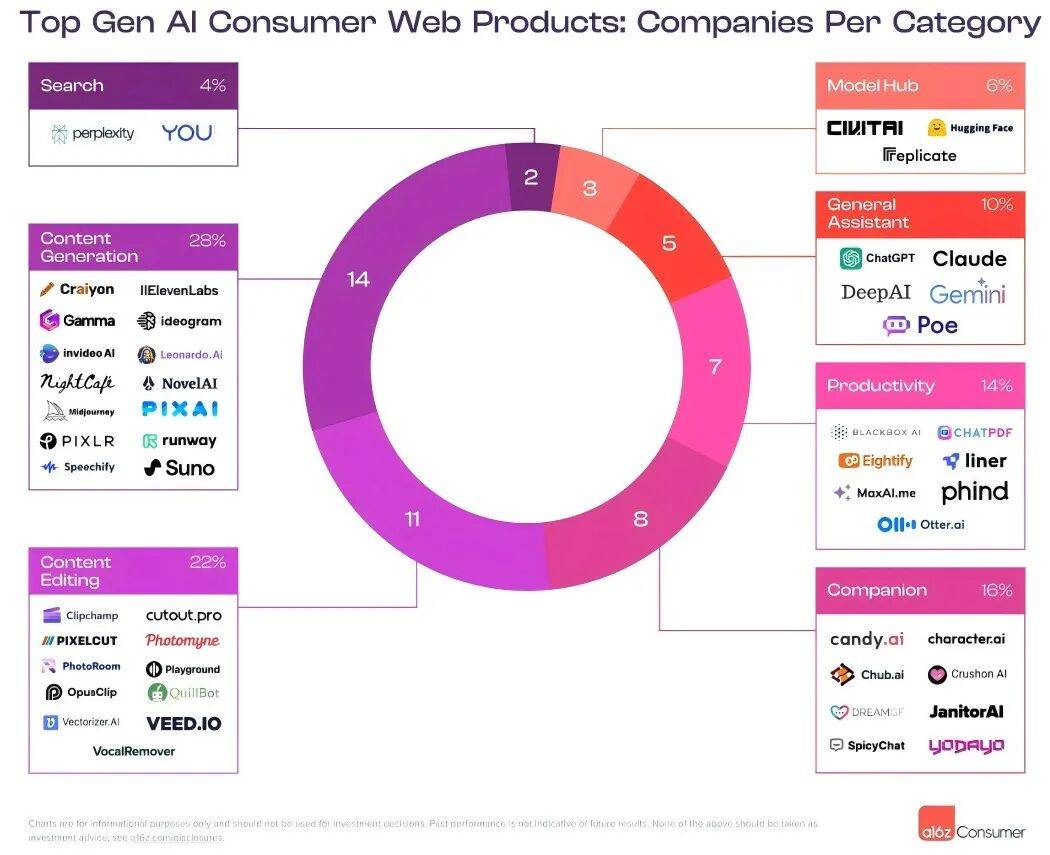
Core Insights - A wave of AI social companies and products has quietly "died," including both well-known models and niche applications, indicating a significant shift in the AI social landscape [6][10][11] - Despite the shutdowns, AI companionship remains a popular sector, with many products still thriving and being recognized in top AI application lists [7][9] Group 1: Market Trends - In 2023, Character.AI emerged as a strong competitor to ChatGPT, with AI companionship being one of the hottest application categories [7] - By 2025, AI companionship applications had reached 220 million downloads globally, generating $221 million in consumer spending [16] - A survey indicated that 52% of teenagers reported using AI companionship applications at least a few times a month [16] Group 2: User Experience and Challenges - Users express concerns over the shutdowns, fearing loss of emotional connections with AI characters they have developed over time [14][18] - The pricing models of AI companionship applications, which often include subscription fees and pay-per-use structures, have been criticized for being too high and complex [17] - Community engagement and stable operations are crucial for user retention, yet many applications struggle to balance emotional content value with commercial viability [17][19] Group 3: Competitive Landscape - The AI companionship sector is highly competitive, with many products facing a "death spiral" due to user growth stagnation and declining engagement [18][19] - Successful AI companionship products are increasingly focusing on content-driven and feature-rich social platforms, while others are targeting niche verticals like gaming and therapy [22][23] - Innovations such as hardware integration, multi-modal experiences, and blending real and AI social interactions are being explored to enhance user engagement [23][26]

又一批AI社交产品悄悄“死亡”了
Hu Xiu· 2025-10-11 07:05
Core Insights - A wave of shutdowns has hit AI social companies, including both established players and startups, indicating a challenging environment for AI companionship products [1][2][3] - Despite the shutdowns, AI companionship remains a popular sector, with significant user engagement and investment interest [4][5][6] Group 1: Market Trends - The AI companionship market has seen a surge in products since the rise of ChatGPT, but it is now experiencing a "shutdown wave" [3][4] - According to a16z, AI companionship applications have been consistently popular, with many products making it to the top rankings [6][9] - By 2025, AI companionship applications had achieved 220 million downloads globally, generating $221 million in consumer spending [19][20] Group 2: User Experience and Challenges - Users have expressed concerns over the pricing models of AI companionship applications, which often include subscription fees and pay-per-use structures [22][23] - Community engagement and stable operations are critical for user retention, as many applications struggle with technical and operational challenges [25][26] - The current landscape reveals a dichotomy where emotional value and commercial viability are difficult to balance [25][30] Group 3: Competitive Landscape - The AI companionship sector is highly competitive, with many products failing to differentiate themselves effectively [30][31] - Successful products are increasingly focusing on content-driven and feature-rich social platforms, while others are targeting niche markets [33][36] - Innovations in user interaction, such as hardware integration and multi-modal experiences, are being explored to enhance user engagement [40][42] Group 4: Future Directions - The market is undergoing a transformation, with a shift towards more personalized and emotionally resonant AI companionship experiences [39][44] - Companies are experimenting with various strategies to sustain user interest and improve retention, including integrating real-world social elements [42][45]