LPU推理芯片

Search documents
【权益风向标】英伟达GTC 2026点燃AI引擎,算力基建与端侧AI共振
Xin Lang Cai Jing· 2026-03-18 10:08
Core Viewpoint - The Nvidia GTC 2026 conference highlighted the evolution of technology and outlined investment themes in AI and consumer electronics, as presented by CEO Jensen Huang during a two-and-a-half-hour keynote speech [2]. Group 1: Computing Infrastructure - The Vera Rubin supercomputer platform features seven types of chips and five rack systems, creating a full-stack AI computing solution [4]. - The introduction of the LPU inference chip, integrating Groq technology, marks a shift in AI computing focus from training to inference [4]. - There is a significant and sustained increase in global computing demand, with both rising sentiment and price trends expected to continue, indicating a strong investment opportunity in the tech sector [4]. Group 2: Edge AI - Nvidia launched NemoClaw, designed as the infrastructure layer for the OpenClaw intelligent agent platform, enabling the deployment of agents with a single command while enhancing security, privacy, and sandbox capabilities [6]. - The expansion of the open model system focuses on three key areas: intelligent agents AI, physical AI, and medical AI [6]. - The market for edge AI applications, including consumer electronics, smart driving, and humanoid robots, is anticipated to accelerate, with global AI glasses shipments projected to reach 8.7 million units by 2025, reflecting a 322% year-on-year growth [6][8].



英伟达GTC2026点燃AI新引擎,算力基建&端侧AI双向共舞
Sou Hu Cai Jing· 2026-03-18 06:21
Group 1 - The core viewpoint of the article highlights the significant advancements in AI technology showcased at the NVIDIA GTC 2026 conference, emphasizing the investment opportunities in AI and consumer electronics [3] - NVIDIA introduced the NemoClaw platform, which serves as the infrastructure layer for the OpenClaw intelligent agent platform, enhancing capabilities in security, privacy, and sandboxing [6] - The global demand for computing power is exceeding expectations, with a continuous trend of rising prices and favorable conditions in the upstream sector, indicating a strong investment thesis in the technology sector [5] Group 2 - The AI glasses market is projected to see substantial growth, with an expected shipment volume of 8.7 million units by 2025, reflecting a year-on-year increase of 32% [6][7] - NVIDIA's new LPU inference chip marks a strategic shift in AI computing focus from training to inference, indicating a significant technological evolution [5] - The expansion of open model systems will cover three major areas: intelligent agents AI, physical AI, and medical AI, suggesting a broadening of applications in various sectors [6]

突袭!油价瞬间暴涨5%!超4500股飘绿!黄仁勋重磅演讲后,算力板块为何全线回调?
雪球· 2026-03-17 08:25
Market Overview - The A-share market experienced a collective pullback, with the Shanghai Composite Index down 0.85% to 4049.91 points, the Shenzhen Component down 1.87% to 14039.73 points, and the ChiNext Index down 2.29% to 3280.06 points [2] - The trading volume in the Shanghai and Shenzhen markets was 2.22 trillion yuan, a decrease of 115.4 billion yuan compared to the previous day [2] - Most industry sectors declined, with insurance, chemical fiber, and real estate services showing the largest gains, while sectors like communication equipment, electronic chemicals, and power equipment faced the most significant losses [2] Oil Market Reaction - WTI crude oil futures rebounded significantly, rising over 5% to $98.28 per barrel, while Brent crude oil futures also increased nearly 5% to $104.84 per barrel [4] - The oil and gas service sector in A-shares saw a recovery in the afternoon, with stocks like Renji Co. hitting the daily limit and others like Tongxin Co. rising nearly 5% [5] Geopolitical Impact on Oil Prices - A report indicated that an oil tanker in the Oman Gulf was attacked, causing minor structural damage but no injuries [9] - The geopolitical tensions in the Middle East are expected to have a significant impact on oil markets, with Goldman Sachs noting that the current conflict could lead to the largest oil market shock in history, affecting products like aviation fuel and diesel more than crude oil itself [10][11] Financial Sector Resilience - The financial sector emerged as a safe haven amid the market downturn, with insurance stocks leading the way. New China Life Insurance rose 3.08%, China Pacific Insurance increased by 2.27%, and Ping An Insurance gained 2.25% [14] - The recent "14th Five-Year Plan" emphasizes risk prevention and high-quality development, which is expected to open up more space for insurance capital allocation [16] Technology Sector Decline - The technology sector faced significant pressure, with semiconductor stocks leading the decline. The ChiNext 50 index fell over 2%, and companies like Tianfu Communication and New Yisheng saw substantial drops [20][26] - The Nvidia GTC conference revealed new products, but the lack of unexpected details led to a sell-off in related stocks, as the market had already priced in long-term growth expectations [26]

“AI界春晚”重磅来袭!一文读懂:英伟达GTC今年有哪些看点?
Zhong Jin Zai Xian· 2026-03-16 13:32
Core Insights - The Nvidia GTC 2026 conference, often referred to as the "Spring Festival of AI," will take place from March 16 to 19 in San Jose, California, featuring a keynote speech by CEO Jensen Huang [1] - The conference is expected to showcase Nvidia's integration of recent acquisitions and partnerships, particularly with AI chip startup Groq, which has developed a Language Processing Unit (LPU) that claims to be ten times more efficient than GPUs for AI inference tasks [1][2] - Nvidia may also unveil new PC processors, N1 and N1X, aimed at Windows laptops, which are based on Arm architecture and targeted towards gaming scenarios [2] - The gaming business generated $22.5 billion in revenue in 2025, while the data center business reached $193.5 billion, indicating a significant revenue disparity [3] - Nvidia is anticipated to provide updates on the upcoming Vera Rubin AI platform and the Vera Ultra, as well as details on the Feynman GPU expected in 2028 [3] - The company is likely to introduce an AI agent platform named NemoClaw, allowing enterprises to deploy intelligent agents within their systems [3] - The conference is expected to highlight innovations in chip products, including the potential release of LPU inference chips and further details on the Rubin Ultra chip [4][5] - The next-generation Feynman architecture and its implications for future computing infrastructure and the AI industry will also be discussed, reinforcing market confidence in the growth of the AI sector [6]
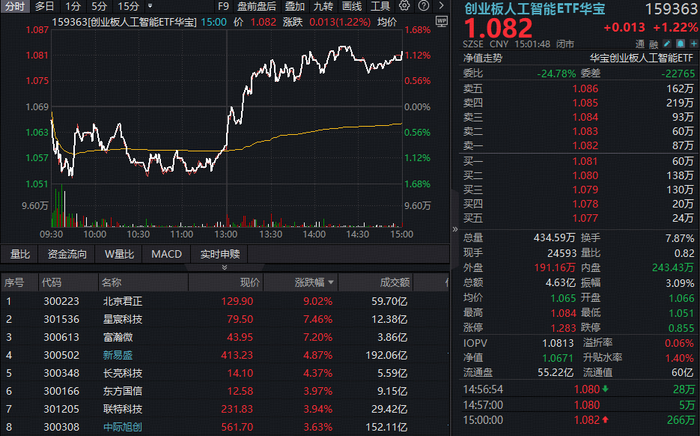
英伟达GTC引爆预期!黄仁勋今晚演讲,资金提前沸腾?华宝基金创业板人工智能ETF午后火速翻红涨超1%!
Xin Lang Cai Jing· 2026-03-16 09:57AI Processing
周一(3月16日),A股市场探底回升,深成指收红,创业板指涨超1%。芯片、光模块等算力硬件午后 异动走强,创业板人工智能由拉升翻红,成份股大面积飘红。人气股全线回归,北京君正涨超9%,星 宸科技、富瀚微涨超7%,新易盛、联特科技、中际旭创等多股涨超3%。 热门ETF方面,双创赛道规模最大的人工智能ETF——创业板人工智能ETF(159363)午后火速翻红冲 高,场内价格收涨1.22%,日线终结三连阴成功收阳,单日成交4.63亿元。 风险提示:创业板人工智能ETF华宝被动跟踪创业板人工智能指数,该指数基日为2018.12.28,发布日 期为2024.7.11,创业板人工智能指数2021-2025年年度涨跌幅分别为:17.57%、-34.52%、47.83%、 38.44%、106.35%。指数成份股构成根据该指数编制规则适时调整,其回测历史业绩不预示指数未来表 现。文中指数成份股仅作展示,个股描述不作为任何形式的投资建议,也不代表管理人旗下任何基金的 持仓信息和交易动向。基金管理人评估的本基金风险等级为R4-中高风险,适宜积极型(C4)及以上的 投资者,适当性匹配意见请以销售机构为准。任何在本文出现的信息(包括 ...
\十五五\规划纲要的核心要求:环球市场动态2026年3月16日
citic securities· 2026-03-16 03:20
Market Overview - A-shares collectively declined, with the Shanghai Composite Index down 0.81% to 4,095 points, and over 3,800 stocks fell amid cautious market sentiment[16] - Brent crude oil prices remained above $100 per barrel for the second consecutive trading day, with a rise of 3.1% on Friday, closing at $98.71 per barrel[27] - The U.S. stock market saw the S&P 500 drop 0.6%, marking its fourth consecutive day of decline, influenced by geopolitical tensions and rising oil prices[10] Economic Indicators - The U.S. GDP growth for Q4 was significantly revised down to 0.7% from 1.4%, indicating a slowdown in economic activity[30] - The Michigan Consumer Sentiment Index fell to 55.5, slightly below market expectations, reflecting consumer concerns amid rising inflation[30] Sector Performance - In the U.S., the technology sector led declines, with the Information Technology Index down 1.29%, while defensive sectors like Utilities rose by 0.94%[10] - In Hong Kong, the Hang Seng Index fell 0.98%, with notable declines in the technology sector, while energy stocks gained due to rising oil prices[12] Investment Insights - Nvidia's upcoming GTC 2026 conference is anticipated to provide insights into AI developments, with a target price of $300, reflecting potential growth in the AI sector[9] - Joyy Inc. reported strong earnings, exceeding market expectations, with a target price of $92, driven by robust advertising growth and a diversified business model[9] Currency and Commodity Trends - The U.S. Dollar Index rose by 0.6% to 100.36, reflecting a strengthening dollar amid rising oil prices and geopolitical tensions[26] - Gold prices fell by 1.2% to $5,061.7 per ounce, as market concerns about the economic impact of the Iran conflict weighed on demand for precious metals[27]



中信证券:聚焦算力链通胀主线 看好英伟达GTC强化AI产业持续增长信心
智通财经网· 2026-03-16 00:33
Core Insights - Nvidia is expected to expand its chip product matrix at the upcoming GTC 2026 conference, potentially unveiling details about the Rubin Ultra chip and cabinet, which may lead to innovations in data interconnectivity and power supply design [1] - The global demand for computing power continues to exceed expectations, indicating sustained growth in the upstream sector and price increases, making it a key focus for technology sector investments [1] Group 1 - The Rubin platform introduces a new chip combination that reflects extreme collaborative design [1] - At the 2026 CES, Nvidia launched the full suite of six core chips for the Vera Rubin AI platform, including Rubin GPU, Vera CPU, BlueField-4 DPU, NVLink 6 Switch, ConnectX-9 SuperNIC, and Spectrum-6 Ethernet Switch, all upgraded to TSMC's 3nm process and featuring HBM4 [2] - The new product lineup enhances the synergy between GPU, CPU, and interconnect chips, with a modular design that improves overall cabinet integrity compared to the previous Blackwell generation [2] Group 2 - Nvidia is expected to disclose more details about the Rubin Ultra chip and cabinet at GTC 2026, with significant improvements in data interconnectivity and power supply systems [2] - The architecture of the Rubin Ultra chip is anticipated to include a two-layer super network structure and advanced power supply solutions, addressing the bottlenecks in computing power expansion [2] Group 3 - Nvidia is likely to introduce a new inference chip, LPU, to strengthen its inference product line, designed specifically for LLM inference with a custom chip architecture [3] - The LPU is expected to enhance data storage and retrieval speeds, while the CPX, launched in 2025, may transition to an independent cabinet form [3] Group 4 - The next-generation Feynman architecture is gaining attention, with expectations for Nvidia to showcase related content at GTC 2026 [4] - Feynman is projected to be among the first chips utilizing TSMC's A16 process, with potential innovations in power delivery and 3D stacking technology [4]

算力|从芯片角度看英伟达GTC前瞻
Xin Lang Cai Jing· 2026-03-16 00:17
Core Insights - The upcoming NVIDIA GTC 2026 conference is expected to showcase an expanded chip product matrix, including the full suite of six core chips from the Vera Rubin AI platform, and potentially reveal details about the Rubin Ultra chip and cabinet innovations, enhancing data interconnectivity and power supply designs [1] Group 1: Rubin Platform and Chip Innovations - The Vera Rubin AI platform, unveiled at CES 2026, includes six core chips: Rubin GPU, Vera CPU, BlueField-4 DPU, NVLink 6 Switch, ConnectX-9 SuperNIC, and Spectrum-6 Ethernet Switch, all utilizing TSMC's 3nm process and upgraded HBM4 memory, enhancing synergy among GPU, CPU, and interconnect chips [2] - At GTC 2026, NVIDIA is likely to disclose more details about the Rubin Ultra chip, which is expected to double the computing performance compared to Rubin by integrating four computing dies, and introduce a two-layer super network architecture for data interconnectivity and power supply systems [2] Group 2: New Inference Chip and System-Level Infrastructure - NVIDIA is anticipated to launch a new inference chip, LPU, at GTC 2026, which will integrate Groq LPU technology and feature a custom chip architecture designed for LLM inference, significantly improving data storage and retrieval speeds [3] - The Rubin CPX, introduced in 2025, is expected to lower prefill costs and may transition from an integrated form to an independent cabinet setup, potentially utilizing GDDR7 or HBM3E memory specifications [3] Group 3: Future Architecture and Industry Trends - The next-generation Feynman architecture is expected to be showcased at GTC 2026, with predictions that it will adopt TSMC's A16 process and incorporate backside power delivery and 3D stacking technologies, with production starting in 2028 and deliveries in 2029 [4] - NVIDIA's insights into the future of AI computing infrastructure will be crucial, especially in the context of the slowing Moore's Law, focusing on innovations in computing, storage, and operational capabilities to support the ongoing evolution of the AI industry [4]

中信证券:看好英伟达GTC 2026大会将进一步强化市场对于AI产业持续增长、增量逻辑兑现的信心
Xin Lang Cai Jing· 2026-03-16 00:17
Core Viewpoint - The upcoming NVIDIA GTC 2026 conference is expected to showcase an expanded chip product matrix, enhancing confidence in the growth of the AI industry [1] Group 1: Product Developments - NVIDIA is anticipated to unveil a complete set of six core chips for the Vera Rubin AI platform at the conference [1] - There may be additional details revealed about the Rubin Ultra chip and cabinet, focusing on innovations in data interconnectivity and power supply design [1] - The introduction of new products such as orthogonal backplanes and CPOs is expected to gain visibility [1] Group 2: Future Directions - NVIDIA might announce the LPU inference chip, which will complement the CPX chip to expand its inference capabilities [1] - The company is likely to discuss the next-generation Feynman architecture upgrade direction, sharing insights on future computing infrastructure and the AI industry [1] - The conference is seen as a means to reinforce market confidence in the sustained growth and realization of incremental logic within the AI sector [1]
下周,AI算力链迎来重要催化!
私募排排网· 2026-03-15 07:00
Core Viewpoint - The upcoming NVIDIA GTC 2026 conference is expected to reignite market interest in the computing power sector, with significant announcements regarding new chip architectures and technologies [2]. Group 1: Rubin GPU Architecture - The Rubin GPU, NVIDIA's main architecture for 2026, is anticipated to enter mass production, utilizing advanced 3nm process technology. It is expected to showcase the Rubin Ultra configuration, integrating up to 144 GPUs in a single cabinet, achieving a network scale-up of 1.5PB/s and a bidirectional interconnect bandwidth of 10.8TB/s [3]. - To support this high-density interconnect, Rubin may implement a dual-layer network topology and transition from copper to optical interconnects within the cabinet [3]. Group 2: Feynman Architecture - NVIDIA is likely to unveil the next-generation GPU architecture platform, Feynman, which may utilize TSMC's A16 process and is projected for release in 2028. The power consumption of the Rubin chip has already surpassed 2000W, while Feynman's target power consumption is speculated to exceed 5000W, necessitating innovations in power supply architecture, packaging, and cooling solutions [4]. Group 3: LPU Inference Chip - NVIDIA may introduce a new inference chip integrated with Groq team's LPU technology, designed for ultra-low latency inference scenarios, particularly for real-time interactive applications. This chip is expected to utilize an SRAM-based on-chip memory architecture, enabling millisecond-level token generation capabilities [5]. Group 4: Upgrades in Data Center Infrastructure - The conference is expected to highlight new upgrades in data center interconnect solutions, power supply architectures, and cooling systems. The transition from copper to optical interconnects is anticipated to accelerate, with CPO (Co-Packaged Optics) technology moving towards commercialization [6]. - Power supply architectures are expected to upgrade to 800V high voltage (HVDC) and modular or vertical supply solutions, as traditional discrete power supply methods approach their limits due to increased power demands [7]. - Liquid cooling technology is projected to become standard, driven by the need for efficient heat dissipation in high-power chips and large-scale data centers. Innovations in cooling materials and thermal interface materials are also expected, with diamond heat spreaders and liquid metal becoming mainstream solutions [7]. Group 5: Related Investment Opportunities - Several companies are positioned to benefit from these advancements, including Tianfu Communication, which has received 2026 orders, and Zhongji Xuchuang, whose 1.6T optical module has been certified by NVIDIA. Other companies like Huagong Technology and Delta Group are also involved in relevant technologies and have established relationships with NVIDIA [8].