
Linker Hand

Search documents
灵心巧手张延柏:从北京出发,打造世界级灵巧手产业生态
Xin Jing Bao· 2026-02-12 23:12
Core Viewpoint - The visit of General Secretary Xi Jinping to the National Innovation Park highlights the importance of technological innovation and the recognition of companies like Lingxin Qiaoshou in the field of embodied intelligence [1] Company Overview - Lingxin Qiaoshou, established in 2023, has become a market leader in the global dexterous hand market, capturing over 80% market share and achieving mass production of 1,000 units of high-freedom dexterous hands [1][2] - The company has developed a product matrix called Linker Hand, which includes various technical routes such as tendon-driven, direct drive, and linkage [2] Product Highlights - The Linker Hand O6 is noted for its lightweight design at only 370g while being able to carry loads up to 50kg, and it has achieved monthly deliveries exceeding 1,000 units at a price of 6,666 yuan [2][4] - The Linker Hand L20, showcased during the event, features 21 degrees of freedom and nearly 20 self-developed motors, enabling it to perform intricate tasks like threading a needle [2][4] Technological Innovation - The dexterous hand's ability to perform precise operations is attributed to its high-precision electronic skin and tactile sensors, which provide real-time feedback on position and force [4] - The company emphasizes the importance of mastering core technologies and developing a self-sufficient supply chain to enhance its innovation capabilities [6] Industry Context - The company views Beijing's development as an international technology innovation center as a significant opportunity, aiming to foster original innovation and deepen the integration of technological and industrial innovation [5] - Lingxin Qiaoshou aims to establish a world-class dexterous hand industry ecosystem, positioning itself as a leader in the field of embodied intelligence [6]
灵心巧手亮相CES 2026:高自由度灵巧手月量产千台 筑牢灵巧手产业基座
Zheng Quan Ri Bao Wang· 2026-01-08 10:22
Core Insights - The core focus of the article is on Lingxin Qiaoshou (Beijing) Technology Co., Ltd. and its innovative contributions to the embodied intelligence industry, particularly through its Linkerbot and Linker Hand products showcased at CES 2026 [1][2][3] Group 1: Product Innovations - Linker Hand features a full range of products with 11-42 degrees of freedom, utilizing direct drive, linkage, and tendon transmission solutions to meet diverse application needs while overcoming the performance, cost, and reliability challenges [1] - The Linker Hand L20 industrial version boasts a driving efficiency of 90% and a thrust of 200N, with a lifespan exceeding one million cycles, achieved through the integration of a self-developed "super electric cylinder" [1] - The Linker Hand O6, weighing only 370g, can achieve a gripping load of 50kg, which is double the traditional industry standard, and is priced at only one-tenth of similar competitors [2] Group 2: Strategic Developments - The "Lingxin Qiaoxiang" workstation, equipped with mechanical dual arms and the Linker Hand L20, demonstrated the autonomous assembly of robotic arm modules, showcasing the flexibility of the Linker Hand in production scenarios [2] - Lingxin Qiaoshou has successfully established a closed-loop system for "smart hand assembling robotic arms" and "smart hand assembling smart hands," extending the capabilities of robots from mere self-manufacturing to self-evolution [2] - The company has launched LinkerSkillNet, a human skill library based on real-world physics, achieving an operation success rate close to 100% with over 500 complex human skills mastered [3] Group 3: Market Position - By 2026, Lingxin Qiaoshou has transitioned from a component supplier to a core infrastructure provider in the robotics era, being the only company globally to achieve a monthly production of 1,000 high-degree-of-freedom dexterous hands [3] - The company currently holds over 80% of the global market share in this field, indicating its dominant position in the embodied intelligence industry [3]
宇树科技、因时机器人、灵心巧手等行业力量集结,第六届中国机器人行业年会邀你共探新局!
机器人大讲堂· 2025-12-02 09:26
Core Viewpoint - The "6th China Robot Industry Annual Conference" will be held on December 18-19, 2025, in Hangzhou, focusing on humanoid robot technology and embodied intelligence, aiming to create a high-end dialogue platform for industry, academia, and investment [1]. Exhibiting Companies and Products - **Yushu Technology Co., Ltd.**: A leading global company in consumer and industrial robots, focusing on high-performance humanoid robots and dexterous robotic arms. The company has participated in major events like the 2023 Super Bowl and the 2025 CCTV Spring Festival [2]. - **Yinshi Robot Technology Co., Ltd.**: Established in 2016, this national-level specialized enterprise focuses on micro precision actuators and dexterous end-effectors. It has over 80 domestic and international intellectual property rights and serves more than 1,800 clients, with an annual production capacity of 100,000 micro servo cylinders [4][7]. - **Lingxin Qiaoshou (Linkerbot)**: A company with a mission to "create everything," holding over 80% of the global market share for high-degree-of-freedom dexterous hands. It has received multiple awards and is used by prestigious institutions and companies [13]. - **Hefei Xinghui Sensor Technology Co., Ltd.**: Founded in April 2025, this high-tech company specializes in the research and production of robotic tactile sensors, leveraging a management team from a leading global sensor company [18]. - **Blue Dot Touch Control (Beijing) Technology Co., Ltd.**: Established in 2019, this national high-tech enterprise focuses on advanced force control technology for robots, achieving over 80% market share in domestic humanoid robots [20]. - **Kunwei (Beijing) Technology Co., Ltd.**: A high-tech enterprise dedicated to the research and production of high-performance tactile sensors, with a founding team from national aerospace research institutions [21][23]. - **Sunrise Instruments**: A leading global manufacturer of six-dimensional force sensors, with a fully controlled production process and a diverse client base [25]. Event Participation and Ticketing - Early bird tickets for the "6th China Robot Industry Annual Conference" are now available, with only 200 tickets offered at a significant discount until December 10, 2025. Free admission tickets are also available, but do not include lunch or the annual report [27].


当机器人拥有一双巧手,世界将会怎样?
红杉汇· 2025-10-09 00:05
Core Viewpoint - The development of humanoid robots faces significant challenges, particularly in creating dexterous hands that can perform complex tasks, which is more difficult than enabling robots to walk or run [3][5]. Group 1: Importance of Dexterous Hands - Dexterous hands are crucial for humanoid robots to interact with tools and environments, representing the "last mile" in making robots practical for human use [5]. - It is estimated that dexterous hands will account for 20%-30% of the total cost of humanoid robots in the long term, making them one of the most important hardware components [5]. Group 2: Technical Aspects of Dexterous Hands - The core components of dexterous hands include mechanical and structural design, which encompasses various aspects such as structure, drive, transmission, sensing, and materials [6]. - The current industry lacks unified technical standards, leading to multiple competing technological routes, particularly in the critical areas of drive, transmission, and sensors [6]. Group 3: Drive Systems - Drive systems serve as the "muscles" of dexterous hands, directly influencing performance and application potential. The main drive methods include electric, hydraulic, pneumatic, and shape memory alloy drives, with electric drives being the most prevalent due to their compact size, quick response, and high stability [8]. Group 4: Transmission Systems - Transmission systems act as the "ligaments and bones" of dexterous hands, responsible for power transmission and structural support. The industry is shifting from single-mode to composite systems, with tendon-driven and composite transmission schemes being the most common [10]. - Early multi-finger dexterous hands primarily used link transmission schemes, which, while strong, were complex and less flexible [10]. Group 5: Sensor Technology - Sensors provide dexterous hands with the ability to perceive their environment, functioning as the "skin" and "nervous system." They are categorized into internal sensors for monitoring the hand's state and external sensors for recognizing object properties [13]. - Tactile sensors have become standard in dexterous hands, with innovations integrating multi-dimensional tactile and AI vision to enhance perception accuracy [13]. Group 6: Market Trends and Players - The global market for dexterous hands is projected to reach $1.7 billion in 2024 and exceed $3 billion by 2030, attracting various players [15][16]. - Players in the market can be categorized into three groups: 1. "Self-research" companies focusing on humanoid robot development, such as Yushu and ZhiYuan [16]. 2. "Vertical new forces" specializing in dexterous hand products, like Lingxin and Lingqiao [16]. 3. "Cross-industry entrants" from upstream components, such as Zhaowei and SuTeng [16]. Group 7: Application Scenarios - Dexterous hands are expanding their applications from traditional fields to emerging sectors, including industrial manufacturing, medical rehabilitation, and daily life services [22][23]. - In industrial manufacturing, dexterous hands enhance flexibility in production lines, particularly in battery assembly for electric vehicles [22]. - In medical rehabilitation, they assist in surgeries and personalized recovery training, providing precision beyond human capabilities [23]. - In daily life, dexterous hands serve as helpful assistants in elder care and hospitality, performing tasks like meal preparation and medication assistance [23]. Group 8: Future Outlook - The evolution of dexterous hands is expected to redefine human-machine collaboration, with advancements in AI promising smarter, more autonomous capabilities [24].
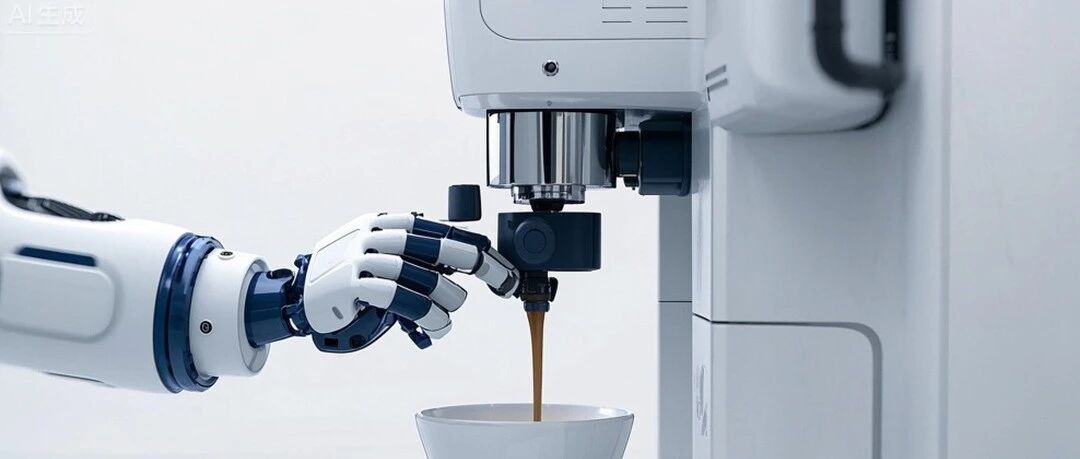
竞逐“最后一厘米”灵巧手掀起资本热潮
Zheng Quan Shi Bao· 2025-08-17 17:41
Core Insights - The development of dexterous hands is crucial for humanoid robots, with their engineering complexity potentially accounting for half of the overall robot development effort [1] - The dexterous hand market is experiencing a surge in product launches and funding, indicating a promising industry outlook [1][2] Industry Overview - The dexterous hand sector is currently in its "iPhone era," with significant growth potential as it is expected to account for over 30% of the robot's value [1][2] - As of March 2025, there are over 40 companies in the domestic dexterous hand market, including startups and established leaders like Zhaowei Electromechanical and Hechuan Technology [2] Technological Advancements - Dexterous hands are evaluated based on their degrees of freedom (DoF), with current models achieving over 20 DoF, significantly improving from earlier versions [3] - Tesla's Optimus third-generation dexterous hand has achieved 22 DoF, while domestic products like Dex5 and DexHand021 Pro also feature high DoF configurations [3] Market Trends - The global market for multi-finger dexterous hands is projected to exceed $5 billion by 2030, with a compound annual growth rate (CAGR) of 64.6% from 2024 to 2030 [5] - Recent funding rounds for companies like Aoyi Technology and Yinshi Robotics indicate strong investor interest in the dexterous hand sector [5][6] Product Development - Companies are focusing on balancing freedom, cost, lifespan, and reliability in their dexterous hand designs, with self-research and partnerships being key strategies [4][7] - The L10 product from Lingxin Dexterous Hand is priced at approximately 19,900 yuan domestically, significantly lower than overseas competitors priced between 60,000 to 100,000 yuan [4] Integration of Hardware and Software - The dexterous hand industry is characterized by competition among various technical solutions, with a focus on integrating hardware components like drive, transmission, and perception systems [7] - Companies are encouraged to pursue a software-hardware integrated approach to enhance competitive advantages, including the development of proprietary databases and dexterous operation models [7] Future Outlook - The industry is at a pivotal moment where dexterous hands must transition from experimental stages to widespread application, with ongoing improvements in both hardware and software [5][8]