Loona

Search documents
模力工场 029 周 AI 应用榜:AI 生图文字不再“开盲盒”,GLM-Image 凭精准登顶榜首!
AI前线· 2026-01-22 06:39
Core Insights - The article highlights the upcoming "Dreaming AI · Angel Foundation" event in Beijing, focusing on AI trends and challenges in the robotics and large model applications sectors [2] - The AI application landscape is evolving towards more practical, integrated, and interactive solutions, with a notable emphasis on hardware innovation and scenario-based services [4] AI Application Trends - This week's AI application ranking features 23 new applications, showcasing a blend of software and hardware innovations across various fields, including large models, smart hardware, lifestyle tools, and AI infrastructure [4] - The current trend indicates that AI applications are becoming more practical and integrated, with hardware innovations driving the widespread adoption of AI technologies [4] Featured Applications - GLM-Image (Zhipu AI): An open-source image generation model excelling in generating complex visual text and long text rendering, particularly suitable for legal documents and product descriptions, with a cost advantage [6] - Qianwen App: An upgraded intelligent assistant from Alibaba that integrates with core services like Taobao and Alipay, allowing users to perform tasks such as ordering food and booking flights through natural dialogue [7] Software and Hardware Evolution - Software is transitioning from merely conversational capabilities to practical functionalities, as evidenced by GLM-Image's success in specialized scenarios and Qianwen App's service integration [9] - Hardware is moving away from being seen as "geek toys" to more practical designs that seamlessly fit into daily life, focusing on user-friendly features [10] Overall AI Development - The development of AI is increasingly focused on integrating with real-world scenarios and user habits, providing timely support rather than emphasizing the technology itself [11] - The emergence of new AR glasses and health devices reflects a shift towards lightweight, user-friendly designs that enhance everyday experiences [14]



CES 2026:中国机器人企业可以科技在CES发布桌面AI伙伴 进军千亿办公辅助市场
Huan Qiu Wang· 2026-01-07 08:48
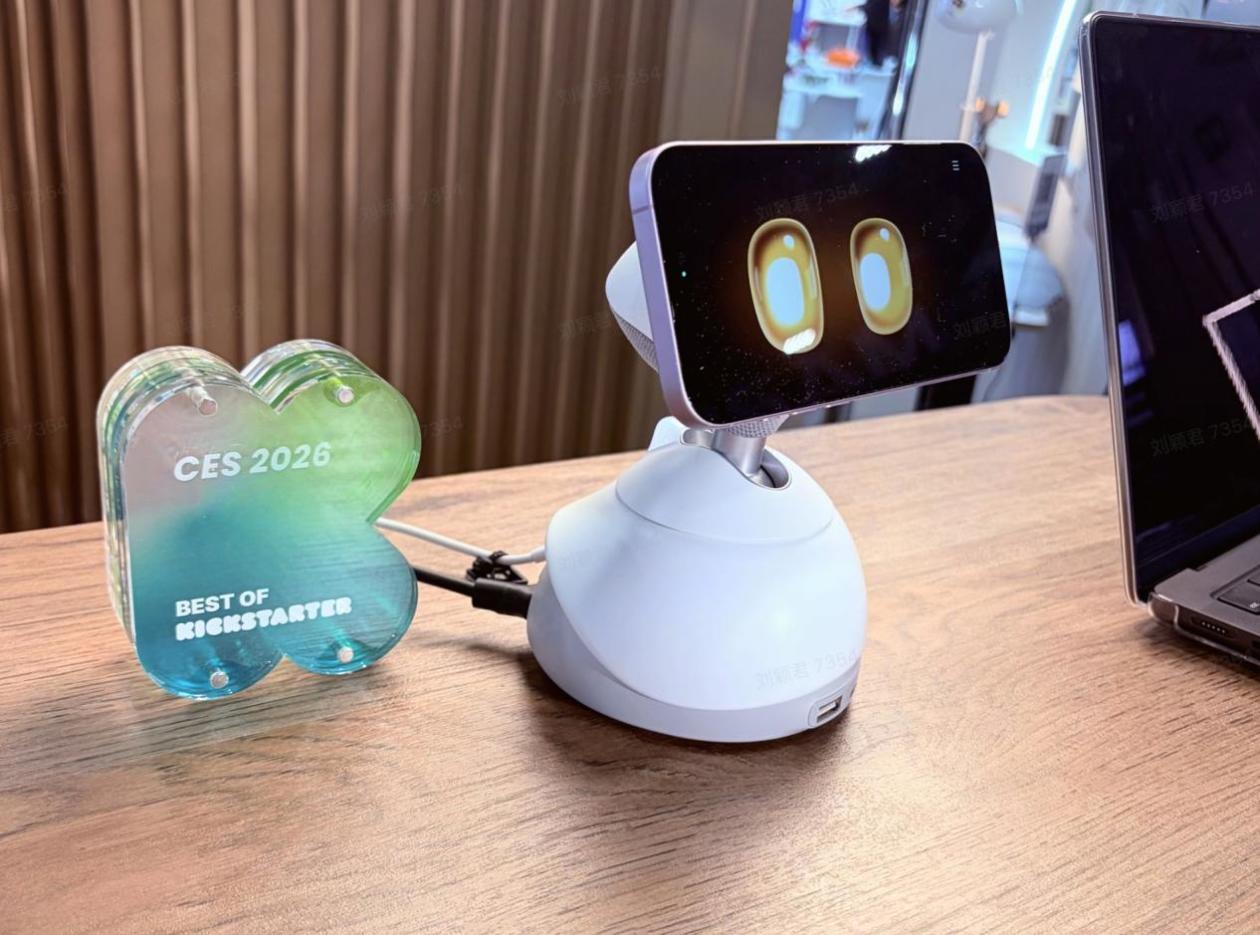
Core Insights - The article highlights the launch of DeskMate, the world's first desktop AI companion by the Chinese robotics company, 可以科技, marking a strategic shift from modular robots to "human-machine symbiosis" [1][3] - The company plans to initiate a B+ round financing roadshow at the end of February 2026 to further accelerate technology development and global market expansion [1][3] Product Overview - DeskMate is a desktop intelligent device equipped with multimodal perception and emotional computing capabilities, designed to sense user emotions and work status in real-time, facilitating natural interaction without commands [1] - The product aims to enhance work efficiency in modern office settings by connecting to computers and mainstream office software while providing emotional companionship to alleviate work stress [1] Company Background - 可以科技 was founded in 2014 and gained initial recognition with its modular robot, CellRobot, followed by the companion robot, Loona, which raised over $3 million on overseas crowdfunding platforms [3] - The company has received multiple international awards, including BBC's "Best of CES" and the Red Dot Design Award [3] Financing and Future Plans - Recently, the company completed a new financing round exceeding 100 million RMB, led by Wu Zhong Jin Kong and Yuan He Tai Hu Wan, with continued investment from existing shareholder BlueRun Ventures [3] - 可以科技 plans to rebrand as Loona INC. by 2026 and implement a new strategy called "Natural Fusion Intelligence," transitioning AI from a tool-based intelligence to a natural companionship model [3]

马斯克、蔡浩宇带火的AI陪伴赛道,热闹背后是真需求还是泡沫?
AI研究所· 2025-07-25 10:15
Core Viewpoint - The article discusses the emergence of AI companionship as a controversial yet rapidly growing sector, particularly highlighted by Elon Musk's xAI and its chatbot Grok, which has introduced a "companions" feature based on the Grok4 model [1][2]. Group 1: AI Companionship Market Dynamics - The AI companionship market is gaining attention, with Musk's project aiming to compete against OpenAI, indicating a significant shift towards emotional engagement in technology [2]. - The launch of the gothic character Ani has quickly captured social media interest, demonstrating the potential for AI companions to fulfill emotional needs and create user engagement [4]. - The contrasting approaches of different projects, such as Musk's Grok and Mihayou's game "Whispers From The Star," highlight the diverse user demands within the AI companionship space [6]. Group 2: Software Innovations and User Engagement - The success of Character.AI in 2022 showcased a previously overlooked market where users are willing to pay for virtual emotional connections, combining large model technology with role-playing [9]. - Replika, established in 2016, emphasizes the identity of an "AI friend" rather than just role-playing, adapting to user interactions to create a personalized experience [10]. - Character.AI is projected to have over 28 million monthly active users by 2025, with revenue expected to rise from $15.2 million in 2023 to $32.2 million in 2024, reflecting a growth rate exceeding 100% [13]. Group 3: Hardware Developments and Challenges - As software competition becomes saturated, hardware innovations like AI companion toys are emerging as new avenues for growth, with products like "Ah Beibei" and "Loona" designed to provide emotional support and interaction [16][17]. - The Japanese brand LOVOT focuses on creating emotional attachment through non-verbal interactions, achieving significant sales despite a high price point [19]. - The entry of major players like Musk into the AI companionship market raises questions about the sustainability and depth of emotional engagement that technology can provide [20]. Group 4: Regulatory and Ethical Considerations - Content regulation remains a critical issue, with concerns about the effectiveness of filtering mechanisms in AI companions like Grok, particularly regarding sensitive content [20]. - The potential for user data from intimate conversations to be included in training datasets raises privacy and compliance issues, especially in light of EU regulations [20]. - The current limitations in AI's emotional understanding highlight the need for technological advancements and a balance between innovation and regulation for the market to mature [21].