
DeskMate

Search documents
CES2026揭示的AI三场变革:从眼镜到机器人、从家庭到工业丨36氪直击CES
36氪· 2026-01-12 09:30
Core Insights - The article emphasizes that AI is transitioning from being merely a tool to becoming the "underlying operating system" of human life, as highlighted by NVIDIA CEO Jensen Huang at CES 2026 [3][4] - The event showcased a clear trend of AI embedding itself into physical reality and daily life, with significant advancements in AI chip performance expected in the coming years [4][6] Group 1: AI in Daily Life - AI is becoming ubiquitous, with a notable shift in information interaction methods, particularly through the rise of smart glasses, which are predicted to replace smartphones as the primary information access point [5][10] - Over 50 companies showcased AI and AR glasses, indicating a strong market growth, with predictions of a significant increase in the global smart glasses market by 2025 [10][11] - Chinese companies are leading the charge in the smart glasses market, with products like Rokid's AI glasses and INMO's offerings demonstrating advanced features and lightweight designs [12][15] Group 2: AI in Home and Industrial Applications - AI is increasingly integrated into home cleaning and organization, with advancements in robotic vacuum cleaners and other smart home devices that enhance user experience [18][21] - Companies like Ecovacs and Yunzhijia are pushing the boundaries of home cleaning technology, evolving from simple cleaning tools to comprehensive home management systems [18][21] - In industrial applications, AI is transforming operations, with companies like Black Sesame Technology showcasing advanced driver assistance systems and smart robotics that enhance automation and efficiency [38][41] Group 3: AI in Health and Work - AI is also making strides in health and wellness, with products like LumiMind's LumiSleep aimed at addressing sleep disorders through innovative brainwave monitoring technology [25][28] - The introduction of personal assistant robots, such as LOONA DeskMate, highlights the growing demand for AI in workplace settings, focusing on enhancing productivity and emotional well-being [29][31] - The CES 2026 event illustrates a shift towards AI systems that not only assist but also understand and adapt to human needs in various contexts [31][32] Group 4: Future Outlook - The article suggests that the next decade will see a significant transformation in consumer electronics due to AI, impacting various sectors including automotive, home appliances, and industrial systems [7][36] - The integration of AI into everyday life is expected to redefine how humans interact with technology, moving towards a more seamless and intuitive experience [43][48] - The participation of Chinese tech companies at CES indicates a collaborative future in technology development, moving beyond national narratives to a more global perspective [48][49]


早报|雷军:小米将会在今年推出一款重磅产品/「全球首款」可量产全固态电池遭质疑/Google逆袭成功,母公司市值超苹果
Sou Hu Cai Jing· 2026-01-09 01:42
Group 1 - Xiaopeng Motors plans to achieve mass production of humanoid robots in 2026, alongside the launch of Robotaxi and flying cars [3][5] - The company showcased its latest humanoid robot, IRON, at a previous event, which sparked skepticism about its authenticity [5] - The 2026 global product launch introduced several new electric and range-extended models, including the P7+ and G7, featuring advanced AI chips and various configurations [5][6][7] Group 2 - Google’s parent company, Alphabet, has surpassed Apple in market capitalization for the first time in seven years, reaching $3.89 trillion [17] - This achievement is attributed to Google's AI strategy, which includes technology development, resource integration, and commercial application [17] - The Gemini AI application has gained significant traction, outperforming ChatGPT in various metrics and achieving a 20% market share in global web traffic [18] Group 3 - Faraday Future's founder, Jia Yueting, unveiled the FX Super One MPV at CES 2026, with plans for mass production this year [20] - The vehicle emphasizes space, AI, and comfort, targeting the luxury market [20] - The company aims to leverage its identity as a U.S. automaker to assemble vehicles using parts from Chinese manufacturers [20] Group 4 - Alibaba Cloud launched a multimodal interaction development suite at the CES 2026, integrating various AI models and tools for hardware developers [26][31] - The suite aims to provide a low barrier to entry for developers, enhancing the speed and richness of AI applications across multiple sectors [31] Group 5 - Donut Lab introduced what it claims to be the world's first mass-producible solid-state battery at CES 2026, featuring high energy density and rapid charging capabilities [28][29] - However, the company faces skepticism due to a lack of independent verification of its claims and the novelty of its technology [28][29] Group 6 - MiniMax, an AI company, is set to break records for institutional subscriptions in its upcoming IPO, with over 460 institutions participating and a subscription rate exceeding 70 times [33] - The company’s revenue is primarily derived from AI-native products, which accounted for over 70% of its income by mid-2025 [34] Group 7 - Zhiyuan Technology, a company focused on AGI, has recently gone public, marking a significant milestone in the AI sector [41] - The CEO emphasized the importance of pursuing AGI and not solely focusing on commercial applications, highlighting the high costs and risks involved in this exploration [41][44]





CES 2026:中国机器人企业可以科技在CES发布桌面AI伙伴 进军千亿办公辅助市场
Huan Qiu Wang· 2026-01-07 08:48
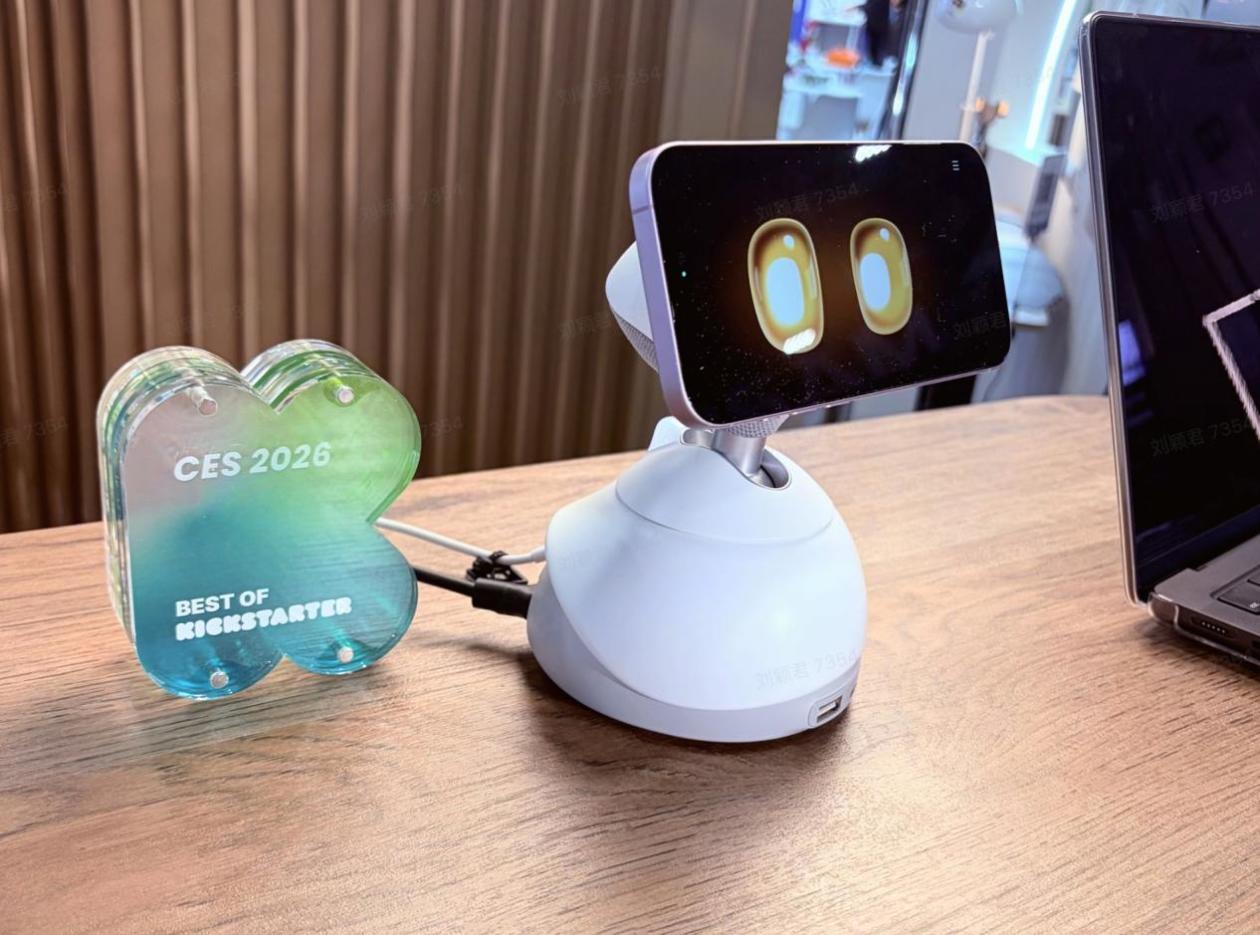
Core Insights - The article highlights the launch of DeskMate, the world's first desktop AI companion by the Chinese robotics company, 可以科技, marking a strategic shift from modular robots to "human-machine symbiosis" [1][3] - The company plans to initiate a B+ round financing roadshow at the end of February 2026 to further accelerate technology development and global market expansion [1][3] Product Overview - DeskMate is a desktop intelligent device equipped with multimodal perception and emotional computing capabilities, designed to sense user emotions and work status in real-time, facilitating natural interaction without commands [1] - The product aims to enhance work efficiency in modern office settings by connecting to computers and mainstream office software while providing emotional companionship to alleviate work stress [1] Company Background - 可以科技 was founded in 2014 and gained initial recognition with its modular robot, CellRobot, followed by the companion robot, Loona, which raised over $3 million on overseas crowdfunding platforms [3] - The company has received multiple international awards, including BBC's "Best of CES" and the Red Dot Design Award [3] Financing and Future Plans - Recently, the company completed a new financing round exceeding 100 million RMB, led by Wu Zhong Jin Kong and Yuan He Tai Hu Wan, with continued investment from existing shareholder BlueRun Ventures [3] - 可以科技 plans to rebrand as Loona INC. by 2026 and implement a new strategy called "Natural Fusion Intelligence," transitioning AI from a tool-based intelligence to a natural companionship model [3]

机器人企业可以科技亮相CES 并宣布融资计划
Jing Ji Guan Cha Wang· 2026-01-07 07:26
Core Insights - The article highlights the launch of DeskMate, the world's first desktop AI companion by a Chinese robotics company, marking a strategic shift towards "human-machine symbiosis" [1] Group 1: Product Launch - DeskMate represents an innovative leap from modular robotic solutions to intelligent companionship, integrating multimodal AI and emotional computing technologies [1] - The product aims to provide a natural interaction experience for modern individuals seeking efficient work without the need for explicit commands [1] Group 2: Financing Plans - The company announced that its B+ round financing roadshow is set to officially commence at the end of February 2026 [1]