M 系列芯片

Search documents
突发!苹果高层再曝大地震:M 芯片之父要走,库克或破天荒设立 CTO 职位挽留
Sou Hu Cai Jing· 2025-12-07 02:37
Core Insights - Apple is experiencing significant executive turnover, with key leaders in AI, design, legal, and government affairs departing the company, marking a rare moment of instability in its history [1][2][3] Group 1: Executive Departures - Recent departures include AI chief John Giannandrea, design head Alan Dye, legal head Katherine Adams, and government affairs chief Lisa Jackson, all of whom reported directly to CEO Tim Cook [1][2][3] - Giannandrea's retirement is linked to Apple's struggles in the generative AI space, with delays and underperformance in the Apple Intelligence platform and Siri's major upgrade plan [3][5] - Alan Dye's departure to Meta is partly due to his disappointment with Apple's slow progress in integrating AI into products [5][16] Group 2: Potential Departures and Concerns - Senior VP of hardware technology Johny Srouji is reportedly considering leaving Apple, which raises concerns given his pivotal role in Apple's chip strategy [2][9][10] - Srouji's contributions to the M and A series chips have provided Apple with significant performance and efficiency advantages, crucial for its market position [10][11] - Apple is attempting to retain Srouji by offering enhanced compensation and a potential CTO position, a move that would break from the company's traditional organizational structure [12][14] Group 3: Talent Drain in AI - Apple is facing a talent exodus, particularly in the AI sector, as competitors like Meta and OpenAI aggressively recruit its engineers [16][18] - The departure of key figures, including those who previously worked on Siri, has led to a decline in morale within Apple's AI team [17][18] - OpenAI has become a significant beneficiary of this talent drain, hiring numerous Apple engineers across various fields [20] Group 4: Power Restructuring - The executive shake-up is reshaping Apple's power dynamics, with increased authority shifting to hardware engineering head John Ternus, services head Eddy Cue, software engineering head Craig Federighi, and new COO Sabih Khan [22][23] - Ternus is seen as a potential successor to Cook, especially with increased responsibilities in robotics and smart glasses, which are viewed as future growth areas [23] Group 5: Speculations on Tim Cook's Future - The executive turmoil has sparked speculation about Tim Cook's future plans, with indications that he may not retire soon, potentially remaining until at least 2026 or 2027 [28][29] - Cook's lifestyle changes and recent real estate purchases have led to discussions about his long-term intentions within the company [28][29] - The company is reportedly increasing efforts to recruit and retain talent amid concerns over low morale and competitive compensation packages [31]


Mac Pro命运被苹果终结,只因无法适合AI PC时代?
3 6 Ke· 2025-11-18 00:28
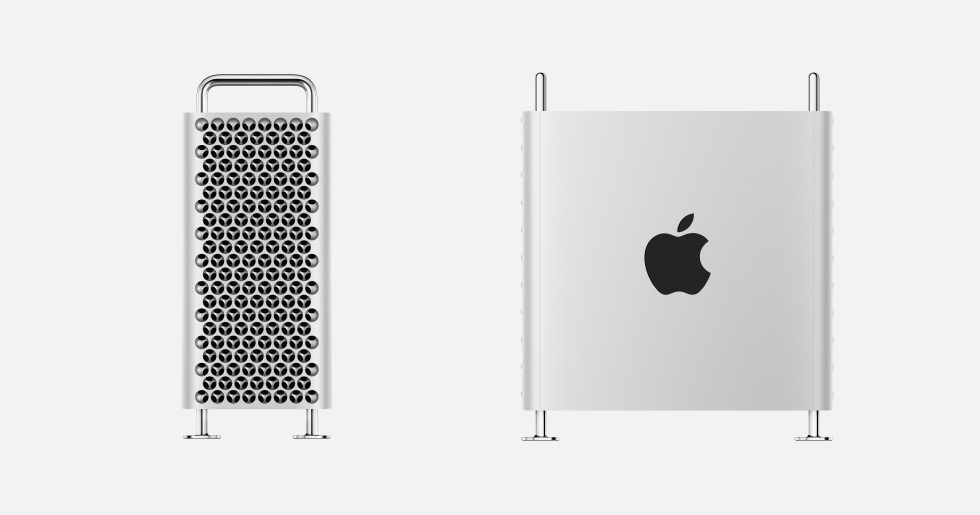
Core Viewpoint - Apple has effectively abandoned the Mac Pro product line, canceling the planned M4 Ultra chip and relegating the new Mac Pro to a "low priority" project, indicating a significant shift in the company's focus away from traditional workstations [1][12]. Group 1: Product Evolution - The Mac Pro, once a symbol of professional computing power, has struggled to find its place in the Apple Silicon era since its last update in 2019, being increasingly replaced by the more compact and integrated Mac Studio line [1][11]. - The introduction of the Mac Studio, which offers comparable performance at a lower price and with greater energy efficiency, has led to a direct migration of professional users away from the Mac Pro [11][12]. Group 2: Industry Trends - The traditional definition of workstations is being redefined as System-on-Chip (SoC) technology becomes powerful enough to challenge the need for tower PCs, with both Apple and Windows ecosystems moving towards high integration [3][18]. - The Windows PC industry is also experiencing a shift towards SoC designs, with companies like AMD and Intel developing integrated solutions that enhance performance while reducing reliance on external components [15][17]. Group 3: Future Implications - The decline of the Mac Pro reflects a broader industry consensus that future computing will require higher integration and efficiency, moving away from external expansions to chip-level integration [18][19]. - The transition from traditional tower workstations to more compact, integrated systems suggests that the need for high-performance tower PCs may diminish, with many tasks shifting to cloud-based solutions [17][18].
史上最强集显,来了?
半导体行业观察· 2025-07-27 03:17
Core Viewpoint - Nvidia's N1X SoC has been revealed through Geekbench OpenCL testing, showcasing its GPU capabilities for the first time, indicating a shift towards consumer-grade ARM SoCs for laptops and potentially desktops [1][2]. Group 1: N1X Specifications and Performance - The N1X chip features a 20-core CPU architecture with two 10-core clusters based on Nvidia's Grace architecture, and includes 48 streaming multiprocessor (SM) units, totaling 6,144 CUDA cores, matching the specifications of the GeForce RTX 5070 [2]. - The early engineering sample of N1X operates at a frequency of 1.05 GHz, achieving an OpenCL score of 46,361, comparable to the RTX 2050, but limited by power and frequency constraints typical of engineering samples [3]. - Despite its current limitations, the integrated GPU of N1X surpasses all mainstream integrated graphics, including Apple's M3 Max and AMD's 890M, which scored around 37,500 in similar tests [3]. Group 2: Market Positioning and Strategy - Nvidia is adopting a hybrid strategy by pairing Blackwell architecture GPU cores with ARM architecture CPU clusters, aiming to balance AI performance, gaming capabilities, and energy efficiency, similar to AMD's Strix Halo and Apple's M series chips [4]. - The N1X is expected to launch in Q1 2026, potentially coinciding with the next wave of AI-driven Windows laptops, although its official release date remains uncertain [4][8]. Group 3: Competitive Landscape - Nvidia's entry into the ARM-based CPU market with the N1X and N1 CPUs could disrupt the current dominance of Intel, AMD, Qualcomm, and Apple in the consumer PC space, promising lighter and more powerful gaming laptops [5][12]. - The N1 series is anticipated to deliver performance comparable to laptops equipped with RTX 4070, while maintaining higher energy efficiency, which could enhance battery life [9][10]. Group 4: Future Outlook - The N1X CPU's performance expectations are high, particularly in ultra-portable laptops, with potential integration of AI technologies for improved energy management [14]. - The first laptops featuring the N1X chip are likely to be gaming-focused, with Dell's Alienware brand expected to lead the way in launching these new devices [12].