MES软件

Search documents
2026年中国生产制造类工业软件行业发展洞察报告
亿欧智库· 2026-02-27 01:05
Investment Rating - The report does not explicitly state an investment rating for the industrial software sector in China, but it highlights significant growth potential and ongoing trends in domestic software development and market penetration. Core Insights - The development of the industrial software sector in China is driven by three main factors: policy guidance, market demand, and technological advancements. The government supports domestic software through strategic policies, while manufacturing needs for efficiency and quality drive demand for systems like MES (Manufacturing Execution Systems) [9][10]. - The report emphasizes the acceleration of domestic production software's localization process, particularly in the context of Industry 4.0 and the integration of AI technologies, which are expected to enhance automation and decision-making capabilities in manufacturing [10][19]. Summary by Sections 1. Current State of the Industrial Software Industry - The industrial software sector is crucial for controlling, executing, and optimizing production processes, essential for achieving smart manufacturing. It includes production control software (DCS, SCADA, PLC) and manufacturing execution systems (MES) [19][26]. - The domestic market has seen a significant increase in the localization of production control software, with high replacement rates in certain areas, although reliance on foreign technology remains in high-end programmable logic controllers (PLC) [19][26]. 2. Localization Progress and Evolution of Sub-sectors - **MES Software**: The domestic MES market is projected to reach 6.29 billion RMB by 2024, with local vendors gaining significant market share due to their adaptability and cost-effectiveness [41]. - **CIM Software**: Domestic CIM solutions have made notable advancements, particularly in the semiconductor sector, where they are increasingly replacing foreign systems [49][54]. - **PLC Software**: The report notes that domestic PLC manufacturers are gradually moving into the mid-to-large PLC market, although challenges remain in software ecosystem development and operating system compatibility [55][60]. 3. Case Studies of Key Companies - The report analyzes several leading companies in the industrial software space, including: - **Zhongkong Technology Co., Ltd.**: Leading in DCS market share and expanding into international markets [66]. - **Holley Technology**: Dominating the DCS market in power generation with a comprehensive product line [66]. - **Saimate Information Group**: A key player in the CIM sector, particularly in semiconductor manufacturing [48]. 4. Future Development Trends - The industrial software sector is expected to evolve towards integrated business processes and ecosystem reconstruction, with a focus on high-precision control scenarios and deeper integration of AI technologies [10][19]. - The report anticipates that the localization of industrial software will continue to accelerate, driven by policy support and technological advancements, particularly in the context of smart manufacturing [10][19].
中国工业软件行业发展研究报告
艾瑞咨询· 2026-02-04 03:25
Core Viewpoint - The industrial software industry is at a critical juncture, necessitating urgent development driven by innovation and supported by favorable policies. It serves as a core production material and key productivity for new industrialization, emphasizing the importance of self-control and supply chain security [1][4]. Industry Dynamics - The evolution path of industrial software is transitioning from tools to systems, then to platforms, and finally to genetic models, focusing on data value in the latter stages [2]. - The market is large, with a projected size nearing 300 billion yuan in 2024, but challenges such as core technology gaps and imbalanced industrial structure are prominent [1][17]. Product Development - Currently, industrial software is primarily sold as products, but it is expected to shift towards selling "intelligence" as data assets are effectively accumulated and utilized, leading to the emergence of industrial intelligent agents [3]. Development Background - Industrial software is crucial for innovation and transformation in the economy, with the shift of control from hardware to software becoming increasingly evident. The encapsulation of industrial knowledge in software is essential for optimizing production processes [4][7]. Driving Factors - Policy support and technological advancements, particularly in AI and large models, are accelerating the development and application of industrial software. Cities are introducing subsidy policies to stimulate innovation in this sector [12][14]. - Demand from enterprises emphasizes practical market needs while also considering domestic alternatives, with government and research institutions focusing on top-level planning and integration [14]. Market Characteristics - The industrial software market is characterized by a significant gap in core technologies, particularly in R&D design software, which is the most affected area by the "bottleneck" phenomenon. The imbalance in the industrial structure shows a stronger presence of management software compared to engineering software [17][19]. Industry Value Flow - The industrial software value distribution follows a "smile curve" model, where the closer to core technology, the higher the barriers and profits. The rise of data value services is expected to create new growth opportunities [30]. Profit Models - Current profit models for industrial software include software licensing, maintenance, and customized development, with ongoing exploration of platform and ecosystem revenue sharing [33]. Future Directions - The industrial software industry is expected to evolve towards platformization and genetic modeling, focusing on enhancing data flow efficiency and value. The future will see products transforming from mere tools to intelligent agents capable of autonomous task execution [48][52].


信创和工业软件行业更新
2025-10-13 01:00
Summary of the Conference Call on the Xinchuang and Industrial Software Industry Industry Overview - The Xinchuang industry in China is set to achieve complete replacement goals for party and government systems by 2027, with a target to narrow the gap in basic software and hardware levels with international standards to within two years [1][4] - The industry is expected to establish domestic production capabilities for Anke CPU chips [1] - In 2025, state-owned enterprises are required to procure over 80% of new infrastructure from domestic sources, with clear indicators for replacing existing systems [1] Key Points and Arguments - The Xinchuang industry faces challenges due to the diversity of technology paths, including multiple operating systems and CPUs, leading to resource wastage [1][5] - A potential unification of operating systems is proposed, with Euler for servers and Harmony for non-server applications [6] - The U.S. industrial software market holds a monopoly globally, and any supply disruptions could severely impact Chinese manufacturing [7] - The next phase of the Xinchuang industry will focus on promoting self-controllable and AI-integrated manufacturing, with a clear emphasis on domestic production rates [7][8] Progress and Achievements - Significant progress has been made in the Xinchuang industry, with notable achievements in domestic software market share exceeding 50% in certain areas, such as DCS and small PLCs [22] - Companies like Zhongsoft, Dameng, and Taiji have reported impressive revenue and profit growth, indicating a strong growth trajectory for the industry [4] Challenges and Solutions - The primary challenge remains the technical diversity, which leads to inefficiencies in adaptation processes [5] - A unified operating system approach is suggested to streamline processes and enhance productivity [6] Industrial Software Importance - The importance of industrial software is underscored by the U.S. restrictions, which highlight the need for China to maintain its manufacturing edge [7] - The promotion of AI in manufacturing is seen as a critical step for the Xinchuang industry, with a focus on establishing clear domestic production rates [7][9] Policy and Strategic Directions - China is leveraging policy guidance to support domestic AI frameworks and promote the use of local operating systems [8] - The "14th Five-Year Plan" may include significant projects for lighthouse factories, presenting major opportunities for service providers [9] Company Performances - Nengke Technology is positioned as a leader in the industrial software sector, with a low valuation and significant growth potential [10] - Dongtu Technology is recognized as a key player in the industrial operating system space, recently securing large orders [11] - Rongzhixing excels in the PHM field, showcasing strong market positioning [12] - Zhongwang, as a leader in the CAD industry, is expected to benefit from policy support [14] Cloud Computing and Software Development - Domestic cloud computing foundational software is crucial for resource management and virtualization, with major players including Alibaba, Tencent, and Huawei [15] - U.S. restrictions on key software exports are anticipated to accelerate the domestic software development process [16] Industrial AI Development - Industrial AI is gaining traction, with significant advancements in large models and intelligent agents, emphasizing customization and automation in production processes [19] - The global market for industrial AI is projected to reach $150 billion by 2030, with applications in various sectors [17] Conclusion - The Xinchuang and industrial software sectors in China are poised for significant growth, driven by domestic policy support, technological advancements, and a focus on self-sufficiency in the face of external pressures [20][21]
鼎捷数智(300378):深耕制造业数智化数十年,拥抱AI构筑第二增长曲线
Hua Yuan Zheng Quan· 2025-07-25 05:01
Investment Rating - The report assigns a "Buy" rating for the company, marking its first coverage in the market [4][7]. Core Views - The company has been deeply engaged in the digital transformation of the manufacturing industry for over 40 years and is now embracing AI to build a second growth curve [13]. - The company is expected to see stable revenue and profit growth, particularly from 2025 onwards, as industrial economic transformation and demand recovery in manufacturing sectors take place [6][9]. - The company is well-positioned to benefit from the ongoing trend of domestic software replacement, with strong customer loyalty and high barriers to entry [9][34]. - The company is actively promoting AI applications across various manufacturing sectors, which is anticipated to generate additional revenue and open new growth avenues [9][45]. Financial Summary - Revenue projections for the company are as follows: - 2023: 2,228 million RMB - 2024: 2,331 million RMB - 2025: 2,530 million RMB - 2026: 2,771 million RMB - 2027: 3,072 million RMB - The expected growth rates for revenue are 11.65% in 2023, 4.62% in 2024, and 8.56% in 2025 [5][51]. - The forecasted net profit attributable to the parent company for 2025-2027 is projected to be 206 million RMB, 281 million RMB, and 362 million RMB, respectively, with growth rates of 32.34%, 36.43%, and 28.70% [5][54]. Business Operations - The company has a diverse product matrix that provides comprehensive software and solutions for the entire production process, integrating AI for innovation [16][20]. - The company has established a strong presence in various manufacturing sectors, including equipment manufacturing, automotive parts, and electronics, with a significant market share in ERP, MES, and PLM solutions [13][41]. - The company is expanding its operations in Southeast Asia, with a focus on local talent and partnerships to enhance its market presence [22][27]. AI Integration - The company is leveraging its Athena platform to integrate AI applications across multiple scenarios, enhancing operational efficiency and customer engagement [45][49]. - AI applications are expected to contribute significantly to the company's revenue growth, with various tailored solutions being developed for specific industry needs [45][50].

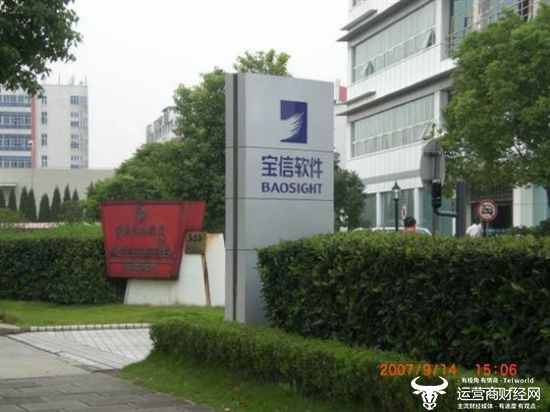
宝信软件副总黄颖雷去年涨薪32.62万元 副总陈健和梁越永却降薪?
Xin Lang Cai Jing· 2025-07-16 03:35
Group 1 - Recent significant personnel changes occurred at Baoxin Software, with the resignation of former chairman Xia Xuesong, drawing attention to the executive team, particularly Deputy General Manager Huang Yinglei [1] - Huang Yinglei, aged 52, has a background in industrial electrical automation and computer technology, and was appointed as Deputy General Manager on August 17, 2023, responsible for daily operations and management [3] - Huang Yinglei's salary increased significantly from 908,200 yuan in 2023 to 1,234,400 yuan in 2024, marking a rise of 326,200 yuan, making him the only Deputy General Manager to receive a salary increase in 2024 [3] Group 2 - In 2024, Huang Yinglei reduced his holdings in the company, selling 210 shares at an average price of 29.32 yuan per share on September 25, resulting in a transaction amount of 61,600 yuan, leaving him with 297,400 shares [4] - On September 27, he further sold 1,790 shares at an average price of 29.98 yuan per share, amounting to 536,600 yuan, with his holdings remaining at 297,500 shares afterward [4]