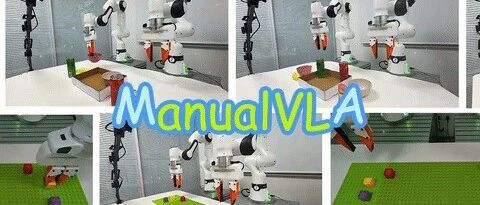
ManualVLA

Search documents
真机RL杀疯了,机器人自学20分钟100分,数字孪生封神
3 6 Ke· 2026-02-13 07:32
Core Insights - TwinRL introduces a digital twin-driven reinforcement learning framework that enhances the exploration capabilities of robots in real-world tasks, achieving a 100% success rate in various operations within approximately 20 minutes, while reducing human intervention by over 50% [1][22][36]. Group 1: Technology and Framework - TwinRL is not a simulator but an exploration amplifier and guide, designed to expand the exploration space for robots beyond the limitations of traditional methods [16][15]. - The framework consists of three main components: exploration space expansion, parallel online reinforcement learning in the digital twin, and sim-to-real guided exploration [32][36]. - The exploration space expansion strategy utilizes high-fidelity digital twin environments to generate synthetic trajectories that exceed human demonstration coverage [25][32]. Group 2: Performance and Efficiency - TwinRL demonstrates a significant improvement in exploration efficiency, achieving at least a 30% acceleration in convergence time compared to existing real-world reinforcement learning methods [22][39]. - In experiments, TwinRL maintained a near 100% success rate in both in-distribution and out-of-distribution areas, showcasing its robustness against environmental changes [39][46]. - The framework effectively bridges the gap between offline training and online learning, allowing for a smoother transition and reducing performance degradation during the learning process [39][34]. Group 3: Research Background and Observations - The research highlights that the effective exploration space in real-world VLA reinforcement learning is heavily constrained by the distribution of supervised fine-tuning (SFT) data [27][30]. - The study reveals that traditional reinforcement learning methods struggle with exploration deadlock in out-of-distribution scenarios, emphasizing the need for a broader exploration strategy [30][31]. - TwinRL addresses these challenges by moving the exploration process to a controllable and expandable digital twin environment, allowing for more effective learning [15][36].


首个长程「VLA-World Model」一体化模型!ManualVLA解锁长程精细操作任务
具身智能之心· 2025-12-23 03:34
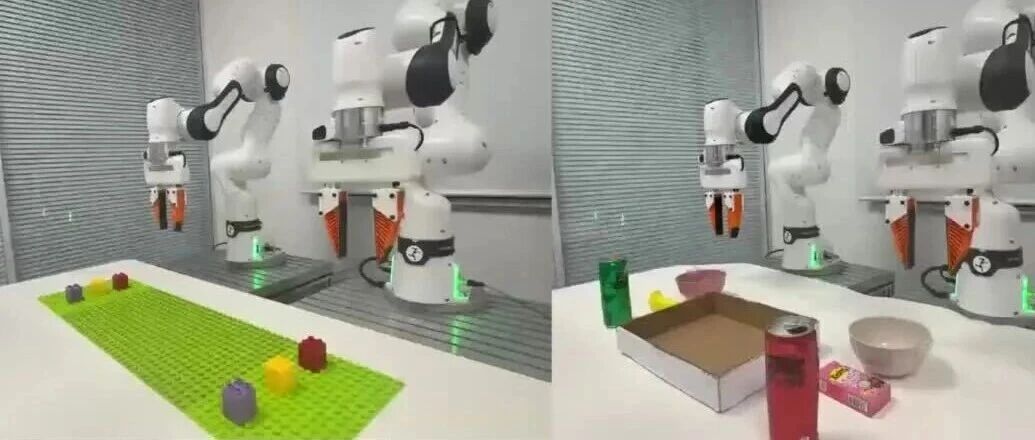
Core Viewpoint - The article introduces the ManualVLA model, a unified VLA model designed to enhance robotic manipulation and task execution by integrating planning and action generation into a single framework, addressing challenges in long-duration tasks that require precise final state definitions [2][5][10]. Group 1: Research Background and Challenges - Recent advancements in VLA models have significantly improved robotic scene understanding and generalization, yet challenges remain in coordinating high-level planning with precise operations for long-duration tasks like LEGO assembly and object rearrangement [7]. - Two main challenges are identified: the need for precise operations to align with predefined final configurations and the integration of long-term planning with fine-grained control while maintaining generalization capabilities in diverse real-world environments [7][9]. Group 2: ManualVLA Method Description - ManualVLA allows the model to generate its own instruction manual and execute actions based on it, breaking down complex long-duration tasks into controllable and interpretable short phases [12][19]. - The model employs a Mixture-of-Transformers (MoT) architecture, integrating a planning expert that generates multimodal operation manuals and an action expert that executes the actions based on these manuals [5][15]. - The ManualCoT reasoning mechanism combines explicit and implicit paths to influence action generation, ensuring a high degree of coordination between manual generation and action execution [16][20]. Group 3: Experimental Results - In real-world tasks, ManualVLA demonstrated a significant improvement in success rates, achieving an average success rate increase of approximately 32% compared to the latest baseline methods [28]. - The model's performance in generating intermediate target images was validated with metrics such as PSNR (e.g., 2D LEGO assembly at 29.01) and MAE (e.g., 2D LEGO assembly at 3.23), indicating high fidelity and accuracy in predicting target object positions [23][27]. - ManualVLA outperformed state-of-the-art methods in simulation tasks, achieving a 70% average success rate, surpassing the previous best of 63% [31]. Group 4: Ablation and Generalization Experiments - Ablation studies confirmed that all modalities of information in the instruction manual (text, images, UV coordinates) and the implicit CoT reasoning are essential for solving long-duration, goal-specific operational tasks [33]. - ManualVLA exhibited robust generalization capabilities under varying backgrounds, object shapes, and lighting conditions, maintaining high task success rates even in unseen scenarios [36].
北大发布 ManualVLA:首个长程「生成–理解–动作」一体化模型,实现从最终状态自主生成说明书并完成操纵
机器之心· 2025-12-18 09:08
Core Insights - The article discusses the limitations of existing VLA models in handling long-duration tasks that require precise final state definitions, such as LEGO assembly and object rearrangement, highlighting the need for a more integrated approach [2][9] - A new model called ManualVLA is introduced, which combines planning and action generation into a unified framework, improving the efficiency and effectiveness of robotic manipulation tasks [3][5] Group 1: Research Background and Challenges - Recent advancements in VLA models have significantly contributed to the development of general embodied intelligence, but challenges remain in coordinating high-level planning with precise control for long-duration tasks [9] - Existing hierarchical methods struggle with generalization to unseen final states and often rely on manually crafted instructions or human demonstration videos, leading to limitations in system complexity, deployment costs, and generalization capabilities [9] Group 2: ManualVLA Methodology - ManualVLA allows the model to generate its own instructions and execute actions based on those instructions, breaking down complex long-duration tasks into manageable steps [10][12] - The model employs a Mixture-of-Transformers (MoT) architecture, integrating a planning expert that generates multimodal operation manuals and an action expert that executes the tasks based on these manuals [5][14] Group 3: Experimental Results - ManualVLA demonstrated a significant improvement in success rates for real-world tasks, achieving an average success rate increase of approximately 32% compared to the latest baseline methods [7][28] - In experiments involving 2D LEGO assembly, 3D LEGO assembly, and object rearrangement, the model produced high-quality intermediate images and maintained a low mean absolute error (MAE) in predicting target object positions [24][27] Group 4: Training Phases - The training process consists of three phases: pre-training on a large dataset of robotic trajectories, utilizing a digital twin tool for 3D reconstruction and manual data generation, and fine-tuning on real-world expert demonstration trajectories [20][21][19] Group 5: Generalization and Robustness - ManualVLA exhibits robust generalization capabilities, maintaining high success rates even under varying backgrounds, object shapes, and lighting conditions, outperforming baseline models in these scenarios [33][37] - Ablation studies confirm that both explicit and implicit reasoning paths are essential for achieving optimal performance in long-duration tasks [33]