Meta Display

Search documents
Meta加码AI眼镜产能
Xin Lang Cai Jing· 2026-01-14 06:57
Core Insights - Meta Platforms and EssilorLuxottica are discussing plans to double the production capacity of AI glasses by the end of 2026, while Meta has announced layoffs of over 1,000 positions in its Reality Labs division to reallocate resources towards AI wearable devices and mobile functionalities [1][11] - The AI glasses market is expected to see significant growth, with IDC predicting that by Q3 2026, the market will reach a shipment volume of 4.508 million units, representing a year-on-year increase of 77.7% [19] Company Developments - Meta is set to launch the second generation of Ray-Ban Meta glasses, Oakley sports line, and Meta Display products by Q3 2025, aiming for a market share of 75.7% [2][12] - Several companies in the AI glasses supply chain have reported advancements in their respective fields, including chip distribution, assembly, and display technologies [4][5][16] Market Trends - The upcoming release of multiple high-profile AI glasses products, including Google's Project Aura and Apple's anticipated AI glasses, is expected to drive market demand [17] - A government policy supporting the purchase of smart products, including AI glasses, will provide a subsidy of 15% of the product price, capped at 500 yuan per item, further incentivizing consumer purchases [17] Financial Performance - Companies like Baiwei Storage expect to achieve a net profit of 850 million to 1 billion yuan in 2025, driven by growth in AI end-side storage products [5] - Stock prices of several AI glasses concept companies, including Doctor Glasses, Pinming Technology, and Thunder Technology, have surged by over 10% following positive market news [2][12]



2025年第三季度全球智能眼镜出货量同比大涨74.1%,中国厂商表现亮眼
Huan Qiu Wang· 2025-12-17 02:09
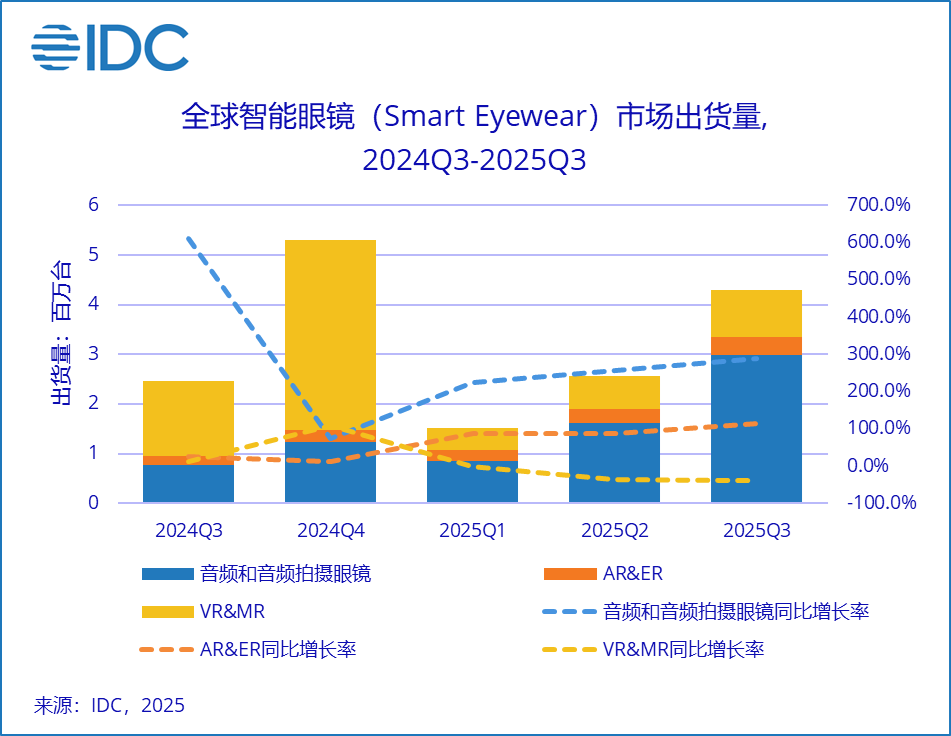
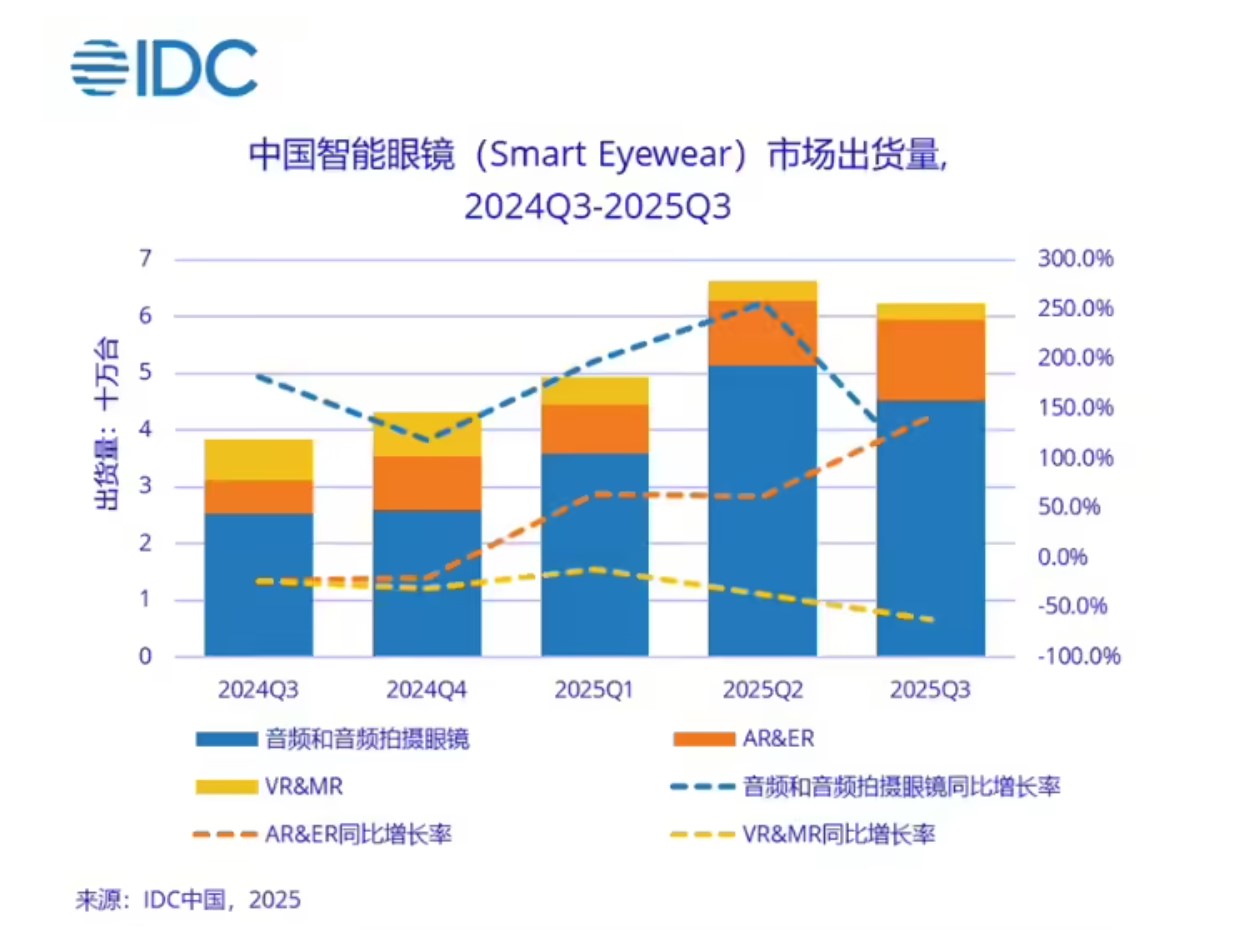
Core Insights - The global smart glasses market is projected to reach 4.296 million units in Q3 2025, reflecting a significant year-on-year growth of 74.1% [1] - Meta maintains a dominant market position with a 75.7% market share, driven by the launch of innovative products such as Ray-Ban Meta 2nd generation and Oakley sports line [1] - Chinese companies Xiaomi, Thunder, Xreal, and Viture have successfully entered the top five global market players, showcasing their increasing innovation capabilities and international competitiveness [1] Market Performance - The global audio and audio-capturing glasses market has seen a remarkable surge, with shipments reaching 2.994 million units, a year-on-year increase of 287.5% [1] - The AR/VR market, however, experienced a decline in shipments, totaling 1.302 million units, down 23.2% year-on-year, indicating structural differentiation within the market [1] - Key regional markets such as North America, Western Europe, China, and Asia-Pacific (excluding China and Japan) achieved over 50% year-on-year growth, with Western Europe leading at 106.5% [2] China Market Insights - In Q3 2025, China's smart glasses market is expected to ship 623,000 units, marking a year-on-year growth of 62.3% [5] - The audio and audio-capturing glasses segment in China is projected to ship 454,000 units, reflecting a 79.2% increase year-on-year, while the AR/VR segment is expected to reach 169,000 units, growing by 29.4% [5] - IDC forecasts that by 2026, China's smart glasses market will continue to grow rapidly, with shipments anticipated to reach 4.508 million units, a year-on-year increase of 77.7% [5]
IDC:三季度全球智能眼镜出货量同比增长74.1% 音频和音频拍摄品类大增287.5%
智通财经网· 2025-12-12 06:07
Core Insights - The global smart eyewear market is projected to ship 4.296 million units in Q3 2025, representing a year-on-year growth of 74.1% [1] - The audio and audio-capturing glasses segment is expected to see a significant increase in shipments, with a year-on-year growth of 287.5%, while the AR/VR segment is experiencing a decline of 23.2% [1] - Meta has launched new products, achieving a market share of 75.7%, while Chinese manufacturers like Xiaomi, Thunder, Xreal, and Viture are also gaining traction in the market [1] Global Market Overview - The global smart eyewear market is expected to see a shipment of 4.296 million units in Q3 2025, with a year-on-year growth of 74.1% [1] - The audio and audio-capturing glasses market is projected to ship 2.994 million units, showing a remarkable growth of 287.5% [1] - The AR/VR market is expected to ship 1.302 million units, but it is facing a decline of 23.2% [1] Chinese Market Insights - The Chinese smart eyewear market is projected to ship 623,000 units in Q3 2025, reflecting a year-on-year growth of 62.3% [3] - The audio and audio-capturing glasses segment in China is expected to ship 454,000 units, with a year-on-year growth of 79.2% [5] - The AR/VR market in China is expected to ship 169,000 units, showing a year-on-year growth of 29.4% [6] Product Innovations and Trends - Major Chinese brands are launching new products, including Alibaba's Quark G1 and Baidu's AI glasses, which are expected to enhance market dynamics [5] - The proportion of products supporting large models has reached 49.5%, indicating a trend towards AI integration in smart eyewear [5] - The AR/ER category is leading growth in the AR/VR market, with a market share of 83.4% and a year-on-year growth of 142.3% [6] Future Projections - The Chinese smart eyewear market is expected to reach 4.508 million units by 2026, with a year-on-year growth of 77.7% [6] - The audio and audio-capturing glasses segment is projected to ship 3.434 million units, reflecting a growth of 68.1% [6] - The AR/VR device shipments are expected to reach 1.073 million units, with a year-on-year growth of 62.1% [6] Competitive Landscape - The smart eyewear market is entering a phase of scale growth, with major companies launching new products and driving technological innovation [8] - Competition is shifting towards ecosystem collaboration, content integration, and practical application scenarios [8] - The market is expected to see a more diverse competitive landscape, with a focus on user experience, AI functionality, and ecosystem completeness [9]