
NVIDIA Cosmos™

Search documents
NVIDIA and Global Robotics Leaders Take Physical AI to the Real World
Globenewswire· 2026-03-16 20:41
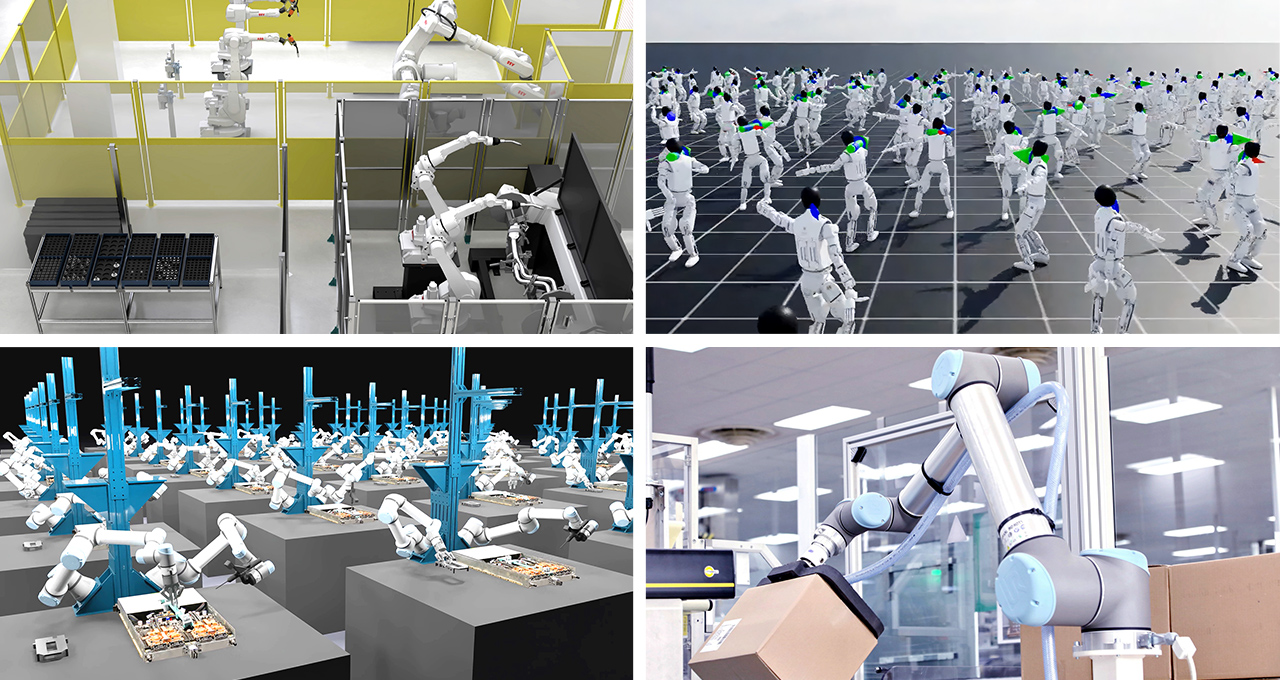
Core Insights - NVIDIA is collaborating with the global robotics ecosystem to advance production-scale physical AI, introducing new simulation frameworks and open models for intelligent robot development [2][21] - Jensen Huang, NVIDIA's CEO, emphasized that every industrial company will transition into a robotics company, with NVIDIA's platform serving as the foundation for the robotics industry [4][21] Industry Partnerships - Key industry players such as ABB Robotics, FANUC, KUKA, and YASKAWA are integrating NVIDIA's technologies into their robotic solutions, enhancing their capabilities with NVIDIA Omniverse libraries and Isaac simulation frameworks [3][5] - Strategic collaborations are translating into real-world impacts, enabling manufacturers to extend automation into more dynamic applications [18][21] Technological Advancements - NVIDIA introduced Cosmos 3, a foundational model for generating synthetic worlds, which accelerates the development of generalized robot intelligence [8] - The launch of Isaac Lab 3.0 allows for faster, large-scale robot learning, utilizing advanced physics engines for improved simulation [11] Humanoid Robotics Development - The development of humanoid robots is being supported by leaders like Boston Dynamics and Figure, utilizing NVIDIA's Cosmos and Isaac technologies to enhance their capabilities [9][10] - NVIDIA's GR00T N models are being adopted by various companies to accelerate the deployment of humanoid robots in industrial settings [12] Healthcare Robotics - NVIDIA's technologies are being applied in healthcare, with companies like CMR Surgical and Johnson & Johnson MedTech using simulation frameworks to validate robotic systems for surgical applications [15][16] Innovation and Accessibility - NVIDIA is committed to making physical AI tools accessible to innovators through its Inception program, which supports startups in the robotics field [29][30] - Collaborations with platforms like Hugging Face aim to connect a broader community of developers, enhancing the development of open-source robotics [30]


NVIDIA Announces Open Physical AI Data Factory Blueprint to Accelerate Robotics, Vision AI Agents and Autonomous Vehicle Development
Globenewswire· 2026-03-16 20:37
Core Viewpoint - NVIDIA has introduced the NVIDIA Physical AI Data Factory Blueprint, an open reference architecture aimed at unifying and automating the generation, augmentation, and evaluation of training data for physical AI systems, thereby reducing costs, time, and complexity in large-scale training [1]. Group 1: Blueprint Features and Benefits - The blueprint allows developers to utilize NVIDIA Cosmos™ open world foundation models and coding agents to convert limited training data into extensive and diverse datasets, including rare edge cases that are typically difficult to capture [2]. - It serves as a single reference architecture that transitions teams from raw data to model-ready training sets through modular and automated workflows, enhancing the efficiency of data processing [4]. - The blueprint is designed to facilitate massive-scale data processing, synthetic data generation, reinforcement learning, and evaluation of physical AI models for various applications, including vision AI agents and autonomous vehicles [15]. Group 2: Collaborations and Integrations - NVIDIA is collaborating with Microsoft Azure and Nebius to integrate the blueprint with their cloud services, enabling developers to leverage accelerated computing power for high-volume training data generation [3]. - Microsoft Azure is incorporating the Physical AI Data Factory Blueprint into an open physical AI toolchain available on GitHub, which integrates with various Azure services to provide enterprise-grade workflows for training physical AI systems [8]. - Nebius has integrated NVIDIA OSMO into its AI Cloud, allowing developers to deploy production-ready data pipelines tailored to their needs, enhancing the overall physical AI stack [10]. Group 3: Industry Adoption - Leading physical AI developers such as FieldAI, Hexagon Robotics, Linker Vision, Milestone Systems, Skild AI, Uber, and Teradyne Robotics are utilizing the blueprint to accelerate the development of robotics, vision AI agents, and autonomous vehicles [3][15]. - Early users like Milestone Systems, Voxel51, and RoboForce are leveraging the blueprint on Nebius infrastructure to expedite model development for video analytics AI agents and autonomous systems [11].

NVIDIA推出Alpamayo系列开源AI模型与工具,加速安全可靠的推理型辅助驾驶汽车开发
Xin Lang Cai Jing· 2026-01-06 04:37
Core Insights - NVIDIA has launched the Alpamayo series of open-source AI models, simulation tools, and datasets aimed at advancing the development of safe and reliable inference-based autonomous driving vehicles [1][3] Group 1: Technology and Features - The Alpamayo series introduces a VLA reasoning model based on chain-of-thought, enhancing decision-making capabilities in autonomous driving systems to handle rare and complex scenarios [1][3] - Alpamayo 1 is the first reasoning model designed for the autonomous driving research community, featuring a 10 billion parameter architecture that generates driving trajectories from video input while providing reasoning insights [3][4] - AlpaSim is a fully open-source end-to-end simulation framework that offers realistic sensor modeling and configurable traffic dynamics, supporting rapid validation and strategy optimization [4] Group 2: Data and Ecosystem - NVIDIA provides a diverse large-scale open dataset for autonomous driving, containing over 1,700 hours of driving data across various geographic areas and environmental conditions, essential for developing reasoning architectures [4] - The Alpamayo ecosystem integrates open models, simulation frameworks, and datasets into a unified system, allowing developers and research teams to build upon it for their projects [3][4] Group 3: Industry Support and Impact - Leading companies in the mobility sector, including Lucid, Jaguar Land Rover, and Uber, have shown significant interest in Alpamayo, aiming to develop reasoning-based autonomous driving stacks for achieving Level 4 autonomy [5] - Industry experts emphasize the growing need for AI systems that not only process data but also possess reasoning capabilities to handle real-world behaviors, highlighting the importance of advanced simulation environments and rich datasets [5] - The open-source nature of Alpamayo is expected to accelerate innovation across the industry, enabling partners to adjust and optimize models according to their unique needs [5]
NVIDIA, Alphabet and Google Collaborate on the Future of Agentic and Physical AI
Globenewswire· 2025-03-18 19:27
Core Insights - NVIDIA, Alphabet, and Google are launching new initiatives to enhance AI, democratize access to AI tools, and transform various industries including healthcare, manufacturing, and energy [1][20] AI and Robotics Development - Engineers and researchers from Alphabet and NVIDIA are collaborating to develop robots with advanced grasping skills and optimize energy grids using AI and simulation technologies [2] - The partnership includes the use of NVIDIA platforms such as Omniverse™, Cosmos™, and Isaac™ to facilitate these developments [2] AI Infrastructure and Tools - Google Cloud will adopt NVIDIA's GB300 NVL72 rack-scale solution and RTX PRO™ 6000 Blackwell Server Edition GPU to enhance AI research and production capabilities [3][15] - NVIDIA will implement Google DeepMind's SynthID technology for watermarking AI-generated content, ensuring intellectual property protection [3][6] Open Models and Innovation - Google DeepMind and NVIDIA are optimizing Gemma, a family of lightweight open models, to run efficiently on NVIDIA GPUs, enhancing accessibility for developers [7] - The collaboration aims to improve the performance of AI models and facilitate their integration into various applications [7] Robotics and Manufacturing - Intrinsic, an Alphabet company, is focused on creating adaptive AI for robotics, aiming to simplify the programming of industrial robots [9] - The partnership with NVIDIA aims to enhance developer workflows and support universal robot grasping capabilities, significantly reducing application development time [10] Drug Discovery and Healthcare - Isomorphic Labs is leveraging AI for drug discovery, utilizing a state-of-the-art drug design engine on Google Cloud with NVIDIA GPUs to advance human health [12] Energy Solutions - Tapestry, a project under Alphabet's X, is working with NVIDIA to develop AI-powered solutions for optimizing electric grid simulations and integrating new energy sources [13][14] Advanced AI Infrastructure - Google Cloud is among the first to offer NVIDIA's latest Blackwell GPUs, which provide significant performance improvements for AI applications [15][16] - The GB300 NVL72 delivers 1.5 times more AI performance compared to its predecessor, enhancing revenue opportunities for AI factories [16] Collaboration and Future Directions - The ongoing partnership between NVIDIA and Alphabet is set to advance agentic AI and physical AI applications across various sectors [20]

NVIDIA Omniverse Physical AI Operating System Expands to More Industries and Partners
GlobeNewswire News Room· 2025-03-18 19:21
Core Insights - NVIDIA has announced that several leading industrial software and service providers are integrating the NVIDIA Omniverse platform to enhance industrial digitalization with physical AI [1][9][10] - New Omniverse Blueprints are available to facilitate robot-ready facilities and large-scale synthetic data generation for physical AI development [2][8] Industrial Adoption - Major companies such as Schaeffler, Accenture, Hyundai Motor Group, and Mercedes-Benz are utilizing Omniverse Blueprints to optimize their manufacturing operations [4][12] - In electronics manufacturing, Pegatron and Foxconn are leveraging the Mega blueprint for improving factory operations and worker safety [5][6] Technological Advancements - The Omniverse platform is described as an operating system that connects physical data to physical AI, enabling the creation of new applications that enhance industrial ecosystems [3][10] - New Blueprints like Mega and the AI factory digital twins are designed to maximize efficiency in industrial settings [7][9] Cloud Integration - NVIDIA Omniverse is now available as virtual desktop images on AWS and Microsoft Azure, simplifying the development and deployment of OpenUSD-based applications [13][14] Collaboration and Ecosystem - Companies such as Databricks, Ansys, and Siemens are integrating Omniverse technologies into their software solutions to accelerate product development and optimize manufacturing processes [10][11]

General Motors and NVIDIA Collaborate on AI for Next-Generation Vehicle Experience and Manufacturing
Globenewswire· 2025-03-18 17:48
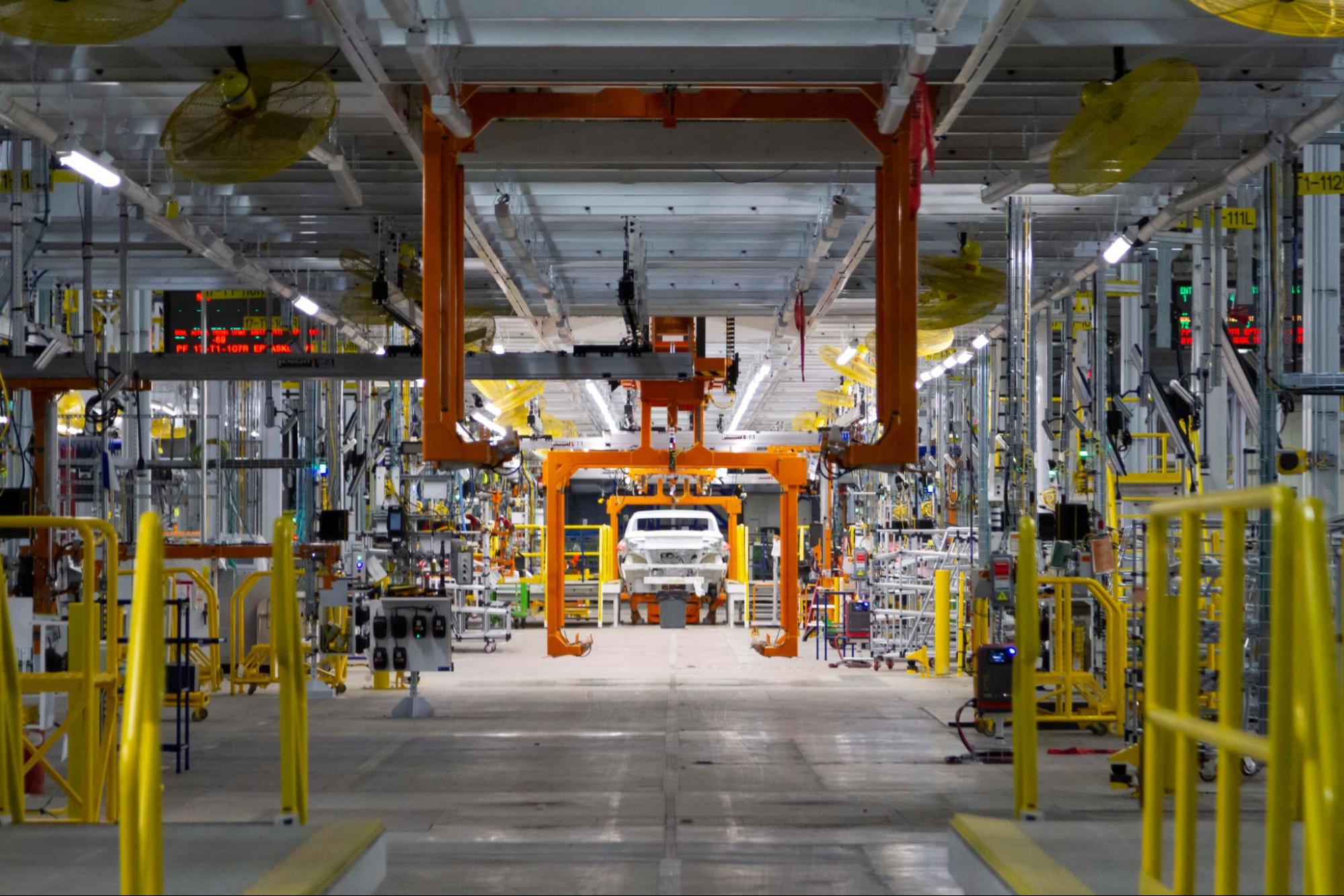
Core Insights - General Motors (GM) and NVIDIA are extending their collaboration to develop next-generation vehicles, factories, and robots utilizing AI, simulation, and accelerated computing [1][2] - The partnership aims to create custom AI systems for optimizing GM's manufacturing processes and enhancing vehicle safety features [2][3] Group 1: Collaboration Details - GM will leverage NVIDIA's accelerated compute platforms, including NVIDIA Omniverse and NVIDIA DRIVE AGX, to train AI manufacturing models [2][4] - The collaboration will focus on creating digital twins of assembly lines for virtual testing and production simulations, aimed at reducing downtime and increasing efficiency [4][5] - GM's future vehicles will be built on NVIDIA DRIVE AGX, which can perform up to 1,000 trillion operations per second, facilitating the development of safe autonomous vehicles [5] Group 2: Leadership Statements - Mary Barra, GM's CEO, emphasized that AI optimizes manufacturing and enhances vehicle intelligence, merging technology with human ingenuity [3] - Jensen Huang, NVIDIA's CEO, highlighted the transformative impact of their partnership on transportation and manufacturing processes [3] Group 3: Event Information - NVIDIA will host a fireside chat during the GTC global AI conference to discuss the collaboration and its implications for automotive manufacturing and software development [6]

NVIDIA Announces Financial Results for Fourth Quarter and Fiscal 2025
Newsfilter· 2025-02-26 21:20
Core Insights - NVIDIA reported a fourth-quarter revenue of $39.3 billion, marking a 12% increase from the previous quarter and a 78% increase year-over-year [1][5] - For fiscal 2025, NVIDIA achieved a record revenue of $130.5 billion, up 114% from the previous year, with GAAP earnings per diluted share rising to $2.94, a 147% increase year-over-year [2][6] - The company highlighted strong demand for its Blackwell AI supercomputers, which contributed significantly to its revenue growth [2][3] Financial Performance - Q4 FY25 GAAP revenue was $39,331 million, with a gross margin of 73.0%, down from 74.6% in Q3 FY25 [4] - Operating income for Q4 FY25 was $24,034 million, up 10% quarter-over-quarter and up 77% year-over-year [4] - Full-year FY25 GAAP net income reached $72,880 million, a 145% increase from FY24 [6] Segment Performance - Data Center revenue for Q4 FY25 was a record $35.6 billion, up 16% from Q3 FY25 and up 93% year-over-year [5] - Gaming revenue for Q4 FY25 was $2.5 billion, down 22% from the previous quarter and down 11% year-over-year, while full-year gaming revenue rose 9% to $11.4 billion [10] Future Outlook - NVIDIA expects Q1 FY26 revenue to be approximately $43.0 billion, with GAAP gross margins projected at 70.6% [9][25] - The company plans to pay a quarterly cash dividend of $0.01 per share on April 2, 2025 [3] Product Developments - NVIDIA launched new GeForce RTX 50 Series graphics cards, which promise up to a 2x performance improvement over the previous generation [10] - The introduction of NVIDIA DLSS 4 technology aims to enhance gaming experiences with improved rendering capabilities [10]