Quantum Computing

Search documents
The 3 Best Quantum Computing Stocks to Buy Right Now
The Motley Fool· 2026-03-22 08:15
Core Insights - Quantum computing is emerging as a significant investment opportunity, potentially surpassing artificial intelligence in importance as the technology becomes viable for various applications [1] Group 1: Investment Opportunities - IonQ, D-Wave Quantum, and Alphabet are identified as key stocks in the quantum computing sector, with the potential for substantial growth as their technologies gain adoption [2] - IonQ and D-Wave Quantum are start-ups focused on creating viable quantum computing solutions, with high risks associated with their success or failure [3] - Investing in companies that prioritize accuracy in quantum computing is deemed a smart strategy, given the current challenges in delivering consistent and trustworthy results [4] Group 2: Company Performance - IonQ has a market capitalization of $11 billion and reported a 429% year-over-year revenue increase to $62 million in Q4 2025, with expectations of $235 million in revenue for 2026 [6] - D-Wave Quantum has a market capitalization of $5.8 billion and reported a 179% revenue increase to $25 million in Q4 [9] - Alphabet, valued at nearly $4 trillion, leverages its established resources to advance quantum computing, with a focus on integrating it into its cloud computing platform [10] Group 3: Risk and Strategy - A balanced investment approach involving IonQ, D-Wave, and Alphabet is recommended to maximize upside potential while minimizing risk exposure [12] - The timeline for commercial integration of quantum computing is projected to be around 2030, suggesting that early investment could yield significant returns as demand grows [12]






1 Clear Signal to Buy International Business Machines Stock Right Now
The Motley Fool· 2026-03-21 13:15
Core Viewpoint - IBM's stock has more than doubled in value over the last three years, despite a recent pullback due to concerns about AI's impact on its business, suggesting it may still be a good time for long-term investors to consider buying IBM [1] Group 1: Quantum Computing and AI - The primary reason to invest in IBM now is its quantum computing business, which has the potential to significantly enhance computing power, complementing AI technologies [2] - While AI is currently a major focus, quantum computing is poised to become increasingly important, indicating a broader narrative about IBM's evolution and adaptability [3][4] - Concerns about AI negatively impacting IBM's business may be overstated, as quantum computing is expected to work synergistically with AI [7][9] Group 2: Company Culture and Historical Evolution - IBM has a unique culture that has allowed it to survive and adapt over its long history, evolving from its origins in manufacturing scales to becoming a leader in technology [4][5] - The company's ability to adapt to changing technology needs of its business customers is a key strength, suggesting resilience in the face of market changes [4] Group 3: AI Integration and Consulting Services - IBM provides services to companies using older operating systems, where AI can assist in addressing coding issues but cannot replace the business logic and process flow that human consultants provide [8] - The integration of AI into IBM's consulting services is expected to enhance efficiency and speed, allowing the company to better serve its clients [8]

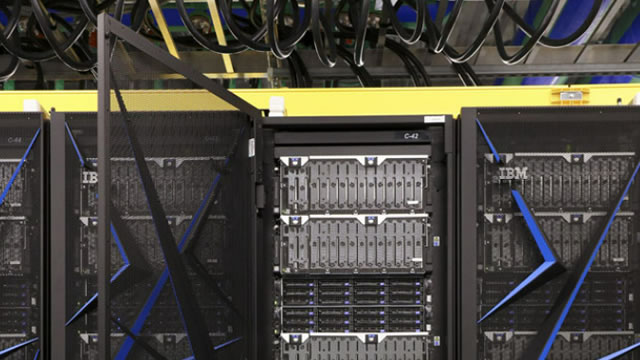
D-Wave Faces New Pressure From IBM’s Quantum Push
Investing· 2026-03-18 06:40
Core Insights - D-Wave Quantum faces increasing competition from IBM, which has made significant advancements in quantum computing technology and has a strong financial foundation [1][2][8] - IBM's hybrid architecture integrates quantum and classical computing, potentially enhancing scientific discovery and application of quantum technology [3][4][6] - D-Wave's focus on pure-play quantum computing may not be sufficient to compete against IBM's established track record and financial stability [7][11] Company Comparisons - IBM has reported a record $14.7 billion in free cash flow for 2025, with Q4 revenue increasing by 9%, surpassing analyst expectations [8][10] - D-Wave has not yet achieved the same level of financial success or stability, making it vulnerable to competition from larger firms like IBM [2][11] - Investors may find IBM's long history of dividend increases and a healthy dividend yield of 2.73% appealing compared to D-Wave's current struggles for profitability [10][11] Market Implications - The hybrid approach of IBM may address investor concerns regarding the practical applications of quantum computing, which have been a barrier to investment in the sector [6][12] - Both IBM and D-Wave are pursuing different paths in quantum computing, with IBM focusing on scientific advancements and D-Wave on optimization problems [12][13] - The competitive landscape suggests that while both companies can coexist, IBM's advantages may pose significant challenges for D-Wave's growth [11][13]


The New Threat IBM's Quantum Computing Research Poses to D-Wave
Yahoo Finance· 2026-03-17 17:46
Core Insights - IBM's recent advancements in quantum computing, particularly its hybrid approach combining quantum hardware with traditional computing, aim to accelerate scientific discovery and have already shown promising results in molecular simulations [1][6][7] - The release of IBM's quantum-centric supercomputing reference architecture in March 2025 marks a significant step in integrating quantum systems with classical computing tools, addressing challenges that neither can solve alone [2][6] - IBM's strong financial fundamentals, including a record $14.7 billion in free cash flow and a 9% revenue increase in Q4 2025, position it as a formidable competitor to D-Wave in the quantum computing space [8][10] Company Comparisons - D-Wave, as a pure-play quantum firm, faces challenges from larger competitors like IBM, which has a stable track record and significant resources to accelerate its quantum development [3][4][8] - While D-Wave focuses exclusively on quantum computing, it must achieve profitability while competing technologically, which may hinder its growth compared to IBM's established financial stability [5][11] - Both IBM and D-Wave are pursuing different paths in quantum computing, with IBM's hybrid architecture aimed at scientific advancements and D-Wave focusing on optimization problems through its annealing approach [12][13] Market Outlook - IBM's stock has seen a decline of over 15% year-to-date, but analysts remain optimistic about its growth prospects, forecasting an 8% increase in earnings and a potential 30% upside in share price [10] - Investors may find IBM appealing due to its long history of dividend increases and a healthy dividend yield of 2.73%, contrasting with D-Wave's struggle for profitability [11]
D-Wave vs. IonQ Isn't the Only Quantum Battle — Here's the Real Race
247Wallst· 2026-03-14 21:40
Core Insights - D-Wave Quantum and IonQ have reported earnings, showcasing contrasting strategies in the pursuit of commercializing quantum computing [1] Company Summaries D-Wave Quantum - D-Wave Quantum's earnings report indicates a specific approach to scaling quantum computing for commercial use [1] IonQ - IonQ's earnings reveal a different strategy compared to D-Wave, highlighting its unique perspective on achieving commercial viability in quantum computing [1]

中国思考-十五五规划:科技为纲、消费为辅
2026-03-12 09:08
Summary of the Conference Call on China's 14th Five-Year Plan Industry Focus - The conference call discusses the **14th Five-Year Plan (FYP)** of China, emphasizing a **technology-centric** approach and a calibrated rebalancing of the economy. Core Points and Arguments 1. **Focus on Technology and Supply-Side Policies** The 14th FYP reiterates a growth path centered on technology and supply-side policies, with clear quantitative targets for innovation and green transformation. However, the promotion of consumption is described in qualitative terms only, indicating a lack of concrete measures to stimulate consumer spending [3][8][11]. 2. **Quantitative Goals for Innovation** Specific quantitative goals include: - Average annual growth rate of R&D expenditure to exceed 7% - Increase the share of the digital economy in GDP from 10.5% to approximately 12.5% by 2030 - Maintain labor productivity growth above GDP growth [7][11][12]. 3. **Moderate Consumption Promotion** Despite an increase in the household consumption rate being a major goal, the plan lacks binding quantitative targets for consumption as a percentage of GDP. This aligns with past policy styles that avoid setting specific numerical goals for macroeconomic structural reforms [3][11]. 4. **Green Transition Goals** The plan aims to increase the share of non-fossil energy consumption in total energy consumption to 25% by the end of the plan period, indicating a shift from administrative reduction targets to a transformation of the energy system [8][12]. 5. **Challenges in Implementation** The plan highlights the need for a unified national market framework to regulate local government behavior. However, actual implementation may face challenges due to entrenched local interests and the need for reforms in local government assessment and tax systems [8][11]. 6. **GDP Growth Forecast** The GDP growth forecast for the year is maintained at 4.8% for real growth and 4.1% to 4.2% for nominal growth, reflecting a cautious outlook amid ongoing structural adjustments in the economy [8][13]. Other Important but Overlooked Content 1. **Sector-Specific Plans** There is an expectation of a series of industry-specific plans to translate the macro goals of the 14th FYP into actionable strategies within the next 6 to 12 months, focusing on technology independence, social security reform, and addressing employment impacts from AI [8][11][12]. 2. **Social Welfare Reforms** The plan includes clearer policy guidance for social welfare reforms, such as increasing pension support and easing access to social security for migrant workers, indicating a more systematic approach to social support [12]. 3. **Addressing AI Employment Impact** The government plans to release documents addressing the employment impacts of AI, which may include support for retraining and the creation of new high-tech jobs [12]. 4. **Institutional Reforms to Combat "Involution"** The focus is on establishing a more unified market entry system and regulatory framework to curb local protectionism and unhealthy competition, which may slow down the pace of implementation due to existing local interests [11][12]. This summary encapsulates the key insights from the conference call regarding China's 14th Five-Year Plan, highlighting the emphasis on technology and innovation while acknowledging the challenges in promoting consumption and implementing reforms.
Quantum Computing Stock Falls on Earnings Report. It Reported Just $198K in Revenue.
Barrons· 2026-03-03 11:24
Core Insights - The firm, trading under the ticker QUBT, has released its financial results for the fourth quarter [1] Group 1 - The company reported its fourth-quarter results, indicating performance metrics that are crucial for investors [1]


This Tiny Quantum Stock Could Surge 200%
The Motley Fool· 2026-02-28 16:00
Core Viewpoint - IonQ is positioning itself as a leader in quantum computing through strategic acquisitions and plans to increase its qubit count, indicating potential for significant upside if execution and commercial adoption improve [1] Group 1: Company Strategy - IonQ is making bold acquisitions to strengthen its position in the quantum computing market [1] - The company has ambitious plans to expand its qubit count, which is critical for enhancing computational power [1] Group 2: Market Potential - If IonQ successfully improves execution and accelerates commercial adoption, the upside for the company could be massive, suggesting it may represent a significant long-term investment opportunity [1]

IonQ Stock Surges After Earnings. Quantum Computing Is Heating Up.
Barrons· 2026-02-27 15:26
Core Insights - IonQ stock surged by 22% following the release of its fourth-quarter earnings, indicating strong investor interest in the quantum computing sector [2]. Company Performance - The significant increase in IonQ's stock price reflects positive market sentiment towards the company's financial results and growth potential in quantum computing [2]. Industry Trends - Quantum computing is being recognized as a transformative technology with potential applications across various sectors, including healthcare, finance, and defense, suggesting a growing interest and investment in this field [2].

IonQ & D-Wave Fall More than 5% Last Week While Rigetti Leads Quantum Stocks
247Wallst· 2026-02-23 14:33
Core Viewpoint - Quantum computing stocks, particularly IonQ and D-Wave, experienced significant declines last week, while Rigetti showed relative resilience despite also falling slightly. The overall sentiment in the quantum computing sector remains bearish as investors shift focus to more stable industries [1]. Group 1: Stock Performance - IonQ (IONQ) fell 6.48% last week, closing at $31.90, marking a one-month loss of 34% and a year-to-date decline of nearly 29% [1]. - D-Wave (QBTS) dropped 8.19% to $18.06, with a year-to-date decline of nearly 31% [1]. - Rigetti (RGTI) was the best performer among quantum stocks, declining only 1.06% to $15.92, but still down 28% year-to-date [1]. Group 2: Insider Activity and Market Sentiment - Insiders across IonQ, Rigetti, and D-Wave net-sold approximately $615 million in shares over the past year, indicating a lack of confidence among those with the most information [1]. - IonQ's insider transactions showed a net direction of selling, with 10 recent transactions reported [1]. - The composite sentiment score for IonQ is 37.99 (Bearish), while Rigetti's score is 34.58 (Bearish), contrasting with D-Wave's score of 67.91 (Bullish) [1]. Group 3: Earnings Expectations - IonQ is set to report Q4 2025 results on February 25, 2026, with analyst consensus expecting a loss of $0.47 EPS and revenue of $40.38 million [1]. - Prediction markets indicate a 76% probability of IonQ beating earnings expectations, raising questions about whether this potential beat is already priced into the stock [1]. - Rigetti will report its Q4 2025 and full-year 2025 financial results on March 4, 2026, with analysts projecting a GAAP EPS of -$0.05 and revenue of $2.33 million [1].