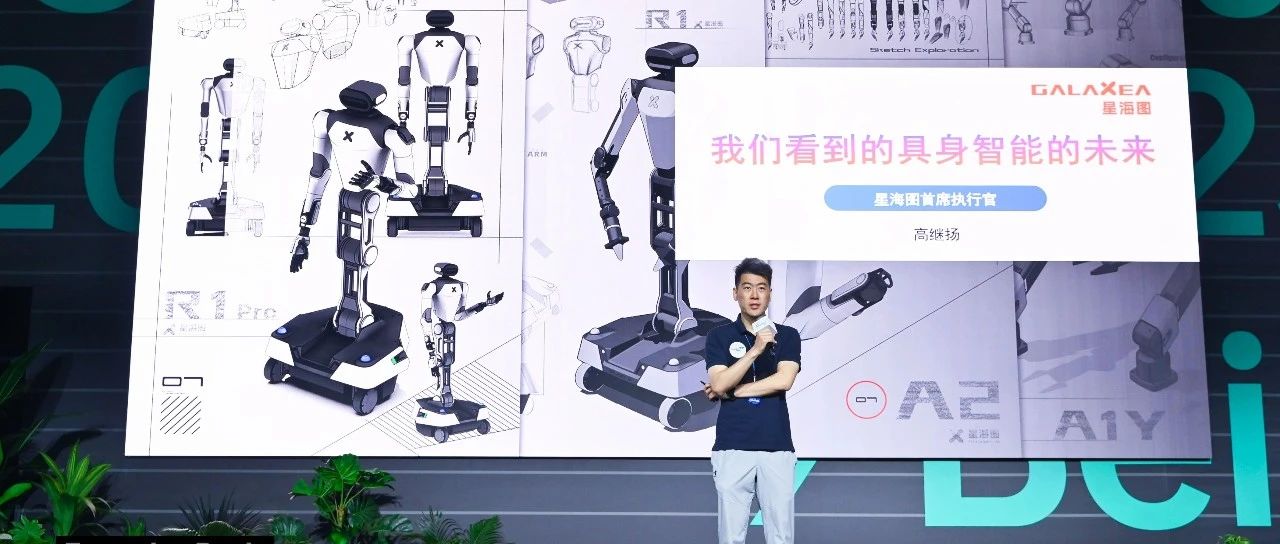
R1 Pro

Search documents
具身智能机器人企业星海图官宣完成10亿元B轮融资,百亿独角兽中成立时间最短!
机器人圈· 2026-02-12 10:23
Core Viewpoint - The article highlights the successful completion of a 1 billion yuan Series B financing round for Xinghai Map, indicating strong market recognition of its technological advancements and commercial progress in embodied intelligence [2]. Group 1: Financing and Shareholder Structure - The financing round attracted leading industry capital such as Jinding Capital, BAIC Investment, and Bihong Investment, which will accelerate technological integration in smart manufacturing and the automotive industry [4]. - Top-tier private equity funds like Zhengxin Valley Capital and Qianhai Ark's participation reflects long-term value investors' recognition of the company's growth potential [4]. - International capital from Yifeng Capital enhances the company's global strategy and resource access, facilitating overseas market expansion [4]. - The continued investment from five major existing shareholders demonstrates confidence in the company's execution capabilities and growth potential [4]. Group 2: Technological Strength - Xinghai Map maintains a "full-stack self-research" approach, investing in algorithms, hardware, and data to build a comprehensive technology system [5]. - The company has iterated its foundational model, launching the G0 model in August 2025 and its upgraded version G0 Plus in January 2026, which is recognized as the world's first out-of-the-box VLA model [5]. - The open-source dataset from Xinghai Map has been downloaded over 500,000 times, becoming the most widely adopted dataset among major global institutions and enterprises [5]. - The company has established a high-efficiency data collection and model training base, entering a phase of large-scale training with hundreds of thousands of hours of high-quality data [5]. Group 3: Commercialization and Market Position - Xinghai Map has secured thousands of orders, covering top global universities, research institutions, and industry leaders, indicating strong commercial capabilities [7]. - The company leads the market in wheeled dual-arm robots, with its R1 Pro and R1 Lite platforms being utilized by over 90% of top global developers [7]. - The company has received large-scale orders from leading domestic automotive manufacturers and smart logistics companies, marking a transition from feasibility demonstrations to large-scale deployments [8]. Group 4: Vision and Future Goals - Xinghai Map aims to redefine its mission beyond manufacturing single robots, focusing on building foundational infrastructure for the intelligent transformation of the physical world [11]. - The company envisions deploying 10 billion intelligent agents to serve 10 billion people, having established a closed-loop verification from technology research and product innovation to commercial implementation [11].

人形机器人“奥运会”即将开幕!谁将引领万亿级智能革命?
Sou Hu Cai Jing· 2025-08-13 18:35
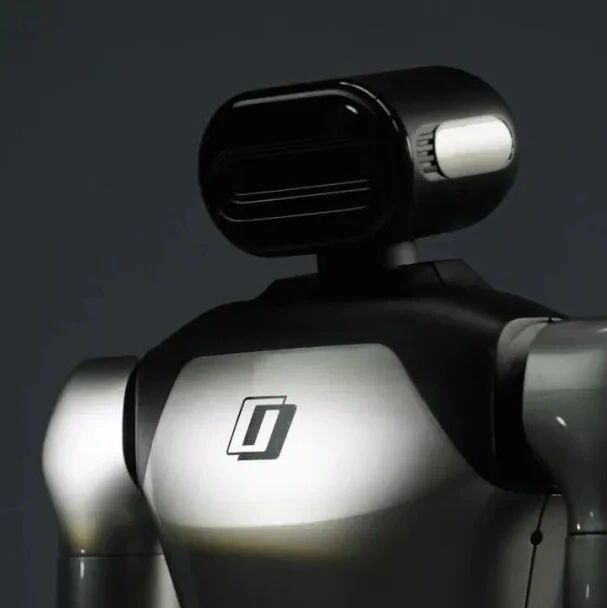
Core Viewpoint - The 2024 World Humanoid Robot Games in Beijing represents a significant shift from laboratory testing to real-world applications, showcasing the potential for commercial opportunities and industry restructuring in the humanoid robotics sector [1]. Event Highlights - The event features diverse project settings that closely resemble real-world applications, including tasks like hotel cleaning, factory material handling, and hospital drug sorting, indicating a move from "showcase" to "practical" robots [3][4]. - A unique "global first humanoid robot half marathon" tests robots' endurance, battery life, and coordination, highlighting technological integration and energy efficiency [3]. Participating Teams - Leading companies such as Xinghaitu, backed by Meituan, are providing exclusive robot solutions for the event, indicating strategic investments in end-service robotics [5]. - Yushu Technology is establishing itself as a foundational player in the industry with its open hardware ecosystem, akin to the Android model in smartphones [5]. - A diverse array of domestic companies, including Tiangong, Jiasu Jinhua, and Fourier, showcases China's multifaceted approach to humanoid robotics [5]. - Academic institutions and international teams from 15 countries are participating, emphasizing the integration of research and global competition in the field [5]. Technological Breakthroughs - Advances in visual recognition and modeling techniques are being demonstrated, such as a high-reflective object detection model developed by a team from Hefei [7]. - Yushu robots are noted for their stability and dynamic control during competitions, showcasing advancements in motion control [8]. - The R1 Pro from Xinghaitu exemplifies the potential of service robots through its ability to understand task processes and execute actions effectively [8]. Industry Trends - The humanoid robotics industry is transitioning from technology validation to commercial application, marking a pivotal moment for market entry [9]. - Capital is increasingly concentrating on a few leading companies, indicating a potential reshaping of the competitive landscape in the next 3-5 years [10]. - Collaboration across the supply chain, including sensors, motors, AI, and operating systems, is essential for success in the humanoid robotics sector [11]. Investment Logic - Attention should be directed towards foundational technology suppliers, such as those providing servo motors and visual recognition chips, which are critical to robotic functionality [12]. - Investment in platform companies like Yushu Technology and UBTECH, which offer robotic platforms and ecosystems, is recommended due to their growth potential [12]. - Companies focused on specific applications, such as Xinghaitu and Fourier, are positioned for clear commercial pathways and profitability [12].

2025WRC:众擎、优必选、乐聚等15家企业展台情况一览
机器人大讲堂· 2025-08-08 16:23
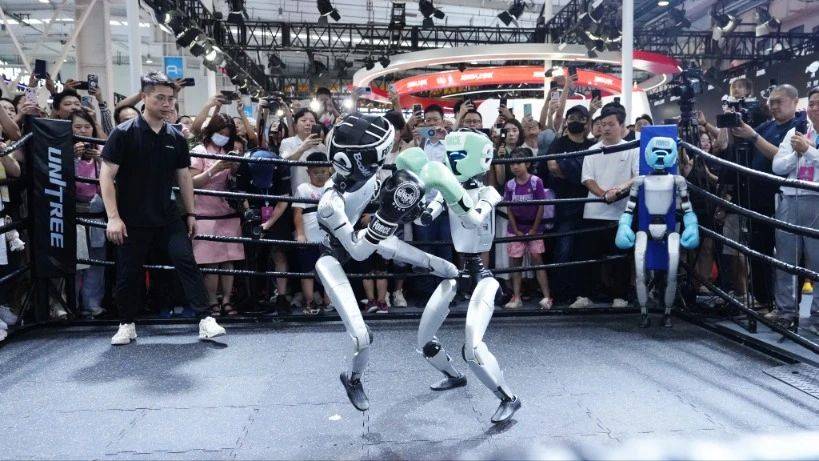
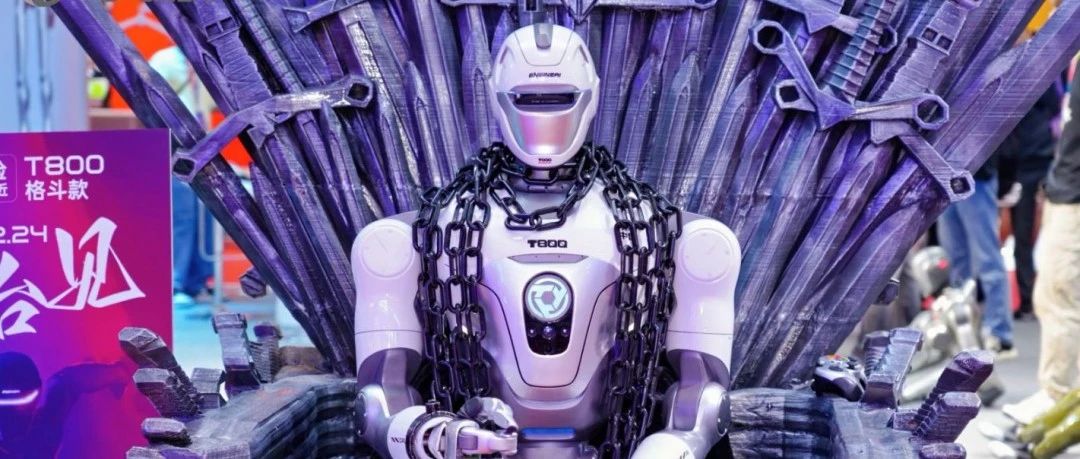
Core Viewpoint - The 2025 World Robot Conference (WRC) showcased advancements in humanoid robots, emphasizing the integration of 5G-A technology and embodied intelligence to enhance operational capabilities and adaptability in complex environments [1][3]. Group 1: Humanoid Robots - The "Kua Fu" humanoid robot by Leju demonstrated significant breakthroughs in communication and decision-making through 5G-A technology, enabling real-time control over distances of 1200 kilometers [1][3]. - The "Kua Fu" robot features a dual-brain system, enhancing human-robot interaction and stability in flexible environments, showcasing its potential in high-risk scenarios like firefighting and chemical industries [3][6]. - The "T800" humanoid robot by Zhongqing is designed for heavy-duty tasks, featuring 41 degrees of freedom and advanced sensor integration for real-time environmental adaptation [7]. Group 2: Industrial Robots - Cyborg Robotics presented the Cyborg-H01 dexterous hand and Cyborg-R01 humanoid robot, focusing on high precision and energy efficiency in industrial applications [4][6]. - The CW series robots by Chuan Robotics combine autonomous mobile platforms with collaborative robotic arms, enhancing flexibility in production environments [30]. Group 3: Perception and Sensing Technologies - Aobi Zhongguang introduced the Pulsar ME450 3D LiDAR and Gemini 345Lg dual 3D camera, enhancing visual perception capabilities for outdoor robots [12][14]. - Pasini launched the third-generation multi-dimensional tactile sensor matrix PX-6AX-GEN3, providing advanced sensing solutions for embodied intelligent systems [10][25]. Group 4: General-Purpose Robots - Zhi Ping Fang showcased the "Ai Bao" robot, capable of performing various tasks in simulated environments, highlighting its adaptability and learning capabilities [17][19]. - The "Wanda" platform by Youliqi demonstrated its application in multiple real-life scenarios, emphasizing its interactive capabilities and service-oriented design [23][24]. Group 5: Collaborative and Ecosystem Development - Xinghai Tu introduced the G-0 VLA model, which enhances human-robot collaboration and opens up new possibilities for developers through a comprehensive toolkit [20][22]. - The collaboration among various companies at WRC indicates a growing ecosystem focused on advancing embodied intelligence and robotics technology across multiple sectors [41].
星海图高继扬:具身智能下半场,应用为王
Founder Park· 2025-06-23 11:44
Core Insights - The core viewpoint is that 2026 will mark the second half of embodied intelligence, focusing on application maturity on both supply and demand sides [1][34]. Group 1: Development and Challenges - The embodied intelligence industry is currently perceived to be in a "technical bottleneck" phase, with a significant need for high-quality data and a correct ontology to drive progress [3][4][10]. - The lack of high-quality data is attributed to the absence of a standard ontology, which is essential for effective data collection and model training [4][11]. - The current focus should be on achieving object and action generalization, as scene and ontology generalization are less critical at this stage [17][27]. Group 2: Product and Model Structure - The ideal product structure for embodied intelligence is a combination of "hardware + pre-trained models + post-training tools," which allows for effective task execution in specific environments [6][9]. - The training process involves a two-phase approach: pre-training to understand basic interactions with the physical world and post-training for specific tasks [21][23]. - The model architecture includes a "slow thinking" component for logical reasoning and a "fast execution" component for real-time actions, which is crucial for operational efficiency [22][19]. Group 3: Market Dynamics and Future Outlook - The market is returning to a rational state, with companies exploring practical applications of embodied intelligence rather than unrealistic expectations of immediate widespread adoption [33][34]. - By 2026, the supply side will see matured robot bodies and initial generalization capabilities, while the demand side will have clearer application scenarios [32][34]. - The growth of the developer community is essential for the prosperity of the embodied intelligence market, as they will create diverse applications that drive value [28][29].