RPU

Search documents
可重构芯片突围:清微智能RPU崛起,“后GPU”算力谁主沉浮
Huan Qiu Wang· 2026-01-14 05:28
Core Insights - The AI chip landscape is shifting towards advanced architectures, with a focus on reconfigurable data flow units like Groq's LPU and China's Qingwei Intelligent's RPU, which are seen as the "Chinese version of advanced TPU" [1][2][4] Group 1: Industry Developments - Nvidia is facing strategic anxiety as competitors like Google with its TPU threaten its dominance, prompting Nvidia to acquire Groq for $20 billion, a significant premium over its valuation [1] - Qingwei Intelligent has completed over 2 billion yuan in Series C financing and has developed a full-stack solution from IP to servers, deploying over 30,000 AI acceleration cards nationwide [2] - The TX81 chip from Qingwei supports trillion-parameter models and can reduce inference costs by 50% while improving energy efficiency by three times [2][5] Group 2: Technological Trends - The AI chip industry is evolving into three main factions: GPU, ASIC, and reconfigurable data flow chips, with each having distinct advantages and challenges [4][7] - The GPU faction, led by Nvidia, remains dominant but faces limitations due to memory bandwidth and power consumption issues [4] - The ASIC faction, represented by Google TPU and others, focuses on high efficiency for specific algorithms but risks obsolescence with algorithm changes [4] - The reconfigurable data flow faction, including Qingwei's RPU, offers a flexible architecture that combines the efficiency of ASICs with the adaptability of GPUs, positioning itself as a key player in the future of AI chips [4][7] Group 3: Strategic Implications - As Nvidia seeks to secure its future through acquisitions, Chinese companies like Qingwei are focusing on developing their own technologies, potentially reshaping the competitive landscape in AI chip manufacturing [1][7] - The emergence of reconfigurable chips is seen as a significant trend, with the potential to become mainstream and a focal point for leading companies in the industry [7]


AI算力竞赛白热化 清微智能可重构芯片开辟新赛道
Xin Lang Cai Jing· 2026-01-11 12:04
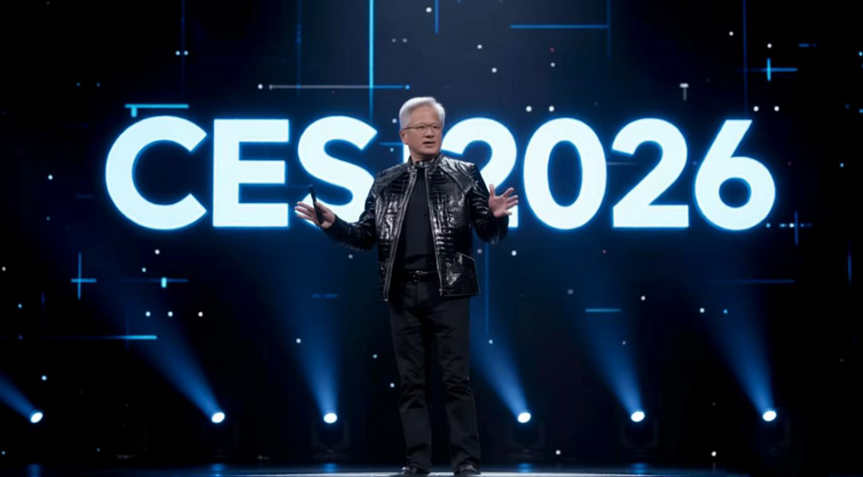
Core Insights - Huang Renxun has introduced the "Rubin" AI chip, which boasts training performance 3.5 times that of Blackwell and a 5-fold increase in AI software running performance, while reducing inference costs to one-tenth of its predecessor [1][3] - The rise of TPU and Reconfigurable Processing Unit (RPU) architectures is threatening NVIDIA's dominance in the AI chip market [1][3] Group 1: Company Developments - NVIDIA has acquired Groq for $20 billion, a significant premium over its previous valuation of $6.9 billion, to secure its unique LPU chip technology, which allows for software-defined hardware [3][5] - Groq's LPU technology can achieve throughput that surpasses GPU and TPU physical limits, being 5-18 times faster and 10 times more energy-efficient [3][5] - The acquisition indicates a strategic shift towards higher-performance general-purpose chips in the AI chip sector [3][5] Group 2: Industry Trends - The AI chip landscape is evolving into three main factions: GPU, ASIC, and Reconfigurable Data Flow [6][7] - The GPU faction, led by NVIDIA, remains dominant but faces challenges due to limitations in semiconductor processes and high power consumption [6][7] - The ASIC faction, represented by Google TPU and others, focuses on highly efficient chips tailored for specific algorithms, but risks obsolescence with algorithm changes [6][7] - The Reconfigurable Data Flow faction, including Groq's LPU and China's RPU, offers a flexible and efficient solution, combining the strengths of both GPU and ASIC technologies [6][7] Group 3: Market Dynamics - In late 2025, the Chinese chip company Qingwei Intelligent raised over 2 billion RMB in Series C funding, indicating strong investment in reconfigurable chip technology [5][12] - Qingwei's RPU technology is positioned to compete with Groq's LPU, highlighting a significant investment trend in reconfigurable architectures in both the US and China [5][12] - By 2028, non-GPU products are expected to capture nearly 50% of the Chinese AI accelerator card market, up from approximately 30% in early 2025 [13]