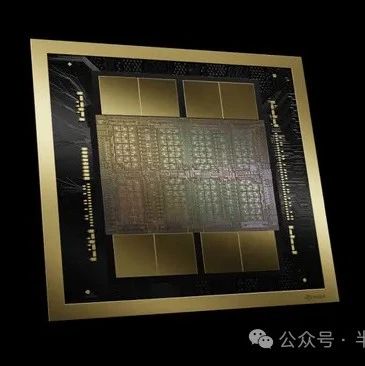
RTX 5080

Search documents
美光加入GDDR 7混战
半导体行业观察· 2026-02-26 01:30
Core Viewpoint - Micron has officially launched its 3GB GDDR7 memory module, entering the competition with Samsung and SK Hynix, with a maximum speed of 36Gbps, which is a 12.5% increase over the initial GDDR7 modules that had a bandwidth of 32Gbps [2] Group 1: Micron's GDDR7 Memory - Micron's new 3GB GDDR7 memory module is slower than Samsung's offering, which has a maximum bandwidth of 42.5Gbps, and SK Hynix's upcoming module, which can reach 40Gbps [2] - Currently, no NVIDIA graphics card can fully utilize the GDDR7 memory's transmission speeds of 40Gbps or higher, with the highest speed being 30Gbps on the RTX 5080 [2][3] - Micron's entry as a third supplier of 3GB GDDR7 memory is beneficial for NVIDIA and other GPU manufacturers, as it may help alleviate the upcoming NAND flash/memory shortage [3] Group 2: Competitors' Developments - Samsung has already showcased 36Gbps and 32Gbps versions of its 3GB GDDR7 memory, which was sampled as early as November last year [5] - SK Hynix plans to present a 48Gbps version of its 3GB GDDR7 memory at the ISSCC 2026, which is aimed at mid-range AI inference workloads [7] - The 48Gbps memory from SK Hynix represents a significant performance increase, with over 70% improvement compared to NVIDIA's current 28Gbps GDDR7 memory [7][8] Group 3: Market Implications - The introduction of a third supplier for 3GB GDDR7 memory could lead to more competitive pricing and availability for GPU manufacturers [3] - NVIDIA's current GPUs using 3GB GDDR7 memory include the RTX 5090 and RTX Pro 6000, with potential future models like the RTX 50 Super series expected to utilize Micron's memory [3] - The industry is witnessing a trend where manufacturers prefer stable, mature solutions over unproven samples, which may affect the adoption of the highest-speed memory options [6]


紧急吃瓜!英伟达GPU供应要缩水了,第一刀砍向RTX 50系列
猿大侠· 2025-12-19 04:11
Core Viewpoint - NVIDIA plans to significantly reduce the production of its GeForce RTX 50 series graphics cards by 30%-40% in the first half of 2026, primarily affecting the RTX 5060 Ti 16GB and RTX 5070 Ti models, which may lead to a shortage and price increase for consumers [1][6][10] Group 1: Production Cuts - NVIDIA's decision to cut production is driven by a shortage of memory, particularly GDDR7, which limits the company's ability to produce at full capacity [4] - The company is prioritizing high-profit models over mid-range options, as it aims to allocate limited memory resources to more profitable RTX PRO series and high-end consumer cards [8] Group 2: Consumer Impact - Consumers may face a choice between lower-spec 8GB graphics cards or higher-priced models due to the reduced availability of 16GB options [2][9] - The anticipated rise in NAND and DRAM memory costs could further increase overall system prices, leading to potential hesitance among consumers to purchase new GPUs [5] Group 3: Market Reactions - The news of production cuts has sparked significant reactions from the gaming community, with some users expressing frustration and suggesting that competitors like AMD and Intel could benefit from NVIDIA's decision [3][11] - There is a growing concern that the price of GDDR5 memory is already rising, which, combined with the GPU supply cuts, could result in a dual impact of shortages and price hikes in 2026 [10]

疯了,游戏本逆天改装:一颗电阻4090反杀5090
3 6 Ke· 2025-11-12 03:47
Core Viewpoint - A modification involving the addition of a single resistor has allowed an RTX 4090 gaming laptop to outperform an RTX 5090 in certain benchmarks, highlighting the significant impact of power consumption on performance [1][10]. Group 1: Power Consumption and Performance - Power consumption is a critical factor that directly influences the performance of gaming laptops, with high-end models often boasting total power consumption exceeding 200W [3][5]. - The total power consumption typically refers to the combined power of the CPU and GPU, where higher power levels correlate with better performance due to enhanced cooling and power supply requirements [5][12]. - A user modified their ROG Zephyrus M16 by adding a resistor, effectively lowering the circuit resistance and allowing the RTX 4090 to draw nearly double its original power limit, resulting in performance that rivals the RTX 5090 [9][10]. Group 2: Benchmark Comparisons - After the modification, the performance of the RTX 4090 in the ROG M16 surpassed that of the RTX 5090 in most 3DMark tests, with the highest score in the Speedway benchmark showing a 9.6% lead [10][11]. - The overall performance improvement from the modification was over 20% in most benchmarks, with some tests showing increases of more than 35% [11][12]. Group 3: Manufacturer Limitations - NVIDIA is identified as the entity that sets power consumption limits for mobile GPUs, which restricts manufacturers from fully utilizing the hardware's potential [13][15]. - Despite the potential for higher performance through increased power limits, manufacturers often adhere to NVIDIA's restrictions to maintain product differentiation and avoid market conflicts [15][16]. - There are indications that NVIDIA may consider lifting power limits for future high-end models to cater to hardcore gaming enthusiasts seeking significant performance boosts [15][16].

李飞飞发起机器人家务挑战赛!老黄第一时间批钱赞助
量子位· 2025-10-11 01:15
Core Insights - The BEHAVIOR Challenge aims to advance embodied intelligence by uniting academic and industrial forces to tackle household robotics [3][4] - Inspired by the success of ImageNet, the challenge seeks to establish a standardized framework for evaluating robotic performance in household tasks [11][14] Challenge Overview - The first BEHAVIOR household challenge, sponsored by NVIDIA, requires participants to use the Xinghai R1 Pro robot to complete 50 household tasks in a realistic virtual environment [5][6] - Participants can choose their algorithms and have access to 10,000 expert demonstration trajectories for imitation learning [6] - The challenge includes two tracks: Standard Track (limited to visible information) and Privileged Track (access to detailed environmental data) [9] Objectives and Rationale - The initiative is driven by the need to address existing challenges in robotic learning, such as lack of standardization and fragmented task selection [25] - The goal is to create a "North Star" task for the robotics field, promoting community collaboration to advance embodied intelligence [16] Design Philosophy - BEHAVIOR emphasizes a human-centered approach, ensuring that AI enhances and empowers human capabilities rather than replacing them [18] - The challenge focuses on household tasks, defining clear standards for a true household robot, including navigation, fine manipulation, long-term planning, and dynamic adaptation [19] Scale and Potential - The challenge encompasses 1,000 household activities and 50 long-term tasks, with an average task duration of 6.6 minutes [21] - BEHAVIOR is positioned to potentially become the "next ImageNet" in the field of embodied intelligence, although its success will depend on future developments [21][22]

Advanced Micro Devices, Inc. (AMD): A Bull Case Theory
Yahoo Finance· 2025-09-28 23:43
Core Thesis - Advanced Micro Devices, Inc. (AMD) is positioned as a strong investment opportunity due to its potential market share gains and the challenges faced by competitor Nvidia, with a target price range of $168–$187 over the next 12–18 months [2][5]. Financial Performance - AMD reported a 32% year-over-year revenue growth in Q2 2025, reaching $7.7 billion, driven by a 73% increase in gaming revenue to $1.1 billion and a 14% rise in data center revenue to $3.2 billion [3]. - Wall Street forecasts suggest a 15–20% compound annual growth rate (CAGR) for earnings per share (EPS) through 2027, despite near-term margin pressures from export controls [3]. Competitive Landscape - Nvidia's structural GPU reliability issues, such as problems with RTX 4090 connectors, create a competitive opportunity for AMD, which is seen as a stable alternative [4]. - AMD's RX 9070 XT shows strong performance and improved power efficiency, while its open-source ROCm platform enhances its data center positioning [4]. Market Opportunities - AMD could capture $3.6–$6 billion in incremental revenue from potential market share gains in the $120 billion discrete GPU segment, although Nvidia's ecosystem dominance poses challenges [5]. - The company's diversified revenue streams and competitive GPU offerings support the potential for multiple expansions, despite macroeconomic risks such as Federal Reserve rate hikes [5]. Historical Context - AMD's stock price has appreciated approximately 39% since May 2025, reflecting strong revenue growth driven by data center and Ryzen processor sales, as well as AI demand [6].

英伟达下一代GPU,我所知道的全在这了
半导体行业观察· 2025-01-04 01:57
Core Viewpoint - The next-generation Nvidia Blackwell GPU architecture and RTX 50 series GPUs are expected to be released, with significant marketing materials already circulating. The official announcement is anticipated during the CES event on January 6, 2025, by CEO Jensen Huang [1][2]. Release Timeline - The RTX 50 series is projected to launch in January 2025, with potential delays due to packaging issues related to the Blackwell B200 GPU. The announcement is now expected by the end of January 2025, with at least one or two models being released [2][3]. - Historically, Nvidia has released new GPU architectures approximately every two years, and while the Blackwell series is slightly delayed, it remains within the expected timeframe [4][5]. Technical Specifications - The Blackwell B200 will utilize TSMC's 4NP node, an enhanced version of the previous N4 node used in the RTX 40 series. This choice is likely to save costs, although it may open opportunities for competitors like AMD and Intel to adopt more advanced nodes [8][9]. - The upcoming GPUs are expected to feature GDDR7 memory, which is projected to provide significant bandwidth improvements over the current GDDR6X and GDDR6 memory types. GDDR7 aims for speeds up to 36Gbps, representing a 50% increase over GDDR6X [10][11]. Performance Enhancements - The Blackwell architecture is anticipated to include various updates from the previous Ada Lovelace architecture, particularly in tensor cores supporting new numerical formats for AI inference. This could enhance performance in both consumer and professional applications [15][16]. - Expected improvements in ray tracing performance and potential new features like DLSS 4 "neural rendering" are also on the horizon, although specific details remain unclear [17]. Pricing Strategy - Nvidia is unlikely to reduce prices for the RTX 50 series compared to the RTX 40 series, given the current market conditions and demand for AI performance. The pricing structure may remain high, reflecting the increased demand in non-gaming sectors [18][19]. - The anticipated pricing for the RTX 5090 could reach as high as $1,500 or more, with budget GPUs now starting around $300, indicating a shift in market segmentation [19].