Rubin计算平台

Search documents
油价-黄金与科技
2026-03-24 01:27
Summary of Key Points from Conference Call Records Industry Overview - The records discuss the impact of geopolitical tensions, particularly the situation in Iran, on various asset classes including oil, gold, and technology sectors, particularly focusing on NVIDIA's developments in AI infrastructure. Core Insights and Arguments Oil Market Dynamics - If the situation in Iran leads to sustained oil prices above $100 per barrel, the Federal Reserve will be unable to lower interest rates before 2026 [1] - The oil supply gap has reached 20 million barrels per day, comparable to the demand gap during 2020; continued supply disruptions could ignite upward price risks [1][2] - A sustained high oil price could negatively impact global GDP by approximately 1%, leading to a potential 10% decline in copper prices, with a bottom anchored at $10,000 [1][2][3] Gold and Equity Markets - The current market pricing for gold reflects a slight rate hike expectation, similar to the logic in the U.S. Treasury market; gold is seen as having some value at current levels if geopolitical tensions do not persist into late 2026 [4][5] - U.S. equities have not fully priced in the pessimistic expectations of no rate cuts, suggesting a potential 10% downside risk if these expectations are realized [4][5] - The anticipated earnings impact from high oil prices has not been adequately reflected in equity valuations, leading to a downward revision of target levels for major indices [4] Technology Sector Insights - NVIDIA's GTC 2026 conference highlighted a shift towards system-level interconnectivity in AI infrastructure, with the introduction of the Rubin platform and LPU specialization driving growth in high-end PCB value [1][18][19] - The demand for AI computing power is expected to increase dramatically, with projections indicating a tenfold increase in required inference power over the next three years [19] Market Sentiment and Investment Strategies - The market is currently experiencing volatility due to geopolitical risks, with differing asset classes responding variably to these tensions [2][3] - Investment strategies suggested include focusing on defensive assets like U.S. Treasuries and gold if the conflict does not extend into 2026, while equities may face significant risks if the situation worsens [3][4] Commodity Market Trends - The agricultural sector is expected to see price increases driven by rising oil prices, which have a strong correlation with grain prices [16] - The livestock sector, particularly pig farming, is under pressure due to rising feed costs, leading to accelerated capacity reductions [17] Geopolitical and Economic Risks - The ongoing conflict in the Middle East poses risks to oil-dependent economies, potentially leading to asset sell-offs in U.S. equities and bonds if fiscal pressures mount [8][9] - The overall commodity market is transitioning from a surplus to a shortage, indicating a potential supercycle in commodities [15] Additional Important Insights - The flow of Middle Eastern capital into Hong Kong has not been as significant as anticipated, with overall market demand remaining weak [6][7] - The dynamics of the dollar's strength during geopolitical tensions differ from past events, indicating a complex market response [6] - The agricultural market is experiencing a shift in investment focus, with low fund allocations in the agricultural sector suggesting potential for significant price movements [16][17] This summary encapsulates the key points from the conference call records, highlighting the interconnectedness of geopolitical events, market dynamics, and investment strategies across various sectors.
招商证券:A股有望延续上行,1月科技+周期牛的主线不会有变化
Xin Lang Cai Jing· 2026-01-11 11:23
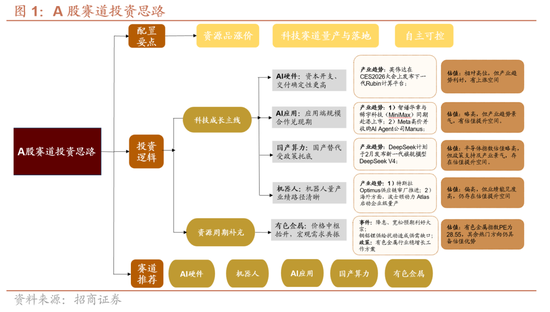
Core Insights - The 2026 industry trend update focuses on AI computing hardware, edge AI, physical AI (autonomous driving, robotics, brain-computer interfaces), AI large models and applications, and commercial aerospace [2][6][8] - The CES 2026 event in Las Vegas highlighted a shift from traditional consumer hardware to AI infrastructure and industrial intelligence, covering various sectors including artificial intelligence, robotics, automotive technology, digital health, and quantum technology [2][7][18] Market Performance - The A-share market has continued its upward trend into 2026, driven by significant net inflows of financing, with a total of 857.8 billion yuan in the first four trading days of January [3][4][8] - The average guarantee ratio of margin trading has increased due to rising stock prices, indicating strong market confidence [3][8] Industry Trends - AI computing hardware advancements include NVIDIA's launch of the next-generation Rubin computing platform, which integrates various components for enhanced performance and cost efficiency [9][21][24] - Edge AI is gaining traction with products like ByteDance's "Doubao" AI glasses entering the market, indicating a shift towards productization in consumer electronics [10][11] - Physical AI developments include NVIDIA's Alpamayo autonomous driving ecosystem, which aims to enhance vehicle decision-making capabilities through multi-step reasoning [12][34][36] Funding and Investment - Significant net inflows in financing have been observed, while ETF redemptions have occurred, indicating a mixed sentiment in the investment landscape [4][8] - Meta's acquisition of AI startup Manus for over $2 billion reflects a strategic move to enhance its AI capabilities and address application gaps [4][14] Valuation Metrics - The overall valuation level of A-shares has increased, with the Wind All A Index PE (TTM) at 18.15, indicating a relatively high valuation compared to historical levels [4][8] Sector Recommendations - The report recommends focusing on cyclical and technology sectors, particularly in the context of the upcoming spring market dynamics and annual report previews [3][8] - Key sectors to watch include power equipment, machinery, non-bank financials, electronics, and basic chemicals, with an emphasis on AI hardware, robotics, and AI applications [8][12]