Saros Rover

Search documents
会跳的扫地机器人也来了
机器人大讲堂· 2026-01-07 09:06
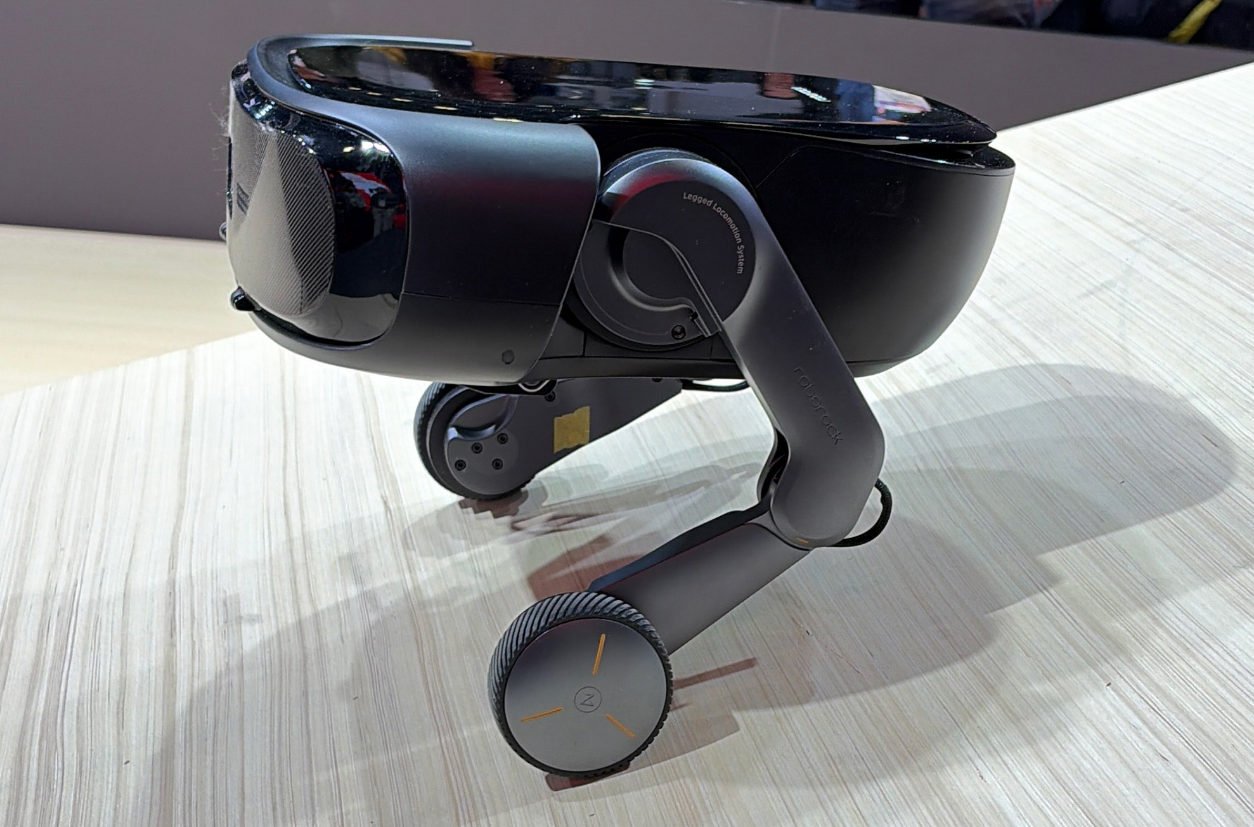
Core Viewpoint - The introduction of the Saros Rover, a wheeled-legged robotic vacuum cleaner, represents a significant innovation in the industry, enhancing mobility and cleaning capabilities beyond traditional designs [1][3][4]. Group 1: Product Features - The Saros Rover can navigate various types of stairs, including traditional, curved, and carpeted stairs, thanks to its leg design, which increases its range of motion and climbing ability [6]. - It utilizes a direct-drive hub motor, providing high balance and dynamic response, allowing it to navigate slopes and obstacles effectively [8]. - The robot can switch between wheeled and legged movement based on environmental conditions, enabling it to traverse complex terrains and avoid obstacles like pet waste [9]. Group 2: Technical Aspects - The combination of wheels and legs is not merely additive; it involves a highly integrated sensor system and intelligent decision-making algorithms [11]. - The robot's ability to quickly perceive and react to its environment is crucial for navigating multi-dimensional spaces, as demonstrated in a video showcasing its ability to dodge a thrown tennis ball [12]. Group 3: Market Potential and Challenges - The innovative design has potential applications beyond residential cleaning, including commercial real estate, hospitals, and factories, where complex cleaning requirements exist [9]. - However, the complexity and cost of the technology may limit its initial market to high-end or commercial sectors, with speculations of a price exceeding $3,000 [14]. - Reliability and noise control during operation pose significant challenges, as the mechanical legs may produce sounds that could be unacceptable to users [14].

The coolest technology from Day 2 of CES 2026
ABC News· 2026-01-07 05:57
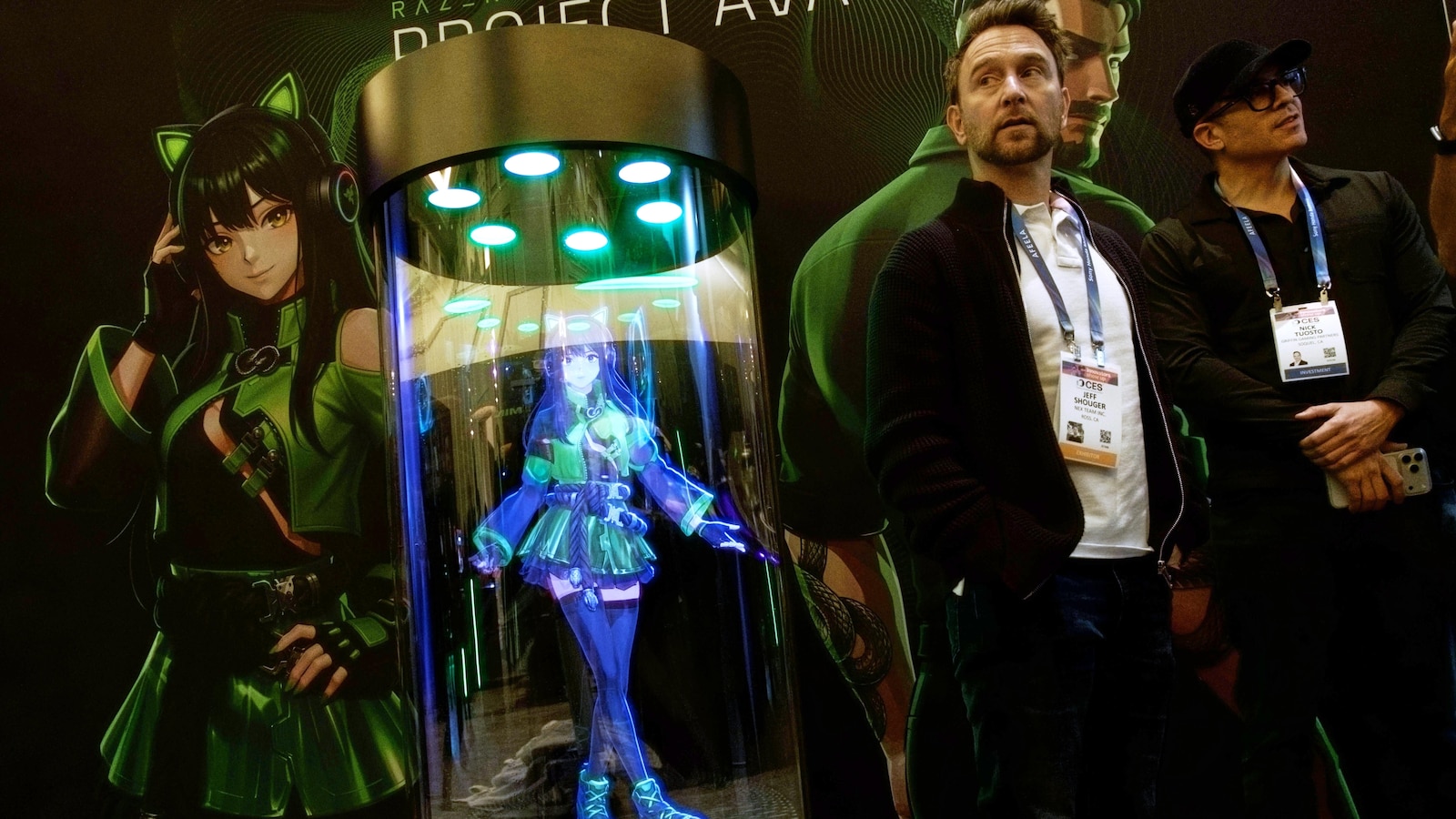
Core Insights - The CES event showcases a wide array of innovations, including AI companions, health tech, and wearables, attracting large crowds on its second day [1] Group 1: AI and Robotics Innovations - Siemens and Nvidia announced an expanded partnership to launch an AI-driven industrial revolution aimed at transforming manufacturing and supply chain management [2] - Razer introduced AI-powered prototypes, including an over-ear gaming headset that functions as a general-purpose assistant and an AI desk companion for gaming advice and life organization [5][7] - Oshkosh Corporation presented autonomous airport robots designed to streamline post-landing processes, aiming to reduce delays and maintain efficiency during adverse weather conditions [9] Group 2: Health and Wellness Technology - Withings unveiled the Body Scan 2, a smart scale that measures 60 biomarkers in 90 seconds, providing personalized health advice and a health trajectory for users [12][13] - The scale is priced at $600 and will be available in spring, with a subscription model for the accompanying app [13] Group 3: Energy Innovations - Commonwealth Fusion Systems, NVIDIA, and Siemens are collaborating to accelerate nuclear fusion as a carbon-free energy source, with a prototype fusion power plant called SPARC nearing 70% completion [14][16] - The partnership aims to create a "digital twin" of the physical machine to expedite progress and data analysis [15]


AI与机器人盘前速递丨石头科技推出可爬楼梯的扫地机器人;现代汽车将在美国工厂部署人形机器人
Mei Ri Jing Ji Xin Wen· 2026-01-07 01:04
Market Review - The Huaxia AI ETF (589010) rose by 1.72% on January 6, with notable performances from stocks like Xinghuan Technology-U, which hit a 20% limit up, and other core stocks such as Lanke Technology and Zhongke Xingtou showing significant gains, indicating high elasticity in AI stocks on the Sci-Tech Innovation Board [1] - The ETF's turnover rate surged to 8.49%, with a trading volume exceeding 324 million yuan, reflecting a notable recovery in trading sentiment and recognition of the long-term value in the AI sector [1] - The Robot ETF (562500) increased by 0.39%, demonstrating a strong "V" reversal pattern after an early drop, supported by robust buying at lower levels, with stocks like Ruishun Technology and Green Harmony rising by 5.55% and 4.57% respectively, indicating a positive trend across the industry chain [1] - The total trading amount for the Robot ETF exceeded 1.715 billion yuan, maintaining a high level of trading activity, showcasing ongoing investor interest in the robotics sector [1] Key Developments - Roborock, a Chinese vacuum cleaner manufacturer, showcased the Saros Rover, a home cleaning robot equipped with legs capable of climbing stairs, utilizing AI and multiple motion sensors for navigation [2] - Hyundai Motor Group and Boston Dynamics publicly demonstrated the Atlas robot, with plans to deploy it in their U.S. electric vehicle factory by 2028, and announced a collaboration with Google DeepMind for AI development [2] - Desay SV's AI Cube, a robotic intelligent base, was officially launched, featuring a modular design that allows for flexible integration of various sensors, aimed at reducing development time and costs for clients [2] Institutional Insights - Guohai Securities believes that the rise of electrification and intelligence will lead to the emergence of humanoid robots, opening up broader market opportunities beyond the automotive sector, marking a significant investment opportunity in the humanoid robot industry [3] - The industry is expected to witness rapid product iterations and business collaborations, with a focus on scaling production and commercial applications of humanoid robots, potentially leading to a "ChatGPT moment" for the sector [3]


石头CES展示双腿扫地机器人:能爬楼能跳,上市日期未定
Hua Er Jie Jian Wen· 2026-01-06 20:47
Group 1 - Stone Technology launched a stair-climbing vacuum robot named Saros Rover at CES, aiming to revitalize its home robotics strategy after a lackluster response to its robotic arm product last year [1][6] - The Saros Rover is the first vacuum cleaner equipped with dual-wheel legs, allowing it to climb stairs, navigate uneven surfaces, and perform sudden stops and slight turns [1][4] - The CES conference focused on robotics technology, but high costs and practicality issues remain significant barriers to widespread adoption [3][5] Group 2 - The Rover utilizes AI, multiple motion sensors, and 3D spatial information for navigation, successfully demonstrating its ability to climb steps and navigate slopes during a media preview [4] - Concerns about the Rover's mobility and battery life persist, as it moves slower when standing on its legs compared to traditional vacuum robots [4][5] - Following the previous unsuccessful launch of the Saros Z70, which received a lukewarm response due to its high price of $2,599 and limited object recognition capabilities, Stone Technology has not yet confirmed a release date for the Rover [6][7]

石头科技演示爬楼梯扫地设备
Xin Lang Cai Jing· 2026-01-06 17:10
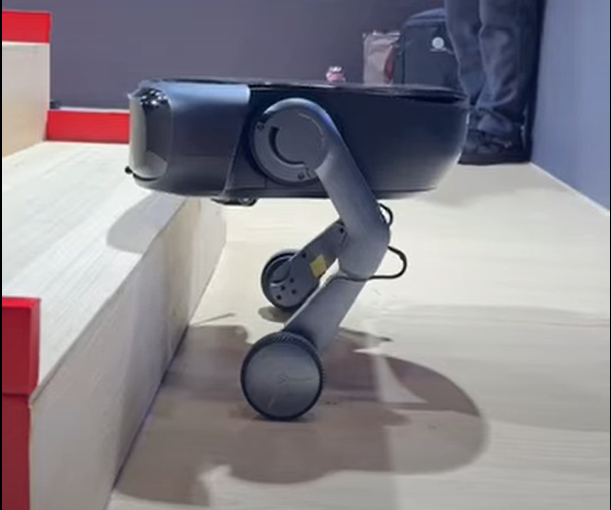
Core Viewpoint - Roborock, a manufacturer of robotic vacuum cleaners, has unveiled a concept device named Saros Rover, which is a stair-climbing home robot equipped with two "legs" [1] Group 1: Product Features - Saros Rover integrates artificial intelligence (AI), multiple motion sensors, and 3D spatial information for navigation [1] - The robot's legs can independently lift and lower, allowing it to traverse stairs and navigate uneven surfaces [1] Group 2: Market Challenges - The company faces challenges in achieving widespread adoption of home robots, including high costs, the need for improved mobility, and battery life [1]