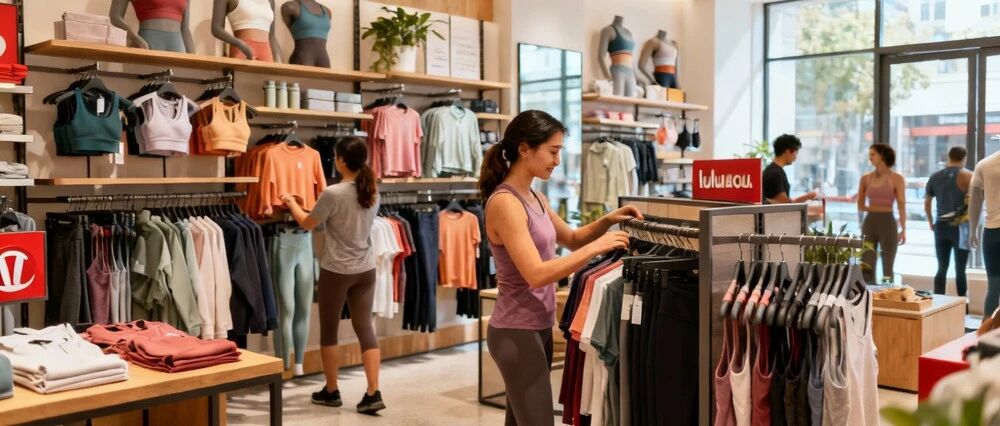
Scuba Waffle系列

Search documents
时代难倒运动品牌CEO
Sou Hu Cai Jing· 2025-12-18 04:31
Core Insights - The sports and outdoor industry is experiencing significant leadership changes among major brands, indicating a turbulent environment where growth ambitions are being reassessed [1][2][3][4][5][14][18] - Companies are grappling with the balance between maintaining high growth and focusing on core competencies, leading to strategic shifts and potential brand identity crises [6][12][14][21] Company Summaries - Under Armour's founder Kevin Plank returned to lead the company, initiating an 18-month restructuring plan as the stock price plummeted from a high of $52 to around $4, highlighting the challenges of sustaining growth [1][14] - Nike's former CEO John Donahoe stepped down, with Elliott Hill taking over amid declining gross margins and increased discount rates, indicating a need for recovery despite previous digital transformation successes [1][16] - Lululemon's CEO Calvin McDonald announced his departure, coinciding with a mixed earnings report that showed a 7% increase in net sales but a 5% decline in comparable sales in North America, raising concerns about the brand's strategic direction [3][4][5] - HOKA ONE ONE, once a strong competitor, faced a significant stock drop due to investor skepticism about its growth potential, prompting its CEO to clarify the brand's focus on specific running categories [1][18][21] - On the other hand, On Running has maintained robust growth, with revenue increases exceeding 30% in recent quarters, positioning itself closer to lifestyle branding while still emphasizing performance [18][19][21] Industry Trends - The differentiation in product technology among sports brands is diminishing, leading to a greater emphasis on brand positioning as companies navigate between being performance-oriented and lifestyle-focused [7][10][11] - The shift in consumer expectations, particularly among Gen Z, is moving from competitive sports to a more participatory and wellness-oriented approach, influencing how brands communicate and market their products [11][12] - The ongoing debate within the industry revolves around how closely brands should align with core athletic performance versus lifestyle trends, with varying strategies yielding different results [12][21]



时代难倒运动品牌CEO
创业邦· 2025-12-18 00:07
Core Insights - The article discusses the challenges faced by major sports brands, particularly in the context of leadership changes and market dynamics, highlighting the difficulties in maintaining growth and brand identity in a competitive landscape [5][6][7]. Group 1: Company Leadership Changes - Under Armour's founder Kevin Plank returned to the company, replacing CEO Stephanie Linnartz, as the stock plummeted from a high of $52 to around $4 [5]. - Nike's former CEO John Donahoe stepped down, with Elliott Hill taking over, but the company is still facing challenges with declining gross margins and increased discount rates [5]. - Lululemon announced the departure of CEO Calvin McDonald, which led to a temporary stock surge, despite the company facing declining comparable sales in its core market [6][9]. Group 2: Financial Performance and Market Trends - Lululemon's Q3 financial report showed a 7% increase in net sales, but a 5% decline in comparable sales in the Americas, with gross margins down by 290 basis points and inventory up by 11% [9]. - HOKA ONE ONE, once a strong competitor, saw its parent company Deckers Outdoor's stock halve in value, raising concerns about HOKA's growth sustainability [5][6]. - The article notes that the sports outdoor industry is undergoing significant changes, with brands grappling with the balance between growth and maintaining their core identity [14][20]. Group 3: Brand Positioning and Consumer Preferences - The narrowing technological differentiation among sports products has led brands to focus more on positioning, questioning whether they should be seen as performance-oriented or lifestyle brands [16][18]. - The shift in consumer mindset, particularly among Gen Z, has moved from competitive sports to a focus on participation and mental well-being, impacting brand messaging and marketing strategies [18][20]. - Alo Yoga's rapid rise is attributed to its lifestyle branding, emphasizing participation over competition, which resonates with modern consumers [18][20]. Group 4: Strategic Decisions and Future Outlook - Brands like Under Armour and Nike are facing the "aftereffects of high-speed growth," leading to a need for refocusing and strategic realignment [21][22]. - HOKA and On Running are at a crossroads, with HOKA focusing on performance while On Running leans towards lifestyle branding, resulting in differing growth trajectories [28][30]. - The future remains uncertain as brands navigate the balance between maintaining their core identity and adapting to changing consumer preferences [30][33].

Lululemon:枯木逢春还是昙花一现?
虎嗅APP· 2025-12-15 23:50
Core Viewpoint - Overall, Lululemon's Q3 2025 performance exceeded the company's previous guidance, indicating a recovery in market expectations despite a generally flat performance [6][10]. Revenue Performance - In Q3 2025, Lululemon achieved revenue of $2.57 billion, a year-on-year increase of 7.1%, surpassing the market consensus and maintaining growth momentum from previous quarters [7][19]. - The North American market experienced a decline of 1.5% year-on-year, while the Chinese market saw a remarkable growth of 43%, marking a new high in nearly a year [7][26]. Product Innovation - The company improved its product launch speed, with women's apparel revenue reaching $1.65 billion, up 5.7% year-on-year, driven by organizational adjustments that enhanced collaboration between design and product departments [8][22]. - Men's apparel revenue grew by 8.1% to $600 million, indicating a slight acceleration in growth, although it remains in a transitional phase towards new product-driven strategies [8][23]. International Expansion - As of Q3 2025, Lululemon had a total of 796 stores globally, with a net addition of 12 stores, primarily in China, focusing on larger experiential retail spaces [9][31]. - The company plans to open 40-45 new stores globally in 2025, with a cautious approach in new markets until consumer acceptance is established [31]. Gross Margin and Profitability - The gross margin declined by 2.9 percentage points to 55.6%, impacted by increased supply chain costs and promotional activities [9][36]. - The overall operating profit margin decreased to 17.1%, down 3.4 percentage points, reflecting the pressures from rising costs and increased hiring for international expansion [9][40]. Guidance Update - The company raised its full-year revenue guidance from 2%-4% to 4%-6%, while projecting a Q4 revenue decline of 1%-3% [9][10].